嚿
| ||||||||
Translingual
Han character
嚿 (Kangxi radical 30, 口+18 in traditional Chinese, 口+17 in simplified Chinese, 21 strokes in traditional Chinese, 20 strokes in simplified Chinese, cangjie input 口廿人難 (RTOX), composition ⿰口舊)
References
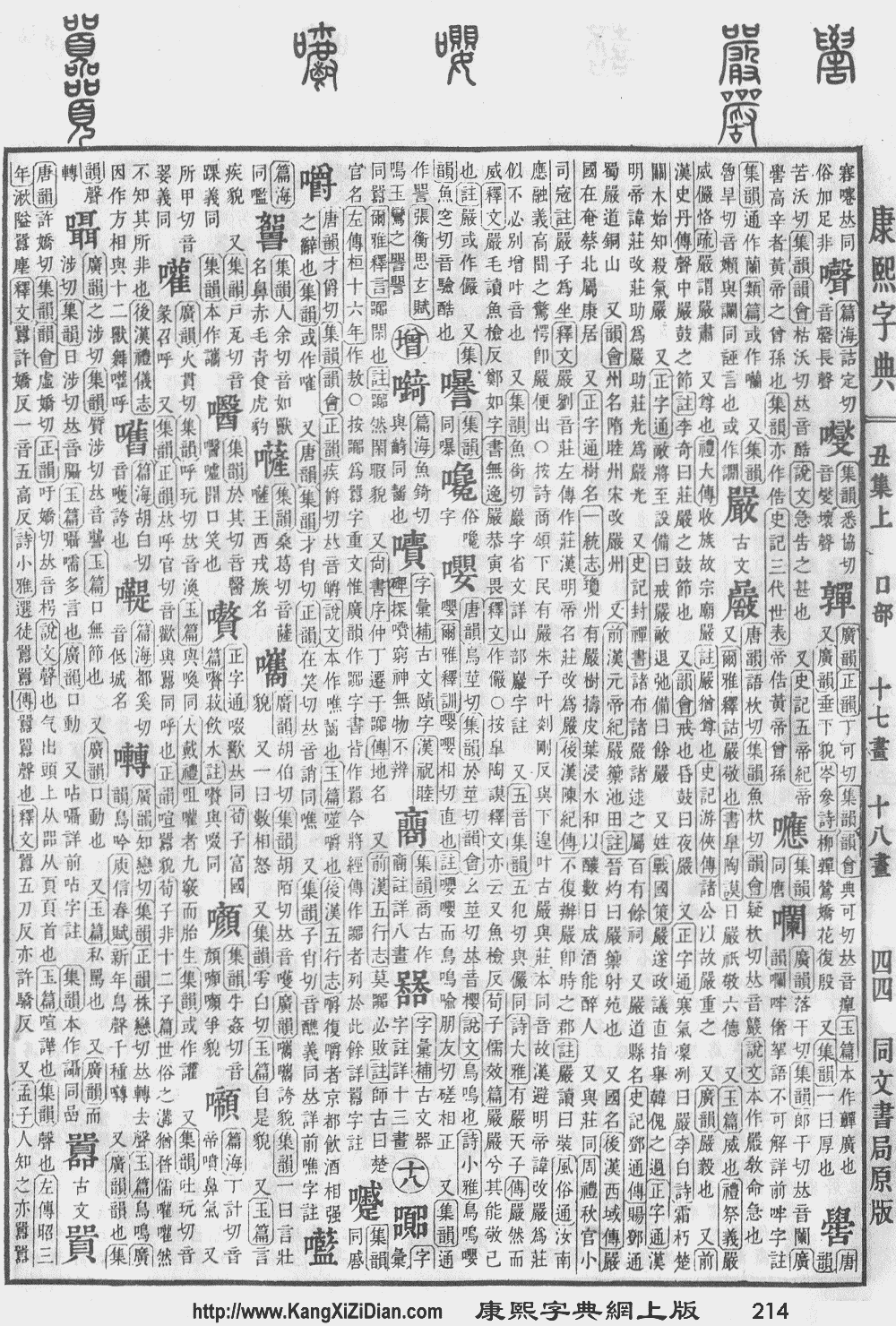
- Kangxi Dictionary: page 214, character 28
- Hanyu Da Zidian (first edition): volume 1, page 705, character 15
- Unihan data for U+56BF
Chinese
Glyph origin
Phono-semantic compound (形聲/形声) : semantic 口 (“mouth; vernacular”) + phonetic 舊.
Etymology 1
| trad. | 嚿 | |
|---|---|---|
| simp. # | 嚿 | |
| nonstandard simp. | 𫩥 | |
| alternative forms | 舊/旧 䊆 倃 | |
Bai (1980) proposes that this word comes from 䊆 (MC gjuwX, “cooked dry rice flour”).
Pronunciation
Definitions
嚿
Etymology 2
| trad. | 嚿 | |
|---|---|---|
| simp. # | 嚿 | |
| nonstandard simp. | 𫩥 | |
(This etymology is missing or incomplete. Please add to it, or discuss it at the Etymology scriptorium. Particularly: “正字通 says it's the same as 嚄”)
Pronunciation
This article is issued from Wiktionary. The text is licensed under Creative Commons - Attribution - Sharealike. Additional terms may apply for the media files.