履
| ||||||||
| ||||||||
Translingual
Han character
履 (Kangxi radical 44, 尸+12, 15 strokes, cangjie input 尸竹人水 (SHOE), four-corner 77247, composition ⿸尸復)
Derived characters
- 𢖓, 𭌆, 𭗫
References
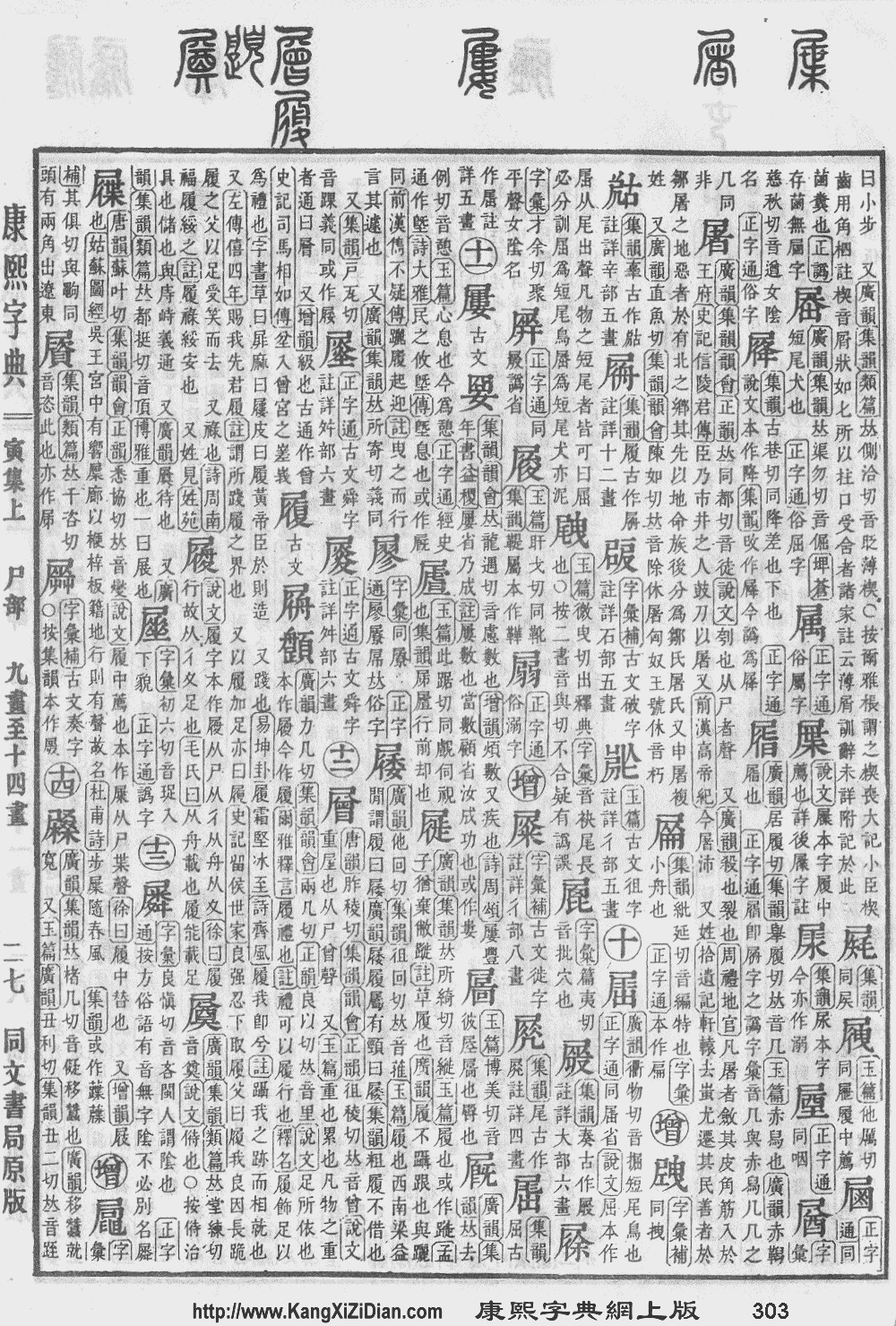
- Kangxi Dictionary: page 303, character 41
- Dai Kanwa Jiten: character 7799
- Dae Jaweon: page 602, character 1
- Hanyu Da Zidian (first edition): volume 2, page 980, character 3
- Unihan data for U+5C65
- Unihan data for U+F9DF
Chinese
| trad. | 履 | |
|---|---|---|
| simp. # | 履 | |
| alternative forms | ||
Glyph origin
| Historical forms of the character 履 | |||
|---|---|---|---|
| Shang | Western Zhou | Shuowen Jiezi (compiled in Han) | Liushutong (compiled in Ming) |
| Oracle bone script | Bronze inscriptions | Small seal script | Transcribed ancient scripts |
 |
 |
 |
 |
In the bronze inscriptions, an ideogrammic compound (會意/会意) : 眉 + 頁 (“person with prominent head”) + 止 (“foot”) + 舟 (“shoe or (shoe-shaped) boat”). Possibly 履 (OC *riʔ) is also phono-semantic (形聲/形声) with phonetic component 眉 (OC *mril).
According to Shuowen, ideogrammic compound (會意/会意) : 尸 + 彳 (“road”) + 夊 (“foot”) + 舟 (“(shoe-shaped) boat”). Possibly phono-semantic (形聲/形声) , with 尸 (OC *hli) functioning as a phonetic component corrupted from 眉 (OC *mril). Comparing Qin bamboo slip script, Shuowen seal's 舟 was corrupted from 自, and Qin's 自 was simplified from 頁.
Pronunciation
Definitions
履
Synonyms
Dialectal synonyms of 鞋 (“shoe”) [map]
Compounds
- 三千珠履
- 不衫不履 (bùshānbùlǚ)
- 倒履相迎
- 冠履
- 冠履倒易
- 冠履倒置
- 冠履無爽/冠履无爽
- 冠道履仁
- 分香賣履/分香卖履
- 削足就履
- 削足適履/削足适履 (xuēzúshìlǚ)
- 劍及履及/剑及履及
- 劍履/剑履 (jiànlǚ)
- 圯橋進履/圯桥进履
- 如履如臨/如履如临
- 如履平地 (rú lǚ píngdì)
- 如履薄冰 (rúlǚbóbīng)
- 安常履順/安常履顺
- 屣履
- 屣履造門/屣履造门
- 履中行善
- 履仁蹈義/履仁蹈义
- 履位
- 履冰 (lǚbīng)
- 履勘
- 履尾
- 履帶/履带 (lǚdài)
- 履帶車/履带车
- 履戴
- 履新 (lǚxīn)
- 履歷/履历 (lǚlì)
- 履歷表/履历表 (lǚlìbiǎo)
- 履湯蹈火/履汤蹈火
- 履癸
- 履端
- 履約/履约 (lǚyuē)
- 履舄 (lǚxì)
- 履舄交錯/履舄交错 (lǚxì jiāocuò)
- 履薄
- 履薄臨深/履薄临深
- 履虎尾
- 履行 (lǚxíng)
- 履長/履长
- 履險如夷/履险如夷
- 履霜
- 履霜之戒
- 履霜堅冰/履霜坚冰
- 履霜知冰
- 席豐履厚/席丰履厚
- 弊履
- 戴圓履方/戴圆履方
- 戴天履地
- 操履
- 據義履方/据义履方
- 文履
- 木履
- 杖履
- 東郭履/东郭履
- 業履/业履
- 正冠納履/正冠纳履
- 步履 (bùlǚ)
- 步履如飛/步履如飞
- 步履維艱/步履维艰 (bùlǚwéijiān)
- 步雪履穿
- 沒海履地/没海履地
- 涉危履險/涉危履险
- 涉艱履危/涉艰履危
- 游履
- 潔操履/洁操履
- 珠履
- 監市履狶/监市履狶
- 福履
- 福履增綏/福履增绥
- 素履
- 納履決踵/纳履决踵
- 縰履/𫄳履
- 繡衣朱履/绣衣朱履
- 臨危履冰/临危履冰
- 臨深履冰/临深履冰
- 臨深履薄/临深履薄
- 臨淵履薄/临渊履薄
- 范履霜
- 草履蟲/草履虫 (cǎolǚchóng)
- 葛屨履霜/葛屦履霜
- 衣履 (yīlǚ)
- 賣履/卖履
- 賜履/赐履
- 跋履
- 踐冰履炭/践冰履炭
- 踐履/践履
- 蹝履
- 躧履/𰸐履
- 進履之謙/进履之谦
- 遺簪墮履/遗簪堕履
- 鄭人買履/郑人买履 (zhèngrénmǎilǚ)
- 鄭履/郑履
- 鄭崇履聲/郑崇履声
- 革履 (gélǚ)
- 章甫薦履/章甫荐履
- 頂天履地/顶天履地
References
- Dictionary of Chinese Character Variants (教育部異體字字典), A01097
- “履”, in 漢語多功能字庫 (Multi-function Chinese Character Database), 香港中文大學 (the Chinese University of Hong Kong), 2014–
Japanese
Readings
This article is issued from Wiktionary. The text is licensed under Creative Commons - Attribution - Sharealike. Additional terms may apply for the media files.