市
| ||||||||
Translingual
| Stroke order | |||
|---|---|---|---|
 | |||
Alternative forms
Note that the Ming typeface used in Japan and Korea as well as the Kangxi dictionary uses a vertical dot for the upper component of 亠 which is slightly different from modern Chinese scripts which uses a slanting 丶 dot for the upper component of 亠 in 市.
Han character
市 (Kangxi radical 50, 巾+2, 5 strokes, cangjie input 卜中月 (YLB), four-corner 00227, composition ⿱丶帀 or ⿱亠巾)
References
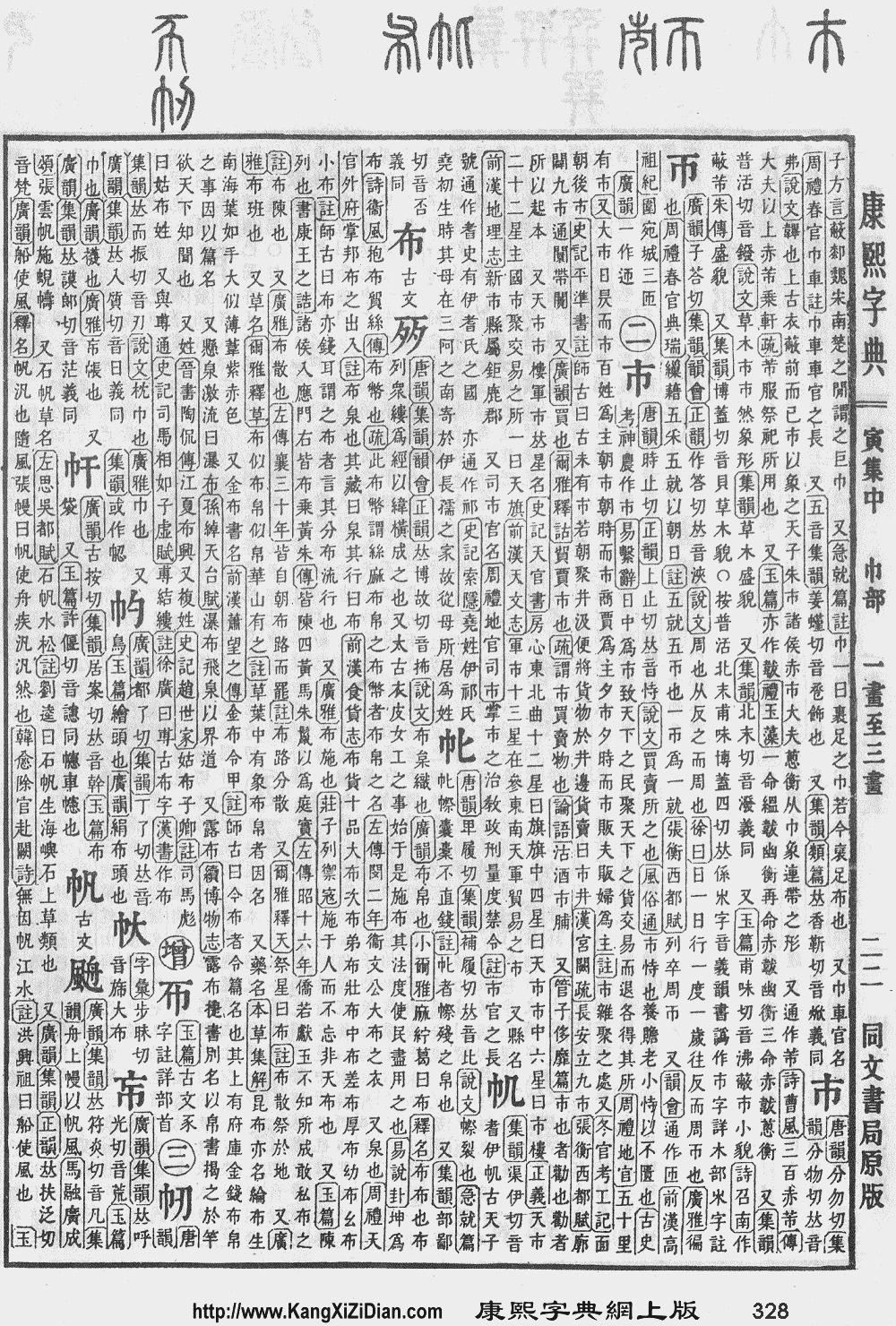
- Kangxi Dictionary: page 328, character 3
- Dai Kanwa Jiten: character 8775
- Dae Jaweon: page 632, character 13
- Hanyu Da Zidian (first edition): volume 1, page 729, character 5
- Unihan data for U+5E02
Chinese
| simp. and trad. |
市 | |
|---|---|---|
Glyph origin
| Historical forms of the character 市 | ||
|---|---|---|
| Western Zhou | Shuowen Jiezi (compiled in Han) | Liushutong (compiled in Ming) |
| Bronze inscriptions | Small seal script | Transcribed ancient scripts |
 |
 |
 |
Oracle bone script and bronze inscriptions: Phono-semantic compound (形聲/形声, OC *djɯʔ) : semantic 兮 (“bustling”) + phonetic 之 (OC *tjɯ).
Etymology
Possibly related to Proto-Tai *z.ɟɯːꟲ (“to buy”), whence Thai ซื้อ (sʉ́ʉ) (Schuessler, 2007).
Pronunciation
Definitions
市
Compounds
- 上市 (shàngshì)
- 三藩市 (Sānfānshì)
- 三街六市
- 不利市
- 予市 (Yǔshì)
- 互市 (hùshì)
- 亥市
- 人肉市場/人肉市场 (rénròu shìchǎng)
- 休市 (xiūshì)
- 假日花市
- 六街三市
- 公超市
- 公開市場/公开市场
- 共同市場/共同市场
- 利市 (lìshì)
- 利市三倍
- 匯市/汇市 (huìshì)
- 千金市骨
- 南門市場/南门市场
- 吳市吹簫/吴市吹箫
- 吹簫吳市/吹箫吴市
- 單一市場/单一市场
- 土市
- 坊市 (fángshì)
- 城市 (chéngshì)
- 城市山林
- 城市病 (chéngshìbìng)
- 城市網絡/城市网络
- 墟市 (xūshì)
- 壟斷市場/垄断市场
- 外匯市場/外汇市场
- 多頭市場/多头市场
- 夜市 (yèshì)
- 夜市場/夜市场
- 大市
- 大發利市/大发利市
- 大陸市場/大陆市场
- 大隱朝市/大隐朝市
- 夯市
- 奔走如市
- 女市
- 姊妹市 (zǐmèishì)
- 室怒市色
- 宮市/宫市
- 寶珠市餅/宝珠市饼
- 小市
- 小市民 (xiǎoshìmín)
- 尚市 (Shàngshì)
- 就業市場/就业市场
- 巴拿馬市/巴拿马市 (Bānámǎ Shì)
- 市不二價/市不二价
- 市不豫價/市不豫价
- 市中心 (shìzhōngxīn)
- 市井 (shìjǐng)
- 市井之人
- 市井之徒 (shìjǐngzhītú)
- 市井之臣
- 市井小人
- 市井小民
- 市井無賴/市井无赖 (shìjǐngwúlài)
- 市人
- 市俗
- 市價/市价 (shìjià)
- 市儈/市侩 (shìkuài)
- 市內/市内 (shìnèi)
- 市公所
- 市區/市区 (shìqū)
- 市地重劃/市地重划
- 市場/市场 (shìchǎng)
- 市場區隔/市场区隔
- 市場深化/市场深化
- 市場調查/市场调查 (shìchǎng diàochá)
- 市容 (shìróng)
- 市尺 (shìchǐ)
- 市平
- 市府 (shìfǔ)
- 市廛
- 市招
- 布拉薩市/布拉萨市
- 市政 (shìzhèng)
- 市政府 (shìzhèngfǔ)
- 市斤 (shìjīn)
- 市曹 (shìcáo)
- 市朝
- 市歡/市欢
- 市民 (shìmín)
- 市民農園/市民农园
- 市況/市况 (shìkuàng)
- 市無二價/市无二价
- 市畝/市亩
- 市立 (shìlì)
- 市肆 (shìsì)
- 市舶司 (shìbósī)
- 市花 (shìhuā)
- 市虎
- 市街
- 市語/市语
- 市議會/市议会 (shìyìhuì)
- 市道 (shìdào)
- 市道交
- 市郊 (shìjiāo)
- 市鎮/市镇 (shìzhèn)
- 市鑰/市钥
- 市長/市长 (shìzhǎng)
- 市隱/市隐
- 市集 (shìjí)
- 市面 (shìmiàn)
- 市食
- 市駿/市骏
- 年市
- 店頭市場/店头市场
- 彌市/弥市 (Míshì)
- 後市/后市
- 應市/应市 (yìngshì)
- 打市語/打市语
- 投杼市虎
- 批發市場/批发市场 (pīfā shìchǎng)
- 招搖過市/招摇过市 (zhāoyáoguòshì)
- 拆放市場/拆放市场
- 抬行市
- 招財利市/招财利市
- 搶市/抢市
- 撐市面/撑市面
- 撻市/挞市
- 攙行奪市/搀行夺市
- 收市 (shōushì)
- 新市 (Xīnshì)
- 新市鎮/新市镇 (xīnshìzhèn)
- 暴屍於市/暴尸于市 (bàoshīyúshì)
- 曉市/晓市
- 書市/书市 (shūshì)
- 曹市 (Cáoshì)
- 𣍐赴市/𫧃赴市 (bē-hù-chhī) (Min Nan)
- 有行無市/有行无市 (yǒuhángwúshì)
- 朝市
- 朝遷市變/朝迁市变
- 本市 (běnshì)
- 東京股市/东京股市
- 東市/东市
- 東市朝衣/东市朝衣
- 果菜市場/果菜市场
- 柴市
- 梅市 (Méishì)
- 棄市/弃市 (qìshì)
- 楊林市/杨林市 (Yánglínshì)
- 榮譽市民/荣誉市民
- 橋市/桥市 (Qiáoshì)
- 橫溝市/横沟市 (Hénggōushì)
- 欺行霸市 (qīhángbàshì)
- 歐市/欧市
- 歸市/归市
- 毛市 (Máoshì)
- 水市 (Shuǐshì)
- 沙市 (Shāshì)
- 河市
- 泡麵市場/泡面市场
- 海上都市
- 海市蜃樓/海市蜃楼 (hǎishìshènlóu)
- 涴市 (Yuānshì)
- 港市 (gǎngshì)
- 滿市街/满市街
- 潛山隱市/潜山隐市
- 燒利市/烧利市
- 燈市/灯市
- 燕市酒人
- 營口市/营口市
- 現貨市場/现货市场
- 瓦市
- 發利市/发利市
- 發市/发市
- 監市履狶/监市履狶
- 直轄市/直辖市 (zhíxiáshì)
- 看淡後市/看淡后市
- 省轄市/省辖市 (shěngxiáshì)
- 科威特市
- 秦市 (Qínshì)
- 簡市/简市 (Jiǎnshì)
- 米市
- 糠市
- 綁赴市曹/绑赴市曹 (bǎngfùshìcáo)
- 網市/网市 (Wǎngshì)
- 縣轄市/县辖市
- 罷市/罢市 (bàshì)
- 羊市 (Yángshì)
- 股市 (gǔshì)
- 股票市場/股票市场 (gǔpiào shìchǎng)
- 胡志明市 (Hú Zhìmíng Shì)
- 臣門如市/臣门如市
- 自治都市
- 自由市
- 自由市場/自由市场 (zìyóu shìchǎng)
- 自貢市/自贡市
- 自選市場/自选市场
- 花市 (huāshì)
- 苗栗市
- 草市
- 茶市 (cháshì)
- 茶馬市/茶马市
- 菜市 (càishì)
- 菜市口 (Càishìkǒu)
- 菜市場/菜市场
- 董市 (Dǒngshì)
- 蚌埠市
- 蜃樓海市/蜃楼海市
- 行市 (hángshì)
- 街市 (jiēshì)
- 街河市 (Jiēhéshì)
- 街頭市尾/街头市尾
- 衛星都市/卫星都市 (wèixīng dūshì)
- 衡陽市/衡阳市
- 襄樊市
- 要市
- 觀光夜市/观光夜市
- 觀者如市/观者如市
- 證券市場/证券市场
- 貨幣市場/货币市场 (huòbì shìchǎng)
- 買市/买市
- 資市/资市 (Zīshì)
- 資本市場/资本市场 (zīběn shìchǎng)
- 超級市場/超级市场 (chāojí shìchǎng)
- 趁頭市/趁头市
- 趕市/赶市
- 跳蚤市場/跳蚤市场
- 躉售市場/趸售市场
- 都市 (dūshì)
- 都市之肺
- 都市化 (dūshìhuà)
- 都市家具
- 都市病
- 都市計畫/都市计画
- 金融市場/金融市场 (jīnróng shìchǎng)
- 銀市/银市
- 錢市/钱市
- 門如市/门如市
- 門市/门市 (ménshì)
- 門庭若市/门庭若市 (méntíngruòshì)
- 開封市/开封市
- 開市/开市 (kāishì)
- 開市大吉/开市大吉
- 院轄市/院辖市
- 隨行就市/随行就市
- 集市 (jíshì)
- 雙核都市/双核都市
- 雙聯市/双联市
- 雲陽市/云阳市
- 零售市場/零售市场
- 面市 (miànshì)
- 韓市呼天/韩市呼天
- 香市
- 鬧市/闹市 (nàoshì)
- 鬼市子
- 魚市/鱼市 (yúshì)
- 鴿市/鸽市
- 黑市 (hēishì)
Japanese
Compounds
Etymology 1
| Kanji in this term |
|---|
| 市 |
| いち Grade: 2 |
| kun’yomi |
From Old Japanese 市 (ichi). Found in the Kojiki of 712 CE.[1]
Noun
市 • (ichi)
Etymology 2
| Kanji in this term |
|---|
| 市 |
| し Grade: 2 |
| on’yomi |
Usage notes
When compounding, similar to 都 (-to), 道 (-dō), 府 (-fu), 県 (-ken) and 町 (chō), makes the accent fall on the 自立拍 (jiritsuhaku, “autonomous mora”) immediately before itself. For example:
- 大阪 (おおさか) + 市 → 大阪市 (おおさかꜜし)
- 佐久 (さく) + 市 → 佐久市 (さくꜜし)
- 仙台 (せꜜんだい) + 市 → 仙台市 (せんだꜜいし; い is a 特殊拍 (tokushuhaku, “special mora”), therefore accentless)
- 五條 (ごꜜじょう) + 市 → 五條市 (ごじょꜜうし; う is a 特殊拍 (tokushuhaku, “special mora”), therefore accentless)
- 日進 (にꜜっしん) + 市 → 日進市 (にっしꜜんし; ん is a 特殊拍 (tokushuhaku, “special mora”), therefore accentless)
References
- Shōgaku Tosho (1988) 国語大辞典(新装版) [Unabridged Dictionary of Japanese (Revised Edition)] (in Japanese), Tōkyō: Shogakukan, →ISBN
- Matsumura, Akira, editor (2006), 大辞林 [Daijirin] (in Japanese), Third edition, Tōkyō: Sanseidō, →ISBN
Korean
Etymology
From Middle Chinese 市 (MC dzyiX).
| Historical readings |
|---|
|
Pronunciation
- (SK Standard/Seoul) IPA(key): [ɕʰi(ː)]
- Phonetic hangul: [시(ː)]
- Though still prescribed in Standard Korean, most speakers in both Koreas no longer distinguish vowel length.