時
| ||||||||
Translingual
| Stroke order | |||
|---|---|---|---|
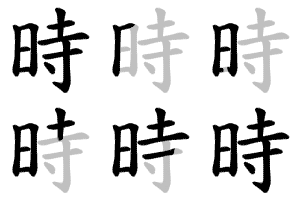 | |||
Han character
| Stroke order | |||
|---|---|---|---|
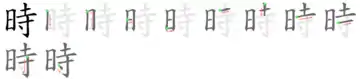 | |||
時 (Kangxi radical 72, 日+6, 10 strokes, cangjie input 日土木戈 (AGDI), four-corner 64041, composition ⿰日寺)
Related characters
References
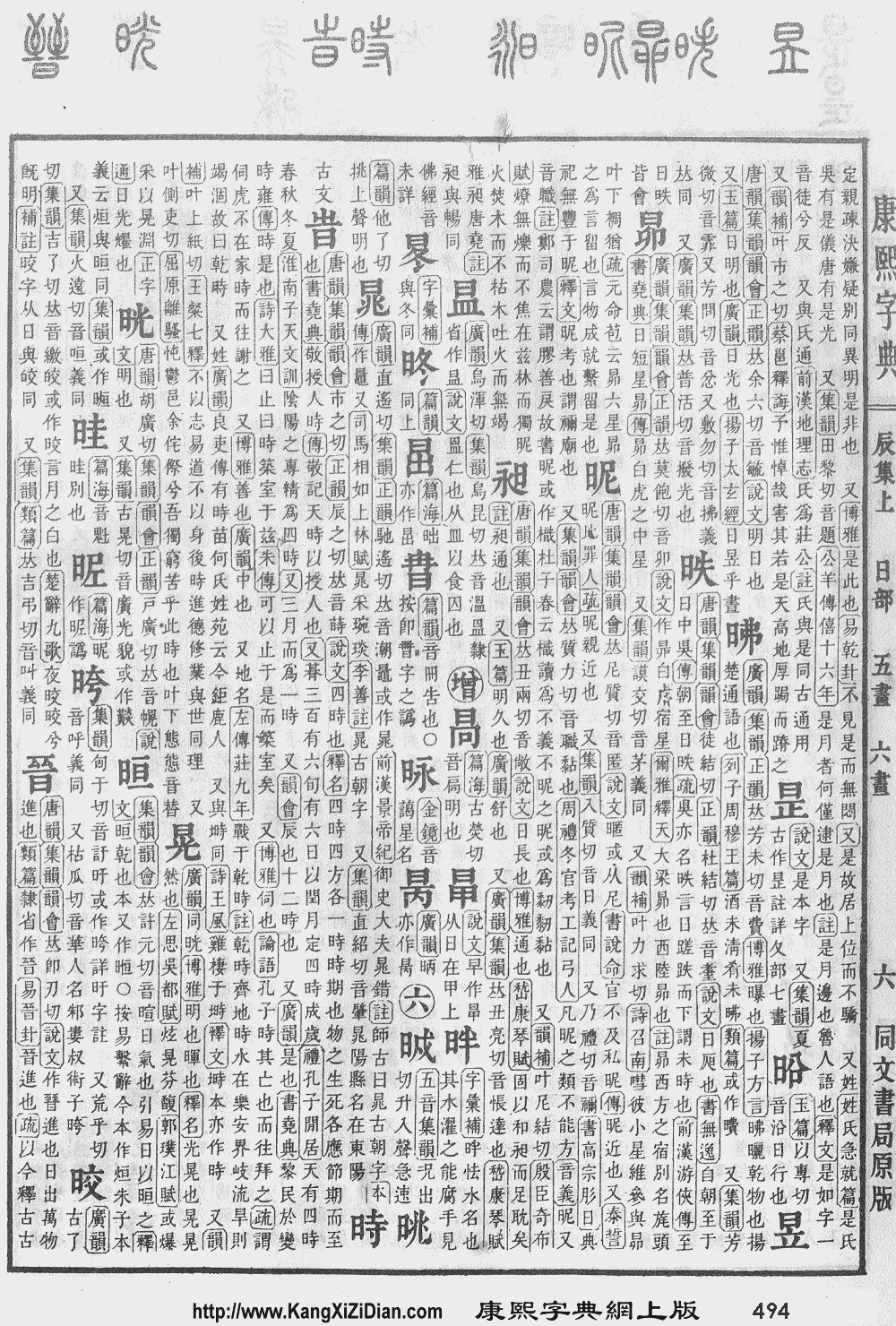
- Kangxi Dictionary: page 494, character 22
- Dai Kanwa Jiten: character 13890
- Dae Jaweon: page 859, character 15
- Hanyu Da Zidian (first edition): volume 2, page 1505, character 5
- Unihan data for U+6642
Chinese
| trad. | 時 | |
|---|---|---|
| simp. | 时 | |
| alternative forms | 旹 时 峕 𣅱 㫑 | |
Glyph origin
| Historical forms of the character 時 | ||||
|---|---|---|---|---|
| Shang | Warring States | Shuowen Jiezi (compiled in Han) | Liushutong (compiled in Ming) | |
| Oracle bone script | Bronze inscriptions | Chu slip and silk script | Small seal script | Transcribed ancient scripts |
 |
 |
 |
 |
 |
Phono-semantic compound (形聲/形声, OC *djɯ) : semantic 日 (“sun; day”) + phonetic 寺 (OC *ljɯs).
In ancient scripts, it had the form 旹, with 之 (OC *tjɯ) as the phonetic instead.
Etymology
From 之 (OC *tjɯ, “to go; to proceed”) + endopassive voicing + endoactive tone B (OC *-ʔ > expected MC 上聲), literally “that which is proceeding” (Schuessler, 2007). The glottal stop was however lost, probably due to confusion with the pronoun sense.
- "this"
- A relatively unemphatic form of 是 (OC *djeʔ, “this”) (Pulleybank, 1995). Cognate with 之 (OC *tjɯ, “this; third-person pronoun”) (Schuessler, 2007).
Pronunciation
Definitions
時
- season
- time (a duration)
- 少之時,血氣未定,戒之在色。 [Classical Chinese, trad.]
- From: The Analects of Confucius, c. 475 – 221 BCE, translated based on James Legge's version
- Shào zhī shí, xuèqì wèi dìng, jiè zhī zài sè. [Pinyin]
- In youth, when the physical powers are not yet settled, he guards against lust.
少之时,血气未定,戒之在色。 [Classical Chinese, simp.]
- time (the passing of time)
- times; years; era
- time; fixed time
- 孺子蚤寢晏起,唯所欲,食無時。 [Classical Chinese, trad.]
- From: The Book of Rites, c. 4th – 2nd century BCE
- Rúzǐ zǎoqǐnyànqǐ, wéi suǒ yù, shí wú shí. [Pinyin]
- The children go earlier to bed, and get up later, according to their pleasure. There is no fixed time for their meals.
孺子蚤寝晏起,唯所欲,食无时。 [Classical Chinese, simp.]
- double-hour
- hour; o’clock (mainly in formal writing)
- opportunity; chance
- 好從事而亟失時,可謂知乎? [Classical Chinese, trad.]
- From: The Analects of Confucius, c. 475 – 221 BCE, translated based on James Legge's version
- Hào cóngshì ér jí shīshí, kě wèi zhī hū? [Pinyin]
- Can he be called wise, who is anxious to be engaged in public employment, and yet is constantly losing the opportunity of being so?
好从事而亟失时,可谓知乎? [Classical Chinese, simp.]
- current; contemporary
- that time
- occasionally; from time to time
- (literary) timely
- (obsolete) beautiful; good
- 爾酒既旨、爾殽既時。 [Pre-Classical Chinese, trad.]
- From: The Classic of Poetry, c. 11th – 7th centuries BCE, translated based on James Legge's version
- Ěr jiǔ jì zhǐ, ěr yáo jì shí. [Pinyin]
- Since your spirits are [so] good, and your viands are all of the season.
尔酒既旨、尔淆既时。 [Pre-Classical Chinese, simp.]
- (obsolete) this
- (grammar) tense
- a surname
Compounds
- 一時/一时 (yīshí)
- 一時一刻/一时一刻 (yīshíyīkè)
- 一時之急/一时之急
- 一時之秀/一时之秀
- 一時之選/一时之选
- 一時之間/一时之间
- 一時半刻/一时半刻 (yīshíbànkè)
- 一時半霎/一时半霎
- 一時糊塗/一时糊涂
- 一時間/一时间 (yīshíjiān)
- 一盞茶時/一盏茶时
- 一霎時/一霎时
- 三不五時/三不五时 (sānbùwǔshí)
- 三時/三时
- 三時教/三时教
- 不一時/不一时
- 不入時宜/不入时宜
- 不合時宜/不合时宜 (bùhéshíyí)
- 不多時/不多时 (bùduōshí)
- 不大合時/不大合时
- 不奪農時/不夺农时
- 丑時/丑时 (chǒushí)
- 不時/不时 (bùshí)
- 不時之需/不时之需 (bùshízhīxū)
- 不時之須/不时之须
- 不時間/不时间
- 不移時/不移时
- 不識時務/不识时务 (bùshíshìwù)
- 不識時變/不识时变
- 不賭時/不赌时
- 不達時務/不达时务
- 不達時宜/不达时宜
- 不違農時/不违农时 (bùwéinóngshí)
- 並時/并时
- 中國時報/中国时报
- 中年時期/中年时期
- 乘時/乘时 (chéngshí)
- 二十四時/二十四时
- 于時
- 亥時/亥时 (hàishí)
- 人時/人时
- 以時/以时
- 他時/他时
- 何時/何时 (héshí)
- 依時/依时
- 俟時/俟时
- 倒數計時/倒数计时
- 偌時/偌时
- 傷時感事/伤时感事
- 先時/先时
- 兒時/儿时 (érshí)
- 入時/入时 (rùshí)
- 八小時制/八小时制
- 共和時代/共和时代
- 共體時艱/共体时艰
- 冰河時期/冰河时期 (bīnghé shíqī)
- 切中時弊/切中时弊
- 分時/分时
- 分時系統/分时系统
- 初時/初时 (chūshí)
- 到時/到时 (dàoshí)
- 剎時/刹时
- 劃時代/划时代 (huàshídài)
- 北京時間/北京时间 (Běijīng Shíjiān)
- 匡俗濟時/匡俗济时
- 匡時/匡时 (kuāngshí)
- 匡時濟世/匡时济世 (kuāngshíjìshì)
- 匡時濟俗/匡时济俗
- 十二時/十二时
- 千歲一時/千岁一时
- 千瓦時/千瓦时
- 千載一時/千载一时
- 午時/午时 (wǔshí)
- 卯時/卯时 (mǎoshí)
- 即時/即时 (jíshí)
- 即時作業/即时作业
- 即時新聞/即时新闻 (jíshí xīnwén)
- 原子時代/原子时代
- 及時/及时 (jíshí)
- 及時行樂/及时行乐 (jíshíxínglè)
- 及時雨/及时雨 (jíshíyǔ)
- 史前時代/史前时代 (shǐqián shídài)
- 古時/古时 (gǔshí)
- 名噪一時/名噪一时
- 吉時/吉时
- 合時/合时 (héshí)
- 向時/向时 (xiàngshí)
- 同時/同时 (tóngshí)
- 合時宜/合时宜 (héshíyí)
- 名滿一時/名满一时
- 名震一時/名震一时
- 君權時代/君权时代
- 命蹇時乖/命蹇时乖
- 哄傳一時/哄传一时
- 四時/四时 (sìshí)
- 四時八節/四时八节
- 因時制宜/因时制宜 (yīnshízhìyí)
- 固時俗/固时俗
- 報時/报时 (bàoshí)
- 夏令時間/夏令时间
- 多時/多时 (duōshí)
- 太平時世/太平时世
- 太平時節/太平时节
- 天文時/天文时
- 天時/天时 (tiānshí)
- 天行時氣/天行时气
- 太陽時/太阳时
- 失時/失时 (shīshí)
- 奉時/奉时
- 好些時/好些时
- 好時好日/好时好日
- 妙絕一時/妙绝一时
- 妙絕時人/妙绝时人
- 威儀孔時/威仪孔时
- 子時/子时 (zǐshí)
- 安培小時/安培小时
- 守時/守时 (shǒushí)
- 定時/定时 (dìngshí)
- 定時器/定时器 (dìngshíqì)
- 定時炸彈/定时炸弹 (dìngshí zhàdàn)
- 定時號誌/定时号志
- 定時鐘/定时钟
- 定時開關/定时开关
- 寅時/寅时 (yínshí)
- 審時定勢/审时定势
- 審時度勢/审时度势 (shěnshíduóshì)
- 小時/小时 (xiǎoshí)
- 小時候/小时候
- 少時/少时
- 尖峰時間/尖峰时间
- 屆時/届时 (jièshí)
- 工時/工时 (gōngshí)
- 巳時/巳时 (sìshí)
- 幕府時代/幕府时代
- 干時
- 平均時差/平均时差
- 平時/平时 (píngshí)
- 年時/年时
- 幾時/几时 (jǐshí)
- 序時帳/序时帐
- 廢時/废时
- 廢時失事/废时失事
- 廢時失業/废时失业
- 彈性工時/弹性工时
- 彌時/弥时
- 往時/往时 (wǎngshí)
- 待時/待时 (dàishí)
- 待時守分/待时守分
- 待時而動/待时而动 (dàishí'érdòng)
- 待時而舉/待时而举
- 得時/得时 (déshí)
- 微時/微时
- 怨世罵時/怨世骂时
- 恁時/恁时
- 悖時鬼/悖时鬼
- 感時/感时
- 憂國憂時/忧国忧时
- 憲政時期/宪政时期
- 應天順時/应天顺时
- 應時/应时 (yìngshí)
- 應時當令/应时当令
- 應時而生/应时而生
- 懷時感物/怀时感物
- 戌時/戌时 (xūshí)
- 或時/或时
- 戰國時代/战国时代 (Zhànguó Shídài)
- 戰時/战时 (zhànshí)
- 按時/按时 (ànshí)
- 授時/授时
- 掌燈時分/掌灯时分
- 搖籃時代/摇篮时代
- 撥亂濟時/拨乱济时
- 啟蒙時代/启蒙时代 (Qǐméng Shídài)
- 敬授人時/敬授人时
- 敬時愛日/敬时爱日
- 斯時/斯时
- 新時代/新时代 (xīnshídài)
- 日據時代/日据时代
- 日治時代/日治时代
- 明時/明时
- 昔時/昔时 (xīshí)
- 是時/是时 (shìshí)
- 時下/时下 (shíxià)
- 時不再來/时不再来
- 時不可失/时不可失 (shí bùkě shī)
- 時不常兒/时不常儿
- 時不我待/时不我待 (shíbùwǒdài)
- 時不我與/时不我与 (shíbùwǒyǔ)
- 時不時/时不时 (shíbùshí)
- 時世/时世 (shíshì)
- 時中/时中
- 時乖/时乖 (shíguāi)
- 時乖命蹇/时乖命蹇
- 時乖運乖/时乖运乖
- 時乖運拙/时乖运拙
- 時乖運蹇/时乖运蹇
- 時事/时事 (shíshì)
- 時事櫥窗/时事橱窗
- 時人/时人 (shírén)
- 時今/时今
- 時令/时令
- 時代/时代 (shídài)
- 時令病/时令病 (shílìngbìng)
- 時代病/时代病
- 時代精神/时代精神 (shídài jīngshén)
- 時代週刊/时代周刊
- 時來暫去/时来暂去
- 時來福湊/时来福凑
- 時來運來/时来运来
- 時來運轉/时来运转 (shíláiyùnzhuǎn)
- 時俗/时俗 (shísú)
- 時值/时值 (shízhí)
- 時候/时候
- 時價/时价
- 時光/时光 (shíguāng)
- 時光不再/时光不再
- 時光虛擲/时光虚掷
- 時光隧道/时光隧道
- 時分/时分
- 時刻/时刻 (shíkè)
- 時刻不忘/时刻不忘
- 時刻表/时刻表 (shíkèbiǎo)
- 時務/时务 (shíwù)
- 時勢/时势 (shíshì)
- 時勢所迫/时势所迫 (shíshìsuǒpò)
- 時區/时区 (shíqū)
- 時命/时命
- 時和年豐/时和年丰
- 時和歲稔/时和岁稔
- 時和歲豐/时和岁丰
- 時夜/时夜 (shíyè)
- 時宜/时宜 (shíyí)
- 時尚/时尚 (shíshàng)
- 時局/时局 (shíjú)
- 時差/时差 (shíchā)
- 時常/时常 (shícháng)
- 時序/时序
- 時弊/时弊 (shíbì)
- 時式/时式 (shíshì)
- 時律/时律
- 時態助詞/时态助词
- 時憲書/时宪书 (shíxiànshū)
- 時或/时或
- 時政/时政 (shízhèng)
- 時效/时效 (shíxiào)
- 時效處理/时效处理
- 時數/时数 (shíshù)
- 時文/时文
- 時新/时新 (shíxīn)
- 時方/时方
- 時日/时日 (shírì)
- 時日無多/时日无多 (shírìwúduō)
- 時時/时时 (shíshí)
- 時時刻刻/时时刻刻 (shíshíkèkè)
- 時會/时会
- 時有所聞/时有所闻
- 時望/时望
- 時望所歸/时望所归
- 時期/时期 (shíqī)
- 時樣/时样
- 時機/时机 (shíjī)
- 時款/时款
- 時段/时段 (shíduàn)
- 時毒/时毒
- 時氣/时气 (shíqì)
- 時流/时流 (shíliú)
- 時潮/时潮 (Shícháo)
- 時異事殊/时异事殊
- 時異勢殊/时异势殊
- 時疫/时疫 (shíyì)
- 時症/时症
- 時病/时病
- 時移世易/时移世易 (shíyíshìyì)
- 時移世異/时移世异
- 時移世變/时移世变
- 時移事改/时移事改
- 時移事遷/时移事迁
- 時移俗易/时移俗易
- 時移勢遷/时移势迁
- 時空/时空 (shíkōng)
- 時窮節乃見/时穷节乃见 (shíqióngjiénǎixiàn)
- 時節/时节 (shíjié)
- 時絀舉贏/时绌举赢
- 時羞/时羞
- 時義/时义
- 時而/时而 (shí'ér)
- 時興/时兴 (shíxīng)
- 時艱/时艰 (shíjiān)
- 時藝/时艺
- 時行/时行 (shíxíng)
- 時行天氣/时行天气
- 時裝/时装 (shízhuāng)
- 時裝表演/时装表演
- 時見/时见
- 時計/时计 (shíjì)
- 時評/时评 (shípíng)
- 時論/时论
- 時調/时调 (shídiào)
- 時談物議/时谈物议
- 時諺/时谚
- 時譽/时誉
- 時變/时变
- 時賢/时贤
- 時輪/时轮
- 時辰/时辰
- 時速/时速 (shísù)
- 時通運泰/时通运泰
- 時遇/时遇
- 時運/时运 (shíyùn)
- 時運不濟/时运不济 (shíyùnbùjì)
- 時運亨通/时运亨通
- 時過境遷/时过境迁 (shíguòjìngqiān)
- 時邁/时迈
- 時針/时针 (shízhēn)
- 時鐘/时钟 (shízhōng)
- 時鐘座/时钟座 (Shízhōngzuò)
- 時間/时间 (shíjiān)
- 時間性/时间性 (shíjiānxìng)
- 時間藝術/时间艺术
- 時間表/时间表 (shíjiānbiǎo)
- 時間詞/时间词 (shíjiāncí)
- 時間醫學/时间医学
- 時間電價/时间电价
- 時限/时限 (shíxiàn)
- 時隱時現/时隐时现
- 時隱時見/时隐时见
- 時雍
- 時雨/时雨 (shíyǔ)
- 時雨春風/时雨春风
- 時髦/时髦 (shímáo)
- 時鮮/时鲜 (shíxiān)
- 時點/时点 (shídiǎn)
- 晡時/晡时
- 晴時多雲/晴时多云
- 暗時/暗时 (am-sṳ̀)
- 暝時/暝时 (mê--sî)
- 暫時/暂时
- 曩時/曩时
- 更待何時/更待何时 (gèng dài héshí)
- 曾幾何時/曾几何时 (céngjǐhéshí)
- 有時/有时 (yǒushí)
- 有時候/有时候
- 未時/未时 (wèishí)
- 枉費時日/枉费时日
- 楊時/杨时
- 標準時/标准时 (biāozhǔnshí)
- 標準時區/标准时区 (biāozhǔn shíqū)
- 標準時間/标准时间 (biāozhǔn shíjiān)
- 權時/权时 (quánshí)
- 此時/此时 (cǐshí)
- 此時此刻/此时此刻 (cǐshícǐkè)
- 歲時/岁时 (suìshí)
- 歲時伏臘/岁时伏腊
- 歷史時代/历史时代
- 歷時/历时 (lìshí)
- 比先時/比先时
- 比利時/比利时 (Bǐlìshí)
- 比時/比时
- 民時/民时
- 決不待時/决不待时
- 沒多時/没多时
- 沒時沒運/没时没运
- 沒時運的/没时运的
- 沒頓飯時/没顿饭时
- 洪荒時代/洪荒时代
- 海權時代/海权时代
- 消滅時效/消灭时效
- 浴蘭時節/浴兰时节
- 準時/准时 (zhǔnshí)
- 漁獵時代/渔猎时代
- 濟世匡時/济世匡时
- 濟時拯世/济时拯世
- 濟時行道/济时行道
- 為時已晚/为时已晚 (wéishíyǐwǎn)
- 為時未晚/为时未晚 (wéishíwèiwǎn)
- 烜赫一時/烜赫一时
- 無一時/无一时
- 無時/无时 (wúshí)
- 無時無刻/无时无刻 (wúshíwúkè)
- 無補於時/无补于时
- 爾時/尔时 (ěrshí)
- 片時/片时 (piànshí)
- 獨步一時/独步一时
- 獨步當時/独步当时
- 理性時代/理性时代
- 現時/现时 (xiànshí)
- 現時報/现时报
- 環球時間/环球时间
- 瓜時/瓜时
- 甘分隨時/甘分随时
- 生不逢時/生不逢时 (shēngbùféngshí)
- 生不遇時/生不遇时
- 生物時鐘/生物时钟
- 生理時鐘/生理时钟
- 申時/申时 (shēnshí)
- 田月桑時/田月桑时
- 異時/异时
- 畫時/画时
- 當時/当时
- 當時得令/当时得令
- 登時/登时 (dēngshí)
- 盛極一時/盛极一时 (shèngjíyīshí)
- 相對時間/相对时间
- 省時/省时
- 相時/相时
- 相時而動/相时而动
- 瞬時速度/瞬时速度 (shùnshí sùdù)
- 知時識務/知时识务
- 石器時代/石器时代 (Shíqì Shídài)
- 神權時代/神权时代
- 萬世一時/万世一时
- 萬代一時/万代一时
- 移時/移时
- 空費時日/空费时日
- 空間時代/空间时代
- 立時/立时 (lìshí)
- 立時三刻/立时三刻
- 立時立刻/立时立刻
- 絕對時間/绝对时间
- 老年時期/老年时期
- 耗時/耗时 (hàoshí)
- 背了時/背了时
- 背時/背时 (bèishí)
- 背時鬼/背时鬼
- 臨時/临时 (línshí)
- 臨時動議/临时动议
- 臨時工/临时工 (línshígōng)
- 臨時政府/临时政府
- 臨時會/临时会
- 臨時條款/临时条款
- 與時俱進/与时俱进 (yǔshíjùjìn)
- 與時消息/与时消息
- 與時浮沉/与时浮沉
- 舊時/旧时 (jiùshí)
- 舊時風味/旧时风味
- 良時/良时
- 良時美景/良时美景
- 荒時暴月/荒时暴月
- 蒿目時艱/蒿目时艰
- 藏器待時/藏器待时
- 行時/行时 (xíngshí)
- 要時/要时
- 計時/计时 (jìshí)
- 計時工資/计时工资 (jìshí gōngzī)
- 訓政時期/训政时期
- 詭時/诡时
- 誤時/误时
- 課時/课时 (kèshí)
- 識時務/识时务 (shíshíwù)
- 識時通變/识时通变
- 識時達務/识时达务
- 識時達變/识时达变
- 變形工時/变形工时
- 豔絕一時/艳绝一时
- 費時/费时 (fèishí)
- 資訊時代/资讯时代
- 賞不踰時/赏不逾时
- 趕時間/赶时间 (gǎn shíjiān)
- 趕時髦|時陣/赶时髦|时阵 (sî-chūn)
- 趨時/趋时 (qūshí)
- 趨時捧勢/趋时捧势
- 身不遇時/身不遇时
- 軍政時期/军政时期
- 較時量力/较时量力
- 輔時/辅时
- 辰時/辰时 (chénshí)
- 農時/农时 (nóngshí)
- 這些時/这些时
- 這時候/这时候
- 逢時按節/逢时按节
- 逢時遇節/逢时遇节
- 通時達變/通时达变
- 運乖時蹇/运乖时蹇
- 運拙時乖/运拙时乖
- 運拙時艱/运拙时艰
- 過時/过时 (guòshí)
- 逾時/逾时 (yúshí)
- 過時不候/过时不候
- 違時絕俗/违时绝俗
- 過渡時期/过渡时期
- 運蹇時乖/运蹇时乖
- 遠古時代/远古时代
- 遜志時敏/逊志时敏
- 遣時/遣时
- 適時/适时 (shìshí)
- 遭時不遇/遭时不遇
- 遵時養晦/遵时养晦
- 遵養時晦/遵养时晦
- 那時/那时 (nàshí)
- 酉時/酉时 (yǒushí)
- 醫時救弊/医时救弊
- 量時度力/量时度力
- 銅器時代/铜器时代
- 鐵器時代/铁器时代 (Tiěqì Shídài)
- 閒時/闲时 (xiánshí)
- 關鍵時刻/关键时刻
- 限時/限时 (xiànshí)
- 限時信/限时信 (xiànshíxìn)
- 限時專送/限时专送
- 隨時/随时 (suíshí)
- 隨時制宜/随时制宜
- 隨時度勢/随时度势
- 隨時隨地/随时随地 (suíshísuídì)
- 雨暘時若/雨旸时若
- 零時/零时
- 霎時/霎时 (shàshí)
- 非常時期/非常时期 (fēicháng shíqī)
- 非時/非时
- 非時之物/非时之物
- 韜晦待時/韬晦待时
- 順天應時/顺天应时
- 順時/顺时
- 順時達變/顺时达变
- 頓時/顿时 (dùnshí)
- 風行一時/风行一时 (fēngxíngyīshí)
- 風雨時若/风雨时若
- 風靡一時/风靡一时 (fēngmǐyīshí)
- 餔時/𫗦时 (būshí)
- 首時/首时
- 黃昏時分/黄昏时分
- 黃梅時候/黄梅时候
- 黃金時代/黄金时代 (huángjīn shídài)
- 黃金時段/黄金时段 (huángjīn shíduàn)
- 黃金時間/黄金时间 (huángjīn shíjiān)
- 黑暗時代/黑暗时代 (Hēi'ànshídài)
References
- “時”, in 漢語多功能字庫 (Multi-function Chinese Character Database), 香港中文大學 (the Chinese University of Hong Kong), 2014–
- Dictionary of Chinese Character Variants (教育部異體字字典), A01794
- “Entry #6027”, in 臺灣閩南語常用詞辭典 [Dictionary of Frequently-Used Taiwan Minnan] (overall work in Mandarin and Hokkien), Ministry of Education, R.O.C., 2023.
Japanese
Readings
Etymology 1
| Kanji in this term |
|---|
| 時 |
| とき Grade: 2 |
| kun’yomi |
| Alternative spelling |
|---|
| 刻 (rare) |
⟨to2ki1⟩ → */təkʲi/ → /toki/
From Old Japanese, from Proto-Japonic *təki. First attested in the Kojiki of 712 CE.[1]
There are various theories regarding the ultimate derivation.
- Possibly a fusion of 常 (toko-, prefix for “always, unchanging”) + い (i, Old Japanese nominal particle).
- However, the sense of “unchanging” does not fit well with the sense of “the passing of time”. Separately, the phonetics of Old Japanese ⟨ki1⟩ → /kʲi/ appear to contraindicate a fusion of /ko/ + /i/, which resulted in ⟨ki2⟩ → /kʷi/ as seen at 木.
- Possibly derived from or otherwise related to 疾し (toshi, “sharp; happening quickly”), cognate with 研ぐ (togu, “to sharpen”).
- However, the historical spelling of toshi was to1(si), as in 那杼佐祁流斗米 (nado1 sake1ru to1 me2, "why do you have knife cutting eyes").[2]
- Possibly related to 年 (toshi, “year”).
Noun
時 • (toki)
- time
- 時の流れ ― toki no nagare ― the flow of time
- 1995 June 1 [1993 February 17], Yōzaburō Kanari with Satō, Fumiya, “オペラ座館殺人事件④ [The Opera House Murder Case ④]”, in 金田一少年の事件簿 (金田一少年の事件簿) [Young Kindaichi Case Files], 14th edition, volume 1 (fiction), Tokyo: Kodansha, →ISBN, page 186:
- 動くな‼じっとしてるんだ‼時間が来れば犯人は自分から名のり出る‼
- Ugoku na‼ Jitto shiteru n da‼ Toki ga kureba hannin wa jibun kara nanorideru‼
- Nobody move‼ Keep still‼ When the time comes, the culprit will show their true identity of their own accord‼
- 動くな‼じっとしてるんだ‼時間が来れば犯人は自分から名のり出る‼
- an event, case, occasion, moment; a specific period in time
- 困った時は私に相談してください。
- Komatta toki wa watashi ni sōdan shite kudasai.
- Please consult with me when troubled (in times of trouble).
- 困った時は私に相談してください。
- a time of something
- (literary) the time during which a narrative takes place
- 時は冬
- toki wa fuyu
- It was winter, […]
- 時は冬
- This term needs a translation to English. Please help out and add a translation, then remove the text
{{rfdef}}.- 時の大統領
- toki no daitōryō
- contemporary president; president at the time
- 時の大統領
- a season
- a tense
Derived terms
Descendants
- → Yami: toki
Further reading
- “時/とき”, in 語源由来辞典 (Gogen Yurai Jiten, “Etymology Derivation Dictionary”) (in Japanese), 2003–2024.
Pronunciation
- IPA(key): [d͡ʑi]
- The pitch accent depends on the entire appended word.
Counter
時 • (-ji)
- hour, o’clock
- 時計を見ると、ちょうど 12時 34分 56秒だった。
- Tokei o miru to, chōdo jūni-ji sanjūyon-pun gojūroku-byō datta.
- When I looked at the clock, it was just 12:34 and 56 seconds.
- 1987 February 20 [1982 November 15], Motoka Murakami, “嵐子再びの巻 [Reunite with Ranko]”, in 六三四の剣 (六三四の剣) [Musashi’s Sword], 18th edition, volume 7 (fiction), Tokyo: Shogakukan, →ISBN, page 154:
- オラ、夏木六三四!6月3日の4時に生まれだから六三四‼まんずよろしく‼
- Ora, Natsuki Musashi! Rokugatsu mikka no yoji ni umareda kara Musashi‼ Manzu yoroshiku‼
- Mah name’s Natsuki Musashi! It’s Musashi because ah was born on June 3 at four o'clock!! Nice to meet y’all!!
- オラ、夏木六三四!6月3日の4時に生まれだから六三四‼まんずよろしく‼
- 時計を見ると、ちょうど 12時 34分 56秒だった。
Derived terms
| Japanese number-counter combinations for 時 (ji) | |||||||||||||
|---|---|---|---|---|---|---|---|---|---|---|---|---|---|
| 0 | 1 | 2 | 3 | 4 | 5 | 6 | 7 | 8 | 9 | 10 | 11 | 12 | What time? |
| 零時 (reiji) | 一時 (ichiji) | 二時 (niji) | 三時 (sanji) | 四時 (yoji) | 五時 (goji) | 六時 (rokuji) | 七時 (shichiji) 七時 (nanaji) |
八時 (hachiji) | 九時 (kuji) | 十時 (jūji) | 十一時 (jūichiji) | 十二時 (jūniji) | 何時 (nanji) |
Derived terms
Etymology 3
| Kanji in this term |
|---|
| 時 |
| さだ Grade: 2 |
| irregular |
Either a sound shift from,[3] or cognate with,[7] Old Japanese しだ (sida → shida, “time, circumstance”).
- ⟨sida⟩ → ⟨sada⟩ → */saⁿda/ → /sada/
- or:
- ⟨sada⟩ → */saⁿda/ → /sada/
Pronunciation
- IPA(key): [sa̠da̠]
Noun
時 • (sada)
- (obsolete) Only used in 時過ぐ (sada sugu): to pass through the prime of life, grow old
References
- “時”, in 日本国語大辞典 (Nihon Kokugo Daijiten, “Nihon Kokugo Daijiten”) (in Japanese), concise edition, Tōkyō: Shogakukan, 2000
- Omodaka, Hisataka (1967) 時代別国語大辞典 上代編 [The dictionary of historical Japanese: Old Japanese] (in Japanese), Tōkyō: Sanseidō, →ISBN, page 493
- Matsumura, Akira, editor (2006), 大辞林 [Daijirin] (in Japanese), Third edition, Tōkyō: Sanseidō, →ISBN
- Kindaichi, Kyōsuke et al., editors (1997), 新明解国語辞典 [Shin Meikai Kokugo Jiten] (in Japanese), Fifth edition, Tōkyō: Sanseidō, →ISBN
- NHK Broadcasting Culture Research Institute, editor (1998), NHK日本語発音アクセント辞典 [NHK Japanese Pronunciation Accent Dictionary] (in Japanese), Tōkyō: NHK Publishing, →ISBN
- Hirayama, Teruo, editor (1960), 全国アクセント辞典 (Zenkoku Akusento Jiten, “Nationwide Accent Dictionary”) (in Japanese), Tōkyō: Tōkyōdō, →ISBN
- “しだ”, in 日本国語大辞典 (Nihon Kokugo Daijiten, “Nihon Kokugo Daijiten”) (in Japanese), concise edition, Tōkyō: Shogakukan, 2000
Korean
Etymology
From Middle Chinese 時 (MC dzyi).
| Historical readings |
|---|
|
Pronunciation
- (SK Standard/Seoul) IPA(key): [ɕʰi]
- Phonetic hangul: [시]
Compounds
Old Japanese
Etymology 1
From Proto-Japonic *təki.
Descendants
- Japanese: 時 (toki)
Etymology 2
Sound shift from しだ (sida, “time, circumstance”).[1]
Descendants
- Japanese: 時 (sada)
References
- Matsumura, Akira, editor (2006), 大辞林 [Daijirin] (in Japanese), Third edition, Tōkyō: Sanseidō, →ISBN