弎
| ||||||||
Translingual
Han character
弎 (Kangxi radical 56, 弋+3, 6 strokes, cangjie input 戈心一一一 (IPMMM), composition ⿹弋三)
Derived characters
- 𪲃
References
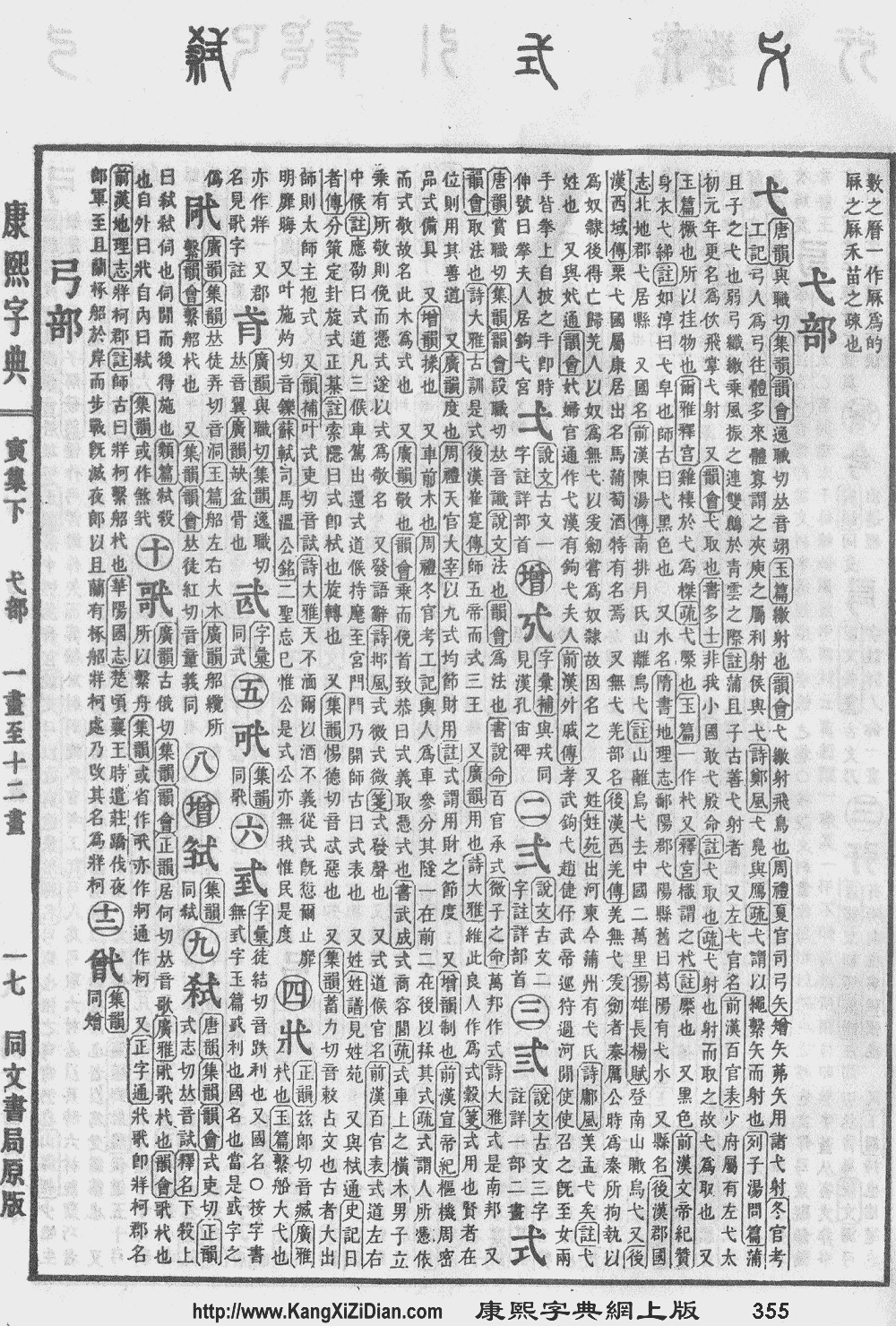
- Kangxi Dictionary: page 355, character 5
- Dai Kanwa Jiten: character 9662
- Dae Jaweon: page 670, character 23
- Hanyu Da Zidian (first edition): volume 1, page 558, character 6
- Unihan data for U+5F0E
Chinese
Glyph origin
| Historical forms of the character 弎 | |
|---|---|
| Shuowen Jiezi (compiled in Han) | Liushutong (compiled in Ming) |
| Ancient script | Transcribed ancient scripts |
 |
 |
Japanese
Vietnamese
References
- Trần (2004).
- Nguyễn (1974).
- Trần (1999).
- Thiều Chửu (1942).
This article is issued from Wiktionary. The text is licensed under Creative Commons - Attribution - Sharealike. Additional terms may apply for the media files.