忽
| ||||||||
Translingual
Han character
忽 (Kangxi radical 61, 心+4, 8 strokes, cangjie input 心竹心 (PHP), four-corner 27332, composition ⿱勿心)
Derived characters
References
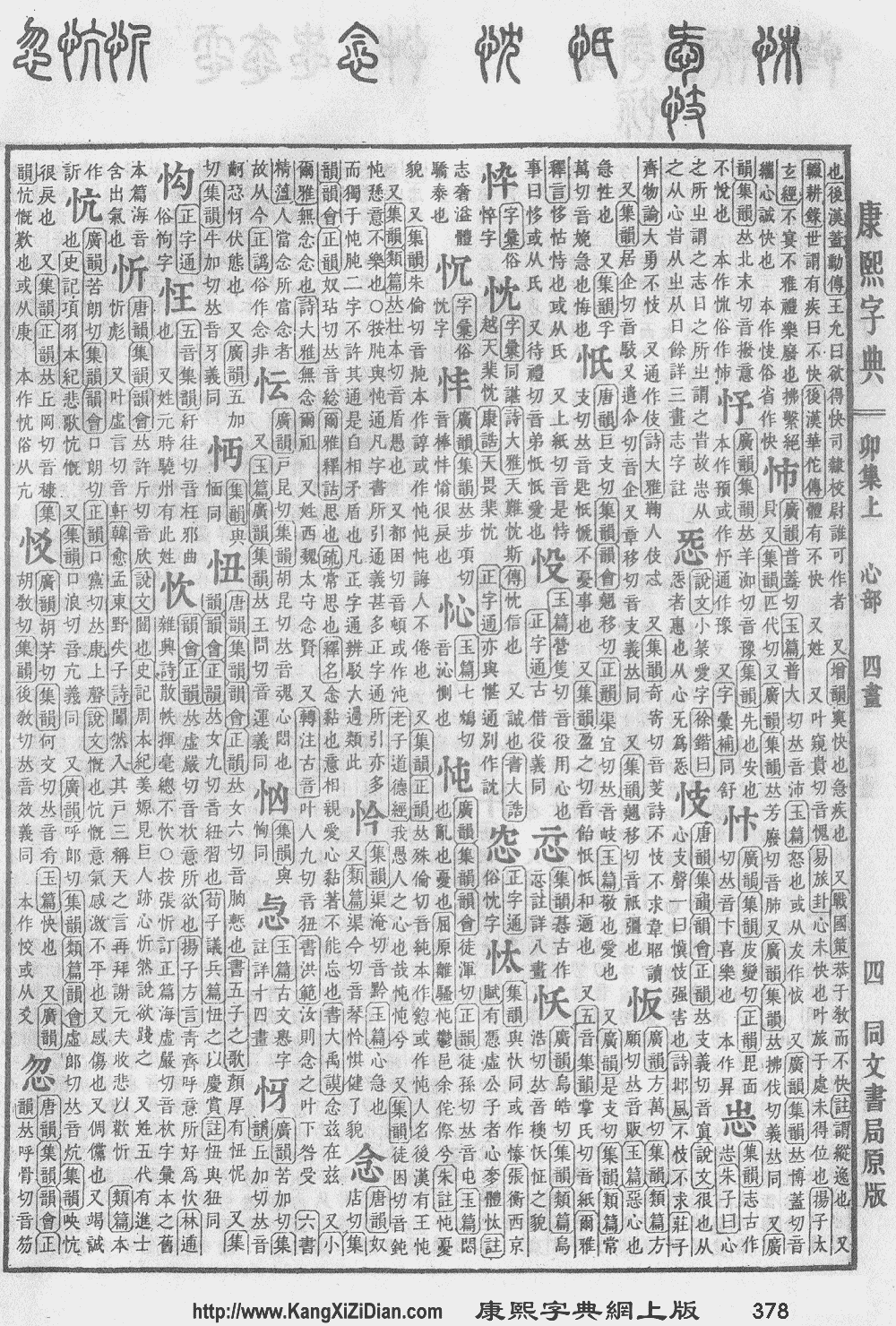
- Kangxi Dictionary: page 378, character 34
- Dai Kanwa Jiten: character 10405
- Dae Jaweon: page 707, character 5
- Hanyu Da Zidian (first edition): volume 4, page 2274, character 9
- Unihan data for U+5FFD
Chinese
Glyph origin
| Historical forms of the character 忽 | |
|---|---|
| Warring States | Shuowen Jiezi (compiled in Han) |
| Bronze inscriptions | Small seal script |
 |
 |
Characters in the same phonetic series (勿) (Zhengzhang, 2003)
Historically and academically considered a phono-semantic compound (形聲/形声, OC *hmɯːd) : phonetic 勿 (OC *mɯd) + semantic 心 (“heart”). Incorrectly colloquially explained as an ideogrammic compound (會意/会意) : 勿 (“not”) + 心 (“heart”).
Pronunciation
Compounds
- 一忽
- 一忽兒/一忽儿
- 倏來忽往/倏来忽往
- 倏忽
- 公忽
- 奄忽
- 岸忽
- 忽上忽下
- 忽冷忽熱/忽冷忽热 (hūlěnghūrè)
- 忽剌八
- 忽剌巴
- 忽喜忽憂/忽喜忽忧
- 忽地 (hūdì)
- 忽微
- 忽忽
- 忽忽不樂/忽忽不乐
- 忽怳 (hūhuǎng)
- 忽恍 (hūhuǎng)
- 忽明忽滅/忽明忽灭
- 忽東忽西/忽东忽西
- 忽然 (hūrán)
- 忽略 (hūlüè)
- 忽的
- 忽視/忽视 (hūshì)
- 忽而 (hū'ér)
- 忽聚忽散
- 忽荒
- 忽見/忽见 (hūjiàn)
- 忽起忽落
- 忽閃/忽闪
- 忽隱忽現/忽隐忽现
- 忽雷 (hūléi)
- 忽高忽低
- 忽魯魯/忽鲁鲁
- 怳忽 (huǎnghū)
- 怠忽
- 怠忽職守/怠忽职守
- 恍忽 (huǎnghū)
- 恍恍忽忽
- 恤近忽遠/恤近忽远
- 悠忽
- 悠悠忽忽
- 暴忽
- 杪忽
- 沒忽的/没忽的
- 玩忽
- 疏忽
- 眇眇忽忽
- 瞻前忽後/瞻前忽后
- 禍生於忽/祸生于忽
- 秒忽
- 簡忽/简忽
- 粗忽
- 罕忽
- 翕忽
- 荒忽
- 行行忽忽
- 行蹤飄忽/行踪飘忽
- 超忽
- 軋忽/轧忽
- 輕忽/轻忽 (qīnghū)
- 迷忽忽
- 這忽兒/这忽儿
- 連朦帶忽/连朦带忽
- 陵忽
- 飄忽/飘忽 (piāohū)
- 飄忽不定/飘忽不定 (piāohūbùdìng)
- 驀忽/蓦忽
- 驀忽間/蓦忽间
- 黑忽忽 (hēihūhū)
References
- “忽”, in 漢語多功能字庫 (Multi-function Chinese Character Database), 香港中文大學 (the Chinese University of Hong Kong), 2014–
Pronunciation
Compounds
- 一岩一忽
- 東一忽西一忽/东一忽西一忽
- 邊忽/边忽
Goguryeo
Etymology
Possibly related to Middle Korean 골〯 (kwǒl) and Middle Korean ᄀᆞ옳 (kòwòlh).[1] A possible Wanderwort; see Proto-Uralic *kota for more.[2]
References
- Lim, Byung-joon (1999) (A) Study on the borrowed writings of the dialect of Koguryo Dynasty in Ancient Korean (MA), Konkuk University
- Vovin, Alexander (2013) “From Koguryo to T'amna”, in Korean Linguistics, volume 15, number 2 (PDF), John Benjamins Publishing Company, , pages 222-240
Japanese
Readings
- On (unclassified): こつ (kotsu)
- Kun: ゆるがせ (yurugase, 忽せ); たちまち (tachimachi, 忽ち)
Korean
Hanja
忽 • (hol) (hangeul 홀)
- This term needs a translation to English. Please help out and add a translation, then remove the text
{{rfdef}}.
Vietnamese
This article is issued from Wiktionary. The text is licensed under Creative Commons - Attribution - Sharealike. Additional terms may apply for the media files.