物
| ||||||||
Translingual
| Stroke order | |||
|---|---|---|---|
 | |||
| Stroke order | |||
|---|---|---|---|
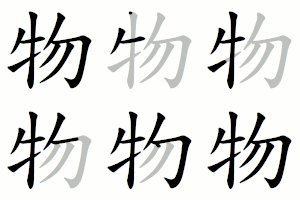 | |||
Han character
物 (Kangxi radical 93, 牛+4, 8 strokes, cangjie input 竹手心竹竹 (HQPHH), four-corner 27520, composition ⿰牜勿)
References
- Kangxi Dictionary: page 699, character 9
- Dai Kanwa Jiten: character 19959
- Dae Jaweon: page 1111, character 9
- Hanyu Da Zidian (first edition): volume 3, page 1805, character 3
- Unihan data for U+7269

Chinese
| simp. and trad. |
物 | |
|---|---|---|
Glyph origin
| Historical forms of the character 物 | |||
|---|---|---|---|
| Shang | Warring States | Shuowen Jiezi (compiled in Han) | Liushutong (compiled in Ming) |
| Oracle bone script | Chu slip and silk script | Small seal script | Transcribed ancient scripts |
 |
 |
 |
 |
Characters in the same phonetic series (勿) (Zhengzhang, 2003)
Phono-semantic compound (形聲/形声, OC *mɯd) : semantic 牛 + phonetic 勿 (OC *mɯd).
Etymology
Compare Proto-Sino-Tibetan *(m/b)rəw (“grain; seed; lineage”) (STEDT), whence Tibetan འབྲུ ('bru, “seed; grain”), Jingpho amyu (ə myú, “kind; sort”), Burmese မျိုး (myui:, “seed”).
Pronunciation
Definitions
物
Compounds
- 一物 (yīwù)
- 下酒物
- 不容物
- 事物 (shìwù)
- 互物
- 人物 (rénwù)
- 人物畫/人物画 (rénwùhuà)
- 什物 (shíwù)
- 代替物
- 作物 (zuòwù)
- 何物
- 低物件
- 係爭物/系争物
- 信物 (xìnwù)
- 俗物 (súwù)
- 傲物 (àowù)
- 公物 (gōngwù)
- 共沸物 (gòngfèiwù)
- 出土物
- 刊物 (kānwù)
- 利物
- 利物浦 (Lìwùpǔ)
- 副食物
- 動植物/动植物 (dòngzhíwù)
- 動物/动物 (dòngwù, “animal”)
- 動物園/动物园 (dòngwùyuán)
- 動物油/动物油 (dòngwùyóu)
- 動物膠/动物胶
- 化合物 (huàhéwù)
- 博物 (bówù)
- 博物學/博物学 (bówùxué)
- 博物志
- 博物院 (bówùyuàn)
- 博物館/博物馆 (bówùguǎn)
- 危險物/危险物
- 原物 (yuánwù)
- 厭物/厌物
- 反物質/反物质 (fǎnwùzhì)
- 可燃物 (kěránwù)
- 古物 (gǔwù)
- 古生物 (gǔshēngwù)
- 名物 (míngwù)
- 吉祥物 (jíxiángwù)
- 含水物
- 品物 (pǐnwù)
- 啥物 (siáⁿ-mi̍h)
- 唯物論/唯物论 (wéiwùlùn)
- 器物 (qìwù)
- 囊中物
- 土物 (tǔwù)
- 地上物
- 填充物 (tiánchōngwù)
- 壺中物/壶中物
- 大人物 (dàrénwù)
- 天物 (tiānwù)
- 失物 (shīwù)
- 奉獻物/奉献物
- 好人物
- 好物 (hǎowù)
- 妖物 (yāowù)
- 妙物
- 官物
- 定物
- 寄生物 (jìshēngwù)
- 實物/实物 (shíwù)
- 寵物/宠物 (chǒngwù)
- 寶物/宝物 (bǎowù)
- 小人物 (xiǎorénwù)
- 尤物 (yóuwù)
- 工作物
- 幣物/币物
- 庶物 (shùwù)
- 廢棄物/废弃物
- 廢物/废物
- 建物 (jiànwù)
- 建築物/建筑物 (jiànzhùwù)
- 役物
- 待物
- 微生物 (wēishēngwù)
- 忘憂物/忘忧物
- 忤物
- 怪物
- 怪物相
- 感物
- 愛物兒/爱物儿
- 應物/应物
- 懸浮物/悬浮物
- 把定物
- 拙物
- 拜物教 (bàiwùjiào)
- 拋物線/抛物线 (pāowùxiàn)
- 排泄物 (páixièwù)
- 接物
- 接物鏡/接物镜
- 故物
- 敷蓋物/敷盖物
- 文物 (wénwù, “cultural relic”)
- 料物
- 新人物
- 方物
- 景物 (jǐngwù)
- 有機物/有机物 (yǒujīwù)
- 服物
- 杯中物 (bēizhōngwù)
- 格物 (géwù)
- 棄物/弃物
- 植物 (zhíwù)
- 植物人 (zhíwùrén)
- 植物園/植物园 (zhíwùyuán)
- 植物學/植物学 (zhíwùxué)
- 植物油 (zhíwùyóu)
- 植物誌/植物志
- 標的物/标的物
- 毒物 (dúwù)
- 比物
- 毛物
- 毛織物/毛织物 (máozhīwù)
- 氟化物 (fúhuàwù)
- 氧化物 (yǎnghuàwù)
- 氫化物/氢化物 (qīnghuàwù)
- 氯化物 (lǜhuàwù)
- 氰化物 (qínghuàwù)
- 氮化物 (dànhuàwù)
- 水合物
- 池中物
- 汙染物/污染物 (wūrǎnwù)
- 沉積物/沉积物 (chénjīwù)
- 法物 (fǎwù)
- 添加物 (tiānjiāwù)
- 混合物 (hùnhéwù)
- 溴化物 (xiùhuàwù)
- 漂流物
- 潑物/泼物
- 濁物/浊物
- 照物兒/照物儿
- 爆炸物 (bàozhàwù)
- 物主 (wùzhǔ)
- 物事 (wùshì)
- 物以類聚/物以类聚 (wùyǐlèijù)
- 物件 (wùjiàn)
- 物候
- 物像 (wùxiàng)
- 物價/物价 (wùjià)
- 物力 (wùlì)
- 物化 (wùhuà)
- 物品 (wùpǐn)
- 物外
- 物役
- 物性 (wùxìng)
- 物情
- 物態/物态 (wùtài)
- 物故
- 物料 (wùliào)
- 物是人非 (wùshìrénfēi)
- 物業/物业 (wùyè)
- 物權/物权
- 物欲 (wùyù)
- 物流 (wùliú)
- 物物
- 物理 (wùlǐ)
- 物理學/物理学 (wùlǐxué)
- 物理量 (wùlǐliàng)
- 物瑪/物玛 (Wùmǎ)
- 物產/物产 (wùchǎn)
- 物種/物种 (wùzhǒng)
- 物競/物竞 (wùjìng)
- 物累
- 物色 (wùsè)
- 物華/物华 (wùhuá)
- 物證/物证 (wùzhèng)
- 物議/物议 (wùyì)
- 物資/物资 (wùzī)
- 物資局/物资局
- 物質/物质 (wùzhì)
- 物鏡/物镜 (wùjìng)
- 物類/物类 (wùlèi)
- 物體/物体 (wùtǐ)
- 獵物/猎物 (lièwù)
- 玩物
- 珍物
- 生物 (shēngwù)
- 生物圈 (shēngwùquān)
- 生物學/生物学 (shēngwùxué)
- 生物戰/生物战
- 生物界
- 生物相 (shēngwùxiāng)
- 生物能 (shēngwùnéng)
- 生物鹼/生物碱 (shēngwùjiǎn)
- 產物/产物 (chǎnwù)
- 異物/异物 (yìwù)
- 痴物
- 發物/发物 (fāwù)
- 白物
- 百物 (bǎiwù)
- 目的物 (mùdìwù)
- 硫化物 (liúhuàwù)
- 碳化物 (tànhuàwù)
- 磷化物
- 礦物/矿物 (kuàngwù)
- 礦物學/矿物学 (kuàngwùxué)
- 礦物油/矿物油
- 礦物質/矿物质 (kuàngwùzhì)
- 神物 (shénwù)
- 祭物 (jìwù)
- 福物
- 禮物/礼物 (lǐwù)
- 萬物/万物 (wànwù)
- 穀物/谷物 (gǔwù)
- 穢物/秽物 (huìwù)
- 節物/节物
- 紀念物/纪念物 (jìniànwù)
- 純物質/纯物质
- 細顆粒物/细颗粒物 (xìkēlìwù)
- 編物/编物 (biānwù)
- 織物/织物 (zhīwù)
- 罕物
- 老厭物/老厌物
- 老廢物/老废物
- 老物
- 聚合物 (jùhéwù)
- 膠體物/胶体物
- 臝物/裸物
- 舊物/旧物 (jiùwù)
- 舶物 (bówù)
- 英物
- 著作物
- 藥物/药物 (yàowù)
- 藥物學/药物学
- 融通物
- 蠢物
- 衍生物 (yǎnshēngwù)
- 衣物 (yīwù)
- 褓中物
- 覈物
- 詠物詩/咏物诗
- 證物/证物 (zhèngwù)
- 護身物/护身物
- 讀物/读物 (dúwù)
- 象物
- 財物/财物 (cáiwù)
- 貨物/货物 (huòwù)
- 貨物稅/货物税
- 買物歷/买物历
- 賤物/贱物
- 購物/购物 (gòuwù)
- 購物袋/购物袋 (gòuwùdài)
- 贓物/赃物 (zāngwù)
- 贓物罪/赃物罪
- 農作物/农作物 (nóngzuòwù)
- 農產物/农产物
- 造物 (zàowù)
- 造物主 (Zàowùzhǔ)
- 造物者 (zàowùzhě)
- 遺物/遗物 (yíwù)
- 醋漬物/醋渍物
- 鎮物/镇物
- 鎮邪物/镇邪物
- 長物/长物
- 阿堵物 (ādǔwù)
- 附屬物/附属物 (fùshǔwù)
- 阿物兒/阿物儿
- 陽物/阳物 (yángwù)
- 障礙物/障碍物 (zhàng'àiwù)
- 雜物/杂物 (záwù)
- 雲物/云物
- 靈物/灵物 (língwù)
- 靈物學/灵物学
- 靜物/静物 (jìngwù)
- 靜物畫/静物画 (jìngwùhuà)
- 韋應物/韦应物
- 顆粒物/颗粒物 (kēlìwù)
- 風物/风物 (fēngwù)
- 食物 (shíwù)
- 食物網/食物网 (shíwùwǎng)
- 食物鏈/食物链 (shíwùliàn)
- 飾物/饰物 (shìwù)
- 體物/体物
- 鬼物
- 鹵化物/卤化物 (lǔhuàwù)
- 齊物論/齐物论
Descendants
References
- “物”, in 漢語多功能字庫 (Multi-function Chinese Character Database), 香港中文大學 (the Chinese University of Hong Kong), 2014–
Japanese
Readings
Compounds
Compounds
Etymology 1
| Kanji in this term |
|---|
| 物 |
| もの Grade: 3 |
| kun’yomi |
⟨mo2no2⟩ → ⟨mono2⟩ → /mono/
From Old Japanese. Attested in the Kojiki. Ultimately from Proto-Japonic *mənə.
Pronunciation
Noun
物 • (mono)
See also
- 事 (koto, “thing”, abstract, intangible)
Suffix
物 or 物 • (-mono)
Prefix
物 • (mono-)
- (non-productive, with adjectives) This term needs a translation to English. Please help out and add a translation, then remove the text
{{rfdef}}.
Etymology 2
/mono/ → /mon/
Shift from mono above.
Etymology 3
| Kanji in this term |
|---|
| 物 |
| ぶつ Grade: 3 |
| on’yomi |
From Middle Chinese 物 (MC mjut). Compare Hokkien 物 (bu̍t).
References
- Matsumura, Akira, editor (2006), 大辞林 [Daijirin] (in Japanese), Third edition, Tōkyō: Sanseidō, →ISBN
Korean
Etymology
From Middle Chinese 物 (MC mjut).
| Historical Readings | ||
|---|---|---|
| Dongguk Jeongun Reading | ||
| Dongguk Jeongun, 1448 | 무ᇙ〮 (Yale: mwúlq) | |
| Middle Korean | ||
| Text | Eumhun | |
| Gloss (hun) | Reading | |
| Hunmong Jahoe, 1527 | 갓 (Yale: kàs) | 믈〮 (Yale: múl) |
Pronunciation
- (SK Standard/Seoul) IPA(key): [muɭ]
- Phonetic hangul: [물]
Compounds
Compounds
- 건물 (建物, geonmul)
- 고물 (古物, gomul)
- 곡물 (穀物, gongmul)
- 광물 (鑛物, gwangmul)
- 괴물 (怪物, goemul)
- 뇌물 (賂物, noemul)
- 대물 (對物, daemul)
- 동물 (動物, dongmul)
- 보물 (寶物, bomul)
- 사물 (事物, samul)
- 생물 (生物, saengmul)
- 선물 (膳物, seonmul)
- 속물 (俗物, songmul)
- 식물 (植物, singmul)
- 오물 (汚物, omul)
- 유물 (遺物, yumul)
- 인물 (人物, inmul)
- 장물 (贓物, jangmul)
- 제물 (祭物, jemul)
- 주물 (鑄物, jumul)
- 물가 (物價, mulga)
- 물건 (物件, mulgeon)
- 물리 (物理, mulli)
- 물질 (物質, muljil)
Kunigami
Pronunciation
- IPA(key): /munuː/
Miyako
Pronunciation
- IPA(key): /munu/
Okinawan
Pronunciation
- IPA(key): /munu/, /muŋ/
Vietnamese
Yaeyama
Pronunciation
- IPA(key): /munu/
Yonaguni
Pronunciation
- IPA(key): /munu/
This article is issued from Wiktionary. The text is licensed under Creative Commons - Attribution - Sharealike. Additional terms may apply for the media files.