悠
| ||||||||
Translingual
Han character
悠 (Kangxi radical 61, 心+7, 11 strokes, cangjie input 人大心 (OKP), four-corner 28334, composition ⿱攸心)
Derived characters
References
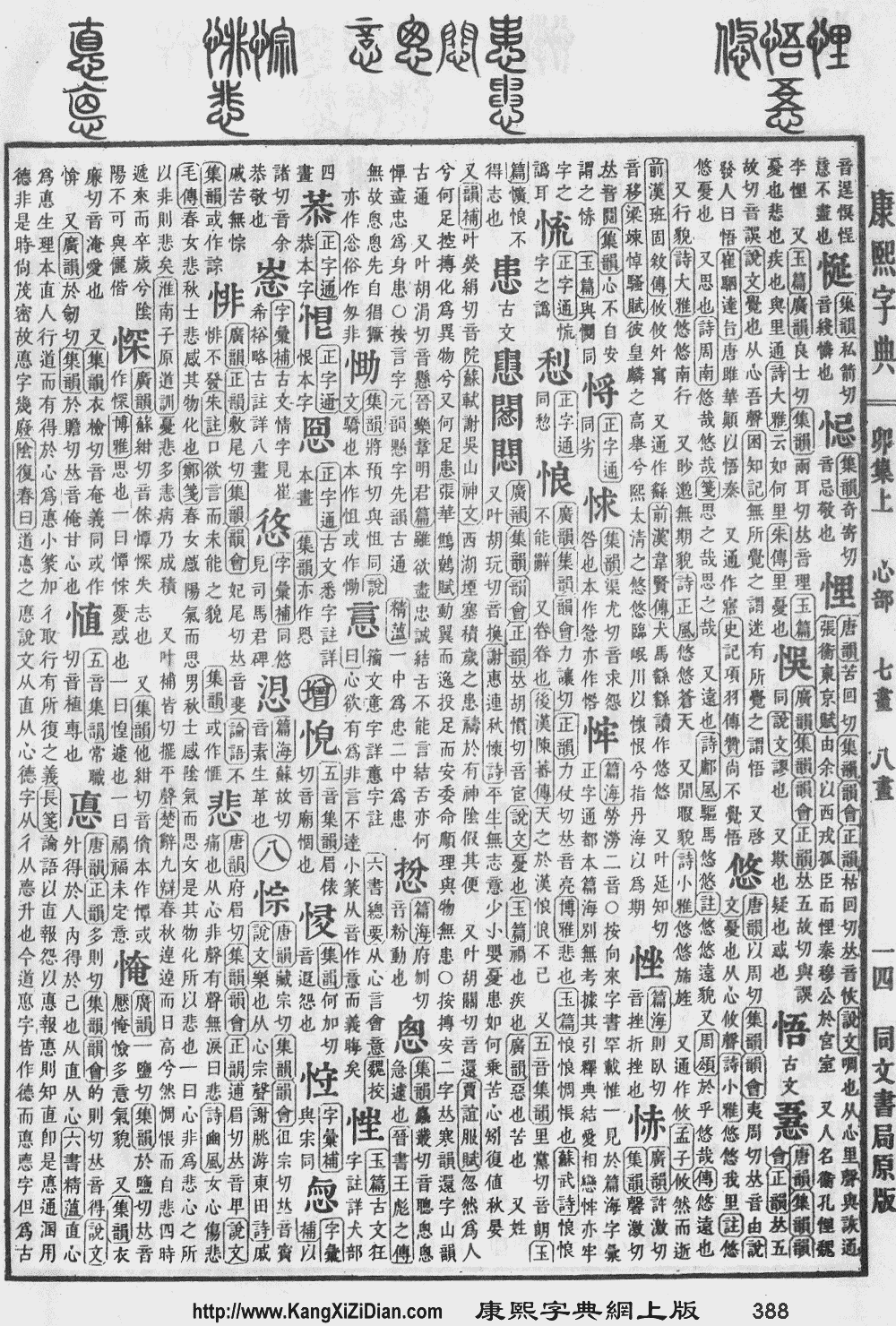
- Kangxi Dictionary: page 388, character 7
- Dai Kanwa Jiten: character 10681
- Dae Jaweon: page 720, character 22
- Hanyu Da Zidian (first edition): volume 4, page 2300, character 15
- Unihan data for U+60A0
Chinese
| trad. | 悠 | |
|---|---|---|
| simp. # | 悠 | |
Glyph origin
Characters in the same phonetic series (攸) (Zhengzhang, 2003)
Phono-semantic compound (形聲/形声, OC *lɯw) : phonetic 攸 (OC *lɯw) + semantic 心 (“heart; mind”)
Etymology
Uncertain. Compare with Burmese ယော်ယမ်း (yauyam:, “to yearn for a distant thing”).
Pronunciation
Definitions
悠
Compounds
References
- “悠”, in 漢語多功能字庫 (Multi-function Chinese Character Database), 香港中文大學 (the Chinese University of Hong Kong), 2014–
Japanese
Readings
Korean
Etymology
(This etymology is missing or incomplete. Please add to it, or discuss it at the Etymology scriptorium. Particularly: “Middle Korean readings, if any”)
Pronunciation
- (SK Standard/Seoul) IPA(key): [ju]
- Phonetic hangul: [유]
Hanja
Wikisource 悠 • (yu) (hangeul 유, revised yu, McCune–Reischauer yu, Yale yu)
- This term needs a translation to English. Please help out and add a translation, then remove the text
{{rfdef}}.
Vietnamese
This article is issued from Wiktionary. The text is licensed under Creative Commons - Attribution - Sharealike. Additional terms may apply for the media files.