攸
| ||||||||
Translingual
Han character
攸 (Kangxi radical 66, 攴+3, 7 strokes, cangjie input 人中人大 (OLOK), four-corner 28240, composition ⿲亻丨攵)
References
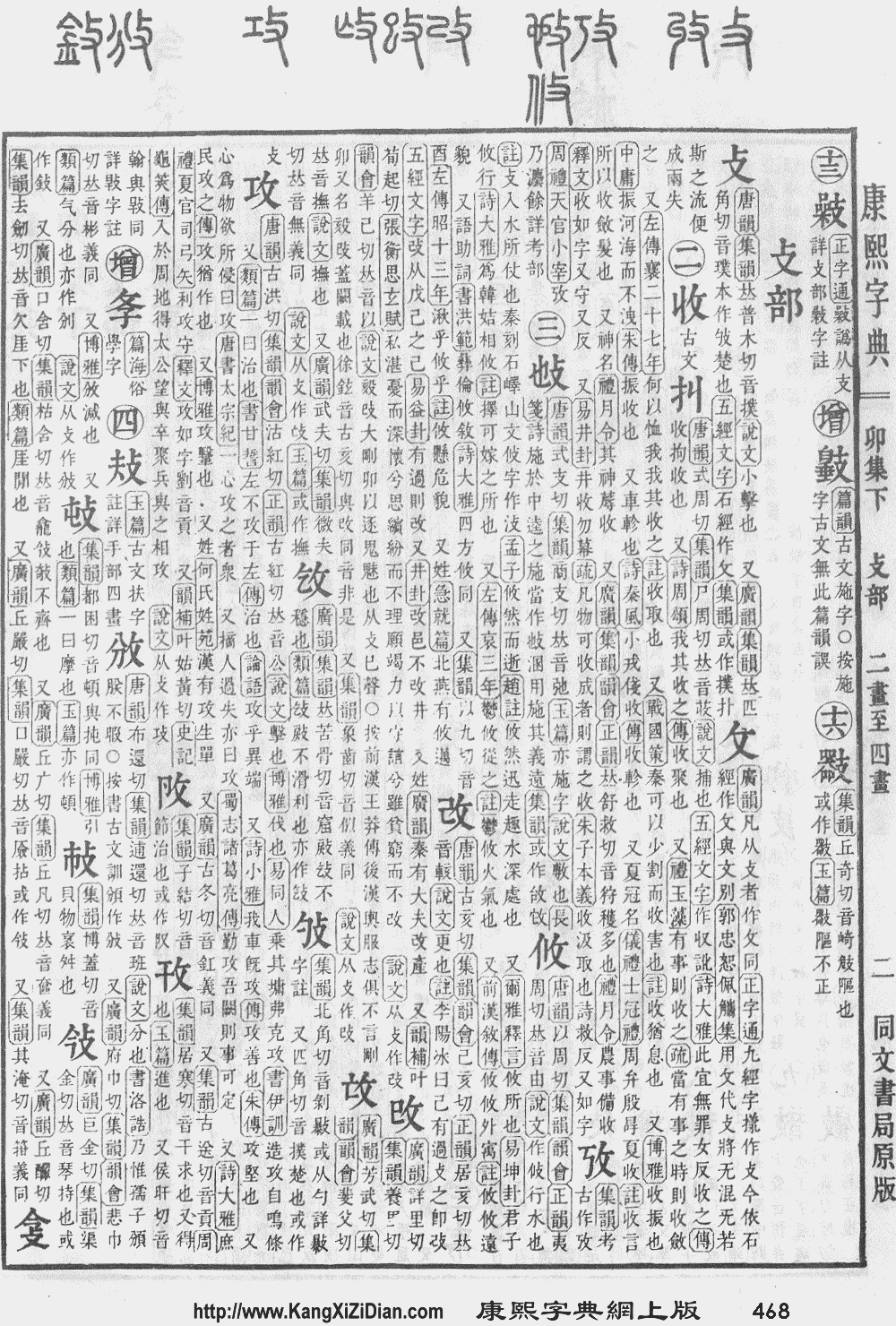
- Kangxi Dictionary: page 468, character 10
- Dai Kanwa Jiten: character 13113
- Dae Jaweon: page 816, character 3
- Hanyu Da Zidian (first edition): volume 1, page 132, character 1
- Unihan data for U+6538
Chinese
| simp. and trad. |
攸 | |
|---|---|---|
Glyph origin
| Historical forms of the character 攸 | ||
|---|---|---|
| Shang | Western Zhou | Shuowen Jiezi (compiled in Han) |
| Oracle bone script | Bronze inscriptions | Small seal script |
 |
 |
 |
Characters in the same phonetic series (攸) (Zhengzhang, 2003)
Ideogrammic compound (會意/会意) : 人 + 攴. Pouring water on a person's back to wash it off and perform a purification ceremony, the original character of 滌.
Pronunciation
Definitions
攸 (literary)
- place; place where
- 王在靈囿,麀鹿攸伏,麀鹿濯濯,白鳥鶴鶴。 [Classical Chinese, trad.]
- From: Mencius, c. 4th century BCE
- Wáng zài líng yòu, yōulù yōu fú, yōulù zhuózhuó, báiniǎo hèhè. [Pinyin]
- The king was in the marvelous menagerie, the place where the does resided. The does were sleek, the white birds were glistening.
王在灵囿,麀鹿攸伏,麀鹿濯濯,白鸟鹤鹤。 [Classical Chinese, simp.]
- what/that which is […] ; indicates the patient of the verb, synonym of 所 (suǒ)
- 四方攸同 ― sìfāng yōu tóng ― all is harmonious in the world
- 性命攸關/性命攸关 ― xìngmìng yōuguān ― a matter of life and death
- 汝不能敬命,予大罰殛之,無有攸赦。 [Classical Chinese, trad.]
- From: The Records of the Grand Historian, by Sima Qian, c. 91 BCE
- Rǔ bù néng jìng mìng, yǔ dà fá jí zhī, wú yǒu yōu shè. [Pinyin]
- Should you be unable to respect my command, I shall carry out the great penalty of execution for it. There will be no forgiveness.
汝不能敬命,予大罚殛之,无有攸赦。 [Classical Chinese, simp.]
- (ideophonic, of water) gently flowing
- 河水攸攸 ― héshuǐ yōuyōu ― the stream ebbs and flows
- (ideophonic) sprinting; quick
- (loanword, Taiwan) yocto- (SI unit prefix)
- Alternative form of 悠 (yōu, “distant”)
Japanese
Korean
Hanja
攸 • (yu) (hangeul 유, revised yu, McCune–Reischauer yu, Yale yu)
- This term needs a translation to English. Please help out and add a translation, then remove the text
{{rfdef}}.
Vietnamese
This article is issued from Wiktionary. The text is licensed under Creative Commons - Attribution - Sharealike. Additional terms may apply for the media files.