惰
See also: 憜
| ||||||||
Translingual
Han character
惰 (Kangxi radical 61, 心+9, 12 strokes, cangjie input 心大一月 (PKMB), four-corner 94027, composition ⿰忄⿱左月)
Derived characters
References
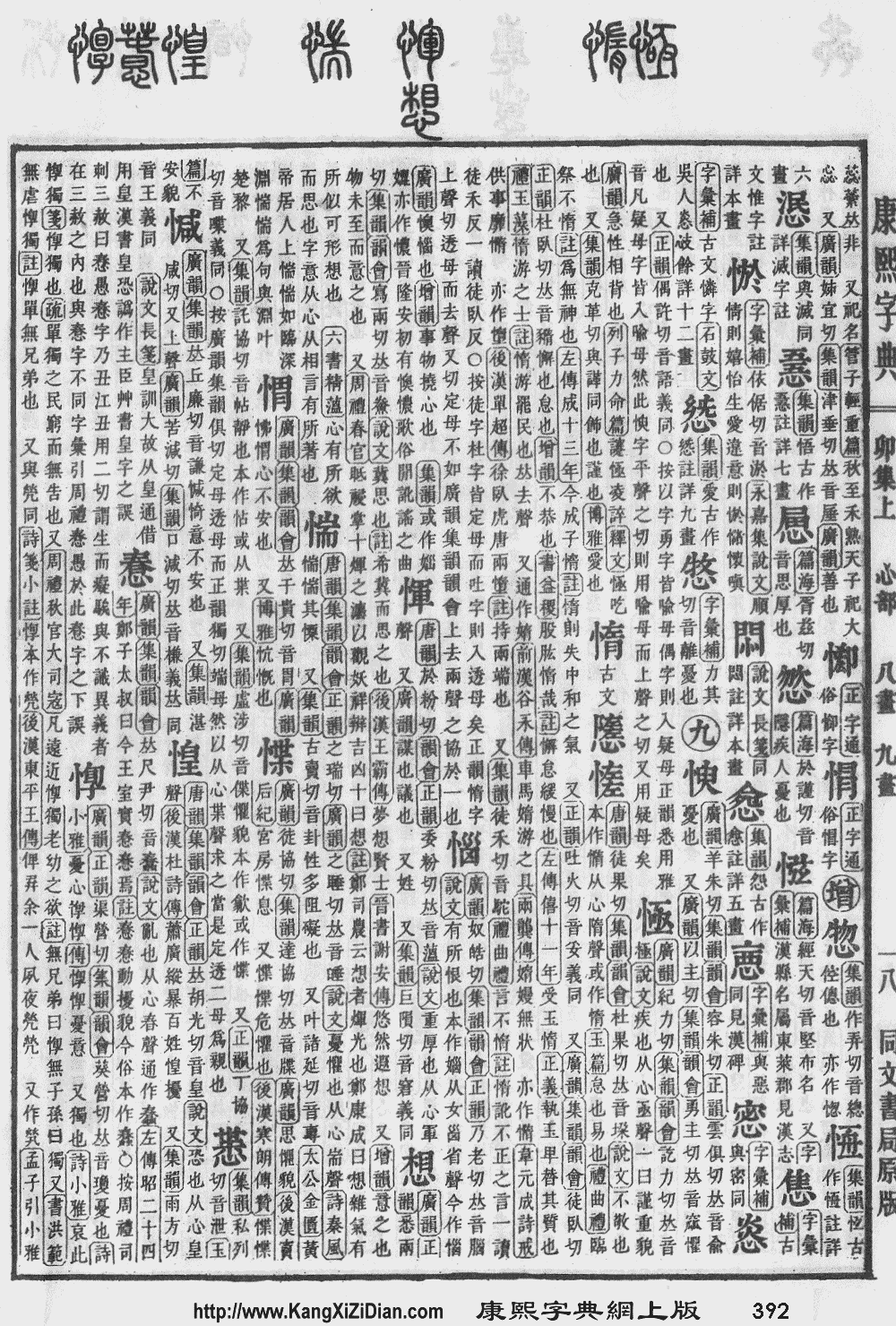
- Kangxi Dictionary: page 392, character 21
- Dai Kanwa Jiten: character 10855
- Dae Jaweon: page 728, character 7
- Hanyu Da Zidian (first edition): volume 4, page 2326, character 11
- Unihan data for U+60F0
Chinese
| trad. | 惰 | |
|---|---|---|
| simp. # | 惰 | |
| alternative forms | 憜 媠 隳 obsolete 墮/堕 | |
Glyph origin
Characters in the same phonetic series (隓) (Zhengzhang, 2003)
Phono-semantic compound (形聲/形声, OC *l'oːlʔ, *l'oːls) : semantic 心 (“heart; mind”) + abbreviated phonetic 隋 (OC *l̥ʰoːlʔ, *l'oːlʔ, *ljol).
Pronunciation
Definitions
惰
- lazy; indolent
- 教不嚴,師之惰。 [Literary Chinese, trad.]
- From: Three Character Classic, circa 13th century CE
- Jiào bù yán, shī zhī duò. [Pinyin]
- To teach, without severity, is the teacher's laziness.
教不严,师之惰。 [Literary Chinese, simp.]
- (obsolete) irreverent; careless
Synonyms
Dialectal synonyms of 懶惰 (“lazy”) [map]
Compounds
- 休惰
- 偏惰
- 偷惰
- 委惰
- 姦惰/奸惰
- 媮惰/偷惰
- 嫚惰
- 嬌惰/娇惰
- 嬾惰/懒惰
- 弛惰
- 怯惰
- 怠惰 (dàiduò)
- 恬惰
- 惰侈
- 惰倪
- 惰偷
- 惰傲
- 惰力
- 惰劣
- 惰君
- 惰壞/惰坏
- 惰失
- 惰奢
- 惰媮/惰偷
- 惰嬾/惰懒
- 惰容
- 惰廢/惰废
- 惰弛
- 惰心
- 惰性 (duòxìng)
- 惰怠
- 惰慵
- 惰慢 (duòmàn)
- 惰懈
- 惰昏
- 惰民
- 惰氣/惰气
- 惰游
- 惰窳
- 惰肆
- 惰行
- 惰貧/惰贫
- 惰農/惰农 (duònóng)
- 惰食
- 惰驕/惰骄
- 慢惰 (mànduò)
- 慵惰
- 懈惰
- 懶惰/懒惰 (lǎnduò)
- 敖惰
- 昏惰
- 曠惰/旷惰
- 浮惰
- 淫惰
- 游惰
- 燕惰
- 猥惰
- 疏惰
- 疑惰
- 矜惰
- 窳惰
- 簡惰/简惰
- 纖惰/纤惰
- 肆惰
- 衰惰
- 解惰
- 貪惰/贪惰
- 貧惰/贫惰
- 輕惰/轻惰
- 退惰
- 逋惰
- 遊惰/游惰
- 違惰/违惰
- 避強擊惰/避强击惰
- 闇惰/暗惰
- 隳惰
- 頑惰/顽惰
- 頹惰/颓惰
- 騃惰/𫘤惰
- 驕惰/骄惰
Japanese
Korean
Hanja
惰 (eum 타 (ta))
- This term needs a translation to English. Please help out and add a translation, then remove the text
{{rfdef}}.
Vietnamese
Han character
惰: Hán Nôm readings: đọa/đoạ, nọa/noạ
- This term needs a translation to English. Please help out and add a translation, then remove the text
{{rfdef}}.
This article is issued from Wiktionary. The text is licensed under Creative Commons - Attribution - Sharealike. Additional terms may apply for the media files.