拱
| ||||||||
Translingual
Han character
拱 (Kangxi radical 64, 手+6, 9 strokes, cangjie input 手廿金 (QTC), four-corner 54081, composition ⿰扌共)
Derived characters
- 𫪵
References
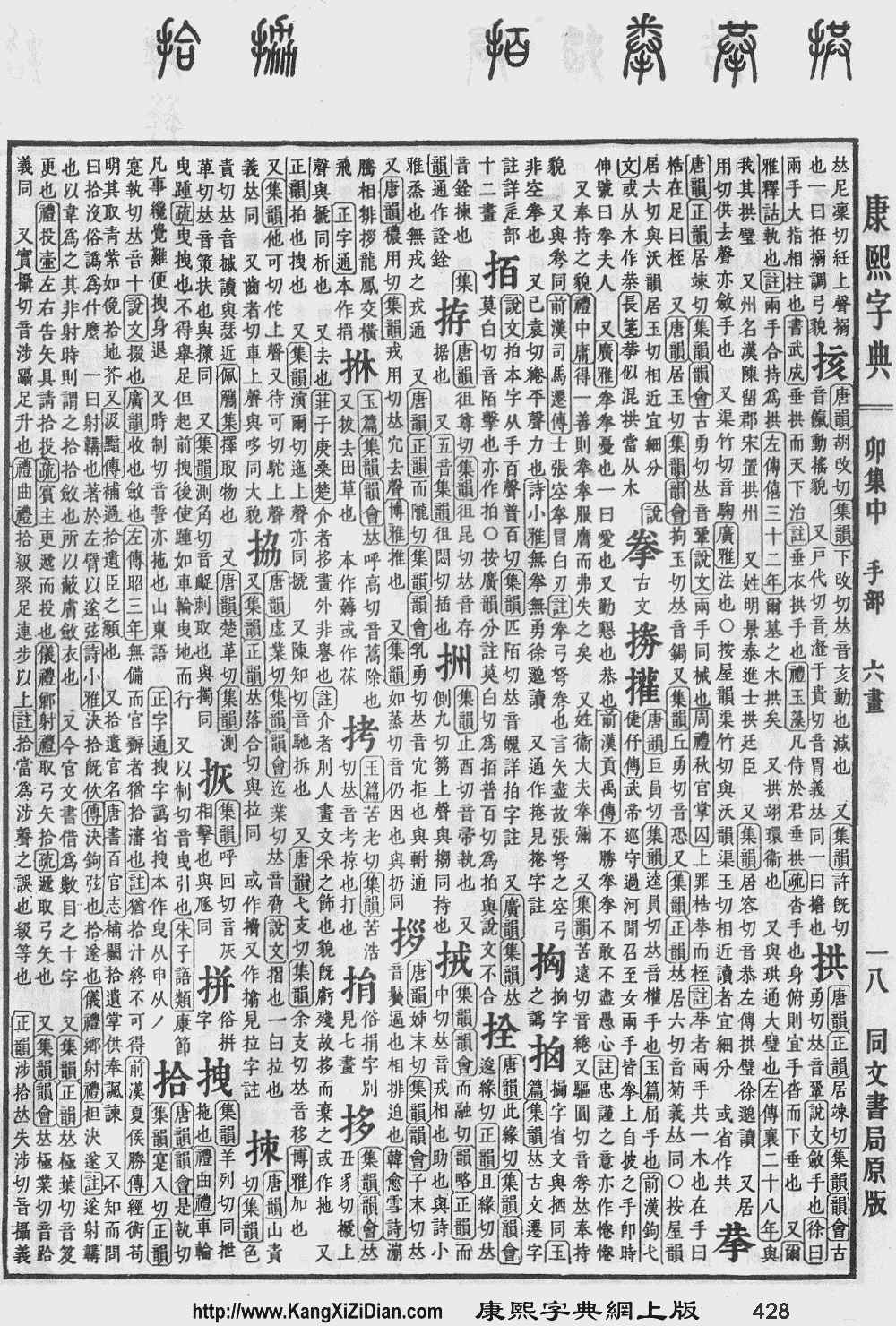
- Kangxi Dictionary: page 428, character 2
- Dai Kanwa Jiten: character 11994
- Dae Jaweon: page 776, character 22
- Hanyu Da Zidian (first edition): volume 3, page 1867, character 2
- Unihan data for U+62F1
Chinese
| simp. and trad. |
拱 | |
|---|---|---|
| alternative forms | 共 廾 | |
Glyph origin
| Historical forms of the character 拱 |
|---|
| Shuowen Jiezi (compiled in Han) |
| Small seal script |
 |
Characters in the same phonetic series (共) (Zhengzhang, 2003)
| Old Chinese | |
|---|---|
| 港 | *kroːŋʔ, *ɡloːŋs |
| 巷 | *ɡroːŋs |
| 衖 | *ɡroːŋs |
| 鬨 | *ɡroːŋs, *ɡloːŋs |
| 烘 | *qʰloːŋ, *qʰloːŋs, *ɡoːŋ, *ɡloːŋs |
| 洪 | *ɡloːŋ |
| 鉷 | *ɡloːŋ |
| 谼 | *ɡloːŋ |
| 葓 | *ɡoːŋ |
| 哄 | *ɡloːŋs |
| 蕻 | *ɡloːŋs |
| 恭 | *kloŋ |
| 供 | *kloŋ, *kloŋs |
| 龔 | *kloŋ |
| 珙 | *kloŋ, *kloŋʔ |
| 共 | *kloŋ, *ɡloŋs |
| 髸 | *kloŋ |
| 拱 | *kloŋʔ |
| 拲 | *kloŋʔ, *kloɡ |
| 蛬 | *kloŋʔ, *ɡloŋ |
| 栱 | *kloŋʔ |
| 輁 | *kloŋʔ, *ɡloŋ |
| 舼 | *ɡloŋ |
| 輂 | *kloɡ |
Ideogrammic compound (會意/会意) and phono-semantic compound (形聲/形声, OC *kloŋʔ) : semantic 扌 (“hand”) + phonetic 共 (OC *kloŋ, *ɡloŋs).
Pronunciation
Definitions
拱
Synonyms
- (to surround):
Compounds
- 垂拱
- 垂拱而治
- 垂頭拱手/垂头拱手
- 墓木已拱 (mùmùyǐgǒng)
- 拱伏
- 拱候
- 拱券
- 拱動/拱动
- 拱北 (Gǒngběi)
- 拱嘴
- 括囊拱手
- 拱廊 (gǒngláng)
- 拱手 (gǒngshǒu)
- 拱手作揖
- 拱手垂裳
- 拱手投降
- 拱手而別/拱手而别
- 拱手而降
- 拱手聽命/拱手听命
- 拱手讓人/拱手让人 (gǒngshǒuràngrén)
- 拱把
- 拱抱
- 拱揖
- 拱服
- 拱木
- 拱極星/拱极星
- 拱橋/拱桥 (gǒngqiáo)
- 拱璧
- 拱立
- 拱肩縮背/拱肩缩背
- 拱花
- 拱衛/拱卫 (gǒngwèi)
- 拱辰
- 拱進/拱进
- 拱門/拱门 (gǒngmén)
- 拱閣/拱阁
- 拱頂/拱顶 (gǒngdǐng)
- 拱默
- 斗拱
- 木拱
- 枓拱
- 洗耳拱聽/洗耳拱听
- 深拱
- 珍同拱璧
- 眾星拱北/众星拱北
- 眾星拱月/众星拱月 (zhòngxīnggǒngyuè)
- 眾星拱辰/众星拱辰
- 端拱
- 舯拱
- 葉拱/叶拱
- 蔫拱
- 連拱壩/连拱坝
- 高拱
- 鳴琴垂拱/鸣琴垂拱
Japanese
Korean
Vietnamese
This article is issued from Wiktionary. The text is licensed under Creative Commons - Attribution - Sharealike. Additional terms may apply for the media files.