包
| ||||||||
 | ||||||||
Translingual
| Stroke order (Chinese) | |||
|---|---|---|---|
 | |||
| Japanese | 包 |
|---|---|
| Simplified | 包 |
| Traditional | 包 |
Alternative forms
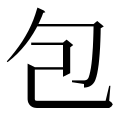
- Note the different Chinese and Japanese forms (a closed loop 巳 in Chinese, center open 己 in Japanese). Note also that the bottom tail extends beyond the right side (in either form).
- A CJK compatibility ideograph exists at
U+2F829for a variant form in Taiwan which is the same as the Japanese form.
Han character
包 (Kangxi radical 20, 勹+3, 5 strokes, cangjie input 心口山 (PRU) or 心尸山 (PSU), four-corner 27712, composition ⿹勹巳(GHTKV) or ⿹勹己(J or U+2F829))
Derived characters
Further reading
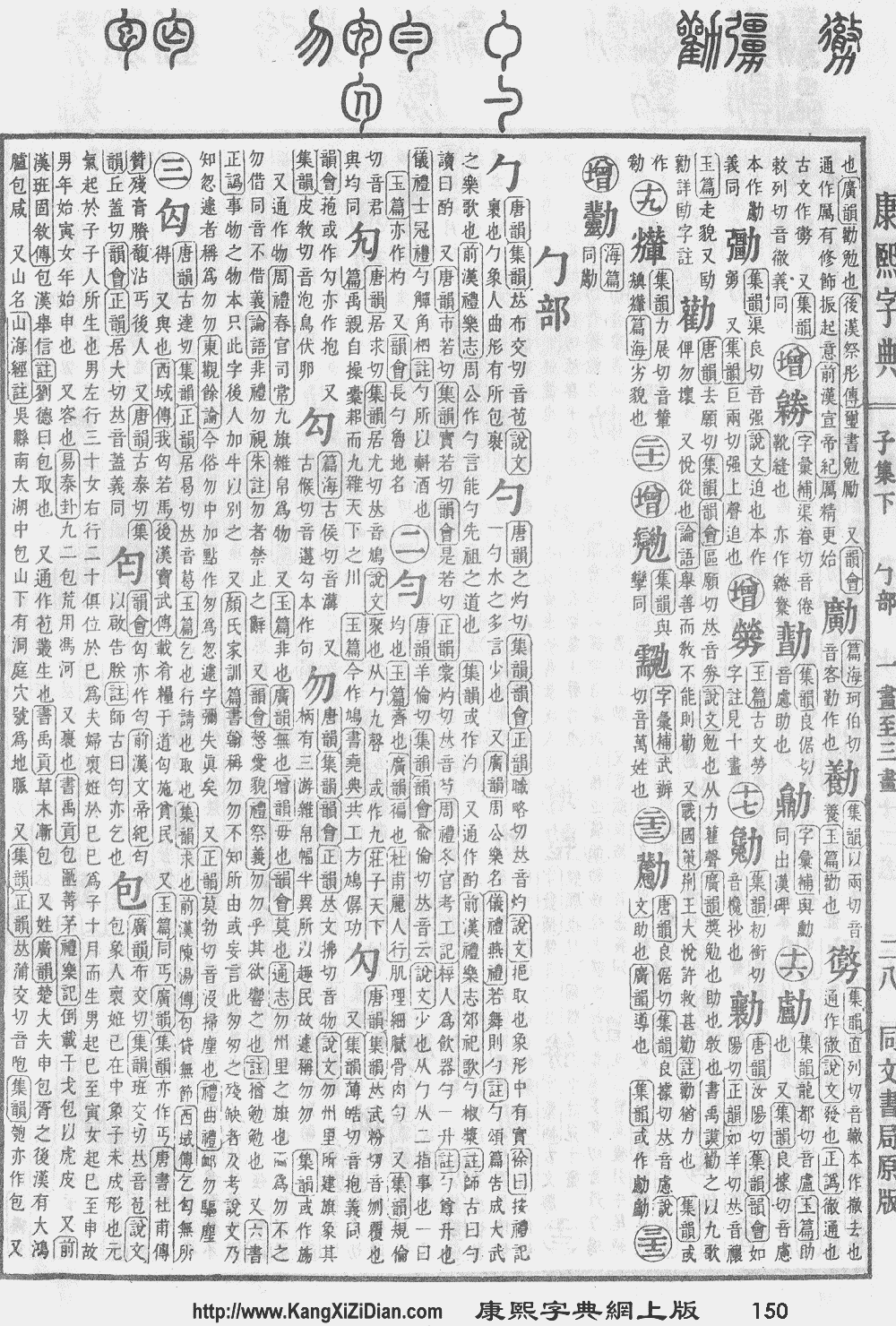
- Kangxi Dictionary: page 150, character 27
- Dai Kanwa Jiten: character 2506
- Dae Jaweon: page 340, character 2
- Hanyu Da Zidian (first edition): volume 1, page 257, character 6
- Unihan data for U+5305
- Unihan data for U+2F829
Chinese
| simp. and trad. |
包 | |
|---|---|---|
| alternative forms | 勹 苞 𮎛 | |
Glyph origin
| Historical forms of the character 包 | ||
|---|---|---|
| Warring States | Shuowen Jiezi (compiled in Han) | Liushutong (compiled in Ming) |
| Qin slip script | Small seal script | Transcribed ancient scripts |
 |
 |
 |
Characters in the same phonetic series (勹) (Zhengzhang, 2003)
| Old Chinese | |
|---|---|
| 袍 | *buː |
| 袌 | *buː, *buːs |
| 軳 | *buː |
| 抱 | *buːʔ |
| 勽 | *buːs, *mɯnʔ |
| 菢 | *buːs |
| 勹 | *pruː |
| 包 | *pruː |
| 胞 | *pruː, *pʰruː |
| 苞 | *pruː |
| 枹 | *pruː, *bu, *bu |
| 飽 | *pruːʔ |
| 泡 | *pʰruː, *m̥ʰruːs, *bruː |
| 炮 | *pʰruːs, *bruː |
| 皰 | *pʰruːs, *bruːs |
| 疱 | *pʰruːs, *bruːs |
| 跑 | *bruː, *bruːɡ |
| 咆 | *bruː |
| 庖 | *bruː |
| 匏 | *bruː |
| 刨 | *bruː |
| 狍 | *bruː |
| 炰 | *bruː |
| 鉋 | *bruː, *bruːs |
| 瓟 | *bruː, *bruːɡ |
| 颮 | *bruː, *pʰruːɡ |
| 鞄 | *bruː, *bruːʔ, *bruːs, *pʰruːɡ |
| 鮑 | *bruːʔ |
| 骲 | *bruːʔ, *bruːs, *bruːɡ, *pʰoːɡ |
| 玸 | *bu |
| 雹 | *bruːɡ |
| 窇 | *bruːɡ |
Pictogram (象形) – a fetus (巳 (sì)) in the womb (勹), or a swaddled baby. Shuowen gives both interpretations.
Pronunciation 1
Definitions
包
- to wrap up; to enwrap; to bundle up
- to include; to encompass
- to cover; to place under cover
- to assure; to ensure; to guarantee
- to reserve or dedicate for a specific purpose
- to make a wrapped item
- to surround
- (Malaysia, Singapore, slang) Short for 打包 (dǎbāo, “to take away (food)”).
- bundle; bunch
- parcel; package
- (software) package
- 包管理器 ― bāoguǎnlǐqì ― package manager
- bag; sack
- bump; swelling
- yurt
- (food) baozi
- 叉燒包/叉烧包 ― chāshāobāo ― char siu bao
- 小籠包/小笼包 ― xiǎolóngbāo ― xiaolongbao
- (food) bun; bread (any small baked good)
- Classifier for packs or bags.
- a surname
Synonyms
- (to wrap up):
- (to include):
- (to assure):
- 保 (bǎo) (literary, or in compounds)
- 保準/保准 (bǎozhǔn) (colloquial)
- 保穩/保稳 (Xiamen Hokkien, Zhangzhou Hokkien)
- 保證/保证 (bǎozhèng)
- 保障 (bǎozhàng)
- 保險/保险 (bǎoxiǎn)
- 保領/保领 (Hokkien)
- 包保 (bāobǎo)
- 包管 (bāoguǎn) (colloquial)
- 包領/包领 (Xiamen Hokkien, Taiwanese Hokkien)
- 擔保/担保 (dānbǎo)
- 確保/确保 (quèbǎo)
- 管 (guǎn)
- 管保 (guǎnbǎo) (colloquial)
- 管教 (guǎnjiào)
- (bread):
Dialectal synonyms of 麵包 (“bread”) [map]
- (baozi):
Dialectal synonyms of 包子 (“steamed bun (with filling)”) [map]
Compounds
- 一手包攬/一手包揽
- 一手包辦/一手包办 (yīshǒubāobàn)
- 一攬包收/一揽包收
- 上腰包
- 丟包術/丢包术
- 倒包
- 倒包錢/倒包钱
- 做倒包
- 傘包/伞包
- 公事包 (gōngshìbāo)
- 兼容并包
- 刈包
- 分包 (fēnbāo)
- 利樂包/利乐包 (lìlèbāo)
- 割包
- 包世臣
- 包伙 (bāohuǒ)
- 包元兒/包元儿
- 包兒/包儿 (bāor)
- 包公 (bāogōng)
- 包公案
- 包准
- 包占
- 包取
- 包含 (bāohán)
- 包商
- 包單/包单
- 包囊
- 包圍/包围 (bāowéi)
- 包圓兒/包圆儿 (bāoyuánr)
- 包場/包场 (bāochǎng)
- 包妓
- 包姆
- 包姆加登
- 包子 (bāozi, “baozi”)
- 包孕 (bāoyùn)
- 包孕句
- 包字頭/包字头 (bāozìtóu)
- 包客
- 包容 (bāoróng)
- 包山
- 包工 (bāogōng)
- 包工連鎖/包工连锁
- 包庇
- 包廂/包厢 (bāoxiāng)
- 包彈/包弹
- 包待制
- 包心菜 (bāoxīncài)
- 包打聽/包打听 (bāodǎtīng)
- 包抄 (bāochāo)
- 包括 (bāokuò)
- 包拯
- 包探 (bāotàn)
- 包換/包换
- 包攬/包揽 (bāolǎn)
- 包攬詞訟/包揽词讼 (bāolǎn císòng)
- 包攬閒事/包揽闲事
- 包晶反應/包晶反应
- 包月 (bāoyuè)
- 包析反應/包析反应
- 包機/包机 (bāojī)
- 包檔/包档
- 包浩斯
- 包涵 (bāohán)
- 包涵兒/包涵儿
- 包漿/包浆 (bāojiāng)
- 包焦尼
- 包爾德樂/包尔德乐
- 包牙
- 包班制
- 包用
- 包皮 (bāopí)
- 包票 (bāopiào)
- 包租 (bāozū)
- 包種茶/包种茶 (bāozhòngchá)
- 包穀/包谷 (bāogǔ)
- 包管 (bāoguǎn)
- 包籠/包笼
- 包米 (bāomǐ)
- 包米棒子
- 包紮/包扎
- 包羅/包罗 (bāoluó)
- 包羅萬象/包罗万象 (bāoluó-wànxiàng)
- 包羞忍恥/包羞忍耻
- 包背裝/包背装
- 包腳/包脚 (bāojiǎo)
- 包膜
- 包舉/包举 (bāojǔ)
- 包船
- 包茅
- 包荒
- 包莊/包庄
- 包莖/包茎
- 包葫蘆頭/包葫芦头
- 包藏 (bāocáng)
- 包藏禍心/包藏祸心 (bāocáng-huòxīn)
- 包融
- 包衣 (bāoyī)
- 包袱 (bāofu)
- 包袱底兒/包袱底儿 (bāofudǐr)
- 包裝/包装 (bāozhuāng)
- 包裝水/包装水
- 包裝紙/包装纸 (bāozhuāngzhǐ)
- 包裝設計/包装设计
- 包裹 (bāoguǒ, “package”)
- 包裹保險/包裹保险
- 包裹表決/包裹表决
- 包谷 (bāogǔ)
- 包谷花
- 包賠/包赔 (bāopéi)
- 包身工 (bāoshēngōng)
- 包車/包车 (bāochē)
- 包辦/包办 (bāobàn)
- 包通
- 包遵彭
- 包金 (bāojīn)
- 包銀/包银 (bāoyín)
- 包銷/包销 (bāoxiāo)
- 包青天 (Bāoqīngtiān)
- 包頭/包头 (bāotóu)
- 包頭市/包头市
- 包頭的/包头的
- 包頭縣/包头县
- 包飯/包饭 (bāofàn)
- 包髻
- 包髻團衫/包髻团衫
- 包龍圖/包龙图
- 半包兒/半包儿
- 卸包袱
- 叉燒包/叉烧包 (chāshāobāo)
- 受氣包/受气包 (shòuqìbāo)
- 土包 (tǔbāo)
- 土包子 (tǔbāozi)
- 壘包/垒包
- 外包 (wàibāo)
- 大包小包 (dàbāoxiǎobāo)
- 大度包容
- 套包
- 如假包換/如假包换 (rújiǎbāohuàn)
- 存包處/存包处
- 封包 (fēngbāo)
- 小包 (xiǎobāo)
- 小籠包/小笼包 (xiǎolóngbāo)
- 并包
- 床包 (chuángbāo)
- 彈包/弹包
- 心包絡/心包络 (xīnbāoluò)
- 急救包 (jíjiùbāo)
- 懶人包/懒人包 (lǎnrénbāo)
- 戲包袱/戏包袱
- 手提包 (shǒutíbāo)
- 打包 (dǎbāo)
- 打包票 (dǎ bāopiào)
- 承包 (chéngbāo)
- 抖包
- 承包商 (chéngbāoshāng)
- 挑包策馬/挑包策马
- 捆包 (“bale”)
- 掉包
- 捲包/卷包
- 掏腰包 (tāo yāobāo)
- 提包 (tíbāo)
- 搭包
- 搠包兒/搠包儿
- 摟包兒/搂包儿
- 摟包兒匠/搂包儿匠
- 擣包/捣包
- 攮包
- 放包袱
- 敖包 (áobāo)
- 旅行包
- 書包/书包 (shūbāo, “backpack”)
- 月亮包 (Yuèliàngbāo)
- 歸裡包堆/归里包堆
- 毛包
- 氈包/毡包
- 氣包子/气包子
- 沙包 (shābāo)
- 沒包彈/没包弹
- 洋包子
- 湯包/汤包 (tāngbāo)
- 潑包婁/泼包娄
- 潛包禍謀/潜包祸谋
- 烤麵包機/烤面包机 (kǎomiànbāojī)
- 無所不包/无所不包 (wúsuǒbùbāo)
- 煙合包/烟合包
- 煙袋荷包/烟袋荷包
- 燒包/烧包 (shāobāo)
- 申包胥
- 病包兒/病包儿 (bìngbāor)
- 發包/发包 (fābāo)
- 皮包 (píbāo)
- 皮包骨 (píbāogǔ)
- 真空包裝/真空包装 (zhēnkōng bāozhuāng)
- 石包城 (Shíbāochéng)
- 破包簍/破包篓
- 破酥包
- 萬象包羅/万象包罗
- 空包彈/空包弹 (kōngbāodàn)
- 管包
- 粉湯包子/粉汤包子
- 紅包/红包 (hóngbāo)
- 紅包場/红包场 (hóngbāochǎng)
- 紙包/纸包
- 紗包線/纱包线 (shābāoxiàn)
- 絲包線/丝包线
- 絞包針/绞包针
- 緊包程/紧包程
- 總包寄遞/总包寄递
- 繡荷包/绣荷包
- 羅裙包土/罗裙包土
- 老包
- 肉包子 (ròubāozi)
- 肚包
- 背包 (bēibāo)
- 腰包 (yāobāo)
- 膿包/脓包 (nóngbāo)
- 膿包貨/脓包货
- 膽大包天/胆大包天
- 自掏腰包 (zì tāo yāobāo)
- 航空包裹
- 色膽包天/色胆包天
- 茶包 (chábāo)
- 草包 (cǎobāo)
- 荷包 (hébāo)
- 荷包蛋 (hébāodàn)
- 菜包子 (càibāozi)
- 蒲包兒/蒲包儿
- 蒙古包 (měnggǔbāo)
- 藥包/药包
- 衣包 (yībāo)
- 褡包
- 調包/调包 (diàobāo)
- 跟包
- 軟包裝/软包装
- 軟膿包/软脓包
- 轉包/转包 (zhuǎnbāo)
- 遞包袱/递包袱
- 郵包/邮包 (yóubāo)
- 鋁箔包/铝箔包
- 錢包/钱包 (qiánbāo)
- 鑲金包銀/镶金包银
- 門包/门包
- 閻羅包老/阎罗包老
- 隨身包/随身包
- 雙包/双包
- 雞包仔/鸡包仔 (jībāozǎi)
- 電子錢包/电子钱包
- 香包 (xiāngbāo)
- 香荷包
- 騷包/骚包 (sāobāo)
- 鬆蛋包/松蛋包
- 麵包/面包 (miànbāo, “bread”)
- 麵包樹/面包树 (miànbāoshù)
- 麵包車/面包车 (miànbāochē)
- 麻包 (mábāo)
- 黃包車/黄包车 (huángbāochē)
Descendants
Others:
- → English: pau
- ⇒ Khmer: នំប៉ាវ (num paaw)
- ⇒ Lao: ກະລາເປົ໋າ (ka lā pao)
- → Malay: pau
- ⇒ Thai: ซาลาเปา (saa-laa-bpao)
Pronunciation 2
Pronunciation 3
Definitions
包
- Only used in 包來/包来.
Japanese
| Shinjitai | 包 | |
| Kyūjitai [1] |
包󠄁 包+ 󠄁?(Adobe-Japan1) |
 |
| 包󠄃 包+ 󠄃?(Hanyo-Denshi) (Moji_Joho) | ||
| The displayed kanji may be different from the image due to your environment. See here for details. | ||
Readings
Etymology
| Kanji in this term |
|---|
| 包 |
| つつ(み) Grade: 4 |
| kun’yomi |
| For pronunciation and definitions of 包 – see the following entry. | ||
| ||
| (This term, 包, is an alternative spelling of the above term.) |
Etymology
| Kanji in this term |
|---|
| 包 |
| くる(み) Grade: 4 |
| kun’yomi |
| For pronunciation and definitions of 包 – see the following entry. | ||
| ||
| (This term, 包, is an alternative spelling of the above term.) |
References
- “包”, in 漢字ぺディア (Kanjipedia) (in Japanese), 日本漢字能力検定協会, 2015–2024
- Matsumura, Akira, editor (2006), 大辞林 [Daijirin] (in Japanese), Third edition, Tōkyō: Sanseidō, →ISBN
Korean
Vietnamese
This article is issued from Wiktionary. The text is licensed under Creative Commons - Attribution - Sharealike. Additional terms may apply for the media files.