圍
| ||||||||
Translingual
| Traditional | 圍 |
|---|---|
| Shinjitai | 囲 |
| Simplified | 围 |
Han character
圍 (Kangxi radical 31, 囗+9, 12 strokes, cangjie input 田木一手 (WDMQ), four-corner 60506, composition ⿴囗韋)
References
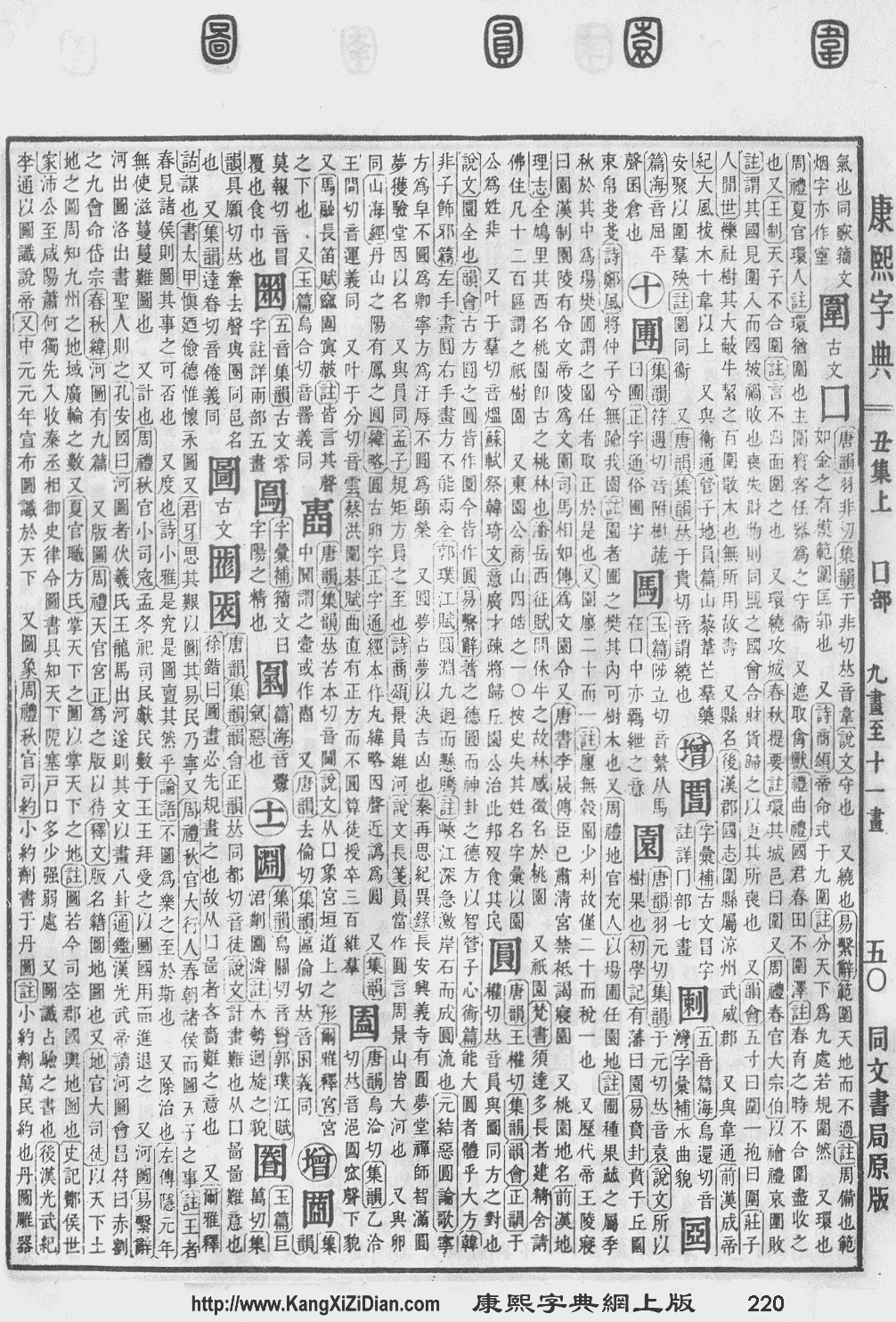
- Kangxi Dictionary: page 220, character 1
- Dai Kanwa Jiten: character 4806
- Dae Jaweon: page 451, character 4
- Hanyu Da Zidian (first edition): volume 1, page 722, character 14
- Unihan data for U+570D
Chinese
| trad. | 圍 | |
|---|---|---|
| simp. | 围 | |
| alternative forms | 囲 | |
Glyph origin
| Historical forms of the character 圍 | ||
|---|---|---|
| Western Zhou | Shuowen Jiezi (compiled in Han) | Liushutong (compiled in Ming) |
| Bronze inscriptions | Small seal script | Transcribed ancient scripts |
 |
 |
 |
Characters in the same phonetic series (韋) (Zhengzhang, 2003)
Phono-semantic compound (形聲/形声, OC *ɢʷɯl, *ɢʷɯls) and ideogrammic compound (會意/会意) : semantic 囗 (“enclosure”) + phonetic 韋 (OC *ɢʷɯl, “to surround”).
Pronunciation
Definitions
圍
- to surround; to encircle; to corral
- all sides
- girth
- (often in Guangdong and Hong Kong place names) walled village (Classifier: 條/条 c)
- (Cantonese) Classifier for number of tables at a restaurant or a feast. (usually twelve people per table)
- (Cantonese) to tally; to calculate (an amount)
- (medicine) peri-
Synonyms
- (to surround):
Compounds
- 三圍/三围 (sānwéi)
- 入圍/入围 (rùwéi)
- 冒鋒突圍/冒锋突围
- 包圍/包围 (bāowéi)
- 十圍五攻/十围五攻
- 合圍/合围
- 周圍/周围 (zhōuwéi)
- 四圍/四围 (sìwéi)
- 圍住/围住 (wéizhù)
- 圍兜/围兜 (wéidōu)
- 圍剿 (wéijiǎo)
- 圍困/围困 (wéikùn)
- 圍坐/围坐 (wéizuò)
- 圍城/围城 (wéichéng)
- 圍城打援/围城打援
- 圍場/围场 (wéichǎng)
- 圍堵/围堵 (wéidǔ)
- 圍子/围子
- 圍尺/围尺
- 圍屏/围屏
- 圍巾/围巾 (wéijīn)
- 圍捕/围捕 (wéibǔ)
- 圍攏/围拢 (wéilǒng)
- 圍攻/围攻 (wéigōng)
- 圍村/围村 (wéicūn)
- 圍桌/围桌 (wéizhuō)
- 圍棋/围棋 (wéiqí)
- 圍棋段位/围棋段位
- 圍標/围标 (wéibiāo)
- 圍爐/围炉 (wéilú)
- 圍牆/围墙 (wéiqiáng)
- 圍獵/围猎
- 圍籬/围篱 (wéilí)
- 圍網/围网 (wéiwǎng)
- 圍繞/围绕
- 圍脖兒/围脖儿 (wéibór)
- 圍腰/围腰
- 圍裙/围裙 (wéiqún)
- 圍觀/围观 (wéiguān)
- 圍阻體/围阻体
- 圍魏救趙/围魏救赵 (wéiwèijiùzhào)
- 團圍/团围
- 團團圍住/团团围住
- 土圍子/土围子
- 基圍/基围
- 壯圍/壮围 (Zhuàngwéi)
- 外圍/外围 (wàiwéi)
- 大圍山/大围山 (Dàwéishān)
- 帶圍/带围
- 打圍/打围 (dǎwéi)
- 打茶圍/打茶围
- 拔圍出夫/拔围出夫
- 攻圍/攻围 (gōngwéi)
- 柏林圍牆/柏林围墙 (Bólín Wéiqiáng)
- 棘圍/棘围
- 殺出重圍/杀出重围
- 氛圍/氛围
- 潰圍/溃围
- 為人解圍/为人解围
- 獵圍/猎围
- 珠圍翠擁/珠围翠拥
- 珠圍翠繞/珠围翠绕
- 珠繞翠圍/珠绕翠围
- 突圍/突围 (tūwéi)
- 竹圍/竹围 (Zhúwéi)
- 範圍/范围 (fànwéi)
- 翠繞珠圍/翠绕珠围
- 胸圍/胸围 (xiōngwéi)
- 腰圍/腰围 (yāowéi)
- 臀圍/臀围 (túnwéi)
- 茶圍/茶围
- 解圍/解围 (jiěwéi)
- 車圍/车围
- 重圍/重围 (chóngwéi)
- 長圍/长围
- 雰圍/氛围
Descendants
- → Vietnamese: vây (“to encircle”)
Japanese
| 囲 | |
| 圍 |
Readings
- Go-on: え (e)←ゑ (we, historical)
- Kan-on: い (i)←ゐ (wi, historical)
- Kun: かこむ (kakomu, 圍む); かこい (kakoi, 圍い)←かこひ (kakofi, 圍ひ, historical); かこう (kakou, 圍う)←かこふ (kakofu, 圍ふ, historical)
Korean
Vietnamese
This article is issued from Wiktionary. The text is licensed under Creative Commons - Attribution - Sharealike. Additional terms may apply for the media files.