起
| ||||||||
| ||||||||
Translingual
| Stroke order | |||
|---|---|---|---|
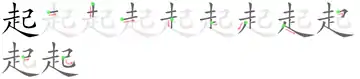 | |||
| Stroke order | |||
|---|---|---|---|
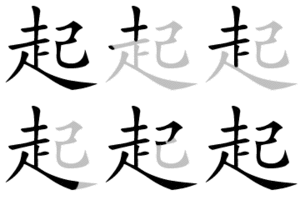 | |||
| Traditional | 起 |
|---|---|
| Simplified | 起 |
| Japanese | 起 |
| Korean | 起 |
Alternative forms
The component in the top right corner is written as 巳 according to Hong Kong and Taiwan standards and 己 according to the writing standards of mainland China, Japan, Korea and Vietnam.
Han character
起 (Kangxi radical 156, 走+3, 10 strokes, cangjie input 土人口山 (GORU) or 土人尸山 (GOSU), four-corner 47801, composition ⿺走巳(HT) or ⿺走己(GJKV))
Descendants
References
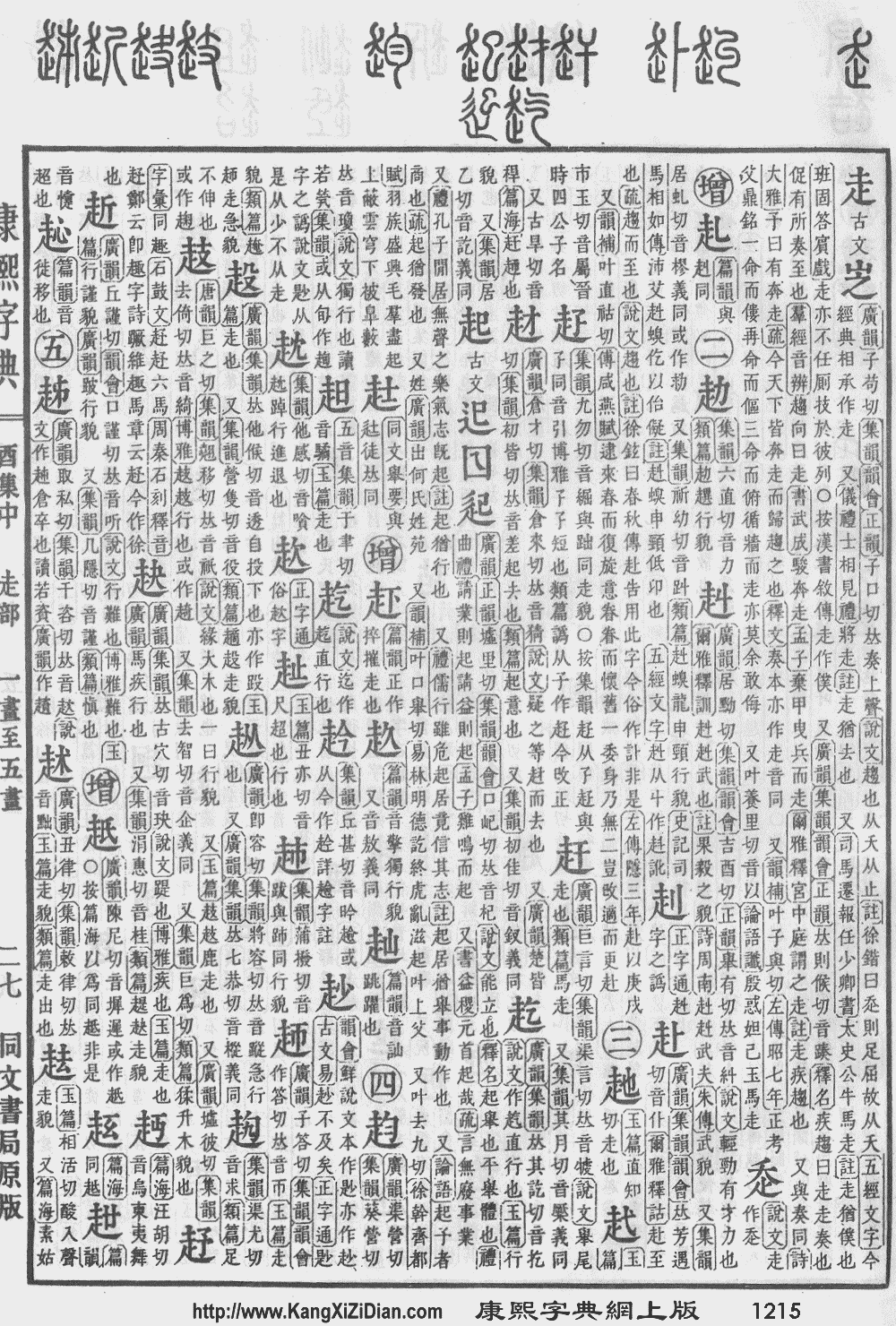
- Kangxi Dictionary: page 1215, character 15
- Dai Kanwa Jiten: character 37048
- Dae Jaweon: page 1683, character 18
- Hanyu Da Zidian (first edition): volume 5, page 3476, character 2
- Unihan data for U+8D77
- Unihan data for U+2F9D7
Chinese
| trad. | 起 | |
|---|---|---|
| simp. # | 起 | |
| alternative forms | 𨑖 𡆡 | |
Glyph origin
| Historical forms of the character 起 | |
|---|---|
| Shuowen Jiezi (compiled in Han) | Liushutong (compiled in Ming) |
| Small seal script | Transcribed ancient scripts |
 |
 |
Characters in the same phonetic series (巳) (Zhengzhang, 2003)
Phono-semantic compound (形聲/形声, OC *kʰɯʔ) : semantic 走 + phonetic 巳 (OC *ljɯʔ, *lɯs).
Pronunciation
Definitions
起
- to rise; to go up; to move up
- to stand up; to rise
- to break out; to grow
- to start; to begin; to become; to take
- to initiate; to instigate; to trigger off
- (dialectal Mandarin, Cantonese, Gan, Hakka, Min, Pinghua, Wu, Xiang) to construct; to build
- to prepare; to draw up; to come up with
- to extract; to pull out; to remove
- (Hokkien, Teochew) to board; to get on (a vehicle)
- (in 從/由……起 structures) from
- particle placed after verbs to indicate upward movement; ... up
- 拿起 ― náqǐ ― to pick up; to lift
- particle placed after verbs to indicate the beginning of a continued action
- (used with 不 or 得 after verbs) up to a certain standard; to be able to stand or afford
- particle placed after verbs to indicate the involvement of a person or thing in the action
- Classifier for incidents and legal cases.
- Classifier for batches or groups.
Synonyms
Dialectal synonyms of 上 (“to go up; to ascend”) [map]
| Variety | Location | Words |
|---|---|---|
| Formal (Written Standard Chinese) | 上 | |
| Mandarin | Beijing | 上 |
| Taiwan | 上 | |
| Malaysia | 上 | |
| Singapore | 上 | |
| Cantonese | Guangzhou | 上 |
| Hong Kong | 上 | |
| Kuala Lumpur (Guangfu) | 上 | |
| Singapore (Guangfu) | 上 | |
| Southern Min | Xiamen | 𬦰, 上, 起 |
| Quanzhou | 𬦰, 上, 起 | |
| Jinjiang | 𬦰 | |
| Zhangzhou | 𬦰, 上, 起 | |
| Tainan | 上, 起 | |
| Penang (Hokkien) | 起 | |
| Singapore (Hokkien) | 起 | |
| Manila (Hokkien) | 𬦰 | |
| Chaozhou | 起 | |
| Shantou | 上, 起 | |
| Singapore (Teochew) | 起 | |
| Wenchang | 上 | |
| Qionghai | 上 | |
| Singapore (Hainanese) | 上 | |
| Wu | Shanghai | 上 |
Dialectal synonyms of 蓋 (“to build; to construct (a building)”) [map]
Compounds
- 一哄而起 (yīhōng'érqǐ)
- 一早起
- 一早起了
- 一波未平,一波又起 (yī bō wèi píng, yī bō yòu qǐ)
- 一病不起 (yībìngbùqǐ)
- 一起 (yīqǐ)
- 一躍而起/一跃而起
- 一部二十四史,不知從何說起/一部二十四史,不知从何说起
- 一饋十起/一馈十起
- 不知起倒
- 不識起倒/不识起倒
- 不起 (bùqǐ)
- 不起之病
- 不起眼 (bùqǐyǎn)
- 不起訴處分/不起诉处分 (bù qǐsù chǔfèn)
- 並起/并起 (bìngqǐ)
- 了不起 (liǎobùqǐ)
- 事不關己,高高掛起/事不关己,高高挂起 (shìbùguānjǐ, gāogāo guàqǐ)
- 仄起體/仄起体
- 代起
- 倔起 (juéqǐ)
- 俱起
- 健起
- 僱不起/雇不起
- 兔起鳧舉/兔起凫举
- 兔起鶻落/兔起鹘落
- 再起 (zàiqǐ)
- 凸起 (tūqǐ)
- 前仆後起
- 勃起 (bóqǐ)
- 原起
- 受不起
- 另起煙爨/另起烟爨
- 另起爐灶/另起炉灶 (lìngqǐlúzào)
- 同起同坐
- 吳起/吴起 (Wúqǐ)
- 吹起捏塌
- 喚起/唤起 (huànqǐ)
- 四起 (sìqǐ)
- 四起八拜
- 回生起死
- 坐言起行
- 坐起
- 垂直起飛/垂直起飞
- 墳起/坟起
- 大清早起
- 大起
- 大起大落 (dàqǐdàluò)
- 大陸隆起/大陆隆起
- 奮袂而起/奋袂而起
- 奮起/奋起 (fènqǐ)
- 奮起直追/奋起直追
- 女起解
- 婆娑起舞
- 對不起/对不起 (duìbùqǐ)
- 對得起/对得起 (duìdeqǐ)
- 屢仆屢起/屡仆屡起
- 崛起 (juéqǐ)
- 平起平坐 (píngqǐpíngzuò)
- 廣州起義/广州起义 (Guǎngzhōu Qǐyì)
- 引起 (yǐnqǐ)
- 後起/后起 (hòuqǐ)
- 後起之秀/后起之秀 (hòuqǐzhīxiù)
- 後起字/后起字 (hòuqǐzì)
- 得了些顏色就開起染房來/得了些颜色就开起染房来
- 從何說起/从何说起
- 心頭火起/心头火起
- 心頭起火/心头起火
- 忽起忽落
- 怒從心上起,惡向膽邊生/怒从心上起,恶向胆边生
- 性起
- 急起直追 (jíqǐzhízhuī)
- 惹不起 (rěbùqǐ)
- 應運而起/应运而起
- 手起刀落 (shǒu qǐ dāo luò)
- 打起
- 打起精神
- 承當不起/承当不起
- 承起
- 抄起
- 抖起來/抖起来
- 拔地而起 (bádì'érqǐ)
- 拍案而起
- 拂袖而起
- 拔起
- 拿不起來/拿不起来
- 拿得起
- 拿得起放得下
- 振衰起敝
- 振起 (zhènqǐ)
- 挺起胸膛
- 掌不起
- 捲起/卷起 (juǎnqǐ)
- 掀起 (xiānqǐ)
- 提不起勁/提不起劲
- 提得起放得下
- 揭竿而起 (jiēgān'érqǐ)
- 揚起/扬起
- 提起 (tíqǐ)
- 提起公訴/提起公诉
- 撩起
- 撈起嘴巴/捞起嘴巴
- 擔不起/担不起
- 擔當不起/担当不起
- 撿起/捡起
- 擱起/搁起
- 攘臂而起
- 日起有功
- 早起 (zǎoqǐ)
- 早起的鳥兒有蟲吃/早起的鸟儿有虫吃 (zǎoqǐ de niǎor yǒu chóng chī)
- 晏起
- 晚起
- 暴起暴落
- 有起色
- 東山再起/东山再起 (dōngshānzàiqǐ)
- 板起臉/板起脸 (bǎnqǐliǎn)
- 此仆彼起
- 此起彼伏 (cǐqǐbǐfú)
- 此起彼落 (cǐqǐbǐluò)
- 武昌起義/武昌起义 (Wǔchāng Qǐyì)
- 汩起
- 沒起倒/没起倒
- 泛起
- 海洋隆起
- 源起
- 漸有起色/渐有起色
- 滾起來/滚起来
- 烽煙四起/烽烟四起 (fēngyānsìqǐ)
- 無盡緣起/无尽缘起
- 無風不起浪/无风不起浪 (wú fēng bù qǐ làng)
- 無風起浪/无风起浪
- 熛起
- 特起
- 狼煙四起/狼烟四起
- 生枯起朽
- 異軍特起/异军特起
- 異軍突起/异军突起 (yìjūntūqǐ)
- 當不起/当不起 (dāngbuqǐ)
- 痗起痗起 (mei1 qi mei1 qi) (Xiang)
- 痿不忘起
- 發起/发起 (fāqǐ)
- 發起人/发起人 (fāqǐrén)
- 白手起家 (báishǒuqǐjiā)
- 白起
- 盜賊四起/盗贼四起
- 盜賊蜂起/盗贼蜂起
- 看不起 (kànbuqǐ)
- 看得起 (kàndeqǐ)
- 看起來/看起来 (kànqilai)
- 瞅不起
- 瞎子起房子
- 瞎子起房子——亂蓋/瞎子起房子——乱盖
- 瞧不起 (qiáobuqǐ)
- 瞧得起 (qiáodeqǐ)
- 破風箏,抖起來了/破风筝,抖起来了
- 禁不起 (jīnbùqǐ)
- 禁得起
- 禍起蕭牆/祸起萧墙 (huòqǐxiāoqiáng)
- 禍起隱微/祸起隐微
- 禍起飛語/祸起飞语
- 萬丈高樓平地起/万丈高楼平地起 (wànzhàng gāolóu píngdì qǐ)
- 稱得起/称得起
- 突起 (tūqǐ)
- 竄起/窜起
- 算起來/算起来
- 綿延起伏/绵延起伏
- 綠林起義/绿林起义
- 綽起/绰起
- 緣起/缘起 (yuánqǐ)
- 群起 (qúnqǐ)
- 群起攻之
- 群起攻訐/群起攻讦
- 群起效尤
- 群起而攻
- 翩翩起舞
- 翻起
- 老起面皮
- 聞雞起舞/闻鸡起舞 (wénjīqǐwǔ)
- 聞風而起/闻风而起
- 聲名鵲起/声名鹊起 (shēngmíngquèqǐ)
- 聲譽鵲起/声誉鹊起
- 肅然起敬/肃然起敬 (sùránqǐjìng)
- 背山起樓/背山起楼
- 臥起/卧起
- 興起/兴起
- 蔚起
- 蕭牆禍起/萧墙祸起
- 蜂午並起/蜂午并起
- 蜂起 (fēngqǐ)
- 蝟起/猬起
- 螺絲起子/螺丝起子 (luósī qǐzi)
- 見財起意/见财起意
- 說起/说起 (shuōqǐ)
- 說起來/说起来
- 變亂四起/变乱四起
- 變起蕭牆/变起萧墙 (biànqǐxiāoqiáng)
- 豎起脊梁
- 貪功起釁/贪功起衅
- 賠不起/赔不起
- 赤手起家
- 起事 (qǐshì)
- 起伏 (qǐfú)
- 起伏不平
- 起住
- 起來/起来 (qǐlái)
- 起倒
- 起偃為豎/起偃为竖
- 起價/起价 (qǐjià)
- 起先 (qǐxiān)
- 起兵 (qǐbīng)
- 起兵動眾/起兵动众
- 起初 (qǐchū)
- 起功局
- 起勁/起劲 (qǐjìn)
- 起動/起动 (qǐdòng)
- 起動器/起动器
- 起動馬達/起动马达
- 起原
- 起厝 (Hokkien Teochew)
- 起司 (qǐsī)
- 起句 (qǐjù)
- 起司蛋糕 (qǐsī dàngāo)
- 起因 (qǐyīn)
- 起圈 (qǐjuàn)
- 起土
- 起坐
- 起坡
- 起士 (qǐshì)
- 起夜 (qǐyè)
- 起夫
- 起奪/起夺
- 起始 (qǐshǐ)
- 起子
- 起家 (qǐjiā)
- 起居 (qǐjū)
- 起居室 (qǐjūshì)
- 起居注
- 起屋 (hei2 uk1) (Cantonese)
- 起岸
- 起工 (qǐgōng)
- 起席
- 起師動眾/起师动众
- 起床 (qǐchuáng)
- 起復/起复
- 起急 (qǐjí)
- 起意 (qǐyì)
- 起手 (qǐshǒu)
- 起打
- 起承轉合/起承转合 (qǐchéngzhuǎnhé)
- 起撥/起拨
- 起敬 (qǐjìng)
- 起數/起数
- 起早 (qǐzǎo)
- 起早貪黑/起早贪黑 (qǐzǎotānhēi)
- 起旱 (qǐhàn)
- 起更
- 起服
- 起末
- 起根兒/起根儿
- 起根發腳/起根发脚
- 起根立地
- 起槓/起杠
- 起步 (qǐbù)
- 起死人,肉白骨
- 起死回生 (qǐsǐhuíshēng)
- 起毛 (qǐmáo)
- 起水頭兒/起水头儿
- 起源 (qǐyuán)
- 起火
- 起火店
- 起烘
- 起煩/起烦
- 起爆
- 起獲/起获
- 起用 (qǐyòng)
- 起疑 (qǐyí)
- 起病 (qǐbìng)
- 起皮子
- 起皺/起皱 (qǐzhòu)
- 起眼 (qǐyǎn)
- 起碼/起码 (qǐmǎ)
- 起磨
- 起租
- 起程 (qǐchéng)
- 起稿
- 起立 (qǐlì)
- 起筆/起笔 (qǐbǐ)
- 起粟
- 起義/起义 (qǐyì)
- 起翅
- 起而效尤
- 起臥/起卧 (qǐwò)
- 起興/起兴
- 起舞 (qǐwǔ)
- 起航 (qǐháng)
- 起色 (qǐsè)
- 起花頭/起花头
- 起草 (qǐcǎo)
- 起落 (qǐluò)
- 起落架
- 起薪 (qǐxīn)
- 起行 (qǐxíng)
- 起見/起见 (qǐjiàn)
- 起解
- 起訖/起讫
- 起訴/起诉 (qǐsù)
- 起訴人/起诉人 (qǐsùrén)
- 起訴書/起诉书 (qǐsùshū)
- 起訴權/起诉权
- 起誓 (qǐshì)
- 起課/起课 (qǐkè)
- 起講/起讲
- 起貨/起货
- 起贓/起赃
- 起跑 (qǐpǎo)
- 起跑線/起跑线 (qǐpǎoxiàn)
- 起跳 (qǐtiào)
- 起身 (qǐshēn)
- 起身炮
- 起軍/起军 (qǐjūn)
- 起轎/起轿
- 起運/起运 (qǐyùn)
- 起釁/起衅 (qǐxìn)
- 起重機/起重机 (qǐzhòngjī)
- 起錨/起锚 (qǐmáo)
- 起開/起开
- 起雷 (qǐléi)
- 起電機/起电机
- 起電盤/起电盘
- 起靈/起灵
- 起頭/起头 (qǐtóu)
- 起頭容易結梢難/起头容易结梢难
- 起風/起风 (qǐfēng)
- 起飛/起飞 (qǐfēi)
- 起首 (qǐshǒu)
- 起馬/起马
- 起馬牌/起马牌
- 起駕/起驾 (qǐjià)
- 起高調/起高调
- 起鬨/起哄 (qǐhòng)
- 起點/起点 (qǐdiǎn)
- 趕起/赶起
- 跑起來/跑起来
- 跪起
- 跳起來/跳起来
- 躍起/跃起
- 身起
- 輛起/辆起
- 輸不起/输不起 (shūbùqǐ)
- 迭起 (diéqǐ)
- 連根拔起/连根拔起 (liángēnbáqǐ)
- 連綿起伏/连绵起伏
- 逞起威風/逞起威风
- 那起人
- 釁起蕭牆/衅起萧墙
- 鋒起/锋起
- 錢起/钱起
- 關起門來,都是一家人/关起门来,都是一家人
- 隆起 (lóngqǐ)
- 陽起石/阳起石 (yángqǐshí)
- 雞鳴而起/鸡鸣而起
- 雲南起義/云南起义
- 雲起龍驤/云起龙骧
- 風在那裡起,雨在那裡落/风在那里起,雨在那里落
- 風起/风起
- 風起水涌
- 風起潮湧/风起潮涌
- 風起雲布/风起云布
- 風起雲湧/风起云涌
- 風起雲蒸/风起云蒸
- 飲食起居/饮食起居 (yǐnshíqǐjū)
- 馬起臉/马起脸
- 騰空而起/腾空而起 (téngkōng'érqǐ)
- 騰蛟起鳳/腾蛟起凤
- 高低起伏
- 高潮迭起
- 鵲起/鹊起
- 齁聲雷起/齁声雷起
References
- “Entry #6299”, in 重編國語辭典修訂本 [Revised Mandarin Chinese Dictionary] (in Chinese), National Academy for Educational Research (Taiwan), 2021.
- “起”, in 漢語多功能字庫 (Multi-function Chinese Character Database), 香港中文大學 (the Chinese University of Hong Kong), 2014–
- Dictionary of Chinese Character Variants (教育部異體字字典), A03992
Japanese
| Shinjitai | 起 | |
| Kyūjitai [1] |
起󠄁 起+ 󠄁?(Adobe-Japan1) |
 |
| 起󠄃 起+ 󠄃?(Hanyo-Denshi) (Moji_Joho) | ||
| The displayed kanji may be different from the image due to your environment. See here for details. | ||
Readings
Pronunciation
- IPA(key): [kʲi]
Affix
起 • (ki)
Korean
Kunigami
Miyako
Vietnamese
Yaeyama
Yonaguni
This article is issued from Wiktionary. The text is licensed under Creative Commons - Attribution - Sharealike. Additional terms may apply for the media files.