氷
| ||||||||
Translingual
| Stroke order | |||
|---|---|---|---|
 | |||
| Traditional | 冰 |
|---|---|
| Simplified | 冰 |
| Japanese | 氷 |
| Korean | 氷 |
Alternative forms
- 冫 (when used as a left Chinese radical)
Han character
氷 (Kangxi radical 85, 水+1, 5 strokes, cangjie input 戈水 (IE), four-corner 32230, composition ⿽水丶)
Derived characters
- Appendix:Chinese radical/冫
References
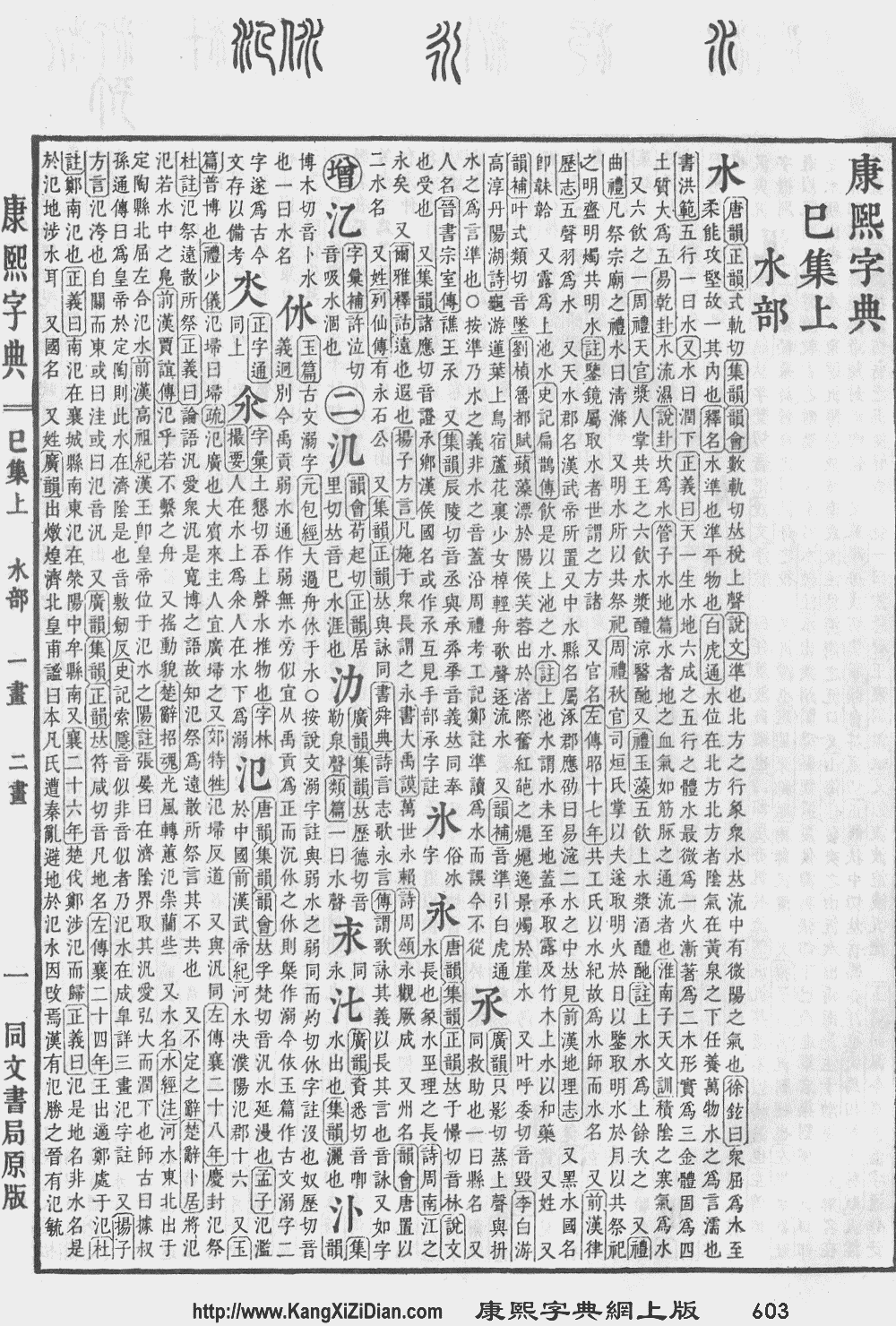
- Kangxi Dictionary: page 603, character 3
- Dai Kanwa Jiten: character 17087
- Dae Jaweon: page 996, character 3
- Hanyu Da Zidian (first edition): volume 3, page 1546, character 4
- Unihan data for U+6C37
Usage notes
This character is listed as the unorthodox form (俗字) of 冰 in the Kangxi dictionary.
Chinese
| For pronunciation and definitions of 氷 – see 冰 (“ice; ice-cold; etc.”). (This character is a variant form of 冰). |
Japanese
Readings
Etymology 1
| Kanji in this term |
|---|
| 氷 |
| こおり Grade: 3 |
| kun’yomi |
| Alternative spellings |
|---|
| 凍り 冰 (uncommon) |

氷 (kōri): a block of ice.
⟨ko2pori⟩ → */kəpori/ → /koɸori/ → /kowori/ → /koːri/
From Old Japanese.
The 連用形 (ren'yōkei, “stem or continuative form”) of verb 凍る (kōru, “to freeze”).[1]
Noun
- ice (frozen water)
- 938, Minamoto no Shitagō, Wamyō Ruijushō, volume 1, page 46:[2]
- 氷 四聲字苑云:「水寒凍結也。」筆凌反[和名:比又古保利]
- Ice - according to the Sisheng Ziyuan: cold water, frozen and solidified. (Chinese fanqie: 筆凌; Japanese name: hi or kōri)
- a cold and sharp object, as a shard of ice
- Short for 氷水 (kōrimizu): ice water; water filled with ice
- Short for 氷襲 (kōrigasane): layered clothing with the front shining white and plain white at the back
Derived terms
Etymology 2
| Kanji in this term |
|---|
| 氷 |
| ひ Grade: 3 |
| kun’yomi |
| Alternative spelling |
|---|
| 冰 (uncommon) |
⟨pi1⟩ → */pʲi/ → /ɸi/ → /hi/
From Old Japanese. Attested in the Man'yōshū of circa 759 CE.[3]
Possibly cognate with 冷える (hieru, “to become cold”).
Compare Middle Chinese 冰 (MC ping).
Noun
氷 • (hi)
- ice (frozen water)
- Synonym: アイス (aisu)
- 938, Minamoto no Shitagō, Wamyō Ruijushō, volume 1, page 46:[2]
- 氷 四聲字苑云:「水寒凍結也。」筆凌反[和名:比又古保利]
- Ice - according to the Sisheng Ziyuan: cold water, frozen and solidified. (Chinese fanqie: 筆凌; Japanese name: hi or kōri)
- hail (precipitated ice)
- Synonym: 雹 (hyō)
Pronunciation
- IPA(key): [ço̞ː]
Derived terms
References
- Matsumura, Akira, editor (2006), 大辞林 [Daijirin] (in Japanese), Third edition, Tōkyō: Sanseidō, →ISBN
- Minamoto, Shitagō with Kyōto Daigaku Bungakubu Kokugogaku Kokubungaku Kenkyūshitu (931–938) Shohon Shūsei Wamyō Ruijushō: Honbunhen (in Japanese), Kyōto: Rinsen, published 1968, →ISBN.
- “氷・冰”, in 日本国語大辞典 (Nihon Kokugo Daijiten, “Nihon Kokugo Daijiten”) (in Japanese), concise edition, Tōkyō: Shogakukan, 2000
Korean
Etymology
From Middle Chinese 冰 (MC ping). Recorded as Middle Korean 冰/비ᇰ (ping) (Yale: ping) in Hunmong Jahoe (訓蒙字會 / 훈몽자회), 1527.
Compounds
Vietnamese
This article is issued from Wiktionary. The text is licensed under Creative Commons - Attribution - Sharealike. Additional terms may apply for the media files.