雹
| ||||||||
Translingual
Han character
雹 (Kangxi radical 173, 雨+5, 13 strokes, cangjie input 一月心口山 (MBPRU), four-corner 10712, composition ⿱雨包)
References
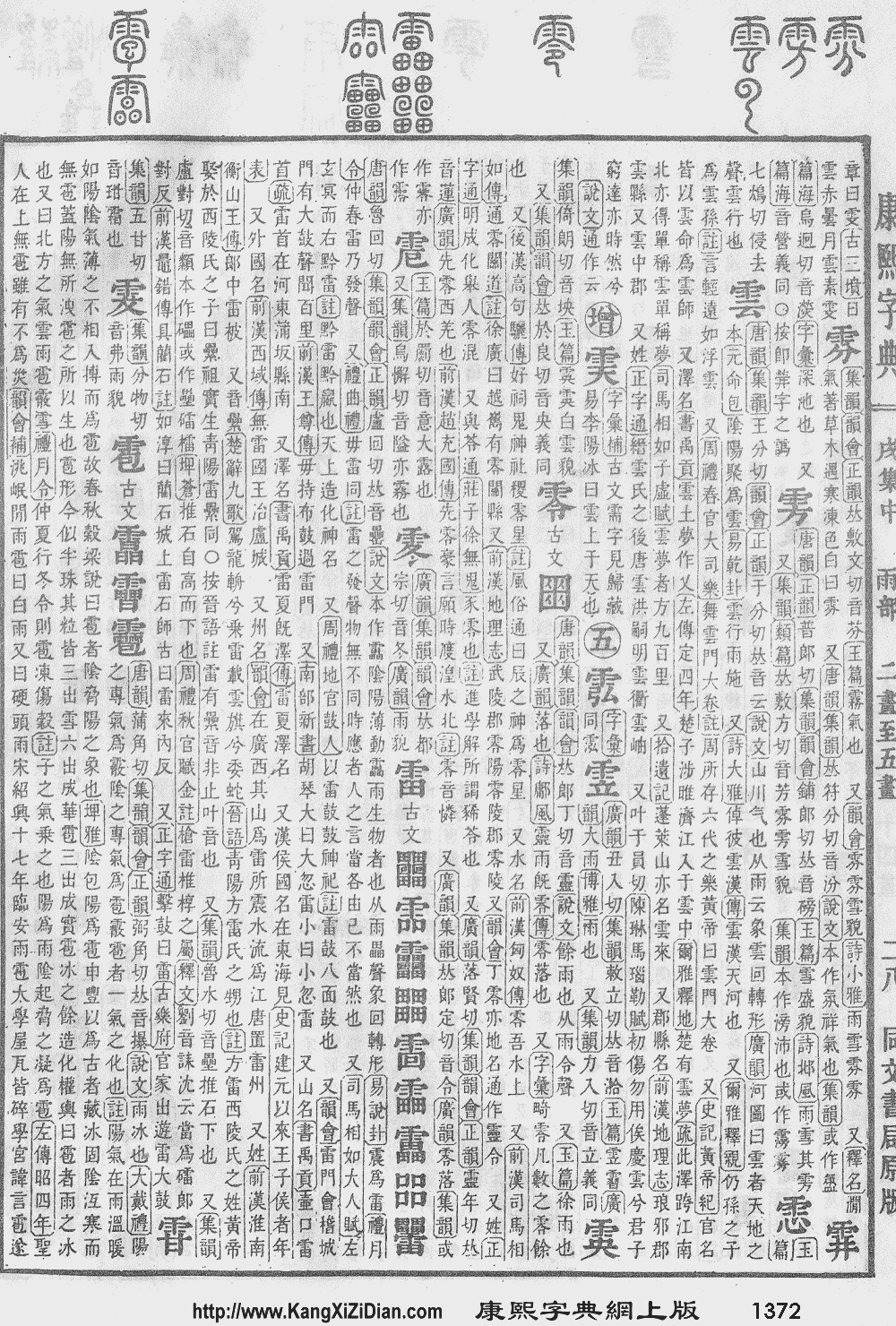
- Kangxi Dictionary: page 1372, character 26
- Dai Kanwa Jiten: character 42248
- Dae Jaweon: page 1882, character 3
- Hanyu Da Zidian (first edition): volume 6, page 4061, character 5
- Unihan data for U+96F9
Chinese
| trad. | 雹 | |
|---|---|---|
| simp. # | 雹 | |
| alternative forms | 𩅟 | |
Glyph origin
| Historical forms of the character 雹 | |||
|---|---|---|---|
| Shang | Warring States | Shuowen Jiezi (compiled in Han) | Liushutong (compiled in Ming) |
| Oracle bone script | Chu slip and silk script | Small seal script | Transcribed ancient scripts |
 |
 |
 |
 |
Characters in the same phonetic series (勹) (Zhengzhang, 2003)
| Old Chinese | |
|---|---|
| 袍 | *buː |
| 袌 | *buː, *buːs |
| 軳 | *buː |
| 抱 | *buːʔ |
| 勽 | *buːs, *mɯnʔ |
| 菢 | *buːs |
| 勹 | *pruː |
| 包 | *pruː |
| 胞 | *pruː, *pʰruː |
| 苞 | *pruː |
| 枹 | *pruː, *bu, *bu |
| 飽 | *pruːʔ |
| 泡 | *pʰruː, *m̥ʰruːs, *bruː |
| 炮 | *pʰruːs, *bruː |
| 皰 | *pʰruːs, *bruːs |
| 疱 | *pʰruːs, *bruːs |
| 跑 | *bruː, *bruːɡ |
| 咆 | *bruː |
| 庖 | *bruː |
| 匏 | *bruː |
| 刨 | *bruː |
| 狍 | *bruː |
| 炰 | *bruː |
| 鉋 | *bruː, *bruːs |
| 瓟 | *bruː, *bruːɡ |
| 颮 | *bruː, *pʰruːɡ |
| 鞄 | *bruː, *bruːʔ, *bruːs, *pʰruːɡ |
| 鮑 | *bruːʔ |
| 骲 | *bruːʔ, *bruːs, *bruːɡ, *pʰoːɡ |
| 玸 | *bu |
| 雹 | *bruːɡ |
| 窇 | *bruːɡ |
Phono-semantic compound (形聲/形声, OC *bruːɡ) : semantic 雨 (“rain”) + phonetic 包 (OC *pruː).
Etymology
From Proto-Sino-Tibetan *m-bru(ŋ/k) (“dragon; thunder”), whence also 龍 (OC *b·roŋ, *mroːŋ, “dragon”) (STEDT).
Pronunciation
Synonyms
Dialectal synonyms of 冰雹 (“hail”) [map]
Descendants
- ⇒ Zhuang: lwgbag
References
- “雹”, in 漢語多功能字庫 (Multi-function Chinese Character Database), 香港中文大學 (the Chinese University of Hong Kong), 2014–
Japanese
Readings
Etymology
| Kanji in this term |
|---|
| 雹 |
| ひょう Hyōgaiji |
| kun’yomi |

雹 (hyō)
Perhaps from 氷 (hyō, “ice”) (This etymology is missing or incomplete. Please add to it, or discuss it at the Etymology scriptorium.)
Derived terms
- 降雹 (kōhyō)
- 雹害 (hyōgai)
Korean
Etymology
From Middle Chinese 雹 (MC baewk).
| Historical Readings | ||
|---|---|---|
| Dongguk Jeongun Reading | ||
| Dongguk Jeongun, 1448 | 빡〮 (Yale: ppák) | |
| Middle Korean | ||
| Text | Eumhun | |
| Gloss (hun) | Reading | |
| Hunmong Jahoe, 1527 | 무〮뤼〮 (Yale: mwúlwúy) | 박〮 (Yale: pák) |
Pronunciation
- (SK Standard/Seoul) IPA(key): [pa̠k̚]
- Phonetic hangul: [박]
Vietnamese
This article is issued from Wiktionary. The text is licensed under Creative Commons - Attribution - Sharealike. Additional terms may apply for the media files.