灸

灸 U+7078, 灸
CJK UNIFIED IDEOGRAPH-7078
← 灷
[U+7077]
CJK Unified Ideographs 灹 →
[U+7079]

Translingual

Han character

灸 (Kangxi radical 86, 火+3, 7 strokes, cangjie input 弓人火 (NOF), four-corner 27809, composition ⿱久火)

Derived characters

  • 𮏅

References

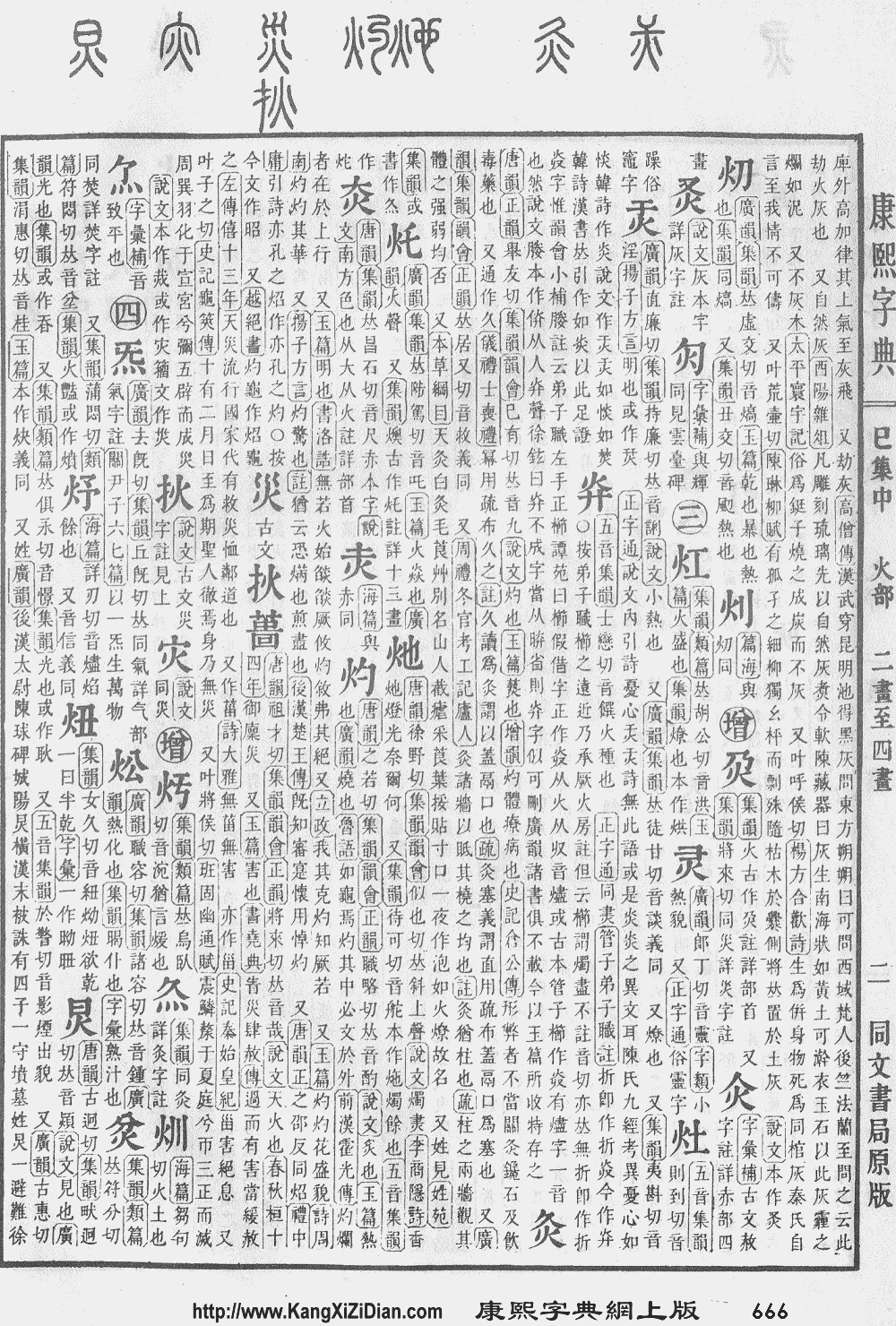
  • Kangxi Dictionary: page 666, character 12
  • Dai Kanwa Jiten: character 18872
  • Dae Jaweon: page 1075, character 16
  • Hanyu Da Zidian (first edition): volume 3, page 2190, character 1
  • Unihan data for U+7078

Chinese

trad. 灸
simp. # 灸

Glyph origin

Pronunciation


Note:
  • kù - vernacular;
  • kiù - literary.

    Rime
    Character 灸 灸
    Reading # 1/2 2/2
    Initial (聲) 見 (28) 見 (28)
    Final (韻) 尤 (136) 尤 (136)
    Tone (調) Rising (X) Departing (H)
    Openness (開合) Open Open
    Division (等) III III
    Fanqie 舉有切 居祐切
    Baxter kjuwX kjuwH
    Reconstructions
    Zhengzhang
    Shangfang
    /kɨuX/ /kɨuH/
    Pan
    Wuyun
    /kiuX/ /kiuH/
    Shao
    Rongfen
    /kiəuX/ /kiəuH/
    Edwin
    Pulleyblank
    /kuwX/ /kuwH/
    Li
    Rong
    /kiuX/ /kiuH/
    Wang
    Li
    /kĭəuX/ /kĭəuH/
    Bernard
    Karlgren
    /ki̯ə̯uX/ /ki̯ə̯uH/
    Expected
    Mandarin
    Reflex
    jiǔ jiù
    Expected
    Cantonese
    Reflex
    gau2 gau3
    Baxter–Sagart system 1.1 (2014)
    Character 灸
    Reading # 1/1
    Modern
    Beijing
    (Pinyin)
    jiǔ
    Middle
    Chinese
    ‹ kjuwX ›
    Old
    Chinese
    /*[k]ʷəʔ/
    English cauterize by burning tinder

    Notes for Old Chinese notations in the Baxter–Sagart system:

    * Parentheses "()" indicate uncertain presence;
    * Square brackets "[]" indicate uncertain identity, e.g. *[t] as coda may in fact be *-t or *-p;
    * Angle brackets "<>" indicate infix;
    * Hyphen "-" indicates morpheme boundary;

    * Period "." indicates syllable boundary.
    Zhengzhang system (2003)
    Character 灸 灸
    Reading # 1/2 2/2
    No. 6970 6972
    Phonetic
    component
    久 久
    Rime
    group
    之 之
    Rime
    subdivision
    0 0
    Corresponding
    MC rime
    久 救
    Old
    Chinese
    /*kʷlɯʔ/ /*kʷlɯs/

    Definitions

    灸

    1. cauterize with moxa or mugwort
    2. moxibustion

    Compounds

    Japanese

    Kanji

    灸

    (“Jinmeiyō” kanji used for names)

    1. This term needs a translation to English. Please help out and add a translation, then remove the text {{rfdef}}.

    Readings

    Etymology 1

    Kanji in this term
    灸
    きゅう
    Jinmeiyō
    on’yomi

    From Middle Chinese 灸 (MC kjuwX|kjuwH).

    Alternative forms

    • お灸(きゅう) (o-kyū)

    Noun

    灸(きゅう) • (kyū) ←きう (kiu)?

    1. moxibustion
    Synonyms
    • 灸治(きゅうじ) (kyūji)

    Etymology 2

    Kanji in this term
    灸
    やいと
    Jinmeiyō
    kun’yomi

    From 焼き (yaki, “scorching”, 連(れん)用(よう)形(けい) (ren'yōkei, “stem or continuative form”) of the verb 焼(や)く (yaku).) + 処 (to, “place”).

    Noun

    灸(やいと) • (yaito) ←やいと (yaito)?

    1. Same as above.

    Korean

    Hanja

    灸 • (gu) (hangeul 구, revised gu, McCune–Reischauer ku, Yale kwu)

    1. (뜸) moxibustion

    Compounds

    See also

    Vietnamese

    Han character

    灸: Hán Nôm readings: cứu

    1. This term needs a translation to English. Please help out and add a translation, then remove the text {{rfdef}}.
    This article is issued from Wiktionary. The text is licensed under Creative Commons - Attribution - Sharealike. Additional terms may apply for the media files.