碎
See also: 砕
| ||||||||
Translingual
Han character
碎 (Kangxi radical 112, 石+8, 13 strokes, cangjie input 一口卜人十 (MRYOJ), four-corner 10648, composition ⿰石卒)
Derived characters
- 𡀬 𢣃 𣩸 𡳥 𤻒
Descendants
References
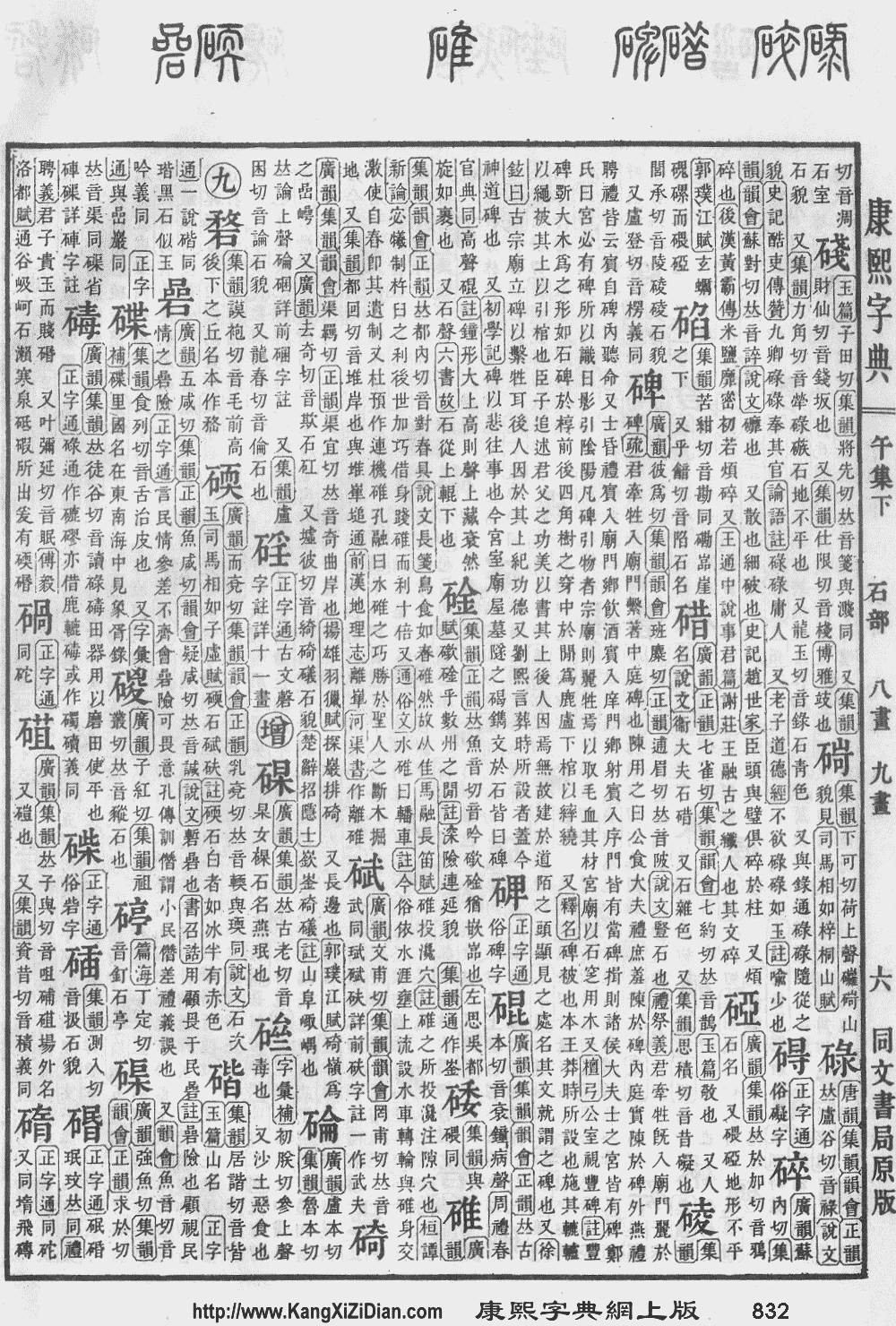
- Kangxi Dictionary: page 832, character 5
- Dai Kanwa Jiten: character 24284
- Dae Jaweon: page 1248, character 23
- Hanyu Da Zidian (first edition): volume 4, page 2439, character 9
- Unihan data for U+788E
Chinese
| simp. and trad. |
碎 | |
|---|---|---|
| 2nd round simp. | 砕 | |
| alternative forms | 砕 | |
Glyph origin
| Historical forms of the character 碎 |
|---|
| Shuowen Jiezi (compiled in Han) |
| Small seal script |
 |
Characters in the same phonetic series (卒) (Zhengzhang, 2003)
| Old Chinese | |
|---|---|
| 晬 | *ʔsuːds |
| 祽 | *ʔsuːds |
| 綷 | *ʔsuːds |
| 淬 | *sʰuːds |
| 啐 | *sʰuːds, *suːds, *sʰroːds, *ʔsud |
| 倅 | *sʰuːds, *ʔsuːd |
| 焠 | *sʰuːds |
| 碎 | *suːds |
| 誶 | *suːds, *suds, *zud |
| 濢 | *ʔslulʔ, *sʰluds |
| 噿 | *ʔslulʔ |
| 臎 | *ʔslulʔ, *sʰluds |
| 醉 | *ʔsuds |
| 翠 | *sʰuds |
| 悴 | *zuds |
| 萃 | *zuds |
| 瘁 | *zuds |
| 顇 | *zuds |
| 粹 | *suds |
| 睟 | *suds |
| 賥 | *suds |
| 卒 | *ʔsuːd, *sʰuːd, *ʔsud |
| 稡 | *ʔsuːd |
| 猝 | *sʰuːd |
| 椊 | *zuːd |
| 捽 | *zuːd, *zud |
| 崪 | *zuːd |
| 窣 | *suːd |
| 崒 | *zud |
| 踤 | *zud |
| 錊 | *ʔsuːɡ |
Phono-semantic compound (形聲/形声, OC *suːds) : semantic 石 (“stone”) + phonetic 卒 (OC *ʔsuːd, *sʰuːd, *ʔsud).
Pronunciation
Definitions
碎
Synonyms
- (fragmented): 零星 (língxīng)
Compounds
- 凌遲碎剮/凌迟碎剐
- 切碎 (qiēsuì)
- 嘴碎 (zuǐsuì)
- 壓碎/压碎 (yāsuì)
- 寧當玉碎/宁当玉碎
- 心寒膽碎/心寒胆碎
- 心碎 (xīnsuì)
- 心膽俱碎/心胆俱碎
- 手零腳碎/手零脚碎
- 打碎 (dǎsuì)
- 掰開揉碎/掰开揉碎
- 搗碎/捣碎 (dǎosuì)
- 摜碎/掼碎
- 摧身碎首
- 擊碎唾壺/击碎唾壶
- 攪碎機/搅碎机
- 支離破碎/支离破碎 (zhīlípòsuì)
- 敲碎
- 殞身碎首/殒身碎首
- 煩言碎語/烦言碎语
- 煩言碎辭/烦言碎辞
- 片鱗碎甲/片鳞碎甲
- 玉石俱碎
- 玉碎 (yùsuì)
- 玉碎珠沉
- 玉碎花銷/玉碎花销
- 玉碎香殘/玉碎香残
- 玉碎香消
- 珠殘玉碎/珠残玉碎
- 珠沉玉碎
- 珠沉璧碎
- 瑣碎/琐碎 (suǒsuì)
- 破碎 (pòsuì)
- 破碎家庭
- 破碎帶/破碎带
- 破碎支離/破碎支离
- 碎修兒/碎修儿
- 碎催
- 碎務/碎务
- 碎嘴子
- 碎嘴碎舌
- 碎塊/碎块
- 碎妝/碎妆
- 碎密
- 碎小
- 碎屍萬段/碎尸万段
- 碎屑 (suìxiè)
- 碎末 (suìmò)
- 碎步
- 碎步兒/碎步儿
- 碎片 (suìpiàn)
- 碎玉 (suìyù)
- 碎瓊亂玉/碎琼乱玉
- 碎瓷
- 碎石 (suìshí)
- 碎紛紛/碎纷纷
- 碎聒
- 碎肉 (suìròu)
- 碎花
- 碎裂 (suìliè)
- 碎身粉骨
- 碎金 (suìjīn)
- 碎首糜軀/碎首糜躯
- 碎骨粉身
- 粉碎 (fěnsuì)
- 粉身碎骨 (fěnshēn-suìgǔ)
- 粉零麻碎
- 粉骨碎身 (fěngǔsuìshēn)
- 糜軀碎首/糜躯碎首
- 細碎/细碎 (xìsuì)
- 絞碎/绞碎
- 苛碎
- 閒言碎語/闲言碎语
- 阿郎雜碎/阿郎杂碎
- 雜碎/杂碎 (zásuì)
- 雞零狗碎/鸡零狗碎
- 零七八碎
- 零打碎敲
- 零敲碎打
- 零碎 (língsuì)
- 零零碎碎
- 顛撲不碎/颠扑不碎
- 香消玉碎
- 骨碎補/骨碎补 (gǔsuìbǔ)
Japanese
| 砕 | |
| 碎 |
Kanji
碎
(“Jinmeiyō” kanji used for names, kyūjitai kanji, shinjitai form 砕)
- This term needs a translation to English. Please help out and add a translation, then remove the text
{{rfdef}}.
Korean
Etymology
From Middle Chinese 碎 (MC swojH).
Compounds
- 분쇄 (粉碎, bunswae, “shattering”)
- 파쇄 (破碎, paswae, “crushing”)
- 쇄빙선 (碎氷船, swaebingseon, “icebreaker”)
Vietnamese
Pronoun
碎 • (tôi)
- (formal in all dialects) I/me (used in formal contexts, regardless of the difference in status between the speakers)
Notes
This character is also used for the alternative pronunciation, tui
This article is issued from Wiktionary. The text is licensed under Creative Commons - Attribution - Sharealike. Additional terms may apply for the media files.