啐
| ||||||||
Translingual
Han character
啐 (Kangxi radical 30, 口+8, 11 strokes, cangjie input 口卜人十 (RYOJ), four-corner 60048, composition ⿰口卒)
- to drink, to taste
- to expectorate, to spit
- start
Derived characters
- 𨅇
References
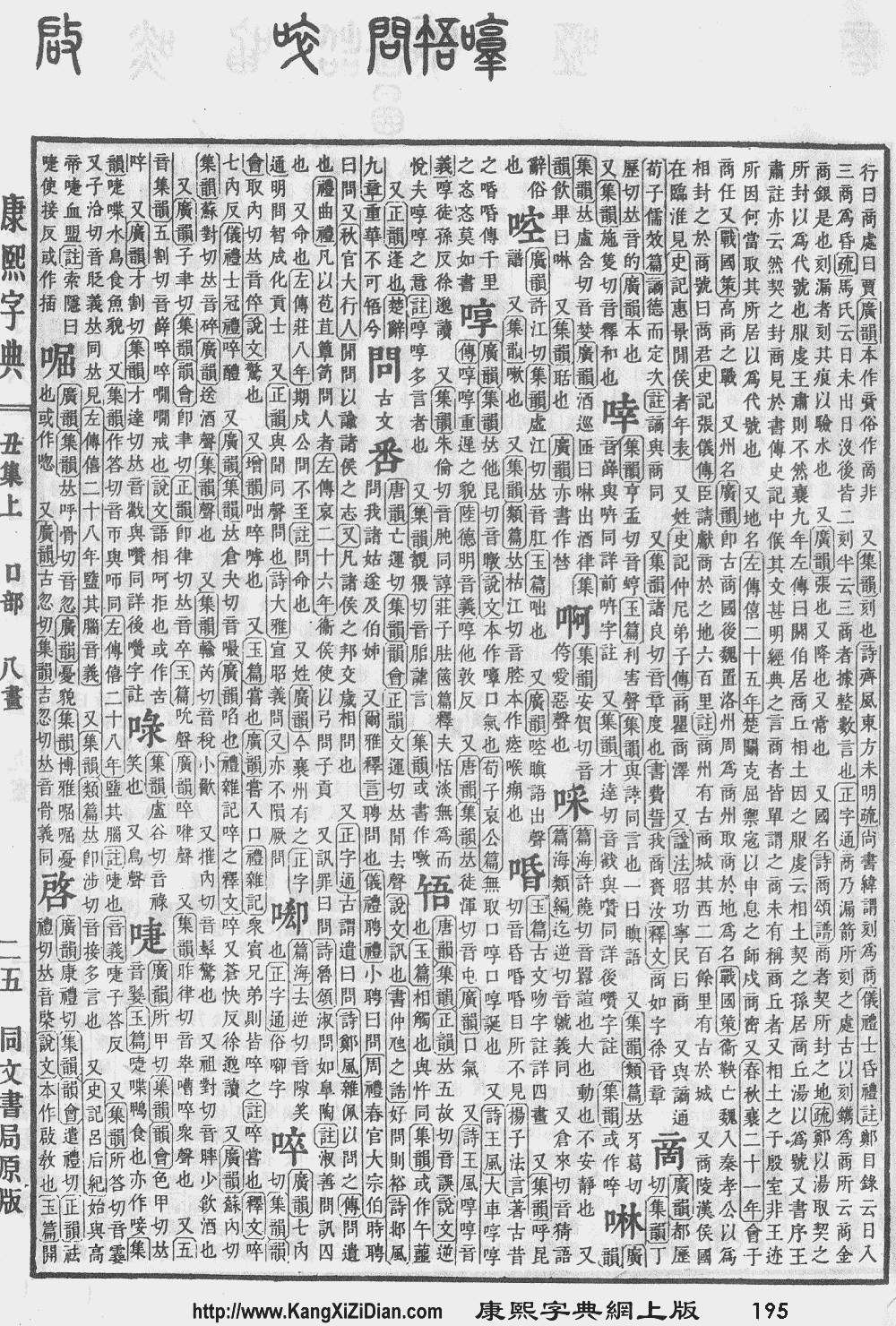
- Kangxi Dictionary: page 195, character 13
- Dai Kanwa Jiten: character 3816
- Dae Jaweon: page 416, character 12
- Hanyu Da Zidian (first edition): volume 1, page 645, character 3
- Unihan data for U+5550
Chinese
| simp. and trad. |
啐 | |
|---|---|---|
| 2nd round simp. | 𠯥 | |
| alternative forms | 𠯥 | |
Glyph origin
| Historical forms of the character 啐 |
|---|
| Shuowen Jiezi (compiled in Han) |
| Small seal script |
 |
Characters in the same phonetic series (卒) (Zhengzhang, 2003)
| Old Chinese | |
|---|---|
| 晬 | *ʔsuːds |
| 祽 | *ʔsuːds |
| 綷 | *ʔsuːds |
| 淬 | *sʰuːds |
| 啐 | *sʰuːds, *suːds, *sʰroːds, *ʔsud |
| 倅 | *sʰuːds, *ʔsuːd |
| 焠 | *sʰuːds |
| 碎 | *suːds |
| 誶 | *suːds, *suds, *zud |
| 濢 | *ʔslulʔ, *sʰluds |
| 噿 | *ʔslulʔ |
| 臎 | *ʔslulʔ, *sʰluds |
| 醉 | *ʔsuds |
| 翠 | *sʰuds |
| 悴 | *zuds |
| 萃 | *zuds |
| 瘁 | *zuds |
| 顇 | *zuds |
| 粹 | *suds |
| 睟 | *suds |
| 賥 | *suds |
| 卒 | *ʔsuːd, *sʰuːd, *ʔsud |
| 稡 | *ʔsuːd |
| 猝 | *sʰuːd |
| 椊 | *zuːd |
| 捽 | *zuːd, *zud |
| 崪 | *zuːd |
| 窣 | *suːd |
| 崒 | *zud |
| 踤 | *zud |
| 錊 | *ʔsuːɡ |
Pronunciation
Definitions
啐
Compounds
- 啐醴
- 啐飲/啐饮
- 嘈啐
- 說詩啐話/说诗啐话
Japanese
Korean
Hanja
啐 • (chwae, jul) (hangeul 쵀, 줄, revised chwae, jul, McCune–Reischauer ch'wae, chul)
- to taste
- to sip
- to spit
- the sound of sipping
- to surprise
Vietnamese
This article is issued from Wiktionary. The text is licensed under Creative Commons - Attribution - Sharealike. Additional terms may apply for the media files.