磕

磕 U+78D5, 磕
CJK UNIFIED IDEOGRAPH-78D5
← 磔
[U+78D4]
CJK Unified Ideographs 磖 →
[U+78D6]

Translingual

Han character

磕 (Kangxi radical 112, 石+10, 15 strokes, cangjie input 一口土戈廿 (MRGIT), four-corner 14617, composition ⿰石盍)

References

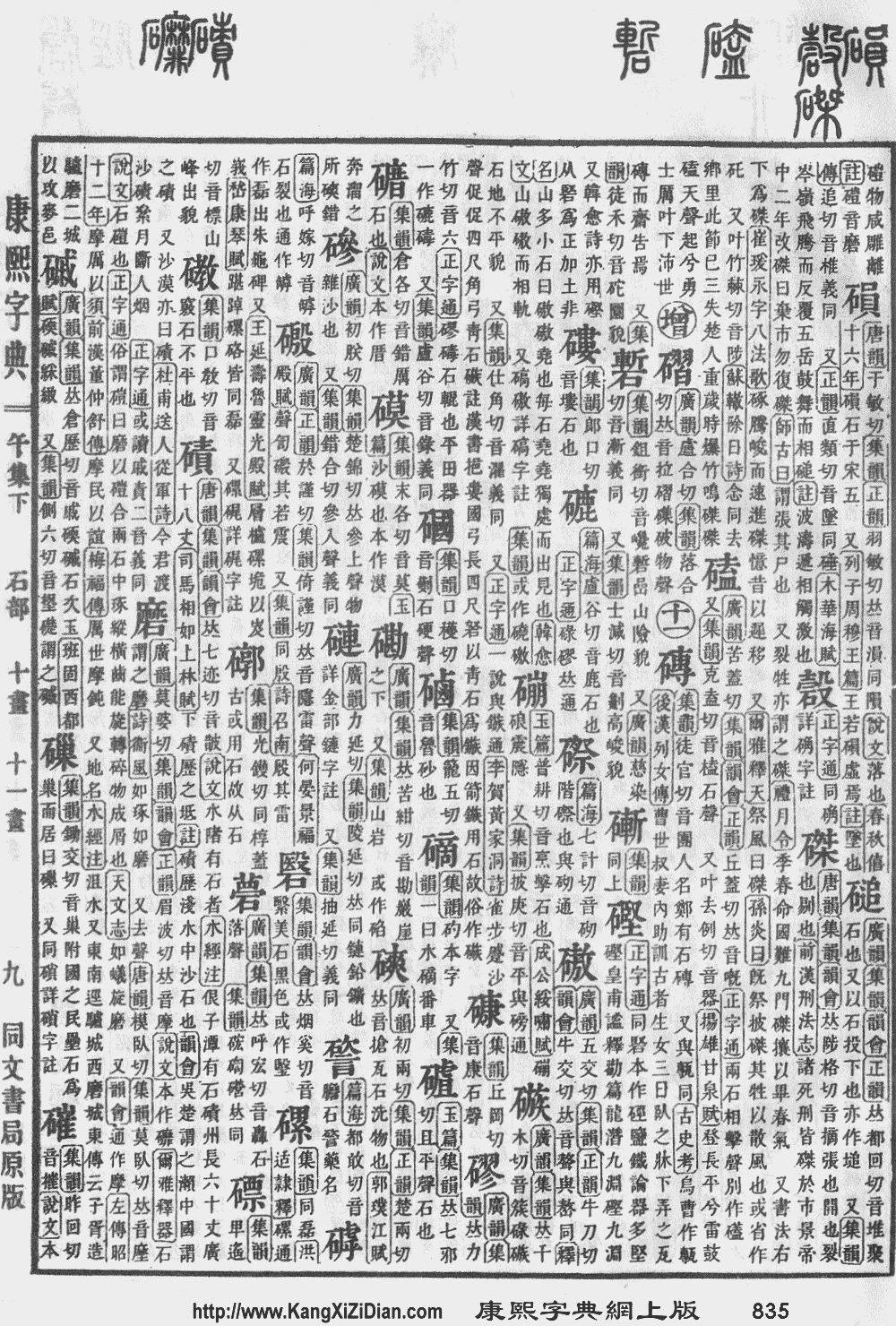
  • Kangxi Dictionary: page 835, character 5
  • Dai Kanwa Jiten: character 24407
  • Dae Jaweon: page 1252, character 11
  • Hanyu Da Zidian (first edition): volume 4, page 2446, character 10
  • Unihan data for U+78D5

Chinese

simp. and trad.
磕
alternative forms 礚
𥕤

Glyph origin

Historical forms of the character 磕
Shuowen Jiezi (compiled in Han)
Small seal script

Phono-semantic compound (形聲/形声, OC *kʰaːb, *kʰaːd) : semantic 石 (“stone”) + phonetic 盍 (OC *ɡaːb).

Pronunciation


Note:
  • khap - literary;
  • kha̍p - vernacular (俗).
    • Wu
      • (Shanghai):
        • Wugniu: 7kheq
        • MiniDict: kheh入
        • Wiktionary Romanisation (Shanghai): 4kheq
        • Sinological IPA (Shanghai): /kʰəʔ⁵⁵/

Rime
Character 磕 磕 磕
Reading # 1/3 2/3 3/3
Initial (聲) 溪 (29) 溪 (29) 溪 (29)
Final (韻) 泰 (25) 曷 (63) 盍 (144)
Tone (調) Departing (H) Checked (Ø) Checked (Ø)
Openness (開合) Open Open Open
Division (等) I I I
Fanqie 苦蓋切 苦曷切 苦盍切
Baxter khajH khat khap
Reconstructions
Zhengzhang
Shangfang
/kʰɑiH/ /kʰɑt̚/ /kʰɑp̚/
Pan
Wuyun
/kʰɑiH/ /kʰɑt̚/ /kʰɑp̚/
Shao
Rongfen
/kʰɑiH/ /kʰɑt̚/ /kʰɑp̚/
Edwin
Pulleyblank
/kʰajH/ /kʰat̚/ /kʰap̚/
Li
Rong
/kʰɑiH/ /kʰɑt̚/ /kʰɑp̚/
Wang
Li
/kʰɑiH/ /kʰɑt̚/ /kʰɑp̚/
Bernard
Karlgren
/kʰɑiH/ /kʰɑt̚/ /kʰɑp̚/
Expected
Mandarin
Reflex
kài ke ke
Expected
Cantonese
Reflex
hoi3 hot3 hap3
Zhengzhang system (2003)
Character 磕 磕
Reading # 1/2 2/2
No. 5077 5090
Phonetic
component
盍 盍
Rime
group
盍 月
Rime
subdivision
1 1
Corresponding
MC rime
榼 渴
Old
Chinese
/*kʰaːb/ /*kʰaːd/

Definitions

磕

  1. to knock sth. against a hard surface; to dash against a stone
  2. to knock an item off another item by hitting them against a hard surface
  3. to kowtow
  4. (dialect, figurative) to fight

Compounds

  • 反磕兒/反磕儿
  • 可磕擦
  • 啻啻磕磕
  • 嗓磕
  • 外磕腳/外磕脚 (Wàikējiǎo)
  • 愣頭磕腦/愣头磕脑
  • 燒香磕頭/烧香磕头
  • 獃磕磕
  • 磕巴 (kēba)
  • 磕打 (kēda)
  • 磕擦
  • 磕牙
  • 磕牙料嘴
  • 磕睡
  • 磕碰 (kēpèng)
  • 磕碰兒/磕碰儿
  • 磕磕撞撞
  • 磕磕絆絆/磕磕绊绊
  • 磕磣/磕碜 (kēchen)
  • 磕素頭/磕素头
  • 磕腦/磕脑
  • 磕膝蓋/磕膝盖
  • 磕過頭的/磕过头的
  • 磕響頭/磕响头 (kē xiǎngtóu)
  • 磕頭/磕头 (kētóu)
  • 磕頭兒/磕头儿
  • 磕頭撞腦/磕头撞脑
  • 磕頭燒香/磕头烧香
  • 磕頭碰腦/磕头碰脑
  • 磕頭蟲/磕头虫 (kētóuchóng)
  • 磣磕磕/碜磕磕
  • 科牙磕齒/科牙磕齿
  • 窣磕
  • 築磕/筑磕
  • 築築磕磕/筑筑磕磕
  • 虎磕腦/虎磕脑
  • 跌磕
  • 閒磕牙/闲磕牙

Japanese

Kanji

磕

(uncommon “Hyōgai” kanji)

  1. hit
  2. collide
  3. knock into

Readings

Korean

Hanja

磕 • (gae) (hangeul 개, revised gae, McCune–Reischauer kae, Yale kay)

  1. bump
  2. drumbeat

Vietnamese

Han character

磕: Hán Nôm readings: khạp

  1. This term needs a translation to English. Please help out and add a translation, then remove the text {{rfdef}}.
This article is issued from Wiktionary. The text is licensed under Creative Commons - Attribution - Sharealike. Additional terms may apply for the media files.