禿
See also: 秃
| ||||||||
Translingual
Han character
禿 (Kangxi radical 115, 禾+2, 7 strokes, cangjie input 竹木竹山 (HDHU), four-corner 20217, composition ⿱禾儿)
References
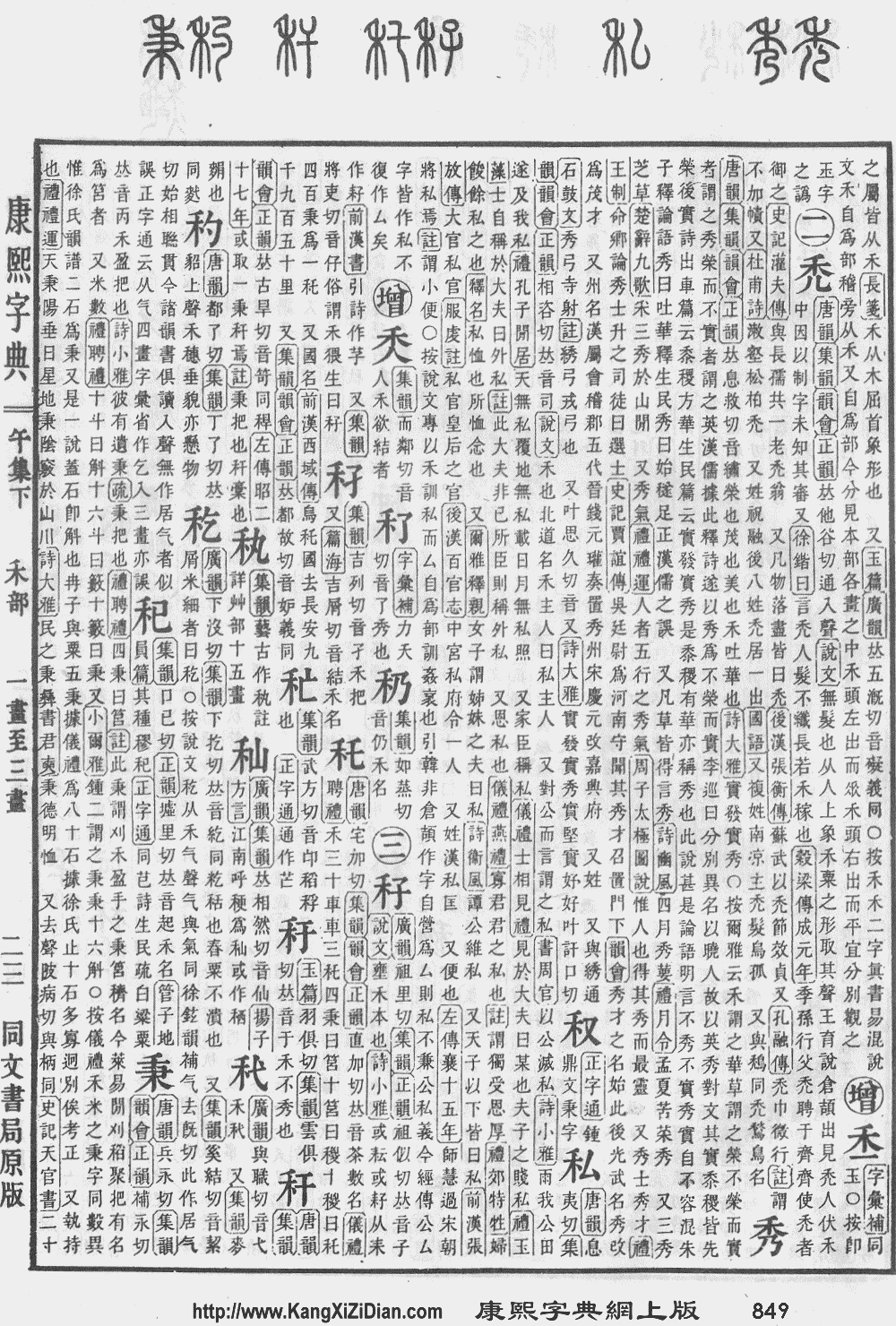
- Kangxi Dictionary: page 849, character 2
- Dai Kanwa Jiten: character 24910
- Dae Jaweon: page 1270, character 15
- Hanyu Da Zidian (first edition): not present, would follow volume 4, page 2588, character 7
- Unihan data for U+79BF
Chinese
| trad. | 禿 | |
|---|---|---|
| simp. | 秃 | |
| alternative forms | 秂 𣬜 痜 | |
Glyph origin
| Historical forms of the character 禿 |
|---|
| Liushutong (compiled in Ming) |
| Transcribed ancient scripts |
 |
Ideogrammic compound (會意/会意) : 毛 (“hair”) + 儿 (“person”). 毛 later corrupted into 禾.
Pronunciation
Definitions
禿
- (of a person's scalp) having little or no hair; bald
- (of a mountain, vegetation, etc.) bare; barren; stripped
- (of a tool) blunt
- (of a work) unfinished; unsatisfactory
- (Quanzhou Hokkien) slick and sly, hard to deal with (especially due to age)
- (Shanghainese) all, everything
- 1870 , William Jones Boone, 新約全書
- Iung-wæ꜄ kōk-doo꜄, jöⁿ-ping꜄, yoong-yau꜄, tʽōk kwæ pæh la꜄ Noong꜄, dzuk-tau꜄ ꜂ioong-꜂ioong ꜂yöⁿ-꜂yöⁿ la꜄. (original romanization)
- 1870 , William Jones Boone, 新約全書
Compounds
- 兀兀禿禿/兀兀秃秃
- 光禿/光秃
- 光禿禿/光秃秃 (guāngtūtū)
- 剔抽禿刷/剔抽秃刷
- 剔抽禿揣/剔抽秃揣
- 剔留禿魯/剔留秃鲁
- 斑禿/斑秃 (bāntū)
- 白禿風/白秃风
- 眼禿刷/眼秃刷
- 禿妃之髮/秃妃之发
- 禿子/秃子 (tūzi)
- 禿子打傘/秃子打伞
- 禿寶蓋/秃宝盖 (tūbǎogài)
- 禿小子/秃小子
- 禿山/秃山
- 禿廝/秃厮
- 禿斑/秃斑 (tūbān)
- 禿歪剌/秃歪剌
- 禿瘡/秃疮 (tūchuāng)
- 禿的/秃的
- 禿禿裡/秃秃里
- 禿科子/秃科子
- 禿筆/秃笔 (tūbǐ)
- 禿賊/秃贼
- 禿頂/秃顶 (tūdǐng)
- 禿頭/秃头 (tūtóu)
- 禿額/秃额
- 禿顱/秃颅
- 禿馬/秃马
- 禿驢/秃驴 (tūlǘ)
- 禿髮/秃发 (tūfà)
- 禿髮奮戰/秃发奋战
- 禿髮症/秃发症
- 禿髮飄飄/秃发飘飘
- 禿鶖/秃鹙
- 禿鷲/秃鹫 (tūjiù)
- 禿鷹/秃鹰 (tūyīng)
- 禿鸛/秃鹳 (tūguàn)
- 突禿/突秃
- 護禿兒/护秃儿
- 賊禿/贼秃
Japanese
Readings
Compounds
Etymology 1
| Kanji in this term |
|---|
| 禿 |
| はげ Hyōgaiji |
| kun’yomi |
Derived terms
Derived terms
Derived terms
- 切り禿 (kirikamuro)
- 羽根の禿 (hanenokamuro)
- 坊主禿 (bōzukamuro)
Etymology 3
| Kanji in this term |
|---|
| 禿 |
| かぶろ Hyōgaiji |
| kun’yomi |
Derived terms
Derived terms
- 海禿 (umikaburo)
- 禿鞘 (kaburozaya)
- 禿立ち (kaburodachi)
- 禿筆 (kaburofude)
- 禿松 (kaburomatsu)
- 引っ込み禿 (hikkomikaburo)
Derived terms
Etymology 5
From Masayoshi Son, founder of SoftBank, is bald.
Pronunciation
- IPA(key): [ha̠ɡe̞]
Proper noun
禿 • (Hage)
- (Internet slang, sometimes derogatory, sometimes offensive) SoftBank (telecommunications company based in Japan)
- (Internet slang, sometimes derogatory, sometimes offensive) Masayoshi Son
References
- Matsumura, Akira, editor (2006), 大辞林 [Daijirin] (in Japanese), Third edition, Tōkyō: Sanseidō, →ISBN
- NHK Broadcasting Culture Research Institute, editor (1998), NHK日本語発音アクセント辞典 [NHK Japanese Pronunciation Accent Dictionary] (in Japanese), Tōkyō: NHK Publishing, →ISBN
This article is issued from Wiktionary. The text is licensed under Creative Commons - Attribution - Sharealike. Additional terms may apply for the media files.