粽
| ||||||||
Translingual
Han character
粽 (Kangxi radical 119, 米+8, 14 strokes, cangjie input 火木十一火 (FDJMF), four-corner 93991, composition ⿰米宗)
Derived characters
- 𪷯, 𣰤
Related characters
- 糉, 糭 (Variant forms of 粽)
References
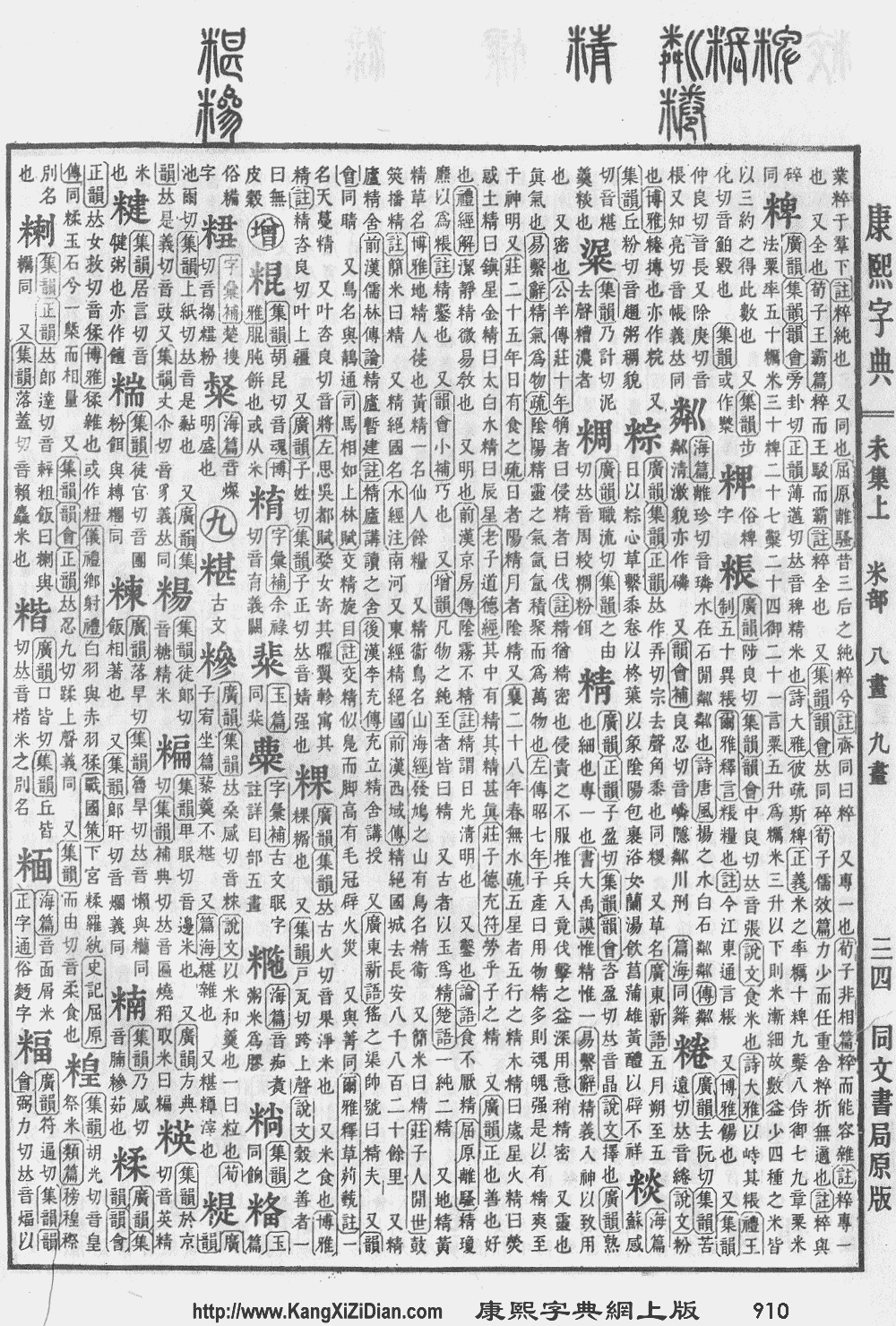
- Kangxi Dictionary: page 910, character 6
- Dai Kanwa Jiten: character 26993
- Dae Jaweon: page 1336, character 6
- Hanyu Da Zidian (first edition): volume 5, page 3153, character 5
- Unihan data for U+7CBD
Chinese
| trad. | 粽/糉/糭 | |
|---|---|---|
| simp. | 粽 | |
| alternative forms | 𥟡 | |
Glyph origin
Characters in the same phonetic series (宗) (Zhengzhang, 2003)
Phono-semantic compound (形聲/形声, OC *ʔsoːŋs) : semantic 米 (“rice”) + phonetic 宗 (OC *ʔsuːŋ).
Etymology
First attested in Fengsu Tongyi (195). Bencao Gangmu claimed it was derived from 棕 (zōng, “palm tree”) due to similar shapes of zongzi and palm tree leaves.
Pronunciation
Synonyms
Dialectal synonyms of 粽子 (“zongzi (sticky rice dumpling)”) [map]
Compounds
Descendants
- → Thai: จ้าง (jâang)
References
- Dictionary of Chinese Character Variants (教育部異體字字典), A03066
- “粽”, in 漢語多功能字庫 (Multi-function Chinese Character Database), 香港中文大學 (the Chinese University of Hong Kong), 2014–
Japanese
Etymology
Compound of 茅 (chi, short for chigaya, "cogon") + 巻 (maki, “wrapping”).
Originally, rice cakes were wrapped in leaves from cogon grass.[1][2]
Noun
粽 • (chimaki)
Derived terms
Derived terms
- 粽馬 (chimaki uma)
- 粽形 (chimaki‐gata)
- 粽草 (chimakigusa)
- 粽笹 (chimaki-zasa)
- 飴粽 (ame chimaki), 飴粽 (ame-jimaki)
- 飾り粽 (kazari chimaki)
- 葛粽 (kuzu chimaki)
- 笹粽 (sasa chimaki)
- 水仙粽 (suisen chimaki)
See also
- 端午の節句 (Tango no Sekku)
References
- Matsumura, Akira (1995) 大辞泉 [Daijisen] (in Japanese), First edition, Tōkyō: Shogakukan, →ISBN
- Matsumura, Akira, editor (2006), 大辞林 [Daijirin] (in Japanese), Third edition, Tōkyō: Sanseidō, →ISBN
Korean
Hanja
粽 • (jong) (hangeul 종, McCune–Reischauer chong, Yale cong)
- This term needs a translation to English. Please help out and add a translation, then remove the text
{{rfdef}}.
Vietnamese
This article is issued from Wiktionary. The text is licensed under Creative Commons - Attribution - Sharealike. Additional terms may apply for the media files.