弄
| ||||||||
| ||||||||
Translingual
| Stroke order | |||
|---|---|---|---|
 | |||
Han character
弄 (Kangxi radical 55, 廾+4, 7 strokes, cangjie input 一土廿 (MGT), four-corner 10441, composition ⿱王廾)
References
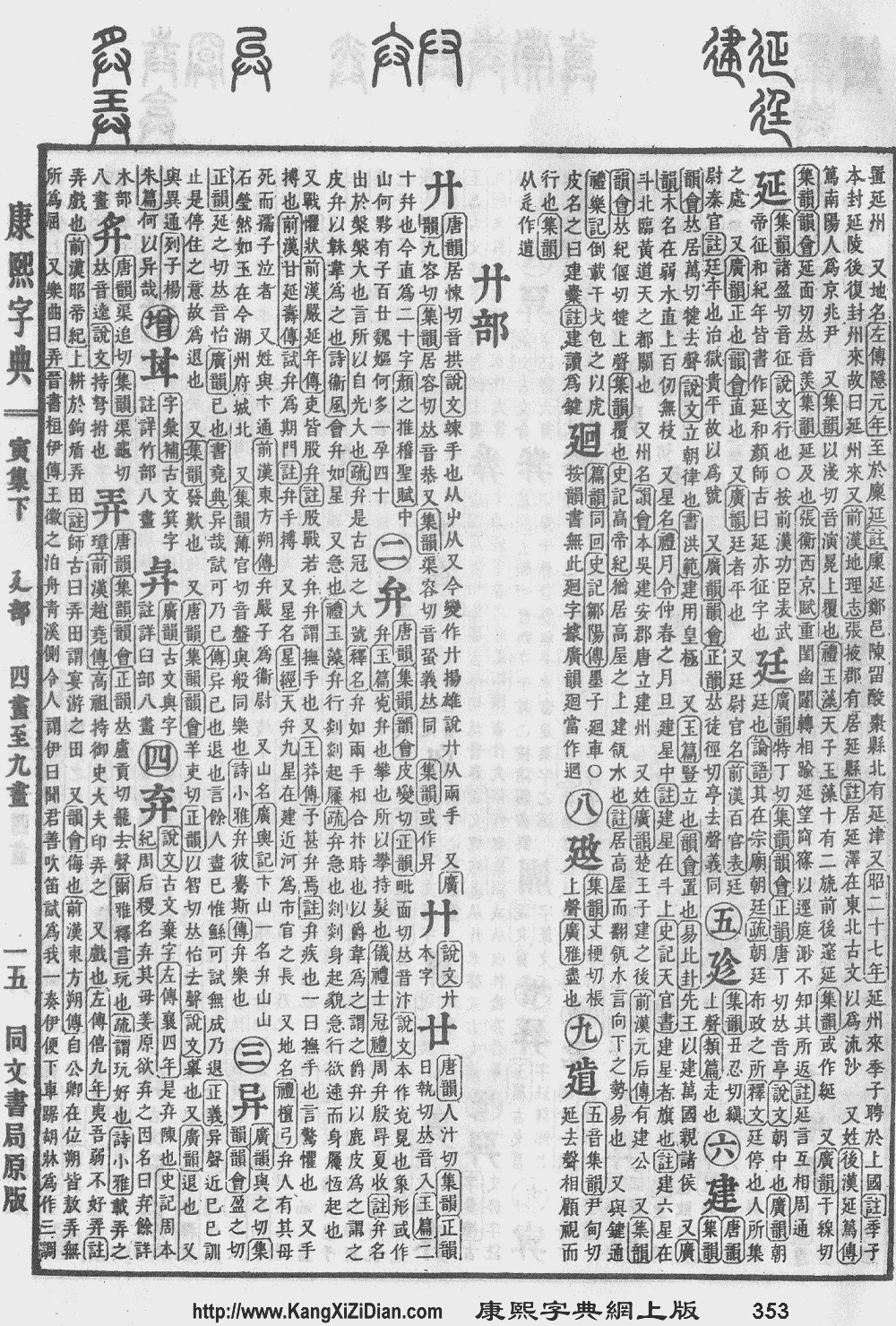
- Kangxi Dictionary: page 353, character 17
- Dai Kanwa Jiten: character 9596
- Dae Jaweon: page 669, character 1
- Hanyu Da Zidian (first edition): volume 1, page 515, character 1
- Unihan data for U+5F04
- Unihan data for U+F943
Chinese
Glyph origin
| Historical forms of the character 弄 | ||
|---|---|---|
| Western Zhou | Shuowen Jiezi (compiled in Han) | Liushutong (compiled in Ming) |
| Bronze inscriptions | Small seal script | Transcribed ancient scripts |
 |
 |
 |
Characters in the same phonetic series (弄) (Zhengzhang, 2003)
Ideogrammic compound (會意/会意) : 玉 (“jade”) + 廾 (“hands”) – play with a jade artefact using one's hands.
Etymology 1
| simp. and trad. |
弄 | |
|---|---|---|
| alternative forms | 挵 挊 | |
Compared with Khmer លួង (luəng, “to console; to cheer; to coax; to flatter”) < Old Khmer lvaṅ (“to cheer, amuse, entertain, divert”) < Pre-Angkorian Khmer loṅ. The Khmer initial consonant does not agree with Old Chinese; perhaps the Khmer word is a post-Han loan (Schuessler, 2007).
Pronunciation
Definitions
弄
- to play with; to play around with; to fiddle with; to fondle
- to enjoy; to play
- trick; magic
- to make fun of; to tease; to bully
- to show off; to make a show of
- (Southern Min) to amuse (a child)
- (music) to play (a musical instrument); to perform
- (music) ditty
- to do; to engage in; to undertake; to deal with
- to make ... do/become ...; to cause ... to do ...
- (colloquial) to cause someone to become pregnant
- (Southern Min) to shake off; to shake out
- to marry
- to investigate; to look into
- to get; to obtain; to fetch
- to decorate; to dress up; to put on make-up
Compounds
- 一弄兒/一弄儿
- 不好弄
- 丟眉弄眼/丢眉弄眼
- 丟眉弄色/丢眉弄色
- 五花爨弄
- 作弄 (zuònòng)
- 侍弄 (shìnòng)
- 傳杯弄盞/传杯弄盏
- 出乖弄醜/出乖弄丑 (chūguāinòngchǒu)
- 吟風弄月/吟风弄月
- 含飴弄孫/含饴弄孙 (hányínòngsūn)
- 咂嘴弄脣/咂嘴弄唇
- 咂嘴弄舌
- 和弄
- 品弄
- 哄弄
- 唆弄
- 嘲弄 (cháonòng)
- 嘲風弄月/嘲风弄月
- 圈弄
- 團弄/团弄
- 好弄玄虛/好弄玄虚
- 媟弄
- 嬉弄
- 專國弄權/专国弄权
- 弄丸
- 弄乖
- 弄乾坤/弄干坤
- 弄來弄去/弄来弄去
- 弄倒
- 弄假成真 (nòngjiǎchéngzhēn)
- 弄優/弄优
- 弄兵潢池
- 弄刀
- 弄刺子兒/弄刺子儿
- 弄口
- 弄口鳴舌/弄口鸣舌
- 弄喧
- 弄喧搗鬼
- 弄嘴
- 弄嘴弄舌
- 弄堂 (lòngtáng)
- 弄壞/弄坏 (nònghuài)
- 弄好 (nònghǎo)
- 弄小
- 弄小性兒/弄小性儿
- 弄局
- 弄岔
- 弄巧反拙
- 弄左性
- 弄巧成拙 (nòngqiǎochéngzhuō)
- 弄影
- 弄性
- 弄性尚氣/弄性尚气
- 弄手腳/弄手脚
- 弄擰了/弄拧了
- 弄文
- 弄文輕武/弄文轻武
- 弄斧班門/弄斧班门
- 弄月
- 弄月嘲風/弄月嘲风
- 弄月摶風/弄月抟风
- 弄柳拈花
- 弄權/弄权 (nòngquán)
- 弄死 (nòngsǐ)
- 弄水
- 弄法
- 弄潮 (nòngcháo)
- 弄潮兒/弄潮儿 (nòngcháo'ér)
- 弄濤/弄涛
- 弄狗相咬
- 弄獅/弄狮
- 弄獐
- 弄獐宰相
- 弄玉偷香
- 弄璋 (nòngzhāng)
- 弄璋之喜 (nòngzhāngzhīxǐ)
- 弄璋之慶/弄璋之庆
- 弄瓦 (nòngwǎ)
- 弄瓦之喜 (nòngwǎzhīxǐ)
- 弄甏
- 弄白相
- 弄盞傳杯/弄盏传杯
- 弄破
- 弄神弄鬼
- 弄空頭/弄空头
- 弄窩子/弄窝子
- 弄筆/弄笔
- 弄筆端/弄笔端
- 弄筆墨/弄笔墨 (nòng bǐmò)
- 弄粉調朱/弄粉调朱
- 弄精神
- 弄精細/弄精细
- 弄精魂
- 弄翰
- 弄聳/弄耸
- 弄腔調/弄腔调
- 弄臣 (nòngchén)
- 弄虛作假/弄虚作假 (nòngxūzuòjiǎ)
- 弄虛頭/弄虚头
- 弄車鼓/弄车鼓
- 弄送
- 弄錯/弄错 (nòngcuò)
- 弄錢/弄钱
- 弄險/弄险
- 弄風兒/弄风儿
- 弄飯/弄饭
- 弄髒/弄脏 (nòngzāng)
- 弄鬆/弄松
- 弄鬼
- 弄鬼妝么
- 弄鬼弔猴/弄鬼吊猴
- 弄鬼搏沙
- 彈弄/弹弄
- 愚弄 (yúnòng)
- 戲弄/戏弄 (xìnòng)
- 抓弄
- 把弄
- 扯皮弄筋
- 抱子弄孫/抱子弄孙
- 拈弄 (niānnòng)
- 拈花弄月
- 抬鼓弄
- 持刀弄棒
- 挑弄 (tiǎonòng)
- 拿板弄勢/拿板弄势
- 挾勢弄權/挟势弄权
- 捏弄
- 捉弄 (zhuōnòng)
- 捕風弄月/捕风弄月
- 掉嘴弄舌
- 掇弄
- 掉弄
- 掬弄
- 提刀弄斧
- 插圈弄套
- 搬口弄舌
- 搬弄 (bānnòng)
- 搬弄口舌
- 搬弄是非 (bānnòngshìfēi)
- 搬脣弄舌/搬唇弄舌
- 搔頭弄姿/搔头弄姿
- 搔首弄姿 (sāoshǒunòngzī)
- 搏香弄粉
- 摩弄
- 摶砂弄汞/抟砂弄汞
- 摶香弄粉/抟香弄粉
- 撩弄
- 撥弄/拨弄 (bōnòng)
- 播弄
- 撮弄 (cuōnòng)
- 撫弄/抚弄 (fǔnòng)
- 撥弄是非/拨弄是非
- 擠眉弄眼/挤眉弄眼
- 擠眼弄眉/挤眼弄眉
- 攛弄/撺弄
- 故弄玄虛/故弄玄虚 (gùnòngxuánxū)
- 梅花三弄
- 江南弄
- 沒打弄/没打弄
- 漁陽弄/渔阳弄
- 潢池弄兵
- 火上弄冰
- 狎弄
- 玩弄
- 班門弄斧/班门弄斧 (bānménnòngfǔ)
- 瑟弄琴調/瑟弄琴调
- 瑟調琴弄/瑟调琴弄
- 盜弄/盗弄
- 盤弄/盘弄
- 瞞神弄鬼/瞒神弄鬼
- 禍弄/祸弄
- 竊弄/窃弄
- 竊弄威權/窃弄威权
- 簉弄
- 簸弄 (bǒnòng)
- 翻弄 (fānnòng)
- 翻脣弄舌/翻唇弄舌
- 耍弄 (shuǎnòng)
- 胡弄局
- 舞弄 (wǔnòng)
- 舞文弄法
- 舞文弄墨 (wǔwénnòngmò)
- 舞筆弄文/舞笔弄文
- 般弄
- 裝神弄鬼/装神弄鬼 (zhuāngshénnòngguǐ)
- 調嘴弄舌/调嘴弄舌
- 調弄/调弄
- 調絃弄管/调弦弄管
- 調脣弄舌/调唇弄舌
- 調舌弄脣/调舌弄唇
- 調風弄月/调风弄月
- 調墨弄筆/调墨弄笔
- 變弄/变弄 (biànnòng)
- 販弄/贩弄
- 賣弄/卖弄
- 踢天弄井
- 踢弄
- 車鼓弄/车鼓弄
- 造化弄人
- 運弄/运弄
- 顧影弄姿/顾影弄姿
- 顯弄/显弄
- 飯飽弄箸/饭饱弄箸
- 鬼弄
Etymology 2
| simp. and trad. |
弄 | |
|---|---|---|
| alternative forms | 衖 | |
Possibly from an ancient regional variant of 巷 (OC *ɡroːŋs, “alley”).
Pronunciation
Definitions
弄
Synonyms
Dialectal synonyms of 衚衕 (“alley; lane”) [map]
Pronunciation
Synonyms
Dialectal synonyms of 玩 (“to play; to play with”) [map]
Compounds
- 弄具
- 弄刀
- 弄喙
- 弄槍/弄枪
- 弄樂/弄乐
- 弄流
- 弄牌
- 弄物
- 弄笑
- 弄雅
- 弄麻雀
Further reading
- (Min Nan pronunciation audio) “Entry #3143”, in 臺灣閩南語常用詞辭典 [Dictionary of Frequently-Used Taiwan Minnan] (overall work in Mandarin and Hokkien), Ministry of Education, R.O.C., 2023.
Japanese
Korean
Vietnamese
This article is issued from Wiktionary. The text is licensed under Creative Commons - Attribution - Sharealike. Additional terms may apply for the media files.