臆
| ||||||||
Translingual
Han character
臆 (Kangxi radical 130, 肉+13, 17 strokes, cangjie input 月卜廿心 (BYTP), four-corner 70236, composition ⿰月意(GJK) or ⿰⺼意(HTV))
Derived characters
- 𡄯
References
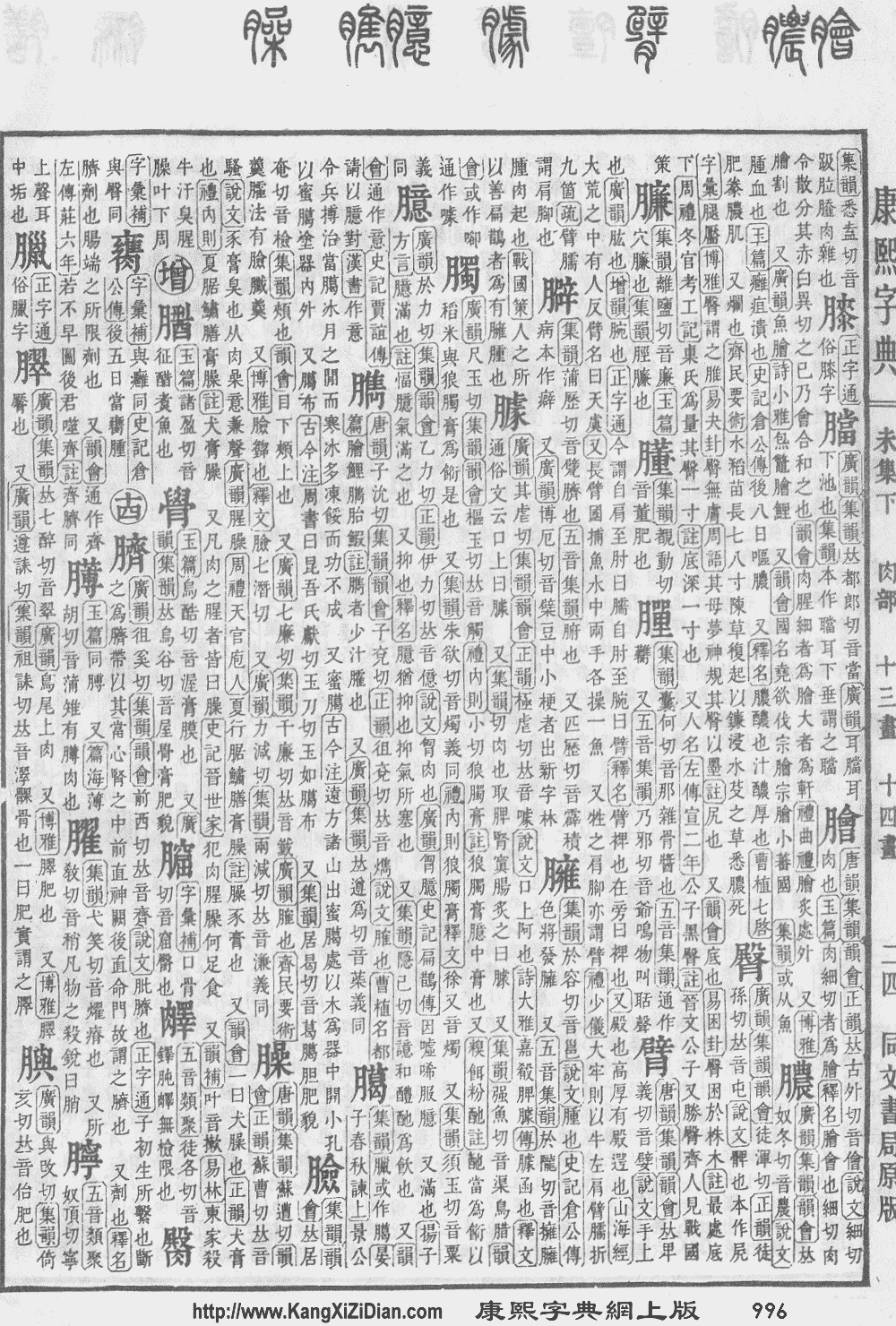
- Kangxi Dictionary: page 996, character 14
- Dai Kanwa Jiten: character 29951
- Dae Jaweon: page 1447, character 16
- Hanyu Da Zidian (first edition): volume 3, page 2118, character 3
- Unihan data for U+81C6
Chinese
Glyph origin
| Historical forms of the character 臆 |
|---|
| Shuowen Jiezi (compiled in Han) |
| Small seal script |
 |
Characters in the same phonetic series (意) (Zhengzhang, 2003)
Phono-semantic compound (形聲/形声, OC *qɯɡ) : semantic 肉 (“body”) + phonetic 意 (OC *qɯɡs).
Etymology 1
| trad. | 臆 | |
|---|---|---|
| simp. # | 臆 | |
| 2nd round simp. | 肊 | |
| alternative forms | 𩪣 𩪙 | |
Compare Proto-Tai *ʔɤkᴰ (“chest”), whence Thai อก (òk). Cognate with 意 (OC *qɯɡs, “mind”) and 憶 (OC *qɯɡ, “to remember”).
Pronunciation
Pronunciation
Definitions
臆
- (Southern Min) to guess
- (Zhangzhou Hokkien) to purchase objects by quantity and not by weight
Synonyms
Dialectal synonyms of 猜 (“to guess”) [map]
References
- Dictionary of Chinese Character Variants (教育部異體字字典), A03368
- “臆”, in 漢語多功能字庫 (Multi-function Chinese Character Database), 香港中文大學 (the Chinese University of Hong Kong), 2014–
Japanese
| Shinjitai | 臆 | |
| Kyūjitai [1] |
臆󠄂 臆+ 󠄂?(Hanyo-Denshi) (Moji_Joho) |
 |
| The displayed kanji may be different from the image due to your environment. See here for details. | ||
Kanji
臆
Readings
Pronunciation
- IPA(key): [o̞kɯ̟ᵝ]
Usage notes
In modern Japanese, 臆 is mostly replaced by 憶, due to the deprecation of non-tōyō kanji caused by the Japanese script reform.
Derived terms
Derived terms
- 臆出 (okushutsu)
- 臆度 (okutaku): guessing; speculation
- 臆断 (okudan): alternative form of 憶断 (okudan, “hasty conclusion; conjecture”)
- 臆病 (okubyō): timidity; cowardice
- 臆面 (okumen): shy face
- 臆見 (okken): conjecture
- 臆説 (okusetsu): hypothesis; speculation
- 臆測 (okusoku): guessing; supposition
Korean
Etymology
From Middle Chinese 臆 (MC 'ik).
Recorded as Middle Korean ᅙᅳᆨ〮 (Yale: quk) in Dongguk Jeongun (東國正韻 / 동국정운), 1448.
Recorded as Middle Korean 억〮 (ék) (Yale: ek) in Hunmong Jahoe (訓蒙字會 / 훈몽자회), 1527.
Compounds
Compounds
- 억측 (臆測, eokcheuk, “speculation; conjecture”)
- 억단 (臆斷, eokdan, “surmise”)
- 억견 (臆見, eokgyeon, “conjecture”)
Vietnamese
Han character
- This term needs a translation to English. Please help out and add a translation, then remove the text
{{rfdef}}.
References
This article is issued from Wiktionary. The text is licensed under Creative Commons - Attribution - Sharealike. Additional terms may apply for the media files.