於
See also: 于
| ||||||||
Translingual
| Stroke order | |||
|---|---|---|---|
 | |||
Alternative forms
- The Hong Kong standard form for this character is ⿸𭤨⺀, despite the fact that 於 is not related to 方 or 㫃 (see below).
Han character
於 (Kangxi radical 70, 方+4, 8 strokes, cangjie input 卜尸人卜 (YSOY), four-corner 08233, composition ⿰方仒 (GTJKV) or ⿸𭤨⺀ (H))
Derived characters
References
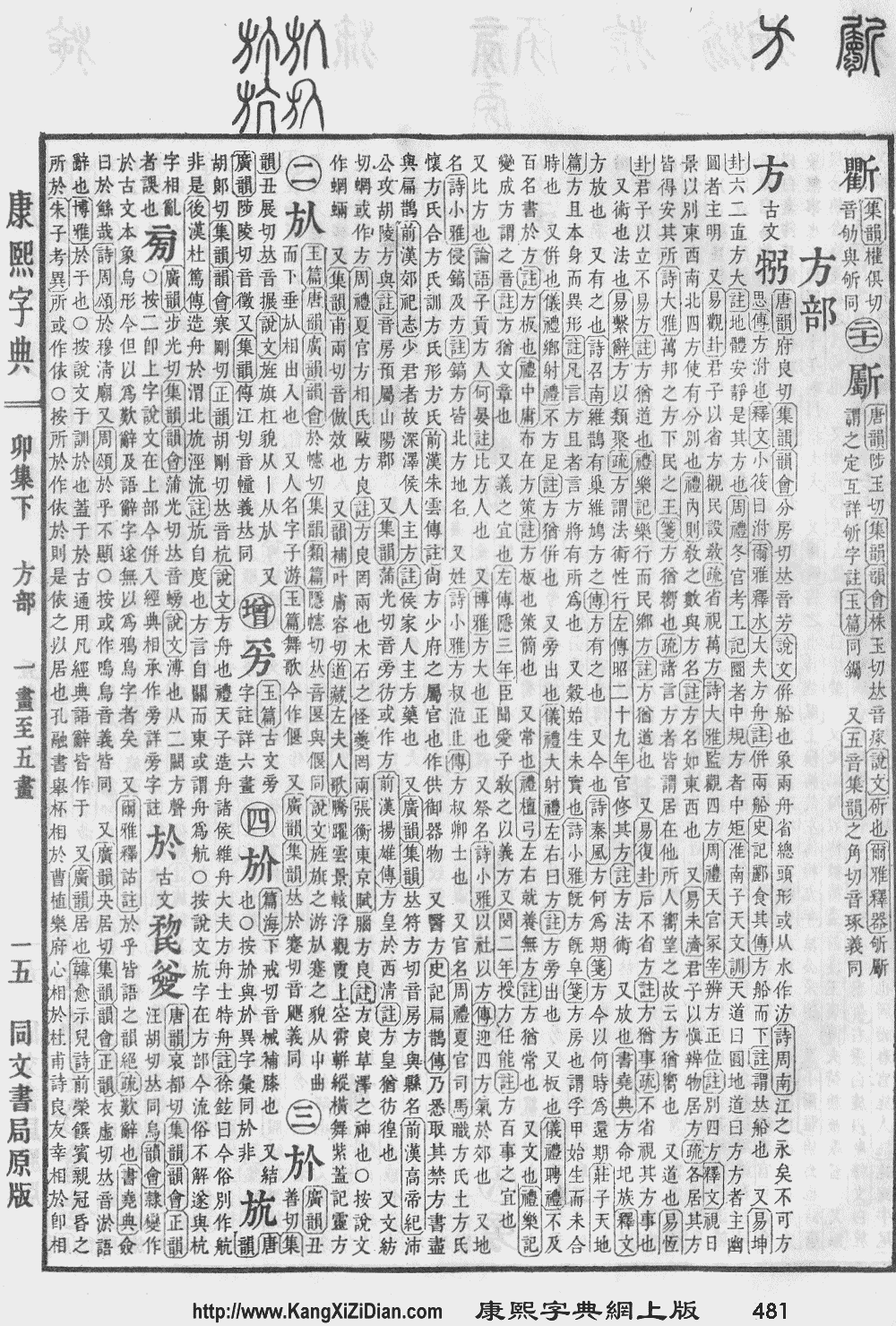
- Kangxi Dictionary: page 481, character 11
- Dai Kanwa Jiten: character 13628
- Dae Jaweon: page 843, character 7
- Hanyu Da Zidian (first edition): volume 3, page 2175, character 2
- Unihan data for U+65BC
Chinese
| trad. | 於/于* | |
|---|---|---|
| simp. | 于* | |
| alternative forms | 扵 | |
| The preposition senses. | ||
| simp. and trad. |
於 | |
|---|---|---|
| alternative forms | 扵 | |
| Other senses. | ||
Glyph origin
| Historical forms of the character 於 | ||
|---|---|---|
| Western Zhou | Warring States | Liushutong (compiled in Ming) |
| Bronze inscriptions | Chu slip and silk script | Transcribed ancient scripts |
 |
 |
 |
Characters in the same phonetic series (於) (Zhengzhang, 2003)
From an ancient variant form of 烏. Not related to 方 or 㫃.
Note the other uses of 于 (yú), the simplified and variant traditional form of the preposition senses.
Etymology
- Preposition
- From Proto-Sino-Tibetan *ʔaj (“to go; directional particle”) (Schuessler, 2007). It has slowly merged with and replaced the older 于 (OC *ɢʷa) (ibid.).
- Prefix in 於菟/於檡/於兔/於䖘
- Variant of 阿 (*qaːl, prefix in kinship terms and personal names) (ibid.).
This etymology is incomplete. You can help Wiktionary by elaborating on the origins of this term.
Pronunciation 1
Definitions
於
- (indicates time or place) in; at; on
- (used before a noun to indicate the object of an action) with; on
- 求助於人/求助于人 ― qiúzhù yú rén ― to ask people for help
- 不滿足於現狀/不满足于现状 ― bù mǎnzú yú xiànzhuàng ― not satisfied with the status quo
- 有益於健康/有益于健康 ― yǒuyì yú jiànkāng ― good for health
- 目前總的國際形勢和國內形勢於我們有利,於侵略者不利。 [MSC, trad.]
- From: 1950, 毛澤東 (Mao Zedong), 《给中国人民志愿军的命令》 (Order to the Chinese People's Volunteers), 《毛澤東選集》. English translation based on the Foreign Languages Press edition
- Mùqián zǒng de guójì xíngshì hé guónèi xíngshì yú wǒmen yǒulì, yú qīnlüèzhě bùlì. [Pinyin]
- At present, the international and domestic situation as a whole is favourable to us, not to the aggressors.
目前总的国际形势和国内形势于我们有利,于侵略者不利。 [MSC, simp.]
- (used before a noun, verb or adjective to indicate the target of action) to
- (indicates beginning or source) from
- (indicates the agent of action) by
- (indicates comparison) than
- (used after a verb or adjective) with regard to
- a surname
Usage notes
The surname 於 is to be distinguished from another surname 于. The character 於 is never simplified if it is used for surname.
Compounds
- 一至於此/一至于此
- 不中於款/不中于款
- 不安於位/不安于位
- 不安於室/不安于室
- 不形於色/不形于色 (bùxíngyúsè)
- 不絕於耳/不绝于耳 (bùjuéyú'ěr)
- 不至於/不至于 (bùzhìyú)
- 不致於/不致于 (bùzhìyú)
- 亞於/亚于 (yàyú)
- 人浮於事/人浮于事 (rénfúyúshì)
- 人浮於食/人浮于食
- 仰給於人/仰给于人
- 位於/位于 (wèiyú)
- 供過於求/供过于求 (gōngguòyúqiú)
- 借聽於聾/借听于聋
- 假力於人/假力于人
- 公諸於世/公诸于世 (gōngzhūyúshì)
- 利多於弊/利多于弊
- 危於累卵/危于累卵
- 厝薪於火/厝薪于火
- 取信於人/取信于人
- 同歸於盡/同归于尽 (tóngguīyújìn)
- 問道於盲/问道于盲
- 喜形於色/喜形于色
- 善於/善于 (shànyú)
- 嚴於律己/严于律己
- 在於/在于 (zàiyú)
- 垂於將來/垂于将来
- 基於/基于 (jīyú)
- 嫁禍於人/嫁祸于人 (jiàhuòyúrén)
- 安於一隅/安于一隅
- 安於泰山/安于泰山
- 安於現狀/安于现状 (ānyúxiànzhuàng)
- 定於一尊/定于一尊 (dìngyúyīzūn)
- 寓兵於農/寓兵于农
- 寓教於樂/寓教于乐 (yùjiàoyúlè)
- 寓禁於征
- 專美於前/专美于前
- 對於/对于 (duìyú)
- 屬於/属于 (shǔyú)
- 形於言色/形于言色
- 形於辭色/形于辞色
- 形於顏色/形于颜色
- 忠於職守/忠于职守
- 怒形於色/怒形于色
- 急於星火/急于星火
- 情溢於表/情溢于表
- 憂形於色/忧形于色
- 拙於言辭/拙于言辞
- 推舟於陸/推舟于陆
- 敏於伎/敏于伎
- 敗於垂成/败于垂成
- 於事無濟/于事无济
- 於事無補/于事无补 (yúshìwúbǔ)
- 於今/于今 (yújīn)
- 於伏/于伏
- 於何/于何
- 於家為國/于家为国
- 於心不安/于心不安
- 於心不忍/于心不忍
- 於心何忍/于心何忍 (yúxīnhérěn)
- 於心無愧/于心无愧
- 於斯/于斯
- 於是/于是 (yúshì)
- 於是乎/于是乎 (yúshìhū)
- 於民潤國/于民润国
- 於法無據/于法无据
- 於潛/於潜 (Yúqián)
- 於焉/于焉
- 於陵
- 易於反掌/易于反掌
- 暴屍於市/暴尸于市 (bàoshīyúshì)
- 月離於畢/月离于毕
- 月麗於箕/月丽于箕
- 有鑒於此/有鉴于此 (yǒujiànyúcǐ)
- 有鑑於此/有鉴于此 (yǒujiànyúcǐ)
- 染指於鼎/染指于鼎
- 格於成例/格于成例
- 格於環境/格于环境
- 業精於勤/业精于勤
- 止於至善/止于至善 (zhǐyúzhìshàn)
- 歸於/归于 (guīyú)
- 死於非命/死于非命 (sǐyúfēimìng)
- 毀於一旦/毁于一旦 (huǐyúyīdàn)
- 求過於供/求过于供
- 求道於盲/求道于盲
- 流傳於世/流传于世
- 流於形式/流于形式
- 淡於名利/淡于名利
- 源於/源于 (yuányú)
- 溢於言表/溢于言表 (yìyúyánbiǎo)
- 瀕於/濒于 (bīnyú)
- 無動於衷/无动于衷 (wúdòngyúzhōng)
- 無濟於事/无济于事 (wújìyúshì)
- 無補於世/无补于世
- 無補於事/无补于事 (wúbǔyúshì)
- 無補於時/无补于时
- 燕巢於幕/燕巢于幕
- 生於憂患,死於安樂/生于忧患,死于安乐 (shēng yú yōuhuàn, sǐ yú ānlè)
- 由於/由于 (yóuyú)
- 疏於/疏于 (shūyú)
- 疲於奔命/疲于奔命 (píyúbēnmìng)
- 相於/相于
- 禍生於忽/祸生于忽
- 窮於應付/穷于应付
- 等於/等于 (děngyú)
- 終於/终于 (zhōngyú)
- 絡繹於途/络绎于途
- 罷於奔命/罢于奔命
- 義形於色/义形于色
- 老於世故/老于世故
- 耿耿於心/耿耿于心
- 耿耿於懷/耿耿于怀 (gěnggěngyúhuái)
- 聊勝於無/聊胜于无 (liáoshèngyúwú)
- 聞名於世/闻名于世 (wénmíngyúshì)
- 膽大於天/胆大于天
- 至於/至于 (zhìyú)
- 血濃於水/血浓于水 (xuènóngyúshuǐ)
- 行成於思/行成于思
- 見堯於牆/见尧于墙
- 見於/见于
- 見笑於人/见笑于人
- 言歸於好/言归于好 (yánguīyúhǎo)
- 詢於芻蕘/询于刍荛
- 謹於心/谨于心
- 輕於鴻毛/轻于鸿毛 (qīngyúhóngmáo)
- 迫於眉睫/迫于眉睫
- 退藏於密/退藏于密
- 過於/过于 (guòyú)
- 重於泰山/重于泰山 (zhòng yú Tàishān)
- 鑒於/鉴于 (jiànyú)
- 關於/关于 (guānyú)
- 難於上天/难于上天
- 青出於藍/青出于蓝 (qīngchūyúlán)
- 青過於藍/青过于蓝
Pronunciation 2
Definitions
於
Japanese
Kanji
於
(“Jinmeiyō” kanji used for names)
- in (defines a place, a moment, a concept in order to describe its relationship with the surroundings)
Korean
Hanja
- This term needs a translation to English. Please help out and add a translation, then remove the text
{{rfdef}}.
Vietnamese
Han character
於: Hán Việt readings: ư[1][2][3]
於: Nôm readings: ơ[1][2][3][4], ở[1][2][3][4], ưa[1][2][3][4], ờ[1][2][3], ư[1][3], ớ[1][3], ô[3], ứ[3], thờ[3]
References
- Nguyễn (2014).
- Nguyễn et al. (2009).
- Trần (2004).
- Hồ (1976).
This article is issued from Wiktionary. The text is licensed under Creative Commons - Attribution - Sharealike. Additional terms may apply for the media files.