藁
| ||||||||
Translingual
Han character
藁 (Kangxi radical 140, 艸+14, 17 strokes, cangjie input 廿卜口木 (TYRD) or 難廿卜口木 (XTYRD), composition ⿱艹槀)
References
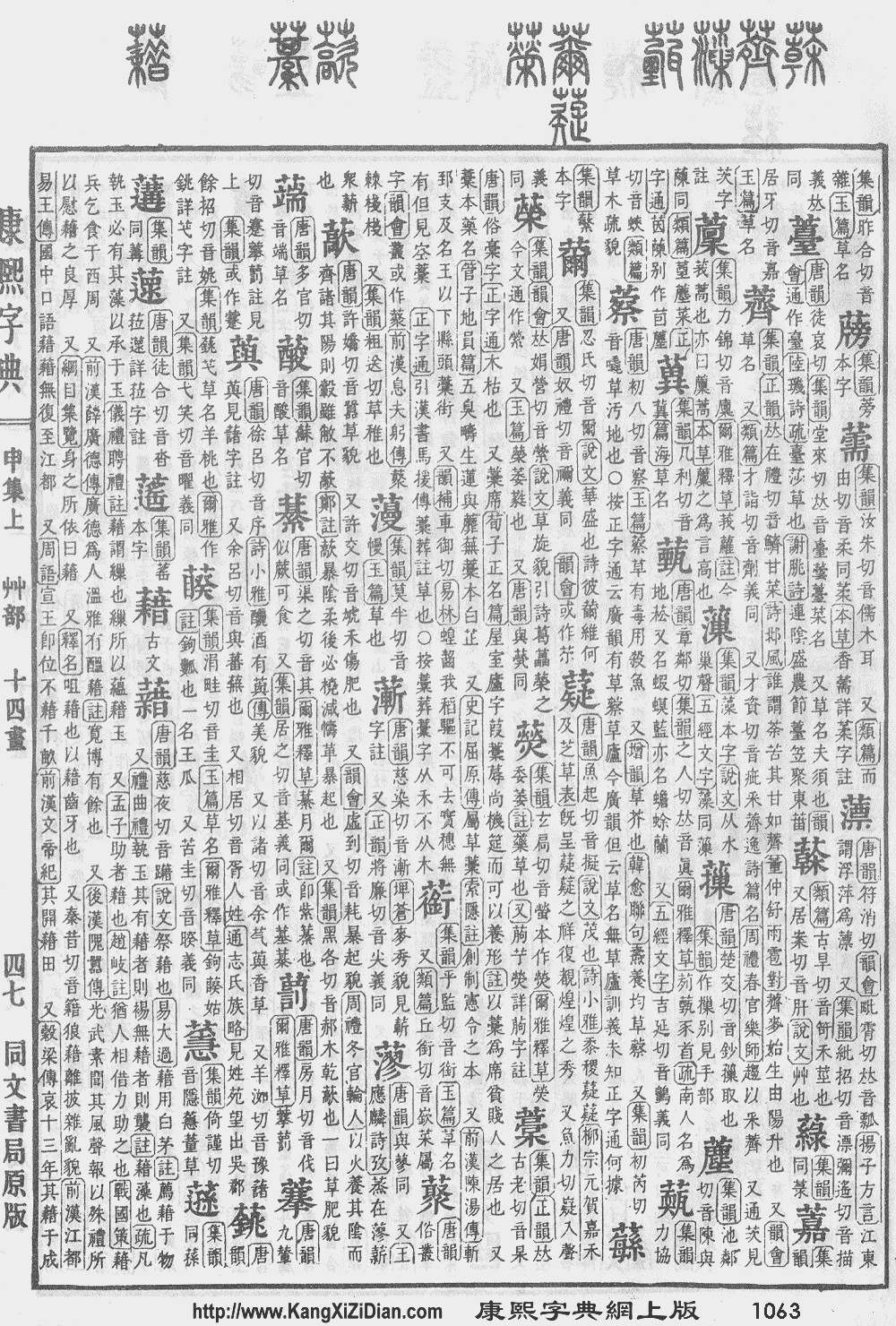
- Kangxi Dictionary: page 1063, character 22
- Dai Kanwa Jiten: character 32222
- Dae Jaweon: page 1528, character 12
- Hanyu Da Zidian (first edition): volume 5, page 3315, character 5
- Unihan data for U+85C1
Chinese
| trad. | 藁 | |
|---|---|---|
| simp. # | 藁 | |
Glyph origin
Characters in the same phonetic series (高) (Zhengzhang, 2003)
| Old Chinese | |
|---|---|
| 高 | *kaːw |
| 膏 | *kaːw, *kaːws |
| 篙 | *kaːw |
| 稿 | *kaːwʔ |
| 稾 | *kaːwʔ, *kʰaːws |
| 槁 | *kaːwʔ, *kʰaːwʔ |
| 縞 | *kaːwʔ, *kaːws |
| 暠 | *kaːwʔ |
| 槀 | *kaːwʔ |
| 藁 | *kaːwʔ |
| 燺 | *kʰaːwʔ |
| 薧 | *kʰaːwʔ, *kʰaːws, *qʰaːw |
| 犒 | *kʰaːws |
| 蒿 | *qʰaːw |
| 藃 | *qʰaːws, *qʰraːw, *qʰraw |
| 豪 | *ɡaːw |
| 毫 | *ɡaːw |
| 壕 | *ɡaːw |
| 濠 | *ɡaːw |
| 鎬 | *ɡaːwʔ |
| 滈 | *ɡaːwʔ, *qʰraːwɢ |
| 鄗 | *ɡaːwʔ, *kʰraːw, *qʰaːwɢ |
| 鰝 | *ɡaːwʔ, *qʰaːwɢ |
| 薃 | *ɡaːwʔ |
| 搞 | *kruːʔ |
| 敲 | *kʰraːw, *kʰraːws |
| 髇 | *qʰraːw |
| 嗃 | *qʰraːw, *qʰraːws, *qʰaːwɢ |
| 巐 | *kʰl'awʔ |
| 歊 | *qʰraw, *qʰoːwɢ |
| 謞 | *qʰaːwɢ, *qʰraːwɢ |
| 熇 | *qʰaːwɢ, *qʰoːwɢ, *qʰoːɡ |
| 碻 | *kʰraːwɢ |
| 塙 | *kʰraːwɢ |
| 毃 | *kʰraːwɢ |
| 翯 | *qʰraːwɢ, *ɡraːwɢ, *ɡoːwɢ |
| 瀥 | *qʰraːwɢ |
Pronunciation
Definitions
藁
References
- (Cantonese) 粵音資料集叢
This article is issued from Wiktionary. The text is licensed under Creative Commons - Attribution - Sharealike. Additional terms may apply for the media files.