高
See also: 髙
| ||||||||
| ||||||||
Translingual
| Stroke order | |||
|---|---|---|---|
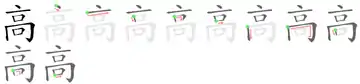 | |||
| Stroke order | |||
|---|---|---|---|
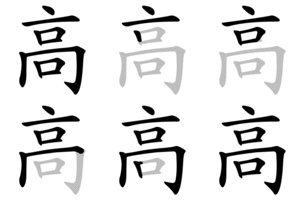 | |||
Alternative forms
Han character
高 (Kangxi radical 189, 高+0, 10 strokes, cangjie input 卜口月口 (YRBR), four-corner 00227, composition ⿳亠口冋)
- Kangxi radical #189, ⾼.
Derived characters
See also
References
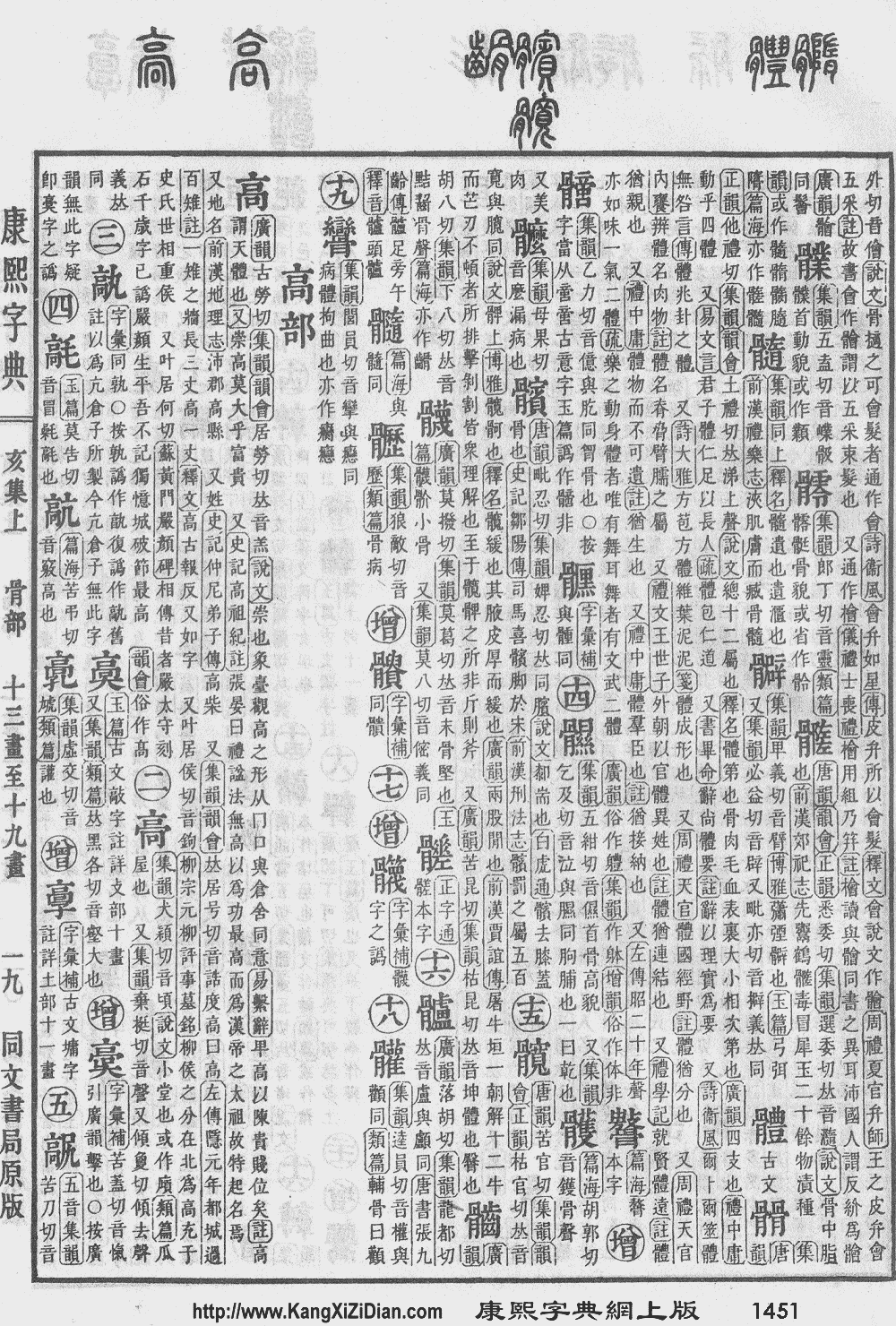
- Kangxi Dictionary: page 1451, character 26
- Dai Kanwa Jiten: character 45313
- Dae Jaweon: page 1979, character 4
- Hanyu Da Zidian (first edition): volume 7, page 4593, character 1
- Unihan data for U+9AD8
Chinese
Glyph origin
| Historical forms of the character 高 | ||||||||
|---|---|---|---|---|---|---|---|---|
| Shang | Western Zhou | Spring and Autumn | Warring States | Shuowen Jiezi (compiled in Han) | Liushutong (compiled in Ming) | |||
| Bronze inscriptions | Oracle bone script | Bronze inscriptions | Bronze inscriptions | Bronze inscriptions | Chu slip and silk script | Qin slip script | Small seal script | Transcribed ancient scripts |
 |
 |
 |
 |
 |
 |
 |
 |
 |
Characters in the same phonetic series (高) (Zhengzhang, 2003)
| Old Chinese | |
|---|---|
| 高 | *kaːw |
| 膏 | *kaːw, *kaːws |
| 篙 | *kaːw |
| 稿 | *kaːwʔ |
| 稾 | *kaːwʔ, *kʰaːws |
| 槁 | *kaːwʔ, *kʰaːwʔ |
| 縞 | *kaːwʔ, *kaːws |
| 暠 | *kaːwʔ |
| 槀 | *kaːwʔ |
| 藁 | *kaːwʔ |
| 燺 | *kʰaːwʔ |
| 薧 | *kʰaːwʔ, *kʰaːws, *qʰaːw |
| 犒 | *kʰaːws |
| 蒿 | *qʰaːw |
| 藃 | *qʰaːws, *qʰraːw, *qʰraw |
| 豪 | *ɡaːw |
| 毫 | *ɡaːw |
| 壕 | *ɡaːw |
| 濠 | *ɡaːw |
| 鎬 | *ɡaːwʔ |
| 滈 | *ɡaːwʔ, *qʰraːwɢ |
| 鄗 | *ɡaːwʔ, *kʰraːw, *qʰaːwɢ |
| 鰝 | *ɡaːwʔ, *qʰaːwɢ |
| 薃 | *ɡaːwʔ |
| 搞 | *kruːʔ |
| 敲 | *kʰraːw, *kʰraːws |
| 髇 | *qʰraːw |
| 嗃 | *qʰraːw, *qʰraːws, *qʰaːwɢ |
| 巐 | *kʰl'awʔ |
| 歊 | *qʰraw, *qʰoːwɢ |
| 謞 | *qʰaːwɢ, *qʰraːwɢ |
| 熇 | *qʰaːwɢ, *qʰoːwɢ, *qʰoːɡ |
| 碻 | *kʰraːwɢ |
| 塙 | *kʰraːwɢ |
| 毃 | *kʰraːwɢ |
| 翯 | *qʰraːwɢ, *ɡraːwɢ, *ɡoːwɢ |
| 瀥 | *qʰraːwɢ |
Etymology 1
| simp. and trad. |
高 | |
|---|---|---|
| 2nd round simp. | ⿳㇔乛龴 | |
| alternative forms | 髙 皋 “tall” | |
Possibly from Proto-Sino-Tibetan *m/s-gaw (“head”). Compare with Burmese ခေါင်း (hkaung:, “head”). However, 元 (OC *ŋon, “head”) instead is more likely to be related to this Proto-Sino-Tibetan root given its significant semantic agreement (Schuessler, 2007).
Likely allofams are 喬 (OC *ɡrew, “tall”), and perhaps 浩 (OC *ɡuːʔ, “vast”) (although the vowels do not agree).
Pronunciation
Definitions
高
Synonyms
Dialectal synonyms of 高 (“tall; high”) [map]
Compounds
- 一決高下/一决高下 (yījuégāoxià)
- 一較高下/一较高下 (yījiàogāoxià)
- 七高八低
- 上高坐
- 不分高下
- 不知高低
- 不識高低/不识高低
- 不顧高低/不顾高低
- 不高興/不高兴 (bùgāoxìng)
- 九九登高
- 人高馬大/人高马大 (réngāomǎdà)
- 仰之彌高/仰之弥高 (yǎngzhīmígāo)
- 伊朗高原 (Yīlǎng Gāoyuán)
- 位卑言高
- 佔高枝兒/占高枝儿
- 偏高
- 債臺高築/债台高筑 (zhàitáigāozhù)
- 元龍高臥/元龙高卧
- 公羊高
- 其高
- 最高法院 (zuìgāo fǎyuàn)
- 最高當局/最高当局
- 冠蓋高舉/冠盖高举
- 冷高壓/冷高压
- 分高下 (fēn gāoxià)
- 制高點/制高点 (zhìgāodiǎn)
- 功高
- 功高不賞/功高不赏
- 功高德重
- 功高望重
- 勞苦功高/劳苦功高 (láokǔgōnggāo)
- 北二高 (Běi'èrgāo)
- 北窗高臥/北窗高卧
- 升高 (shēnggāo)
- 升高自下
- 半高元音
- 卑無高論/卑无高论
- 卑高
- 厚祿高官/厚禄高官
- 反高潮
- 另請高明/另请高明 (lìngqǐnggāomíng)
- 吉星高照
- 名高天下
- 名高引謗/名高引谤
- 名高難副/名高难副
- 品格清高
- 品高德重
- 唐高祖
- 唱高調/唱高调 (chàng gāodiào)
- 地望高華/地望高华
- 增高 (zēnggāo)
- 外高加索 (Wài Gāojiāsuǒ)
- 大纛高牙
- 天高
- 天高地厚 (tiāngāodìhòu)
- 天高地迥
- 天高地遠/天高地远
- 天高地闊/天高地阔
- 天高日遠/天高日远
- 天高氣清/天高气清
- 天高氣爽/天高气爽
- 天高聽卑/天高听卑
- 天高聽遠/天高听远
- 奎星高照
- 女高
- 女高音 (nǚgāoyīn)
- 好高騖遠/好高骛远 (hàogāowùyuǎn)
- 孤高 (gūgāo)
- 孤高自許/孤高自许
- 學習高原/学习高原
- 安世高
- 宋高宗
- 官高祿厚/官高禄厚
- 居高
- 居高不下 (jūgāobùxià)
- 居高思危
- 居高臨下/居高临下 (jūgāolínxià)
- 展翅高飛/展翅高飞
- 山西高原
- 山高水低
- 山高水遠/山高水远
- 山高水長/山高水长
- 山高路陡
- 崖岸自高
- 崧高
- 崇高 (chónggāo)
- 巴西高原
- 巴高望上
- 巴高枝兒/巴高枝儿
- 年德並高/年德并高
- 年高
- 年高德劭 (niángāodéshào)
- 廣袖高髻/广袖高髻
- 建瓴高屋 (jiànlínggāowū)
- 引吭高歌
- 弦高
- 德劭年高
- 德干高原
- 德碩年高/德硕年高
- 德高年劭
- 德高望重 (dégāowàngzhòng)
- 心高
- 心高氣傲/心高气傲 (xīngāoqì'ào)
- 心高氣硬/心高气硬
- 志大心高
- 志高氣揚/志高气扬
- 忽高忽低
- 憑高/凭高
- 憑高望遠/凭高望远
- 懸的過高/悬的过高
- 懼高症/惧高症
- 戴高帽 (dài gāomào)
- 戴高樂/戴高乐 (Dàigāolè)
- 才高八斗 (cáigāobādǒu)
- 才高意廣/才高意广
- 手高手低
- 才高氣傲/才高气傲
- 才高行厚
- 才高行潔/才高行洁
- 打高空 (dǎgāokōng)
- 技高一籌/技高一筹 (jìgāoyīchóu)
- 拔高 (bágāo)
- 抬高 (táigāo)
- 指日高陞/指日高升 (zhǐrìgāoshēng)
- 挑高
- 振翅高飛/振翅高飞
- 振臂高呼
- 接貴攀高/接贵攀高
- 提高 (tígāo)
- 攀高接貴/攀高接贵
- 攀高枝
- 攀高結貴/攀高结贵
- 放言高論/放言高论
- 斜高
- 方高坪 (Fānggāopíng)
- 日高三丈
- 明鏡高懸/明镜高悬 (míngjìnggāoxuán)
- 春秋日高
- 暈高兒/晕高儿
- 曲高和寡 (qǔgāohèguǎ)
- 月黑風高/月黑风高 (yuèhēifēnggāo)
- 朗朗高談/朗朗高谈
- 本事高強/本事高强
- 束之高閣/束之高阁 (shùzhīgāogé)
- 材智高奇
- 材高知深
- 東山高臥/东山高卧
- 柏高
- 格高意遠/格高意远
- 棋高一著
- 標高/标高 (biāogāo)
- 標高投影/标高投影
- 樹高招風/树高招风
- 步步高 (bùbùgāo)
- 步步高陞/步步高升 (bùbùgāoshēng)
- 比個高下/比个高下
- 比個高低/比个高低
- 比高
- 氣傲心高/气傲心高
- 氣燄高張/气焰高张
- 氣高/气高
- 氣高樣大/气高样大
- 水漲船高/水涨船高 (shuǐzhǎngchuángāo)
- 水長船高/水长船高
- 水闊山高/水阔山高
- 沒高下/没高下
- 沒高沒低/没高没低
- 波高
- 流水高山
- 浪高
- 深溝高壘/深沟高垒 (shēngōugāolěi)
- 清談高論/清谈高论
- 清風高節/清风高节
- 清風高誼/清风高谊
- 清高 (qīnggāo)
- 清高宗
- 漢高祖/汉高祖 (Hàn Gāozǔ)
- 火傘高張/火伞高张
- 熱河高原/热河高原
- 燒高香/烧高香
- 爬高枝兒/爬高枝儿
- 牙縫高低/牙缝高低
- 特高頻/特高频 (tè gāopín)
- 特高頻率/特高频率
- 玄高
- 琴高乘鯉/琴高乘鲤
- 略高一籌/略高一筹
- 登高 (dēnggāo)
- 登高一呼
- 登高會/登高会
- 登高望遠/登高望远
- 登高枝
- 發高燒/发高烧
- 登高節/登高节
- 登高能賦/登高能赋
- 登高自卑
- 登高賦裁/登高赋裁
- 百戰功高/百战功高
- 眉眼高低
- 眉高眼低
- 眼皮子高
- 眼高
- 眼高手低 (yǎngāoshǒudī)
- 瞭高兒/了高儿
- 知高識低/知高识低
- 福壽年高/福寿年高
- 福星高照 (fúxīnggāozhào)
- 萬丈高樓平地起/万丈高楼平地起 (wànzhàng gāolóu píngdì qǐ)
- 秋高氣爽/秋高气爽 (qiūgāoqìshuǎng)
- 秋高氣肅/秋高气肃
- 秋高馬肥/秋高马肥
- 秦鏡高懸/秦镜高悬
- 空腹高心
- 突高
- 等高種植/等高种植
- 等高線/等高线
- 等高耕作
- 節節攀高/节节攀高
- 節節高/节节高
- 米高梅 (Mǐ-Gāo-Méi)
- 絕對高度/绝对高度
- 置之高閣/置之高阁
- 肥遯鳴高/肥遁鸣高
- 胖高麗/胖高丽
- 能高山
- 腳高步低/脚高步低
- 自命清高
- 自視過高/自视过高
- 自高自大 (zìgāozìdà)
- 至誠高節/至诚高节
- 至高無上/至高无上 (zhìgāowúshàng)
- 興高采烈 (xìnggāocǎiliè)
- 舉止高雅/举止高雅
- 舞林高手
- 若高若低
- 莫測高深/莫测高深 (mòcègāoshēn)
- 莫高 (Mògāo)
- 莫高窟 (Mògāokū)
- 蒙古高原 (měnggǔ Gāoyuán)
- 藏北高原
- 虛談高論/虚谈高论
- 虛論高議/虚论高议
- 行短才高
- 西高 (Xīgāo)
- 見高低/见高低
- 言語高低/言语高低
- 言高語低/言高语低
- 調高/调高 (tiáogāo)
- 豔陽高照/艳阳高照
- 貞高絕俗/贞高绝俗
- 貴賤高下/贵贱高下
- 起高調/起高调
- 超高頻/超高频
- 趙高/赵高
- 足高氣揚/足高气扬
- 趾高氣揚/趾高气扬 (zhǐgāoqìyáng)
- 跳高 (tiàogāo)
- 踏高蹻/踏高跷
- 踩高蹺/踩高跷 (cǎi gāoqiāo)
- 踩高蹻/踩高跷 (cǎi gāoqiāo)
- 身高 (shēngāo)
- 道高一尺,魔高一丈 (dào gāo yī chǐ, mó gāo yī zhàng)
- 道高德隆
- 遠舉高飛/远举高飞
- 遠走高飛/远走高飞 (yuǎnzǒugāofēi)
- 重九登高
- 鐘鼎高門/钟鼎高门
- 鑽堅仰高/钻坚仰高
- 門第高/门第高
- 門高莫對/门高莫对
- 開低走高/开低走高
- 開高走低/开高走低
- 開高走高/开高走高
- 闊步高談/阔步高谈
- 陝北高原/陕北高原
- 陳義過高/陈义过高
- 隨高就低/随高就低
- 雄辯高談/雄辩高谈
- 難分高下/难分高下
- 雲天高誼/云天高谊
- 雲貴高原/云贵高原 (Yún-Guì Gāoyuán)
- 雲雨高唐/云雨高唐
- 音高 (yīngāo)
- 頭高/头高
- 風大浪高/风大浪高
- 風高/风高
- 首下尻高
- 駟馬高車/驷马高车
- 高一籌/高一筹
- 高上
- 高下 (gāoxià)
- 高下任心
- 高下其手
- 高下在心 (gāoxià zài xīn)
- 高不可攀
- 高不可登
- 高世
- 高世志
- 高中
- 高亢 (gāokàng)
- 高人 (gāorén)
- 高人一等 (gāorényīděng)
- 高人一籌/高人一筹
- 高人勝士/高人胜士
- 高人逸士
- 高低 (gāodī)
- 高位 (gāowèi)
- 高作
- 高估 (gāogū)
- 高低不平
- 高位厚祿/高位厚禄 (gāowèihòulù)
- 高低槓/高低杠 (gāodīgàng)
- 高低起伏
- 高位重祿/高位重禄
- 高來高去/高来高去
- 高個兒/高个儿
- 高個子/高个子
- 高傲 (gāo'ào)
- 高僧 (gāosēng)
- 高僧傳/高僧传
- 高價/高价 (gāojià)
- 高元音
- 高入雲霄/高入云霄
- 高冠博帶/高冠博带
- 高冠敞袖
- 高冷地 (gāolěngdì)
- 高几
- 高出 (gāochū)
- 高利 (gāolì)
- 高利貸/高利贷 (gāolìdài)
- 高力士
- 高功
- 高加索 (Gāojiāsuǒ)
- 高化 (gāohuà)
- 高升 (gāoshēng)
- 高升調
- 高卓
- 高原 (gāoyuán)
- 高原之舟
- 高原期
- 高古
- 高可摩天
- 高句麗/高句丽 (Gāogōulí)
- 高名 (gāomíng)
- 高呼 (gāohū)
- 高品
- 高唐 (gāotáng)
- 高商
- 高唱 (gāochàng)
- 高唱入雲/高唱入云
- 高喊 (gāohǎn)
- 高喚/高唤
- 高四生
- 高地 (gāodì)
- 高地氣候/高地气候
- 高坐 (gāozuò)
- 高坪 (Gāopíng)
- 高城 (Gāochéng)
- 高城深塹/高城深堑
- 高城深池
- 高城深溝/高城深沟
- 高堂 (gāotáng)
- 高堂大廈/高堂大厦
- 高基廟/高基庙 (Gāojīmiào)
- 高壁深塹/高壁深堑
- 高壁深壘/高壁深垒
- 高壓/高压 (gāoyā)
- 高壓手段/高压手段
- 高壓球/高压球
- 高壓線/高压线 (gāoyāxiàn)
- 高壓迴流/高压回流
- 高壓鍋/高压锅 (gāoyāguō)
- 高壓電/高压电 (gāoyādiàn)
- 高壘深塹/高垒深堑 (gāolěishēnqiàn)
- 高壘深壁/高垒深壁 (gāolěishēnbì)
- 高壘深溝/高垒深沟 (gāolěishēngōu)
- 高士 (gāoshì)
- 高壯/高壮
- 高壽/高寿 (gāoshòu)
- 高大 (gāodà)
- 高天 (gāotiān)
- 高天厚地
- 高妙 (gāomiào)
- 高姓
- 高官 (gāoguān)
- 高官厚祿/高官厚禄 (gāoguānhòulù)
- 高官大祿/高官大禄
- 高官極品/高官极品
- 高官重祿/高官重禄
- 高官顯爵/高官显爵
- 高家堰 (Gāojiāyàn)
- 高家沖/高家冲 (Gāojiāchōng)
- 高寒
- 高射炮 (gāoshèpào)
- 高尚 (gāoshàng)
- 高就 (gāojiù)
- 高屋建瓴 (gāowūjiànlíng)
- 高層人士/高层人士
- 高山 (gāoshān)
- 高山仰之
- 高山仰止 (gāoshānyǎngzhǐ)
- 高山安仰
- 高山峻嶺/高山峻岭
- 高山族 (Gāoshānzú)
- 高山景行
- 高山植物
- 高山流水 (gāoshānliúshuǐ)
- 高山病 (gāoshānbìng)
- 高山語/高山语
- 高山重嶂
- 高岸
- 高岡/高冈 (gāogāng)
- 高岡兒/高冈儿
- 高岸深谷
- 高峰 (gāofēng)
- 高峭
- 高峻 (gāojùn)
- 高峰會議/高峰会议 (gāofēng huìyì)
- 高嶺/高岭 (Gāolǐng)
- 高嶺土/高岭土 (gāolǐngtǔ)
- 高工 (gāogōng)
- 高帽子 (gāomàozi)
- 高平 (gāopíng)
- 高平調/高平调
- 高年
- 高幹/高干 (gāogàn)
- 高底
- 高底鞋
- 高度 (gāodù)
- 高度計/高度计
- 高廟/高庙 (Gāomiào)
- 高強/高强 (gāoqiáng)
- 高徒 (gāotú)
- 高徐 (Gāoxú)
- 高心
- 高志
- 高悝匿孤
- 高情
- 高情厚愛/高情厚爱
- 高情厚意
- 高情厚誼/高情厚谊
- 高情逸態/高情逸态
- 高情逸興/高情逸兴
- 高情遠意/高情远意
- 高情遠致/高情远致
- 高情邁俗/高情迈俗
- 高意
- 高慢 (gāomàn)
- 高懸/高悬 (gāoxuán)
- 高房
- 高手 (gāoshǒu)
- 高才 (gāocái)
- 高才卓識/高才卓识
- 高才博學/高才博学
- 高才大學/高才大学
- 高才大德
- 高手如雲/高手如云 (gāoshǒurúyún)
- 高才捷足
- 高才生
- 高才碩學/高才硕学
- 高才絕學/高才绝学
- 高才遠識/高才远识
- 高手雲集/高手云集
- 高抗
- 高招 (gāozhāo)
- 高抬明鏡/高抬明镜
- 高抬貴手/高抬贵手 (gāotáiguìshǒu)
- 高抬身價/高抬身价
- 高拱
- 高挑子
- 高掌遠蹠/高掌远蹠
- 高揚臉兒/高扬脸儿
- 高攀 (gāopān)
- 高攀不上
- 高教 (gāojiào)
- 高敞
- 高文
- 高文典冊/高文典册
- 高文大冊/高文大册
- 高明 (gāomíng)
- 高昂 (gāo'áng)
- 高昇/高升 (gāoshēng)
- 高明遠見/高明远见
- 高明遠識/高明远识
- 高昂鬥志/高昂斗志
- 高普考
- 高曠/高旷 (gāokuàng)
- 高曾規矩/高曾规矩
- 高會/高会
- 高朋 (gāopéng)
- 高朋故戚
- 高朋滿座/高朋满座 (gāopéngmǎnzuò)
- 高朗
- 高末兒/高末儿
- 高村 (Gāocūn)
- 高材生 (gāocáishēng)
- 高材疾足
- 高枕 (gāozhěn)
- 高枕不虞
- 高枝兒/高枝儿
- 高枕勿憂/高枕勿忧
- 高果子茶
- 高枕安寢/高枕安寝
- 高枕安臥/高枕安卧
- 高枕無事/高枕无事
- 高枕無憂/高枕无忧 (gāozhěnwúyōu)
- 高枕無虞/高枕无虞
- 高枕而眠
- 高枕而臥/高枕而卧
- 高架橋/高架桥 (gāojiàqiáo)
- 高架道路
- 高架鐵路/高架铁路
- 高根 (gāogēn)
- 高校 (gāoxiào)
- 高栖
- 高格調/高格调
- 高棉 (Gāomián)
- 高楠 (Gāonán)
- 高業弟子/高业弟子
- 高樑/高梁 (gāoliáng)
- 高標/高标
- 高樂/高乐
- 高樁兒/高桩儿
- 高樓大廈/高楼大厦 (gāolóudàshà)
- 高標準/高标准
- 高橋/高桥 (Gāoqiáo)
- 高樹/高树 (Gāoshù)
- 高檔/高档 (gāodàng)
- 高欄/高栏
- 高歌 (gāogē)
- 高歌猛進/高歌猛进 (gāogēměngjìn)
- 高步通衢
- 高步雲衢/高步云衢
- 高段
- 高氏症
- 高氣壓/高气压 (gāoqìyā)
- 高深 (gāoshēn)
- 高深莫測/高深莫测 (gāoshēnmòcè)
- 高湯/高汤 (gāotāng)
- 高湖 (Gāohú)
- 高湖街 (Gāohújiē)
- 高溫/高温 (gāowēn)
- 高溫消毒/高温消毒
- 高漲/高涨 (gāozhǎng)
- 高潮 (gāocháo)
- 高潔/高洁 (gāojié)
- 高潮迭起
- 高照
- 高燒/高烧 (gāoshāo)
- 高燥
- 高爆彈/高爆弹
- 高爐/高炉 (gāolú)
- 高爵厚祿/高爵厚禄
- 高爵豐祿/高爵丰禄
- 高爵重祿/高爵重禄
- 高爽
- 高爾夫/高尔夫 (gāo'ěrfū)
- 高爾夫球/高尔夫球 (gāo'ěrfūqiú)
- 高牙
- 高牙大纛
- 高球場/高球场
- 高甲戲/高甲戏 (gāojiǎxì)
- 高登 (Gāodēng)
- 高白岩 (Gāobáiyán)
- 高盧/高卢 (Gāolú)
- 高眼
- 高瞻遠矚/高瞻远瞩 (gāozhānyuǎnzhǔ)
- 高矮 (gāo'ǎi)
- 高碳鋼/高碳钢
- 高祖 (gāozǔ)
- 高祖母 (gāozǔmǔ)
- 高票 (gāopiào)
- 高視闊步/高视阔步 (gāoshìkuòbù)
- 高科
- 高科技 (gāokējì)
- 高積雲/高积云 (gāojīyún)
- 高空 (gāokōng)
- 高空作業/高空作业 (gāokōng zuòyè)
- 高空彈跳/高空弹跳 (gāokōng tántiào)
- 高空病
- 高空跳傘/高空跳伞 (gāokōng tiàosǎn)
- 高空轟炸/高空轰炸
- 高空逆溫/高空逆温
- 高竿
- 高第
- 高等 (gāoděng)
- 高等動物/高等动物
- 高等學府/高等学府
- 高等學校/高等学校 (gāoděng xuéxiào)
- 高等教育 (gāoděng jiàoyù)
- 高等文官
- 高等植物
- 高等法院 (gāoděng fǎyuàn)
- 高等考試/高等考试
- 高筋麵粉/高筋面粉 (gāojīn miànfěn)
- 高節/高节
- 高節清風/高节清风
- 高節邁俗/高节迈俗
- 高粱 (gāoliáng)
- 高粱篾兒/高粱篾儿
- 高粱米 (gāoliángmǐ)
- 高粱酒 (gāoliángjiǔ)
- 高級/高级 (gāojí)
- 高級中學/高级中学 (gāojí zhōngxué)
- 高級官員/高级官员
- 高級汽油/高级汽油
- 高緯度/高纬度
- 高纖維/高纤维
- 高羅/高罗 (Gāoluó)
- 高義/高义 (gāoyì)
- 高義薄雲/高义薄云
- 高翔遠引/高翔远引
- 高考 (gāokǎo)
- 高而不危
- 高聳/高耸 (gāosǒng)
- 高聲/高声 (gāoshēng)
- 高聲朗誦/高声朗诵
- 高聳聳/高耸耸
- 高職/高职 (gāozhí)
- 高胡 (gāohú)
- 高能 (gāonéng)
- 高腔
- 高臥/高卧
- 高臥東山/高卧东山
- 高自位置
- 高自標樹/高自标树
- 高自標置/高自标置
- 高自驕大/高自骄大
- 高致
- 高臺/高台 (gāotái)
- 高臺教/高台教 (Gāotáijiào)
- 高臺盤/高台盘
- 高興/高兴 (gāoxìng)
- 高舉/高举 (gāojǔ)
- 高舉深藏/高举深藏
- 高舉遠蹈/高举远蹈
- 高著兒/高著儿 (gāozhāor)
- 高薪 (gāoxīn)
- 高處/高处 (gāochù)
- 高血壓/高血压 (gāoxuèyā)
- 高血糖症
- 高行
- 高見/高见 (gāojiàn)
- 高見遠識/高见远识
- 高言
- 高誼/高谊
- 高談/高谈
- 高論/高论 (gāolùn)
- 高調/高调 (gāodiào)
- 高談劇論/高谈剧论
- 高談大論/高谈大论
- 高談弘論/高谈弘论
- 高談快論/高谈快论
- 高調照片/高调照片
- 高談虛論/高谈虚论
- 高談虛辭/高谈虚辞
- 高談闊步/高谈阔步
- 高談闊論/高谈阔论 (gāotánkuòlùn)
- 高談雅步/高谈雅步
- 高談雄辯/高谈雄辩
- 高譚清論/高谭清论
- 高識遠度/高识远度
- 高識遠見/高识远见
- 高貴/高贵 (gāoguì)
- 高貴不貴/高贵不贵
- 高貴優雅/高贵优雅
- 高賢/高贤
- 高超 (gāochāo)
- 高趫/高𰷶
- 高足 (gāozú)
- 高足弟子
- 高跟 (gāogēn)
- 高跟鞋 (gāogēnxié)
- 高踞 (gāojù)
- 高蹈
- 高蹈遠引/高蹈远引
- 高蹈遠舉/高蹈远举
- 高蹤/高踪
- 高蹺/高跷 (gāoqiāo)
- 高躅
- 高䠷
- 高車駟馬/高车驷马
- 高軒/高轩
- 高軒蒞止/高轩莅止
- 高軒過/高轩过
- 高辛氏
- 高農/高农
- 高速 (gāosù)
- 高速公路 (gāosù gōnglù)
- 高速攝影/高速摄影
- 高速鋼/高速钢
- 高速鐵路/高速铁路 (gāosù tiělù)
- 高逸
- 高邁/高迈
- 高郵/高邮 (Gāoyóu)
- 高鐵/高铁 (gāotiě)
- 高門/高门 (gāomén)
- 高閣/高阁
- 高陂 (Gāobēi)
- 高院 (gāoyuàn)
- 高陵 (Gāolíng)
- 高階/高阶 (gāojiē)
- 高陽/高阳 (Gāoyáng)
- 高陽公子/高阳公子
- 高階層/高阶层
- 高陽狂客/高阳狂客
- 高階語言/高阶语言 (gāojiē yǔyán)
- 高陽酒徒/高阳酒徒
- 高雅 (gāoyǎ)
- 高雄/髙雄
- 高雄市
- 高雄港
- 高雄縣/高雄县
- 高難度/高难度
- 高音 (gāoyīn)
- 高領/高领 (gāolǐng)
- 高頻/高频 (gāopín)
- 高頭/高头
- 高頭大馬/高头大马
- 高頭駿馬/高头骏马
- 高額/高额 (gāo'é)
- 高顴/高颧
- 高風/高风 (gāofēng)
- 高風亮節/高风亮节 (gāofēngliàngjié)
- 高風勁節/高风劲节
- 高風峻節/高风峻节
- 高颺/高飏
- 高飛/高飞 (gāofēi)
- 高飛球/高飞球
- 高飛遠翔/高飞远翔
- 高飛遠舉/高飞远举
- 高飛遠走/高飞远走
- 高飛遠遁/高飞远遁
- 高飛遠集/高飞远集
- 高香
- 高高下下
- 高高低低
- 高高在上 (gāogāozàishàng)
- 高高瘦瘦
- 高高興興/高高兴兴 (gāogāoxìngxìng)
- 高鳳流麥/高凤流麦
- 高麗/高丽
- 高麗參/高丽参 (gāolíshēn)
- 高麗本/高丽本
- 高麗紙/高丽纸
- 高麗菜/高丽菜 (gāolícài)
- 高黃/高黄 (Gāohuáng)
- 高齡/高龄 (gāolíng)
- 高齡產婦/高龄产妇
- 鬥志高昂/斗志高昂
- 鳳止高梧/凤止高梧
- 黃土高原/黄土高原 (Huángtǔ Gāoyuán)
Pronunciation
Definitions
高
- (Min) Alternative form of 懸/悬 (“tall; high”)
- 飛卡高看卡遠 一目看透看乎清 [Hokkien, trad.]
- From: 2009, 黄一飞 [Freddie Huang]; 小喵 (lyrics), 邓智彰 [Ang Chee Ciang]; 黄一飞 [Freddie Huang] (music), 欢喜自游飞, performed by 黄一飞 [Freddie Huang]; 菲比 [Phoebe Yap]; Jentzen; 周奕斌 [Brian Chew]; 刘婉滢 [Wanyin Lau]; 黄莞媇; 曾爱佳 [Chan Ai Chia]; 陈荣发; 毛依贤 [Celine Mow]
- poe khah kûiⁿ khòaⁿ khah hn̄g, chi̍t ba̍k khòaⁿ-thàu khòaⁿ hō͘ chheng [Pe̍h-ōe-jī]
- Fly higher, look farther, with one eye, see through it all, see it clearly
飞卡高看卡远 一目看透看乎清 [Hokkien, simp.]
References
- “高”, in 漢語多功能字庫 (Multi-function Chinese Character Database), 香港中文大學 (the Chinese University of Hong Kong), 2014–
Japanese
Alternative forms
Readings
Etymology 1
| Kanji in this term |
|---|
| 高 |
| たか Grade: 2 |
| kun’yomi |
Pronunciation
Idioms
- 高が知れている (taka ga shirete iru)
- 高を括る (taka o kukuru)
Prefix
References
- Matsumura, Akira, editor (2006), 大辞林 [Daijirin] (in Japanese), Third edition, Tōkyō: Sanseidō, →ISBN
- NHK Broadcasting Culture Research Institute, editor (1998), NHK日本語発音アクセント辞典 [NHK Japanese Pronunciation Accent Dictionary] (in Japanese), Tōkyō: NHK Publishing, →ISBN
- Yoshiro Kojima, Shigeru Takebayashi, Keisuke Nakao, and Hideo Masuda, editors (2005), Luminous Japanese-English Dictionary, second edition, Kenkyusha
Korean
Etymology
(This etymology is missing or incomplete. Please add to it, or discuss it at the Etymology scriptorium. Particularly: “Middle Korean readings, if any”)
Pronunciation
- (SK Standard/Seoul) IPA(key): [ko̞]
- Phonetic hangul: [고]
Vietnamese
Han character
高: Hán Việt readings: cao (
高: Nôm readings: cao[1][2][3][4][5][6], sào[3][7][6], kiêu[1]
Compounds
References
- Nguyễn (2014).
- Nguyễn et al. (2009).
- Trần (2004).
- Bonet (1899).
- Génibrel (1898).
- Taberd & Pigneau de Béhaine (1838).
- Hồ (1976).
This article is issued from Wiktionary. The text is licensed under Creative Commons - Attribution - Sharealike. Additional terms may apply for the media files.