蛹
| ||||||||
Translingual
Han character
蛹 (Kangxi radical 142, 虫+7, 13 strokes, cangjie input 中戈弓戈月 (LINIB), four-corner 57127, composition ⿰虫甬)
References
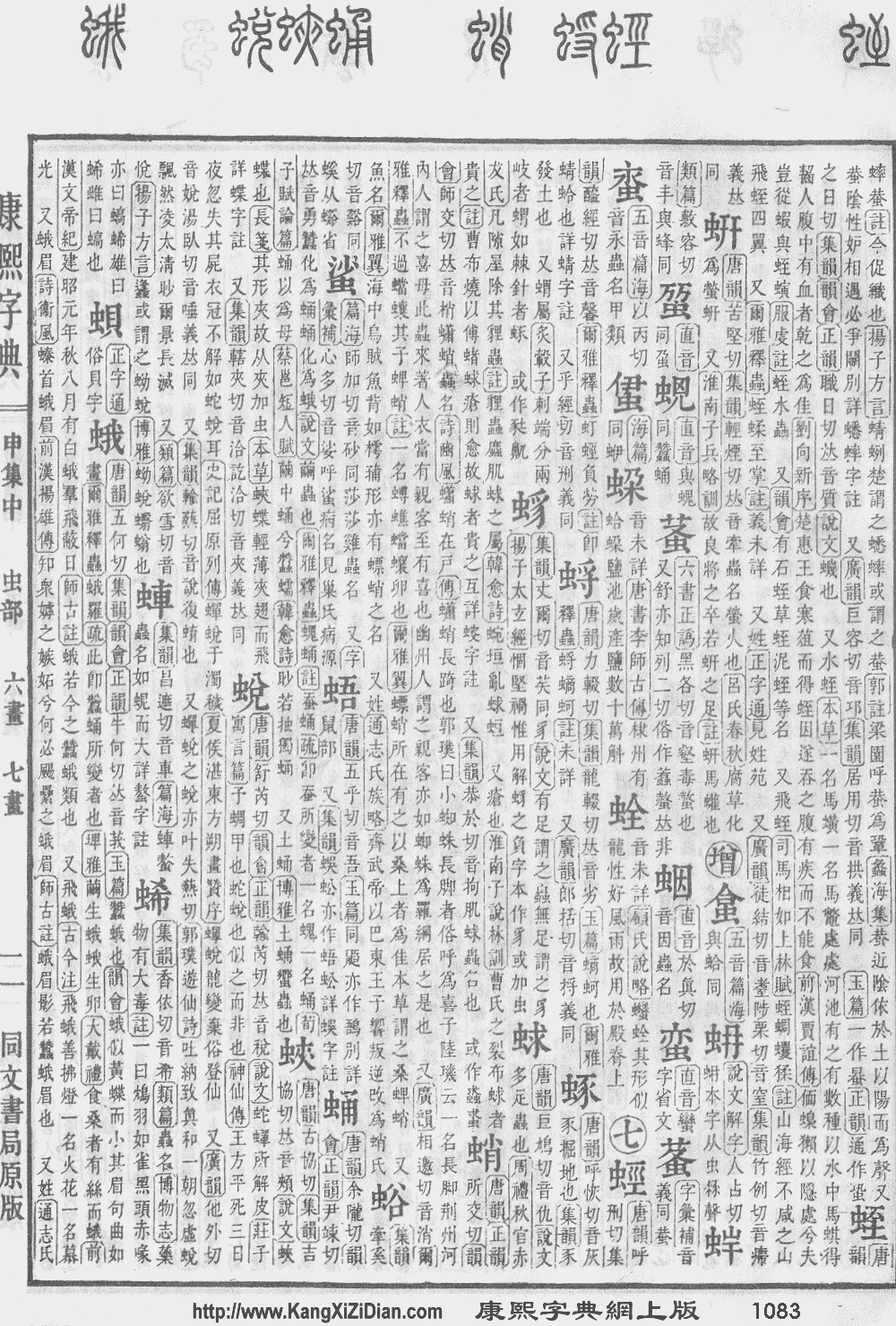
- Kangxi Dictionary: page 1083, character 25
- Dai Kanwa Jiten: character 33076
- Dae Jaweon: page 1551, character 13
- Hanyu Da Zidian (first edition): volume 4, page 2858, character 6
- Unihan data for U+86F9
Chinese
| simp. and trad. |
蛹 | |
|---|---|---|
Pronunciation
References
- “蛹”, in 漢語多功能字庫 (Multi-function Chinese Character Database), 香港中文大學 (the Chinese University of Hong Kong), 2014–
Japanese
Etymology
| Kanji in this term |
|---|
| 蛹 |
| さなぎ Hyōgaiji |
| kun’yomi |
| For pronunciation and definitions of 蛹 – see the following entry. | ||
| ||
| (This term, 蛹, is an alternative spelling of the above term.) |
Vietnamese
This article is issued from Wiktionary. The text is licensed under Creative Commons - Attribution - Sharealike. Additional terms may apply for the media files.