俑

俑 U+4FD1, 俑
CJK UNIFIED IDEOGRAPH-4FD1
← 俐
[U+4FD0]
CJK Unified Ideographs 俒 →
[U+4FD2]

Translingual

Han character

俑 (Kangxi radical 9, 人+7, 9 strokes, cangjie input 人弓戈月 (ONIB), four-corner 27227, composition ⿰亻甬)

  1. wooden figure buried with the dead

References

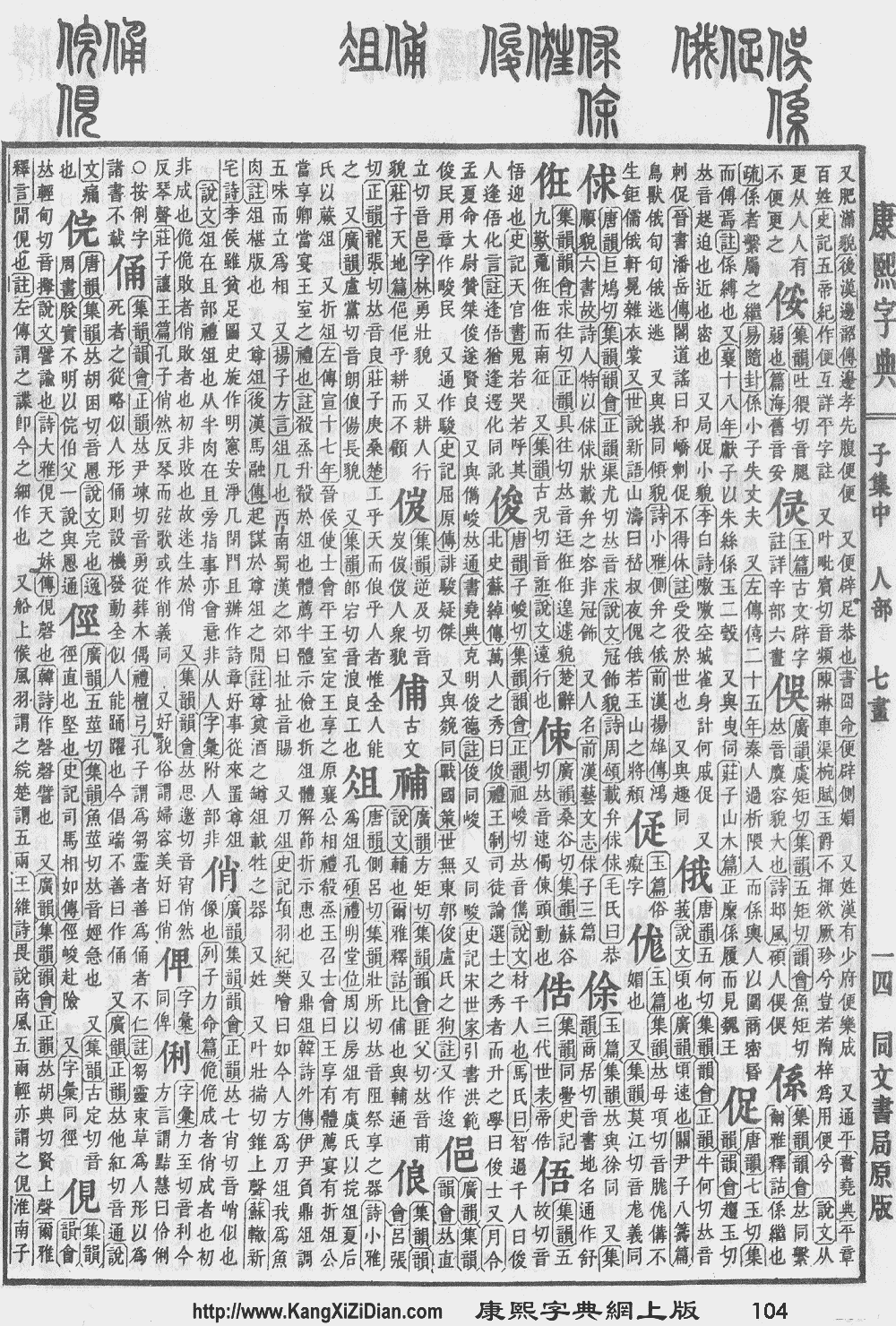
  • Kangxi Dictionary: page 104, character 25
  • Dai Kanwa Jiten: character 683
  • Dae Jaweon: page 221, character 9
  • Hanyu Da Zidian (first edition): volume 1, page 168, character 2
  • Unihan data for U+4FD1

Chinese

simp. and trad.
俑

Glyph origin

Historical forms of the character 俑


References:

Mostly from Richard Sears' Chinese Etymology site (authorisation),
which in turn draws data from various collections of ancient forms of Chinese characters, including:

  • Shuowen Jiezi (small seal),
  • Jinwen Bian (bronze inscriptions),
  • Liushutong (Liushutong characters) and
  • Yinxu Jiaguwen Bian (oracle bone script).

Pronunciation


Rime
Character 俑 俑
Reading # 1/2 2/2
Initial (聲) 透 (6) 以 (36)
Final (韻) 東 (1) 鍾 (7)
Tone (調) Level (Ø) Rising (X)
Openness (開合) Open Open
Division (等) I III
Fanqie 他紅切 余隴切
Baxter thuwng yowngX
Reconstructions
Zhengzhang
Shangfang
/tʰuŋ/ /jɨoŋX/
Pan
Wuyun
/tʰuŋ/ /jioŋX/
Shao
Rongfen
/tʰuŋ/ /ioŋX/
Edwin
Pulleyblank
/tʰəwŋ/ /juawŋX/
Li
Rong
/tʰuŋ/ /ioŋX/
Wang
Li
/tʰuŋ/ /jĭwoŋX/
Bernard
Karlgren
/tʰuŋ/ /i̯woŋX/
Expected
Mandarin
Reflex
tōng yǒng
Expected
Cantonese
Reflex
tung1 jung5
Baxter–Sagart system 1.1 (2014)
Character 俑
Reading # 1/1
Modern
Beijing
(Pinyin)
yǒng
Middle
Chinese
‹ yowngX ›
Old
Chinese
/*loŋʔ/
English grave figures

Notes for Old Chinese notations in the Baxter–Sagart system:

* Parentheses "()" indicate uncertain presence;
* Square brackets "[]" indicate uncertain identity, e.g. *[t] as coda may in fact be *-t or *-p;
* Angle brackets "<>" indicate infix;
* Hyphen "-" indicates morpheme boundary;

* Period "." indicates syllable boundary.
Zhengzhang system (2003)
Character 俑 俑
Reading # 1/2 2/2
No. 15429 15451
Phonetic
component
用 用
Rime
group
東 東
Rime
subdivision
0 0
Corresponding
MC rime
通 勇
Old
Chinese
/*l̥ʰoːŋ/ /*loŋʔ/

Definitions

俑

  1. tomb figurine

Compounds

Japanese

Kanji

俑

(uncommon “Hyōgai” kanji)

  1. This term needs a translation to English. Please help out and add a translation, then remove the text {{rfdef}}.

Readings

  • Go-on: ゆう (yū)
  • Kan-on: よう (yō)
  • Kun: いたむ (itamu)
Kanji in this term
俑
よう
Hyōgaiji
on’yomi

Pronunciation

  • IPA(key): [jo̞ː]

Noun

俑(よう) • (yō) 

  1. wooden figure buried with the dead

Korean

Hanja

俑 (eum 용 (yong))

  1. This term needs a translation to English. Please help out and add a translation, then remove the text {{rfdef}}.

Vietnamese

Han character

俑: Hán Nôm readings: dõng, dũng

  1. This term needs a translation to English. Please help out and add a translation, then remove the text {{rfdef}}.

References

This article is issued from Wiktionary. The text is licensed under Creative Commons - Attribution - Sharealike. Additional terms may apply for the media files.