通
| ||||||||
Translingual
| Stroke order | |||
|---|---|---|---|
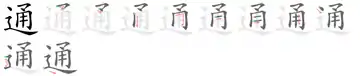 | |||
Han character
通 (Kangxi radical 162, 辵+7, 10 strokes, cangjie input 卜弓戈月 (YNIB), four-corner 37302, composition ⿺辶甬)
References
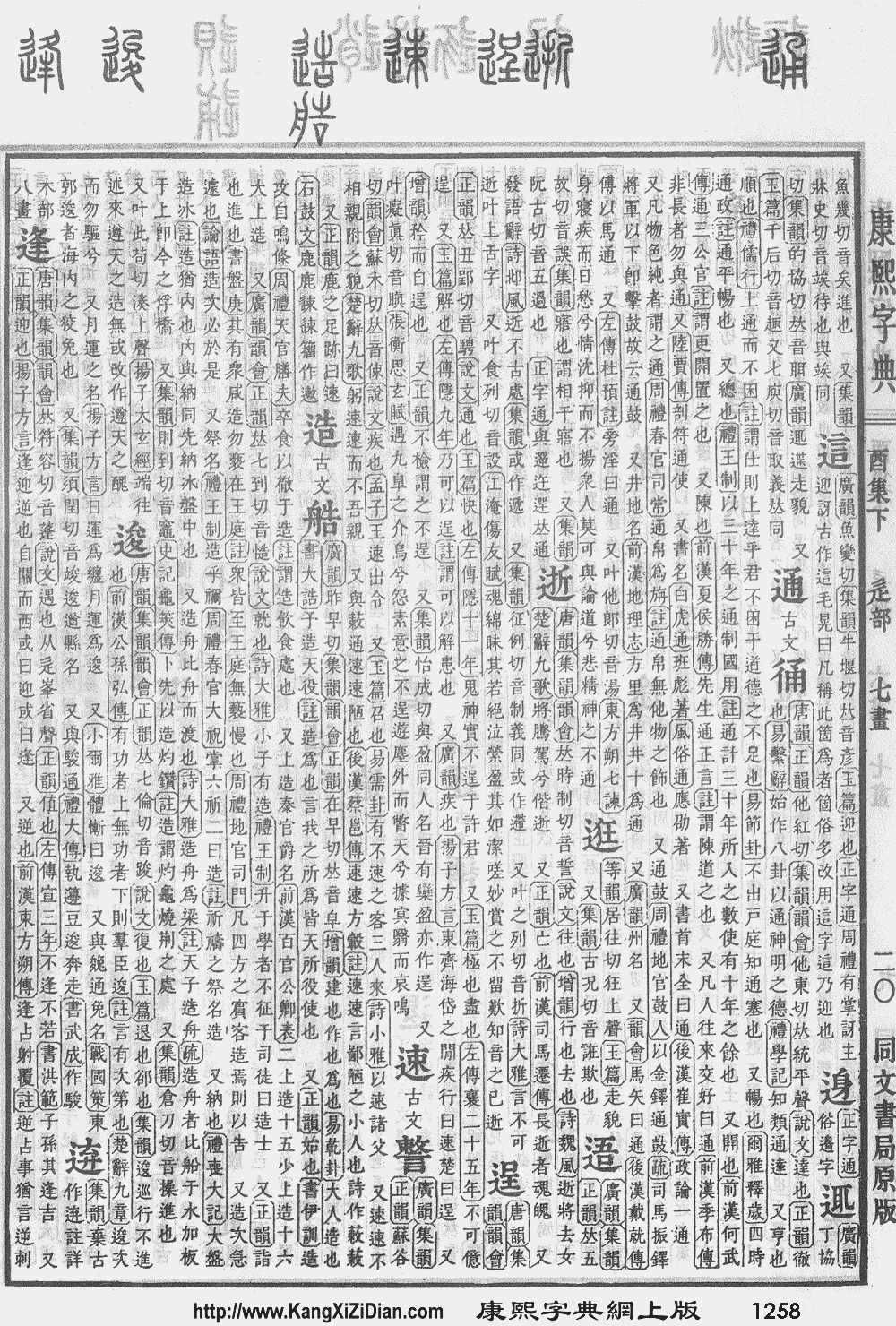
- Kangxi Dictionary: page 1258, character 4
- Dai Kanwa Jiten: character 38892
- Dae Jaweon: page 1743, character 18
- Hanyu Da Zidian (first edition): volume 6, page 3845, character 8
- Unihan data for U+901A
Chinese
| trad. | 通 | |
|---|---|---|
| simp. # | 通 | |
| alternative forms | 迵 (thàng) Hokkien | |
Glyph origin
Characters in the same phonetic series (用) (Zhengzhang, 2003)
Phono-semantic compound (形聲/形声, OC *l̥ʰoːŋ) : semantic 辶 + phonetic 甬 (OC *loŋʔ).
Pronunciation
Definitions
通
- to pass through; to travel through; to go through; or, to allow passage
- 通心粉 ― tōngxīnfěn ― macaroni (lit. "pass-through heart pasta")
- 講唔通/讲唔通 [Cantonese] ― gong2 m4 tung1 [Jyutping] ― unable to have someone understand what one is talking about (lit. "unable to talk through")
- 仲夏行冬令,則雹凍傷穀,道路不通,暴兵來至。 [Classical Chinese, trad.]
- From: The Book of Rites, c. 4th – 2nd century BCE
- Zhòngxià xíng dōnglìng, zé báo dòng shāng gǔ, dàolù bù tōng, bàobīng lái zhì. [Pinyin]
- If, in the second month of summer, the governmental proceedings of winter were observed, hail and cold would injure the grain; the roads would not be passable; and violent assaults of war would come.
仲夏行冬令,则雹冻伤谷,道路不通,暴兵来至。 [Classical Chinese, simp.]- 五方之民,言語不通,嗜欲不同。 [Classical Chinese, trad.]
- From: The Book of Rites, c. 4th – 2nd century BCE
- Wǔ fāng zhī mín, yányǔ bù tōng, shìyù bù tóng. [Pinyin]
- In those five regions, the languages of the people were not mutually intelligible, and their likings and desires were different.
五方之民,言语不通,嗜欲不同。 [Classical Chinese, simp.]
- through- (spanning across; going between)
- pipe-shaped object
- (telephony) to get through
- Classifier for phone calls, talks, criticisms, etc.
- Classifier for actions.
- to make sense; to be logical
- expert
- (of Chinese characters) to be etymologically related to and carry a similar meaning to
- (Southern Min) can; may
- (Cantonese) Short for 通心粉 (“macaroni”).
- 腿通 [Cantonese] ― teoi2 tung1 [Jyutping] ― macaroni with ham
- (Hokkien) to be clear; to be understood; to connect; to get through; to communicate; to be understandable
- (Hokkien) to be clear on; to perceive clearly; to understand; to comprehend
- (Hokkien) clear; coherent; rational; connected; simple; easy to understand; makes sense;
- (Hokkien) convenient; interesting; suitable
- (Hokkien) to clear; to smoothen; to clean; to unobstruct; to make passable
- (Hokkien) clear; passable; unobstructed; unimpeded; smooth; unclogged
- (Hokkien) entire; all throughout; all over; whole
- (Xiamen and Zhangzhou Hokkien) very; most; clearly
Compounds
- 一竅不通/一窍不通 (yīqiàobùtōng)
- 一脈相通/一脉相通
- 七通八達/七通八达
- 三方通話/三方通话
- 三通 (sāntōng)
- 三通一平
- 三通四流
- 不知通變/不知通变
- 不通 (bùtōng)
- 不通弔慶/不通吊庆
- 不通水火
- 不通濟/不通济
- 不通痾癢/不通疴痒
- 不通聞問/不通闻问
- 世事通考
- 串通 (chuàntōng)
- 九通
- 五口通商
- 互通 (hùtōng)
- 互通有無/互通有无
- 五通神
- 交通 (jiāotōng)
- 亨通 (hēngtōng)
- 傍通
- 光纖通訊/光纤通讯
- 光通量
- 八面圓通/八面圆通
- 六通四辟
- 共通 (gòngtōng)
- 共通意志
- 兼通
- 最後通牒/最后通牒 (zuìhòutōngdié)
- 勾通 (gōutōng)
- 包通
- 南通 (Nántōng)
- 博古通今 (bógǔtōngjīn)
- 卡通 (kǎtōng)
- 右側通行/右侧通行
- 史通
- 呼吸相通 (hūxīxiāngtōng)
- 唔通
- 四通五達/四通五达
- 四通八達/四通八达 (sìtōngbādá)
- 圓通/圆通 (yuántōng)
- 圓通大士/圆通大士
- 大三通
- 大通 (dàtōng)
- 大通之年
- 大通套
- 大通年
- 大通河
- 大通銀行/大通银行
- 天眼通
- 太空通訊/太空通讯
- 天通苑 (Tiāntōngyuàn)
- 妙畫通靈/妙画通灵
- 姻通
- 姦通/奸通 (jiāntōng)
- 字通
- 官運亨通/官运亨通 (guānyùnhēngtōng)
- 密不通風/密不通风
- 宿命通
- 小三通
- 平通
- 廣通渠/广通渠
- 徇通
- 心有靈犀一點通/心有灵犀一点通 (xīn yǒu língxī yīdiǎn tōng)
- 息息相通
- 想不通 (xiǎngbùtōng)
- 意見溝通/意见沟通
- 感通
- 應權通變/应权通变
- 戰地通訊/战地通讯
- 打通 (dǎtōng)
- 打通兒/打通儿
- 打通狀/打通状
- 打通關/打通关
- 打通關節/打通关节
- 扞格不通 (hàngébùtōng)
- 接通 (jiētōng)
- 搶通/抢通
- 撲撲通通/扑扑通通
- 撲通/扑通 (pūtōng)
- 撲通一聲/扑通一声
- 撲通撲通/扑通扑通
- 撲通通冬/扑通通冬
- 擂鼓三通
- 政通人和 (zhèngtōngrénhé)
- 文獻通考/文献通考 (Wénxiàn Tōngkǎo)
- 旁通
- 明通 (Míngtōng)
- 易通釋/易通释
- 昭通 (Zhāotōng)
- 時通運泰/时通运泰
- 時運亨通/时运亨通
- 普通 (pǔtōng)
- 暢通/畅通 (chàngtōng)
- 暢通無阻/畅通无阻 (chàngtōngwúzǔ)
- 曲徑通幽/曲径通幽
- 書通二酉/书通二酉
- 會通/会通 (huìtōng)
- 有無相通/有无相通
- 木通 (mùtōng)
- 格古通今
- 正字通 (Zhèngzìtōng)
- 毋通
- 水喉通
- 水泄不通 (shuǐxièbùtōng)
- 水洩不通/水泄不通 (shuǐxièbùtōng)
- 流通 (liútōng)
- 海底通訊/海底通讯
- 深通
- 清通 (qīngtōng)
- 淹通
- 溝通/沟通 (gōutōng)
- 溝通管道/沟通管道
- 滿臉通紅/满脸通红
- 漸通人事/渐通人事
- 滿面通紅/满面通红
- 烏鵲通巢/乌鹊通巢
- 無師自通/无师自通 (wúshīzìtōng)
- 無所不通/无所不通
- 煙通/烟通
- 燈火通明/灯火通明 (dēnghuǒtōngmíng)
- 狗屁不通 (gǒupìbùtōng)
- 理番通事
- 疏通 (shūtōng)
- 白虎通義/白虎通义
- 百事通 (bǎishìtōng)
- 直通 (zhítōng)
- 相通 (xiāngtōng)
- 碩學通儒/硕学通儒
- 神通 (shéntōng)
- 萬事亨通/万事亨通
- 萬事通/万事通 (wànshìtōng)
- 私通 (sītōng)
- 窮通/穷通
- 窮通皆命/穷通皆命
- 粗通
- 精通 (jīngtōng)
- 絕地天通/绝地天通
- 統通/统通
- 續通典/续通典
- 續通志/续通志
- 老運亨通/老运亨通
- 聯網通/联网通
- 脈絡貫通/脉络贯通
- 苓通
- 融會貫通/融会贯通 (rónghuìguàntōng)
- 融通
- 融通物
- 行不通 (xíngbutōng)
- 裡通外國/里通外国 (lǐtōngwàiguó)
- 觸類旁通/触类旁通 (chùlèipángtōng)
- 該通/该通
- 識時通變/识时通变
- 警世通言
- 變通/变通 (biàntōng)
- 豁然貫通/豁然贯通
- 財運亨通/财运亨通
- 貫通/贯通 (guàntōng)
- 買通/买通 (mǎitōng)
- 資治通鑑/资治通鉴 (Zīzhì Tōngjiàn)
- 賤貴窮通/贱贵穷通
- 路路不通
- 路路通
- 辭通/辞通
- 通事 (tōngshì)
- 通事官 (tōngshìguān)
- 通事舍人
- 通亮
- 通人
- 通人達才/通人达才
- 通今博古
- 通令 (tōnglìng)
- 通例 (tōnglì)
- 通信 (tōngxìn)
- 通俗 (tōngsú)
- 通侻
- 通俗劇/通俗剧
- 通便劑/通便剂
- 通俗文
- 通俗文學/通俗文学
- 通俗編/通俗编
- 通俗讀物/通俗读物
- 通假 (tōngjiǎ)
- 通儒 (tōngrú)
- 通光 (thang-kng) (Min Nan)
- 通共 (tōnggòng)
- 通典 (Tōngdiǎn)
- 通函 (tōnghán)
- 通分
- 通判
- 通刺
- 通則/通则 (tōngzé)
- 通劑/通剂
- 通力 (tōnglì)
- 通力合作 (tōnglìhézuò)
- 通功易事
- 通勤 (tōngqín)
- 通勤圈
- 通口
- 通史 (tōngshǐ)
- 通古博今
- 通古斯族
- 透古通今
- 通名 (tōngmíng)
- 通同 (tōngtóng)
- 通吃
- 通合一氣/通合一气
- 通同一氣/通同一气
- 通告 (tōnggào)
- 通問/通问 (tōngwèn)
- 通商 (tōngshāng)
- 通商口岸 (tōngshāng kǒu'àn)
- 通商條約/通商条约
- 通商港 (tōngshānggǎng)
- 通國/通国 (tōngguó)
- 通城 (Tōngchéng)
- 通報/通报 (tōngbào)
- 通塞
- 通夜 (tōngyè)
- 通天 (tōngtiān)
- 通天冠
- 通天塔
- 通天徹地/通天彻地
- 通天河 (Tōngtiān Hé)
- 通天河 (Tōngtiān Hé)
- 通天犀
- 通套
- 通好
- 通奸 (tōngjiān)
- 通姦/通奸 (tōngjiān)
- 通婚 (tōnghūn)
- 通學/通学
- 通學生/通学生
- 通官
- 通宵 (tōngxiāo)
- 通家 (tōngjiā)
- 通家之好
- 通宵達旦/通宵达旦 (tōngxiāodádàn)
- 通宿 (tōngxiǔ)
- 通寶/通宝 (tōngbǎo)
- 通山 (Tōngshān)
- 通常 (tōngcháng)
- 通年 (tōngnián)
- 通幽洞微
- 通往 (tōngwǎng)
- 通徹/通彻 (tōngchè)
- 通心 (tōngxīn)
- 通心粉 (tōngxīnfěn)
- 通心麵/通心面
- 通志
- 通性 (tōngxìng)
- 通惠 (Tōnghuì)
- 通情
- 通情達理/通情达理 (tōngqíngdálǐ)
- 通房
- 通才 (tōngcái)
- 通才教育
- 通才練識/通才练识
- 通政司 (Tōngzhèngsī)
- 通敵/通敌 (tōngdí)
- 通明 (tōngmíng)
- 通時達變/通时达变
- 通暢/通畅 (tōngchàng)
- 通曉/通晓 (tōngxiǎo)
- 通曆/通历
- 通書/通书 (tōngshū)
- 通朗
- 通梁 (Tōngliáng)
- 通條/通条
- 通條樹/通条树
- 通欄/通栏
- 通權達變/通权达变 (tōngquándábiàn)
- 通款
- 通殺/通杀 (tōngshā)
- 通氣/通气 (tōngqì)
- 通水 (tōngshuǐ)
- 通泰
- 通海口 (Tōnghǎikǒu)
- 通濟渠/通济渠
- 通牒 (tōngdié)
- 通玄
- 通理
- 通用 (tōngyòng)
- 通疏
- 通病 (tōngbìng)
- 通盤/通盘 (tōngpán)
- 通眉長爪/通眉长爪
- 通知 (tōngzhī)
- 通知單/通知单 (tōngzhīdān)
- 通知啟事/通知启事
- 通知書/通知书 (tōngzhīshū)
- 通神 (tōngshén)
- 通票 (tōngpiào)
- 通禮/通礼
- 通稱/通称 (tōngchēng)
- 通竅/通窍 (tōngqiào)
- 通算 (tōngsuàn)
- 通籍
- 通紅/通红 (tōnghóng)
- 通統/通统
- 通經/通经
- 通緝/通缉 (tōngjī)
- 通義/通义
- 通考 (tōngkǎo)
- 通脫/通脱
- 通脫不拘/通脱不拘
- 通脫木/通脱木
- 通腳/通脚
- 通膨 (tōngpéng)
- 通臂拳
- 通航 (tōngháng)
- 通草 (tōngcǎo)
- 通草灰
- 通草紙/通草纸
- 通莊/通庄
- 通融 (tōngróng)
- 通行 (tōngxíng)
- 通行本
- 通行權/通行权
- 通行無阻/通行无阻
- 通行證/通行证 (tōngxíngzhèng)
- 通行費/通行费 (tōngxíngfèi)
- 通衢 (tōngqú)
- 通衢大道
- 通衢廣陌/通衢广陌
- 通觀/通观 (tōngguān)
- 通觀全局/通观全局
- 通解 (tōngjiě)
- 通訊/通讯 (tōngxùn)
- 通訊卡/通讯卡
- 通訊員/通讯员 (tōngxùnyuán)
- 通訊器/通讯器
- 通訊社/通讯社 (tōngxùnshè)
- 通訊網/通讯网 (tōngxùnwǎng)
- 通訊自由/通讯自由
- 通訊處/通讯处
- 通訊衛星/通讯卫星 (tōngxùn wèixīng)
- 通訊錄/通讯录 (tōngxùnlù)
- 通誠/通诚
- 通話/通话 (tōnghuà)
- 通語/通语 (tōngyǔ)
- 通論/通论 (tōnglùn)
- 通謀/通谋
- 通識/通识 (tōngshí)
- 通譜/通谱
- 通識教育/通识教育 (tōngshí jiàoyù)
- 通識科目/通识科目
- 通議/通议
- 通譯/通译 (tōngyì)
- 通譯員/通译员 (tōngyìyuán)
- 通讀/通读 (tōngdú)
- 通變/通变 (tōngbiàn)
- 通谷 (tōnggǔ)
- 通財/通财 (tōngcái)
- 通貨/通货 (tōnghuò)
- 通貨緊縮/通货紧缩 (tōnghuò jǐnsuō)
- 通貨膨脹/通货膨胀 (tōnghuò péngzhàng)
- 通路 (tōnglù)
- 通身 (tōngshēn)
- 通身上下
- 通車/通车 (tōngchē)
- 通通 (tōngtōng)
- 通連/通连
- 通透 (tōngtòu)
- 通運/通运
- 通過/通过 (tōngguò)
- 通達/通达 (tōngdá)
- 通道 (tōngdào)
- 通達事理/通达事理
- 通達人情/通达人情
- 通郵/通邮 (tōngyóu)
- 通都大邑
- 通鋪/通铺 (tōngpù)
- 通鑑/通鉴 (Tōngjiàn)
- 通關/通关 (tōngguān)
- 通關手/通关手
- 通關節/通关节 (tōng guānjié)
- 通關鼻子/通关鼻子
- 通陳/通陈
- 通雅
- 通電/通电 (tōngdiàn)
- 通靈/通灵 (tōnglíng)
- 通靈寶玉/通灵宝玉
- 通韻/通韵
- 通順/通顺 (tōngshùn)
- 通頭/通头
- 通顯/通显
- 通風/通风 (tōngfēng)
- 通風報信/通风报信 (tōngfēngbàoxìn)
- 通風機/通风机
- 通飭/通饬
- 通體/通体 (tōngtǐ)
- 達士通人/达士通人
- 達權通變/达权通变
- 鄧通之財/邓通之财
- 鄧通錢/邓通钱
- 錢可通神/钱可通神
- 錢通/钱通
- 鐵通/铁通
- 開元通寶/开元通宝
- 開通/开通
- 關通/关通
- 雙向溝通/双向沟通
- 電子通勤/电子通勤
- 靈犀相通/灵犀相通
- 靈通/灵通 (língtōng)
- 風俗通義/风俗通义
- 首尾貫通/首尾贯通
- 馬氏文通/马氏文通
- 馬通/马通 (mǎtōng)
- 高步通衢
- 鬆通/松通
Further reading
- “Entry #7925”, in 臺灣閩南語常用詞辭典 [Dictionary of Frequently-Used Taiwan Minnan] (overall work in Mandarin and Hokkien), Ministry of Education, R.O.C., 2023.
- “通”, in 漢語多功能字庫 (Multi-function Chinese Character Database), 香港中文大學 (the Chinese University of Hong Kong), 2014–
Japanese
| Shinjitai | 通 | |
| Kyūjitai [1] |
通󠄁 通+ 󠄁?(Adobe-Japan1) |
 |
| 通󠄃 通+ 󠄃?(Hanyo-Denshi) (Moji_Joho) | ||
| The displayed kanji may be different from the image due to your environment. See here for details. | ||
Readings
- Go-on: つう (tsū, Jōyō)←つう (tuu, historical); つ (tsu, Jōyō †)←つ (tu, historical)
- Kan-on: とう (tō)←とう (tou, historical)
- Kun: とおる (tōru, 通る, Jōyō)←とほる (toforu, 通る, historical); かよう (kayou, 通う, Jōyō); とおす (tōsu, 通す, Jōyō)←とほす (tofosu, 通す, historical)
- Nanori: とん (ton); どうし (dōshi); とお (tō); とおり (tōri); とおる (tōru); どおり (dōri); みち (michi); みつ (mitsu); ゆき (yuki); なお (nao); ひらく (hiraku)
Compounds
References
- “通”, in 漢字ぺディア (Kanjipedia) (in Japanese), 日本漢字能力検定協会, 2015–2024
Vietnamese
Han character
通: Hán Việt readings: thông (
通: Nôm readings: thong[1][2][3][6][4][5][7], thông[1][2][4][7], thồng[5], thỗng[5]
- chữ Hán form of thông (“to go through; to pass through”).
- chữ Hán form of thông (“to clear off; to unchoke; to unclog”).
- chữ Hán form of thông (“to be familiar with; to master; to be fluent or conversant”).
- Nôm form of thong (“clear; open; having a passage through”).
- Nôm form of thong (“to communicate”).
Compounds
Compounds
- 通報 (thông báo)
- 通病 (thông bệnh)
- 通告 (thông cáo)
- 通淫 (thông dâm)
- 通譯 (thông dịch)
- 通牒 (thông điệp)
- 通同 (thông đồng)
- 通用 (thông dụng)
- 通家 (thông gia)
- 通行 (thông hành)
- 通鄰 (thông lân)
- 通例 (thông lệ)
- 通言 (thông ngôn)
- 通判 (thông phán)
- 通風 (thông phong)
- 通過 (thông qua)
- 通關 (thông quan)
- 通商 (thông thương)
- 通常 (thông thường)
- 通信 (thông tin)
- 通知 (thông tri)
- 通咨 (thông tư)
- 通俗 (thông tục)
- 神通 (thần thông)
- 感通 (cảm thông)
- 交通 (giao thông)
- 開通 (khai thông)
- 流通 (lưu thông)
- 普通 (phổ thông)
- 貫通 (quán thông)
- 精通 (tinh thông)
- 傳通 (truyền thông)
- 私通 (tư thông)
- 通訊社 (thông tấn xã)
References
- Nguyễn (2014).
- Nguyễn et al. (2009).
- Trần (2004).
- Bonet (1899).
- Génibrel (1898).
- Hồ (1976).
- Taberd & Pigneau de Béhaine (1838).
This article is issued from Wiktionary. The text is licensed under Creative Commons - Attribution - Sharealike. Additional terms may apply for the media files.