褻
See also: 亵
| ||||||||
Translingual
Han character
褻 (Kangxi radical 145, 衣+11, 17 strokes, cangjie input 卜土戈女 (YGIV), four-corner 00732, composition ⿴衣埶 or ⿳亠埶𧘇)
References
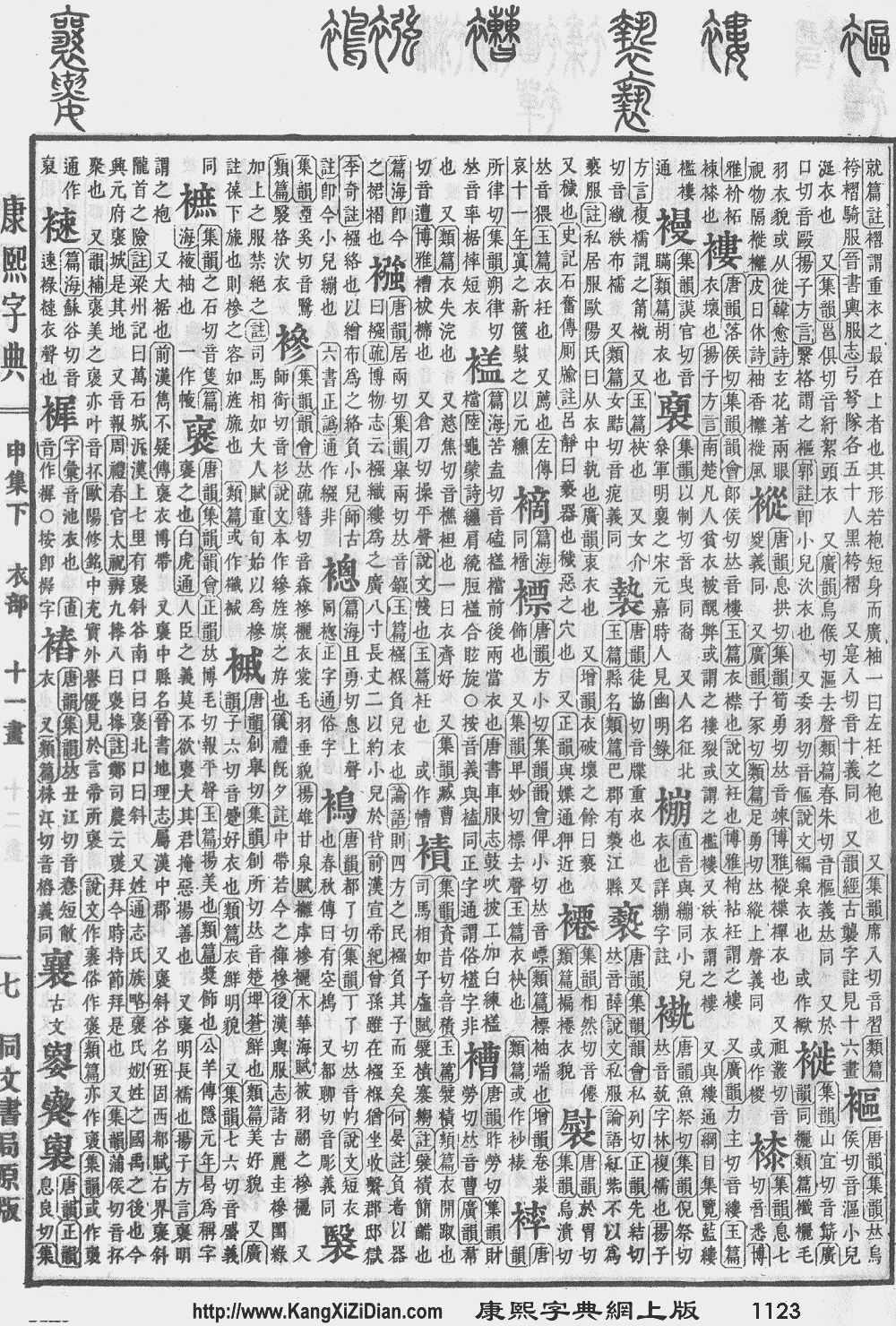
- Kangxi Dictionary: page 1123, character 11
- Dai Kanwa Jiten: character 34536
- Dae Jaweon: page 1591, character 2
- Hanyu Da Zidian (first edition): volume 5, page 3109, character 11
- Unihan data for U+893B
Chinese
| trad. | 褻 | |
|---|---|---|
| simp. | 亵 | |
| alternative forms | 䙝/亵 𣊓 | |
Glyph origin
Characters in the same phonetic series (埶) (Zhengzhang, 2003)
Phono-semantic compound (形聲/形声, OC *sŋed) : phonetic 衣 (OC *qɯl, *qɯls, “clothes”) + semantic 埶.
Pronunciation
Definitions
褻
- licentious; intimate; light-hearted
- disrespectful
- (obsolete) close-fitting underwear
- (obsolete) casual clothes worn at home
Compounds
- 交褻/交亵
- 俚褻/俚亵
- 偎褻/偎亵
- 卑褻/卑亵
- 嘲褻/嘲亵
- 委褻/委亵
- 媟褻/媟亵
- 嬉褻/嬉亵
- 戲褻/戏亵
- 敝褻/敝亵
- 汙褻/污亵
- 淫褻/淫亵 (yín xiè)
- 淫詞褻語/淫词亵语
- 溷褻/溷亵
- 煩褻/烦亵
- 燕褻/燕亵
- 狎褻/狎亵
- 猥褻/猥亵 (wěixiè)
- 私褻/私亵 (sīxiè)
- 穢褻/秽亵
- 簡褻/简亵
- 褻人/亵人
- 褻侮/亵侮
- 褻刑/亵刑
- 褻味/亵味
- 褻器/亵器
- 褻嫚/亵嫚
- 褻寵/亵宠
- 褻尊/亵尊
- 褻幸/亵幸
- 褻御/亵御
- 褻慢/亵慢
- 褻昵
- 褻服/亵服 (xièfú)
- 褻汙/亵污
- 褻污/亵污
- 褻濫/亵滥
- 褻瀆/亵渎 (xièdú)
- 褻狎/亵狎
- 褻玩/亵玩 (xièwán)
- 褻視/亵视
- 褻絆/亵绊
- 褻翫/亵玩
- 褻臣/亵臣
- 褻衣/亵衣 (xièyī)
- 褻裘/亵裘
- 褻語/亵语
- 褻諢/亵诨
- 褻謔/亵谑
- 褻越/亵越
- 褻近/亵近
- 褻露/亵露
- 褻饌/亵馔
- 褻黷/亵黩
- 謗褻/谤亵
- 輕褻/轻亵
- 輶褻/𬨎亵
- 鄙褻/鄙亵
- 鄙褻語/鄙亵语
- 醜褻/丑亵
- 驕褻/骄亵
Korean
Hanja
褻 • (seol) (hangeul 설, revised seol, McCune–Reischauer sŏl, Yale sel)
- This term needs a translation to English. Please help out and add a translation, then remove the text
{{rfdef}}.
This article is issued from Wiktionary. The text is licensed under Creative Commons - Attribution - Sharealike. Additional terms may apply for the media files.