藝
| ||||||||
Translingual
| Traditional | 藝 |
|---|---|
| Shinjitai | 芸 |
| Simplified | 艺 |
Han character
藝 (Kangxi radical 140, 艸+15, 19 strokes in traditional Chinese and Korean, 18 strokes in mainland China and Japanese, cangjie input 廿土戈戈 (TGII), four-corner 44731, composition ⿱蓺云)
Related characters
- 芸 (Japanese shinjitai)
- 艺 (Simplified Chinese)
Further reading
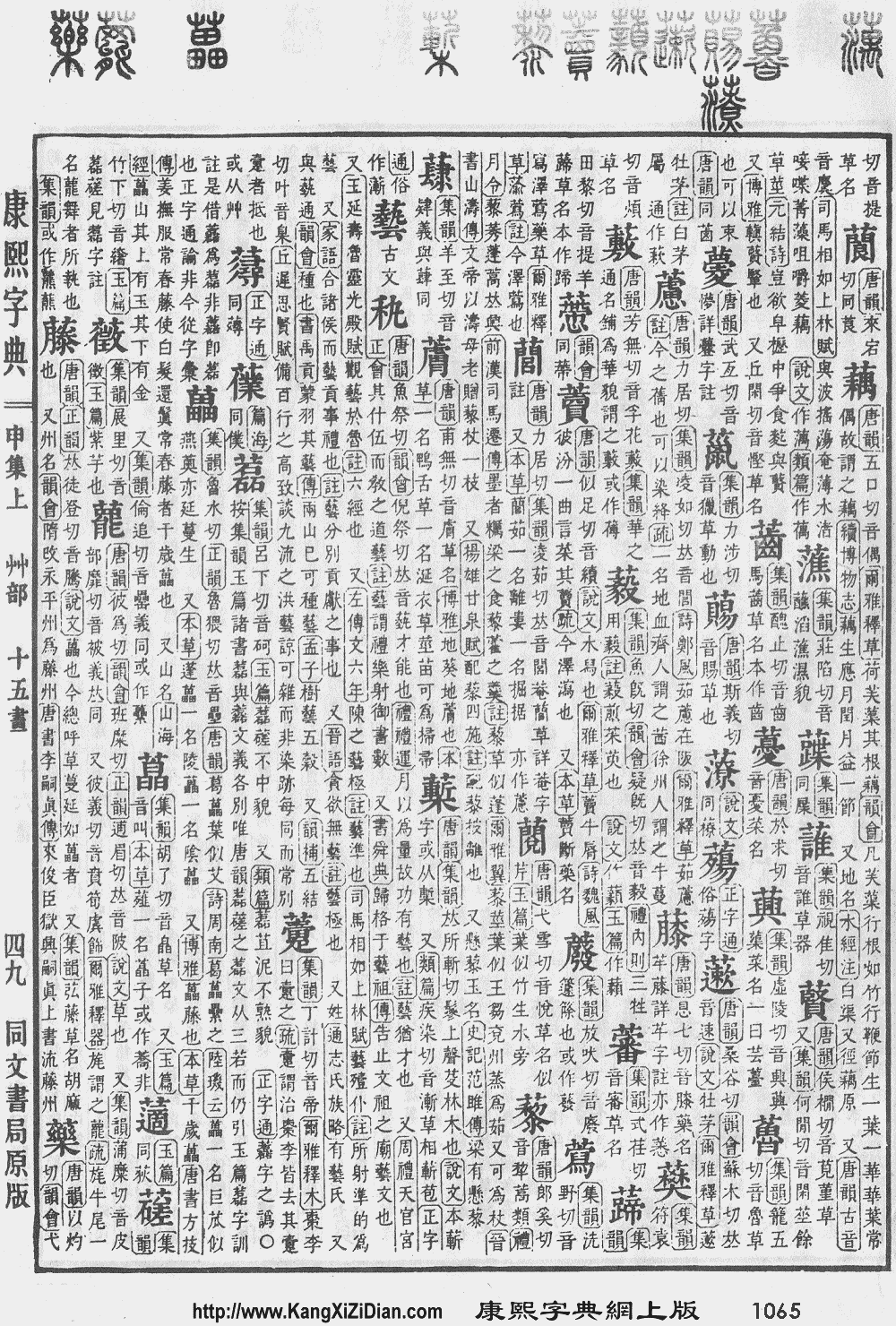
- Kangxi Dictionary: page 1065, character 34
- Dai Kanwa Jiten: character 32330
- Dae Jaweon: page 1530, character 25
- Hanyu Da Zidian (first edition): volume 5, page 3317, character 12
- Unihan data for U+85DD
Chinese
| trad. | 藝 | |
|---|---|---|
| simp. | 艺 | |
| alternative forms | 埶 蓺 㙯 秇 萟 | |
Glyph origin
Characters in the same phonetic series (埶) (Zhengzhang, 2003)
Originally written as 埶 (OC *ŋeds). The 艸 (“grass; plant”) and 云 were added later.
Pronunciation
Compounds
- 一藝/一艺
- 不世之藝/不世之艺
- 伐藝/伐艺
- 光藝術/光艺术
- 六藝/六艺 (Liùyì)
- 制藝/制艺
- 動畫藝術/动画艺术
- 原始藝術/原始艺术
- 園藝/园艺 (yuányì)
- 園藝作物/园艺作物
- 園藝學/园艺学
- 多才多藝/多才多艺 (duōcáiduōyì)
- 多材多藝/多材多艺
- 太空藝術/太空艺术
- 女性藝術/女性艺术
- 學藝/学艺 (xuéyì)
- 家庭園藝/家庭园艺
- 小工藝/小工艺
- 小玩藝兒/小玩艺儿
- 小眾藝術/小众艺术
- 工藝/工艺 (gōngyì)
- 工藝品/工艺品 (gōngyìpǐn)
- 工藝學/工艺学
- 工藝教育/工艺教育
- 工藝美術/工艺美术 (gōngyì měishù)
- 工藝雜流/工艺杂流
- 巧藝/巧艺
- 平面藝術/平面艺术
- 形象藝術/形象艺术
- 手工藝/手工艺 (shǒugōngyì)
- 手工藝品/手工艺品 (shǒugōngyìpǐn)
- 手藝/手艺 (shǒuyì)
- 才藝/才艺 (cáiyì)
- 才藝班/才艺班
- 投戈講藝/投戈讲艺
- 技藝/技艺 (jìyì)
- 技藝超群/技艺超群
- 拜師學藝/拜师学艺
- 拼貼藝術/拼贴艺术
- 授藝/授艺
- 數位藝術/数位艺术
- 文藝/文艺 (wényì)
- 文藝復興/文艺复兴 (Wényì Fùxīng)
- 文藝節/文艺节
- 文藝評論/文艺评论
- 新文藝/新文艺
- 新藝拉瑪/新艺拉玛
- 新藝術/新艺术
- 時藝/时艺
- 時間藝術/时间艺术
- 普普藝術/普普艺术 (pǔpǔyìshù)
- 曲藝/曲艺 (qǔyì)
- 書藝/书艺 (shūyì)
- 末藝/末艺 (mòyì)
- 材藝/材艺
- 棋藝/棋艺 (qíyì)
- 橋藝/桥艺
- 樹藝/树艺
- 歐普藝術/欧普艺术
- 武藝/武艺 (wǔyì)
- 民俗曲藝/民俗曲艺
- 民族藝師/民族艺师
- 民間工藝/民间工艺
- 民間藝術/民间艺术
- 江湖藝人/江湖艺人
- 游藝/游艺
- 演藝/演艺 (yǎnyì)
- 演藝人員/演艺人员
- 焊接藝術/焊接艺术
- 無藝/无艺
- 特種工藝/特种工艺 (tèzhǒng gōngyì)
- 特藝彩色/特艺彩色
- 獻藝/献艺
- 玩藝兒/玩艺儿 (wányìr)
- 琉璃工藝/琉璃工艺
- 現代藝術/现代艺术
- 球藝/球艺 (qiúyì)
- 百藝/百艺
- 視覺藝術/视觉艺术 (shìjué yìshù)
- 空間藝術/空间艺术
- 第九藝術/第九艺术
- 第八藝術/第八艺术
- 絕藝/绝艺
- 經藝/经艺
- 綜合藝術/综合艺术
- 綜藝團/综艺团
- 綜藝節目/综艺节目 (zōngyì jiémù)
- 習藝所/习艺所
- 耍手藝/耍手艺
- 舞臺藝術/舞台艺术
- 舞藝/舞艺 (wǔyì)
- 色藝/色艺
- 色藝兩絕/色艺两绝
- 色藝無雙/色艺无双
- 色藝絕倫/色艺绝伦
- 色藝雙絕/色艺双绝
- 花絲金藝/花丝金艺
- 茶藝/茶艺 (cháyì)
- 茶藝館/茶艺馆
- 菲藝/菲艺
- 藝不壓身/艺不压身 (yìbùyāshēn)
- 藝人/艺人 (yìrén)
- 藝名/艺名 (yìmíng)
- 藝品/艺品 (yìpǐn)
- 藝壇/艺坛 (yìtán)
- 藝壓當行/艺压当行
- 藝妓/艺妓 (yìjì)
- 藝展/艺展
- 藝師/艺师
- 藝廊/艺廊 (yìláng)
- 藝徒/艺徒
- 藝文/艺文 (yìwén)
- 藝文志/艺文志 (yìwénzhì)
- 藝文活動/艺文活动
- 藝文類聚/艺文类聚
- 藝旦/艺旦 (yìdàn)
- 藝林/艺林
- 藝業/艺业 (yìyè)
- 藝祖/艺祖
- 藝能/艺能
- 藝苑/艺苑 (yìyuàn)
- 藝術/艺术
- 藝術品/艺术品 (yìshùpǐn)
- 藝術字/艺术字 (yìshùzì)
- 藝術季/艺术季
- 藝術家/艺术家 (yìshùjiā)
- 藝術性/艺术性 (yìshùxìng)
- 藝術指導/艺术指导
- 藝術歌曲/艺术歌曲
- 藝術界/艺术界 (yìshùjiè)
- 藝術館/艺术馆
- 藝閣/艺阁
- 藝齡/艺龄
- 行為藝術/行为艺术 (xíngwéi yìshù)
- 術藝/术艺
- 談文論藝/谈文论艺
- 課藝/课艺
- 貪慾無藝/贪欲无艺
- 賣藝/卖艺 (màiyì)
- 農藝/农艺 (nóngyì)
- 造形藝術/造形艺术
- 遊藝/游艺 (yóuyì)
- 道藝/道艺
- 遊藝會/游艺会
- 鄉土藝術/乡土艺术
- 金屬工藝/金属工艺
- 鑲嵌工藝/镶嵌工艺
- 陶藝/陶艺 (táoyì)
- 雕蟲小藝/雕虫小艺
- 電影藝術/电影艺术
- 電腦藝術/电脑艺术
References
- “藝”, in 漢語多功能字庫 (Multi-function Chinese Character Database), 香港中文大學 (the Chinese University of Hong Kong), 2014–
Korean
Etymology
(This etymology is missing or incomplete. Please add to it, or discuss it at the Etymology scriptorium. Particularly: “Middle Korean readings, if any”)
Pronunciation
- (SK Standard/Seoul) IPA(key): [je̞(ː)]
- Phonetic hangul: [예(ː)]
- Though still prescribed in Standard Korean, most speakers in both Koreas no longer distinguish vowel length.
Compounds
- 예술 (藝術, yesul, “art”)
- 예능 (藝能, yeneung, “(public) entertainment, performing arts”)
Vietnamese
References
- Jean-Louis Taberd (1838), Dictionarium Anamitico-Latinum, p. A338.
- Lê Sơn Thanh, "Nom-Viet.dat", WinVNKey (details)
This article is issued from Wiktionary. The text is licensed under Creative Commons - Attribution - Sharealike. Additional terms may apply for the media files.