覦
See also: 觎
| ||||||||
Translingual
Han character
覦 (Kangxi radical 147, 見+9, 16 strokes, cangjie input 人弓月山山 (ONBUU), four-corner 86210, composition ⿰俞見(GT) or ⿰兪見(JK))
- desire strongly, covet, long for
References
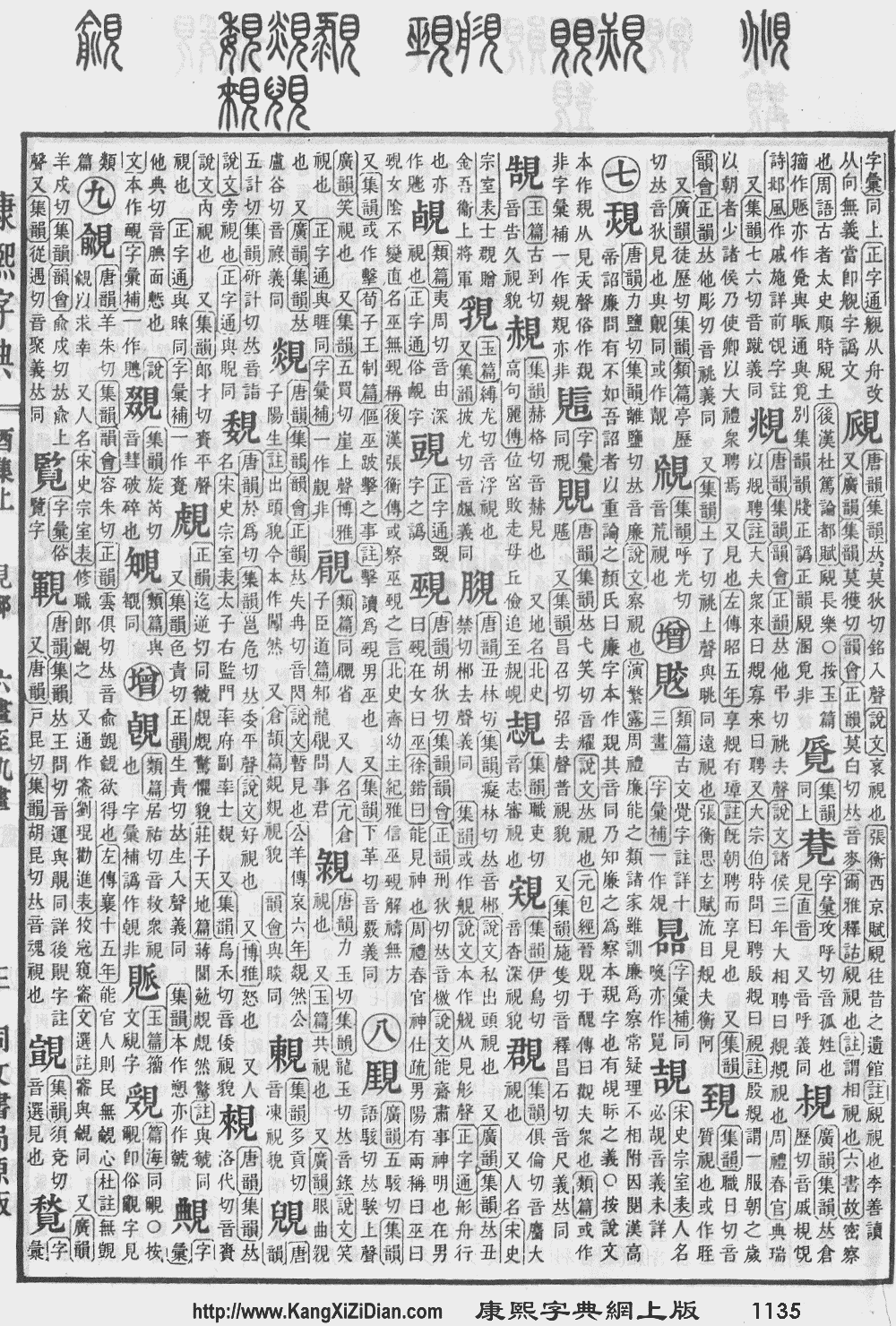
- Kangxi Dictionary: page 1135, character 39
- Dai Kanwa Jiten: character 34904
- Dae Jaweon: page 1602, character 22
- Hanyu Da Zidian (first edition): volume 6, page 3671, character 9
- Unihan data for U+89A6
Chinese
| trad. | 覦 | |
|---|---|---|
| simp. | 觎 | |
Glyph origin
Characters in the same phonetic series (俞) (Zhengzhang, 2003)
| Old Chinese | |
|---|---|
| 褕 | *low, *lo |
| 偷 | *l̥ʰoː |
| 媮 | *l̥ʰoː, *lo |
| 鍮 | *l̥ʰoː |
| 緰 | *l'oː, *slo |
| 牏 | *l'oː, *l'os, *lo |
| 揄 | *l'oː, *l'oːʔ, *lu, *lo |
| 窬 | *l'oː, *l'oːs, *lo |
| 歈 | *l'oː, *lo |
| 俞 | *l̥ʰus, *lo |
| 隃 | *slo, *hljo, *hljos, *lo |
| 毹 | *sro |
| 輸 | *hljo, *hljos |
| 鄃 | *hljo, *lo |
| 腧 | *hljos |
| 逾 | *lo |
| 榆 | *lo |
| 愉 | *lo |
| 渝 | *lo |
| 瑜 | *lo |
| 蕍 | *lo |
| 覦 | *lo, *los |
| 蝓 | *lo |
| 踰 | *lo |
| 崳 | *lo |
| 羭 | *lo |
| 堬 | *lo |
| 瘉 | *lo, *loʔ |
| 萮 | *lo |
| 騟 | *lo |
| 愈 | *loʔ |
| 貐 | *loʔ |
| 喻 | *los |
| 諭 | *los |
Phono-semantic compound (形聲/形声, OC *lo, *los) : phonetic 俞 (OC *l̥ʰus, *lo) + semantic 見 (“to see”).
Pronunciation
Definitions
覦
- This term needs a translation to English. Please help out and add a translation, then remove the text
{{rfdef}}.
Compounds
- 睥睨窺覦/睥睨窥觎
- 覦覬/觎觊
- 覬覦之心/觊觎之心
- 覬覦之志/觊觎之志
References
- “覦”, in 漢語多功能字庫 (Multi-function Chinese Character Database), 香港中文大學 (the Chinese University of Hong Kong), 2014–
Japanese
Kanji
覦
- This term needs a translation to English. Please help out and add a translation, then remove the text
{{rfdef}}.
This article is issued from Wiktionary. The text is licensed under Creative Commons - Attribution - Sharealike. Additional terms may apply for the media files.