貼
See also: 贴
| ||||||||
Translingual
Han character
貼 (Kangxi radical 154, 貝+5, 12 strokes, cangjie input 月金卜口 (BCYR), four-corner 61860, composition ⿰貝占)
Derived characters
- 𢵚, 𰸭, 𪹭
References
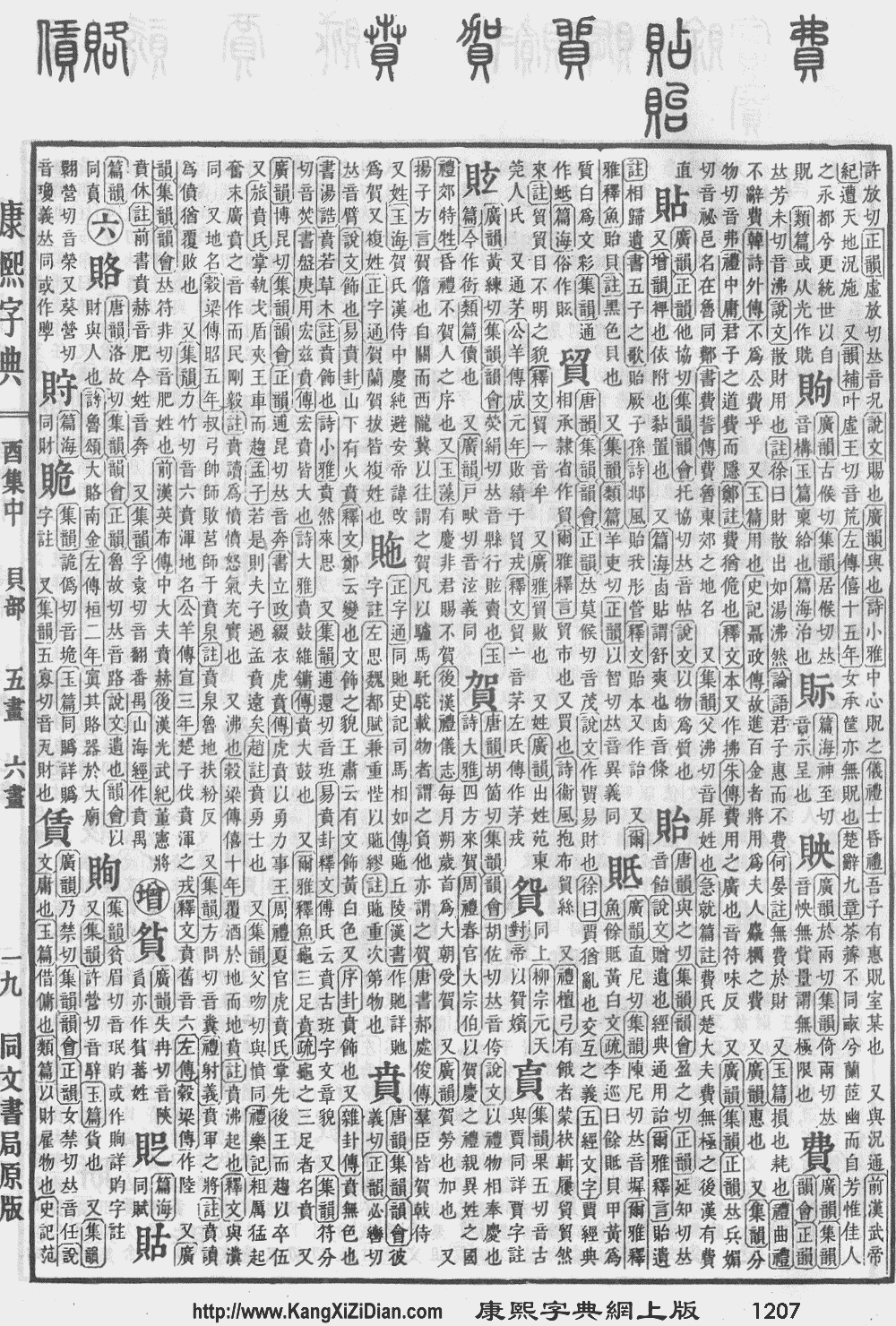
- Kangxi Dictionary: page 1207, character 5
- Dai Kanwa Jiten: character 36718
- Dae Jaweon: page 1670, character 10
- Hanyu Da Zidian (first edition): volume 6, page 3632, character 7
- Unihan data for U+8CBC
Chinese
Glyph origin
| Historical forms of the character 貼 |
|---|
| Shuowen Jiezi (compiled in Han) |
| Small seal script |
 |
Characters in the same phonetic series (占) (Zhengzhang, 2003)
| Old Chinese | |
|---|---|
| 頕 | *taːm |
| 煔 | *ɦlaːm, *hljems, *hl'eːms |
| 炶 | *ɦlaːm |
| 詀 | *rteːm, *rdeːms, *teːm, *tʰjeb |
| 站 | *rteːms |
| 檆 | *sreːm |
| 黏 | *nem |
| 粘 | *nem |
| 枮 | *slem, *ʔl'ɯm |
| 霑 | *tem |
| 沾 | *tem, *teːms, *tʰeːm |
| 覘 | *tems, *tʰem |
| 鉆 | *tʰem, *ɡrem, *tʰeːb |
| 占 | *ʔljem, *tjems |
| 颭 | *tjemʔ |
| 佔 | *tjems, *teːm |
| 苫 | *hljem, *hljems |
| 痁 | *hljem, *teːms |
| 蛅 | *njem |
| 阽 | *lem |
| 敁 | *teːm |
| 掂 | *tiːm |
| 點 | *teːmʔ |
| 玷 | *teːmʔ, *teːms |
| 店 | *tiːms |
| 坫 | *tiːms, *tim |
| 黇 | *tʰeːm |
| 扂 | *deːmʔ |
| 拈 | *neːm |
| 鮎 | *neːm |
| 砧 | *ʔl'ɯm |
| 笘 | *teːb |
| 跕 | *teːb, *tʰeːb |
| 貼 | *tʰeːb |
| 帖 | *tʰeːb |
| 怗 | *tʰeːb |
| 呫 | *tʰeːb |
Pronunciation
Compounds
- 不調貼/不调贴
- 伏貼/伏贴
- 伏首貼耳/伏首贴耳
- 倒貼/倒贴 (dàotiē)
- 典貼/典贴
- 剪貼/剪贴 (jiǎntiē)
- 剪貼簿/剪贴簿
- 創可貼/创可贴
- 反貼門神/反贴门神
- 叨貼/叨贴
- 妥妥貼貼/妥妥贴贴
- 妥貼/妥贴 (tuǒtiē)
- 寧貼/宁贴
- 張貼/张贴 (zhāngtiē)
- 愜貼/惬贴
- 打貼補/打贴补
- 招貼/招贴 (zhāotiē)
- 抬貼/抬贴
- 抹貼/抹贴
- 招貼畫/招贴画
- 拼貼/拼贴
- 拼貼藝術/拼贴艺术
- 服服貼貼/服服贴贴 (fúfutiētiē)
- 服貼/服贴 (fútiē)
- 津貼/津贴 (jīntiē)
- 津貼制度/津贴制度
- 熨貼/熨贴 (yùtiē)
- 眉貼花鈿/眉贴花钿
- 票貼/票贴
- 穩貼/稳贴
- 粘貼/粘贴
- 臉上貼金/脸上贴金
- 薄貼/薄贴
- 藥貼/药贴
- 補貼/补贴 (bǔtiē)
- 襯貼/衬贴
- 覓貼兒/觅贴儿
- 調貼/调贴
- 調風貼怪/调风贴怪
- 貼兒/贴儿
- 貼切/贴切 (tiēqiè)
- 貼夫/贴夫
- 貼己/贴己 (tiējǐ)
- 貼席/贴席
- 貼後/贴后
- 貼心/贴心 (tiēxīn)
- 貼心人/贴心人
- 貼心貼腹/贴心贴腹
- 貼息/贴息 (tiēxī)
- 貼戀/贴恋
- 貼戶/贴户
- 貼換/贴换 (tiēhuàn)
- 貼放/贴放
- 貼旦/贴旦
- 貼書/贴书
- 貼本/贴本
- 貼本錢/贴本钱
- 貼標籤/贴标签
- 貼水/贴水
- 貼燮/贴燮
- 貼現/贴现
- 貼現率/贴现率
- 貼現窗口/贴现窗口
- 貼畫/贴画
- 貼皮貼肉/贴皮贴肉
- 貼票卡/贴票卡
- 貼紙/贴纸 (tiēzhǐ)
- 貼紙圖案/贴纸图案
- 貼緊/贴紧
- 貼肉/贴肉
- 貼背/贴背
- 貼花/贴花
- 貼補/贴补 (tiēbǔ)
- 貼補家用/贴补家用
- 貼身/贴身 (tiēshēn)
- 貼軍戶/贴军户
- 貼近/贴近 (tiējìn)
- 貼邊/贴边
- 貼鄰/贴邻
- 貼金/贴金 (tiējīn)
- 貼錢/贴钱
- 貼題/贴题 (tiētí)
- 貼食/贴食
- 貼餅子/贴饼子
- 連貼/连贴
- 重貼現率/重贴现率
- 鍋貼/锅贴 (guōtiē)
- 靠胸貼肉/靠胸贴肉
- 體貼/体贴 (tǐtiē)
- 體貼入微/体贴入微 (tǐtiērùwēi)
- 黏貼/黏贴 (niántiē)
Alternative forms
Pronunciation
Definitions
貼
Japanese
Korean
Etymology
From Middle Chinese 貼 (MC thep). Recorded as Middle Korean 텹〮 (thyép) (Yale: thyep) in Hunmong Jahoe (訓蒙字會 / 훈몽자회), 1527.
Compounds
Compounds
- 첩부 (貼付, cheopbu)
- 공첩 (公貼, gongcheop)
This article is issued from Wiktionary. The text is licensed under Creative Commons - Attribution - Sharealike. Additional terms may apply for the media files.