資
See also: 资
| ||||||||
| ||||||||
Translingual
Han character
資 (Kangxi radical 154, 貝+6, 13 strokes, cangjie input 戈人月山金 (IOBUC) or 一人月山金 (MOBUC), four-corner 37806, composition ⿱次貝)
References
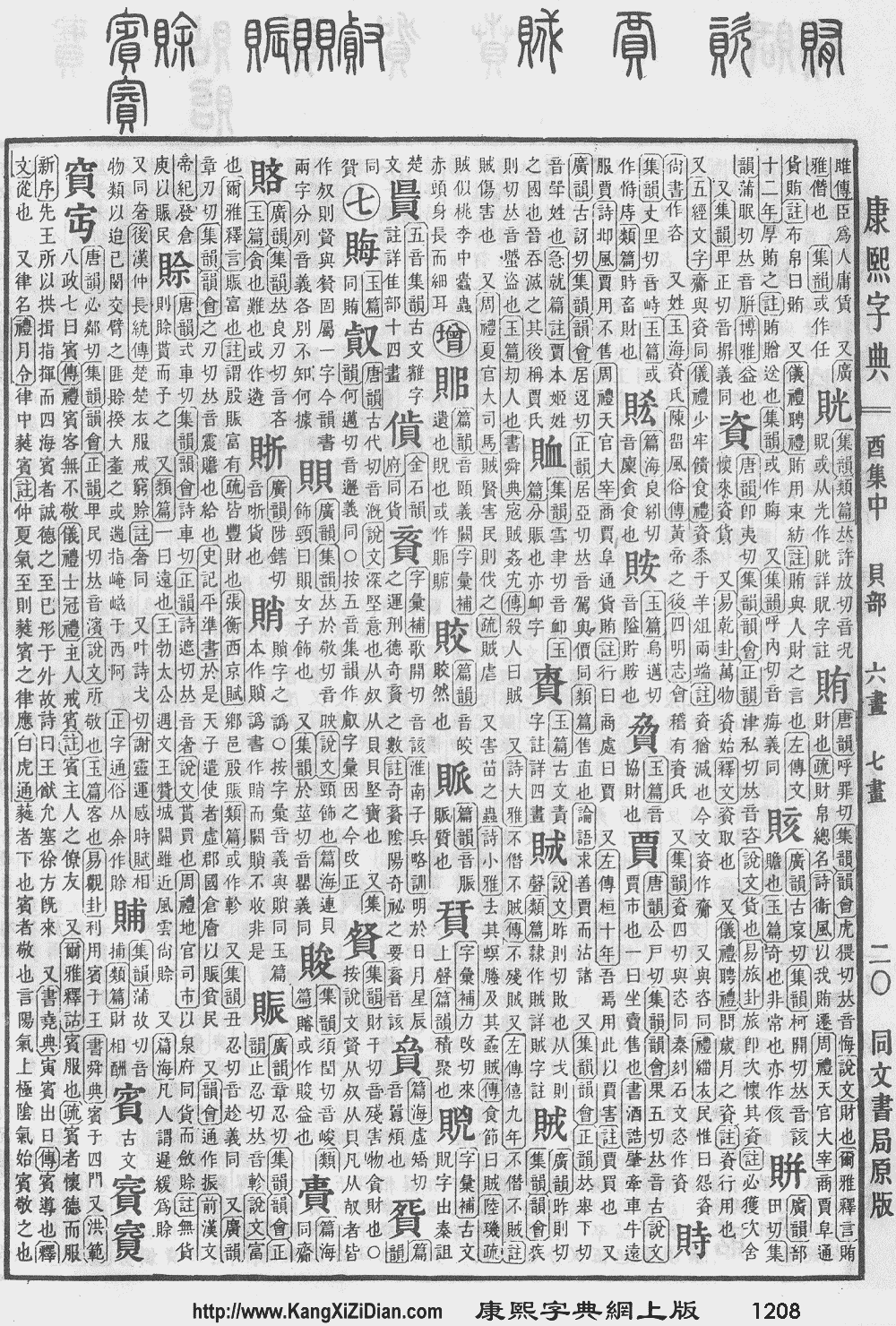
- Kangxi Dictionary: page 1208, character 5
- Dai Kanwa Jiten: character 36750
- Dae Jaweon: page 1671, character 18
- Hanyu Da Zidian (first edition): volume 6, page 3640, character 4
- Unihan data for U+8CC7
Chinese
| trad. | 資 | |
|---|---|---|
| simp. | 资 | |
Glyph origin
| Historical forms of the character 資 | |
|---|---|
| Shuowen Jiezi (compiled in Han) | Liushutong (compiled in Ming) |
| Small seal script | Transcribed ancient scripts |
 |
 |
Characters in the same phonetic series (次) (Zhengzhang, 2003)
Phono-semantic compound (形聲/形声, OC *ʔsli) : phonetic 次 (OC *sn̥ʰis) + semantic 貝 (“shell-money”) – according to the Shuowen.
Pronunciation
Definitions
資
- money; fund; wealth; capital
- expense; cost; fee
- money and goods; property; resources
- natural endowments; natural gift
- qualifications; certificate
- material; matter
- grain; cereal
- to provide; to support
- to aid; to assist
- to store up; to amass
- to obtain; to acquire
- sharp; sharp-edged
- (~水) name of a river in Hunan Province
- a surname
Compounds
- 三資/三资
- 人力資源/人力资源 (rénlì zīyuán)
- 信託資金/信托资金
- 個人資料/个人资料
- 僑資/侨资
- 光資訊/光资讯
- 內資/内资 (nèizī)
- 公共投資/公共投资
- 再生資源/再生资源
- 最低工資/最低工资 (zuìdī gōngzī)
- 冥資/冥资
- 凍結資金/冻结资金
- 出資/出资 (chūzī)
- 分資/分资
- 勞資/劳资 (láozī)
- 勞資合作/劳资合作
- 勞資爭議/劳资争议
- 勞資糾紛/劳资纠纷
- 勞資關係/劳资关系 (láozī guānxi)
- 募資工具/募资工具
- 可變資本/可变资本
- 合資/合资 (hézī)
- 因敵取資/因敌取资
- 固定資本/固定资本
- 固定資產/固定资产 (gùdìng zīchǎn)
- 國家資本/国家资本
- 國際投資/国际投资
- 圖資系統/图资系统
- 土地資源/土地资源
- 地下投資/地下投资
- 地下資源/地下资源
- 基本工資/基本工资 (jīběn gōngzī)
- 增資/增资 (zēngzī)
- 壟斷資本/垄断资本
- 外資/外资 (wàizī)
- 夜度資/夜度资
- 天然資源/天然资源 (tiānrán zīyuán)
- 天資/天资 (tiānzī)
- 嫁資/嫁资
- 官僚資本/官僚资本
- 官資/官资
- 家資/家资 (jiāzī)
- 居安資深/居安资深
- 川資/川资 (chuānzī)
- 工資/工资 (gōngzī)
- 巨資/巨资 (jùzī)
- 師資/师资 (shīzī)
- 平均工資/平均工资
- 年資/年资 (niánzī)
- 戰略物資/战略物资
- 投資/投资 (tóuzī)
- 投資人/投资人 (tóuzīrén)
- 投資公司/投资公司
- 投資放款/投资放款
- 投資誘因/投资诱因
- 投資預算/投资预算
- 投資額/投资额
- 按資排輩/按资排辈
- 撤資/撤资 (chèzī)
- 文化資產/文化资产
- 文武兼資/文武兼资
- 斥資/斥资 (chìzī)
- 智力投資/智力投资
- 有形資本/有形资本
- 有形資產/有形资产
- 朴資茅斯
- 杖頭資/杖头资
- 業主資本/业主资本
- 欠資/欠资 (qiànzī)
- 欠資郵票/欠资邮票
- 次級資料/次级资料
- 水利資源/水利资源
- 水力資源/水力资源
- 水資源/水资源 (shuǐzīyuán)
- 注資 (zhùzī)
- 流動資本/流动资本
- 流動資產/流动资产 (liúdòng zīchǎn)
- 流動資金/流动资金 (liúdòng zījīn)
- 海洋資源/海洋资源
- 淨投資/净投资
- 減資/减资
- 游資/游资
- 潤資/润资 (rùnzī)
- 燈火之資/灯火之资
- 物資/物资 (wùzī)
- 物資局/物资局
- 獨占資本/独占资本
- 獨資/独资 (dúzī)
- 班資/班资
- 生活資訊/生活资讯
- 產業資本/产业资本
- 短期投資/短期投资
- 社區資源/社区资源
- 筆資/笔资 (bǐzī)
- 節制資本/节制资本
- 籌資/筹资 (chóuzī)
- 統計資料/统计资料
- 網路資源/网路资源
- 網路資訊/网路资讯
- 耗資/耗资 (hàozī)
- 脯資/脯资
- 自然資源/自然资源 (zìrán zīyuán)
- 船資/船资
- 薪資/薪资 (xīnzī)
- 融資/融资 (róngzī)
- 計件工資/计件工资 (jìjiàn gōngzī)
- 計時工資/计时工资 (jìshí gōngzī)
- 談資/谈资 (tánzī)
- 調資/调资
- 論資排輩/论资排辈 (lùnzīpáibèi)
- 負薪之資/负薪之资
- 資丘/资丘 (Zīqiū)
- 資中/资中 (Zīzhōng, “Zizhong”)
- 資優/资优 (zīyōu)
- 資優生/资优生
- 資力/资力 (zīlì)
- 資助/资助 (zīzhù)
- 資州/资州
- 資市/资市 (Zīshì)
- 資從/资从
- 資性/资性
- 資怨助禍/资怨助祸
- 資政/资政 (zīzhèng)
- 資料/资料 (zīliào)
- 資料傳輸/资料传输
- 資料庫/资料库 (zīliàokù)
- 資料檔/资料档
- 資料索引/资料索引
- 資料處理/资料处理
- 資料通訊/资料通讯
- 資斧/资斧
- 資方/资方 (zīfāng)
- 資暇集/资暇集
- 資望/资望 (zīwàng)
- 資本/资本 (zīběn)
- 資本主義/资本主义 (zīběnzhǔyì)
- 資本家/资本家 (zīběnjiā)
- 資本市場/资本市场 (zīběn shìchǎng)
- 資本帳/资本帐
- 資本論/资本论
- 資本財/资本财
- 資本額/资本额
- 資格/资格 (zīgé)
- 資歷/资历 (zīlì)
- 資治通鑑/资治通鉴 (Zīzhì Tōngjiàn)
- 資深/资深 (zīshēn)
- 資淺望輕/资浅望轻
- 資淺齒少/资浅齿少
- 資源/资源 (zīyuán)
- 資源保育/资源保育
- 資源回收/资源回收
- 資產/资产 (zīchǎn)
- 資產股/资产股
- 資產重估/资产重估
- 資產階級/资产阶级 (zīchǎn jiējí)
- 資用/资用
- 資稟/资禀
- 資策會/资策会
- 資訊/资讯 (zīxùn)
- 資訊中心/资讯中心
- 資訊工業/资讯工业
- 資訊時代/资讯时代
- 資訊月/资讯月
- 資訊檢索/资讯检索
- 資訊社/资讯社
- 資訊科學/资讯科学 (zīxùn kēxué)
- 資訊站/资讯站
- 資訊網路/资讯网路
- 資訊革命/资讯革命
- 資財/资财 (zīcái)
- 資費/资费 (zīfèi)
- 資質/资质 (zīzhì)
- 資賦/资赋
- 資送/资送
- 資遣/资遣 (zīqiǎn)
- 資遣費/资遣费 (zīqiǎnfèi)
- 資金/资金 (zījīn)
- 資陽/资阳 (Zīyáng, “Ziyang”)
- 賭資/赌资
- 赤資資/赤资资
- 走資派/走资派 (zǒuzīpài)
- 車資/车资 (chēzī)
- 軍資/军资 (jūnzī)
- 輕資/轻资
- 轉投資/转投资
- 郵資/邮资 (yóuzī)
- 醵資/醵资
- 重資/重资 (zhòngzī)
- 長期投資/长期投资
- 門資/门资
- 集資/集资 (jízī)
- 非書資料/非书资料
References
- “資”, in 漢語多功能字庫 (Multi-function Chinese Character Database), 香港中文大學 (the Chinese University of Hong Kong), 2014–
Japanese
| Shinjitai | 資 | |
| Kyūjitai [1] |
資󠄁 資+ 󠄁?(Adobe-Japan1) |
 |
| 資󠄄 資+ 󠄄?(Hanyo-Denshi) (Moji_Joho) | ||
| The displayed kanji may be different from the image due to your environment. See here for details. | ||
Readings
Etymology
From Middle Chinese 資 (MC tsij)
References
- Haga, Gōtarō (1914) 漢和大辞書 [The Great Kanji-Japanese Dictionary] (in Japanese), Fourth edition, Tōkyō: Kōbunsha, , page 2025 (paper), page 1064 (digital)
- Yamada, Tadao et al., editors (2011), 新明解国語辞典 [Shin Meikai Kokugo Jiten] (in Japanese), Seventh edition, Tōkyō: Sanseidō, →ISBN
- Matsumura, Akira, editor (2006), 大辞林 [Daijirin] (in Japanese), Third edition, Tōkyō: Sanseidō, →ISBN
Korean
Vietnamese
This article is issued from Wiktionary. The text is licensed under Creative Commons - Attribution - Sharealike. Additional terms may apply for the media files.