臊

臊 U+81CA, 臊
CJK UNIFIED IDEOGRAPH-81CA
← 臉
[U+81C9]
CJK Unified Ideographs 臋 →
[U+81CB]

Translingual

Han character

臊 (Kangxi radical 130, 肉+13, 17 strokes, cangjie input 月口口木 (BRRD), four-corner 76294, composition ⿰⺼喿)

References

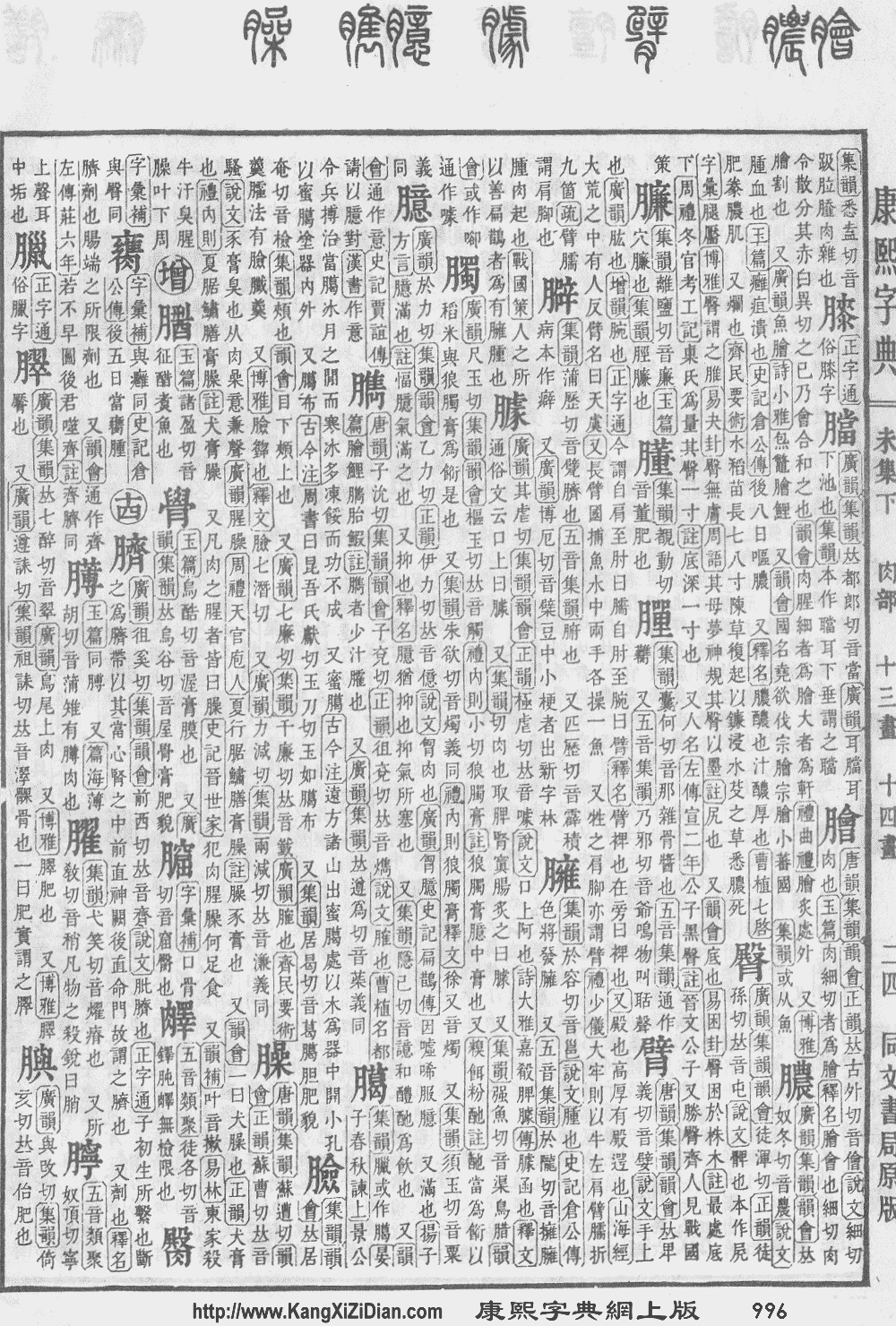
  • Kangxi Dictionary: page 996, character 18
  • Dai Kanwa Jiten: character 29955
  • Dae Jaweon: page 1447, character 20
  • Hanyu Da Zidian (first edition): volume 3, page 2116, character 10
  • Unihan data for U+81CA

Chinese

trad. 臊
simp. # 臊
alternative forms 𦞣

Glyph origin

Historical forms of the character 臊
Shuowen Jiezi (compiled in Han)
Small seal script

Phono-semantic compound (形聲/形声, OC *saːw, *saːws) : semantic 肉 (“meat; flesh”) + phonetic 喿 (OC *saːws)

Pronunciation 1


Note:
  • so/so͘ - literary;
  • chho - vernacular.

    Rime
    Character 臊
    Reading # 1/1
    Initial (聲) 心 (16)
    Final (韻) 豪 (89)
    Tone (調) Level (Ø)
    Openness (開合) Open
    Division (等) I
    Fanqie 蘇遭切
    Baxter saw
    Reconstructions
    Zhengzhang
    Shangfang
    /sɑu/
    Pan
    Wuyun
    /sɑu/
    Shao
    Rongfen
    /sɑu/
    Edwin
    Pulleyblank
    /saw/
    Li
    Rong
    /sɑu/
    Wang
    Li
    /sɑu/
    Bernard
    Karlgren
    /sɑu/
    Expected
    Mandarin
    Reflex
    sāo
    Expected
    Cantonese
    Reflex
    sou1
    Baxter–Sagart system 1.1 (2014)
    Character 臊
    Reading # 1/1
    Modern
    Beijing
    (Pinyin)
    sāo
    Middle
    Chinese
    ‹ saw ›
    Old
    Chinese
    /*[m.s]ˁaw/
    English fat of swine or dog

    Notes for Old Chinese notations in the Baxter–Sagart system:

    * Parentheses "()" indicate uncertain presence;
    * Square brackets "[]" indicate uncertain identity, e.g. *[t] as coda may in fact be *-t or *-p;
    * Angle brackets "<>" indicate infix;
    * Hyphen "-" indicates morpheme boundary;

    * Period "." indicates syllable boundary.
    Zhengzhang system (2003)
    Character 臊
    Reading # 1/2
    No. 16577
    Phonetic
    component
    喿
    Rime
    group
    宵
    Rime
    subdivision
    1
    Corresponding
    MC rime
    騷
    Old
    Chinese
    /*saːw/
    Notes 後通作騷

    Definitions

    臊

    1. having the smell like one of urine
      alt. forms: 騷/骚 (sāo)
    2. (Cantonese) rank taste and smell of meat, especially mutton

    Pronunciation 2


    Zhengzhang system (2003)
    Character 臊
    Reading # 2/2
    No. 16586
    Phonetic
    component
    喿
    Rime
    group
    宵
    Rime
    subdivision
    1
    Corresponding
    MC rime
    喿
    Old
    Chinese
    /*saːws/
    Notes 手冊所列新分化字

    Definitions

    臊

    1. minced meat
    2. embarrassed
    3. to embarrass

    Compounds

    References

    Japanese

    Kanji

    臊

    (uncommon “Hyōgai” kanji)

    1. This term needs a translation to English. Please help out and add a translation, then remove the text {{rfdef}}.

    Readings

    • On (unclassified): そう (sō)
    • Kun: あぶら (abura)

    Korean

    Hanja

    臊 • (jo) (hangeul 조, revised jo, McCune–Reischauer cho, Yale co)

    1. This term needs a translation to English. Please help out and add a translation, then remove the text {{rfdef}}.
    This article is issued from Wiktionary. The text is licensed under Creative Commons - Attribution - Sharealike. Additional terms may apply for the media files.