辱
| ||||||||
Translingual
Han character
辱 (Kangxi radical 161, 辰+3, 10 strokes, cangjie input 一女木戈 (MVDI), four-corner 71343, composition ⿱辰寸)
References
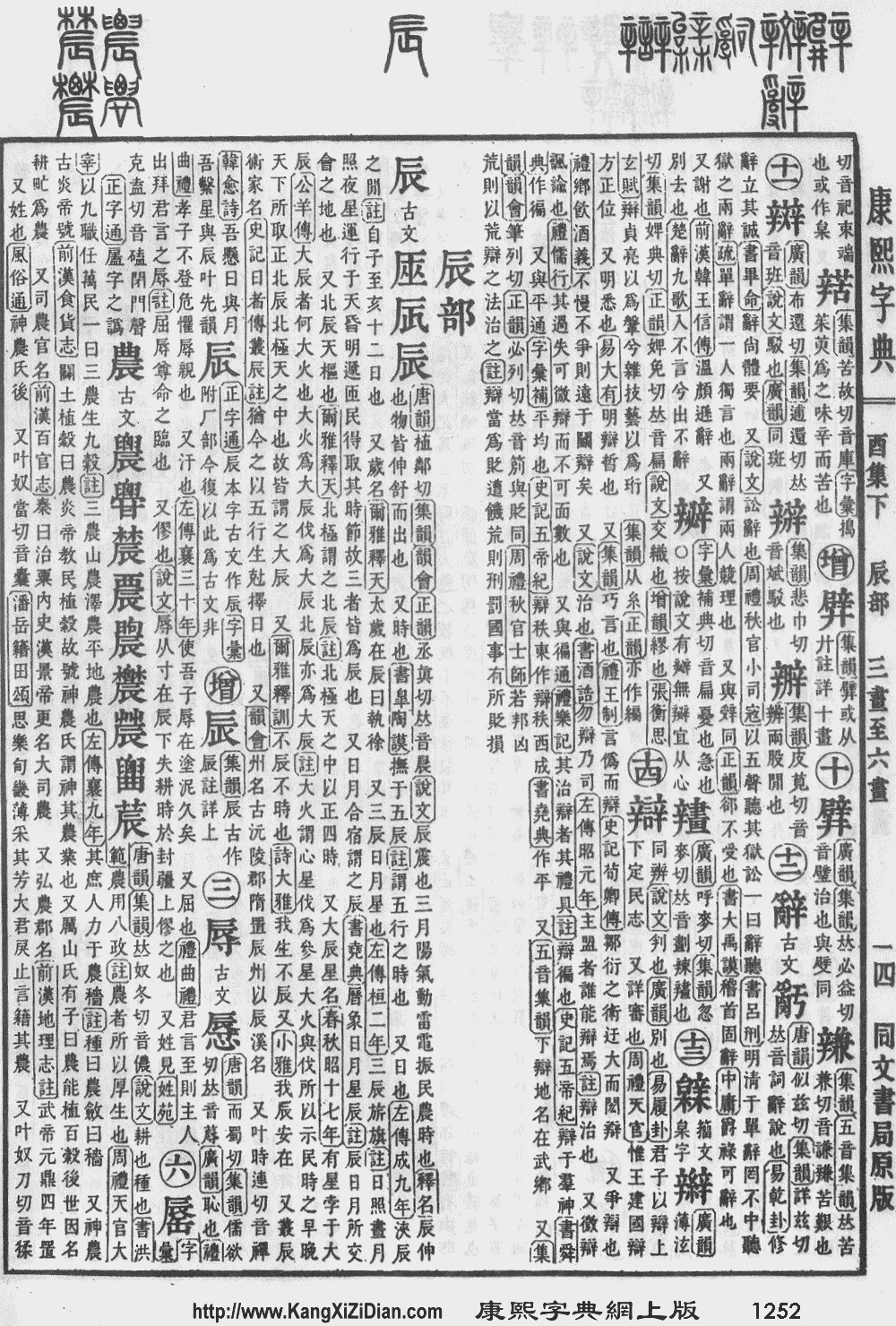
- Kangxi Dictionary: page 1252, character 21
- Dai Kanwa Jiten: character 38686
- Dae Jaweon: page 1733, character 8
- Hanyu Da Zidian (first edition): volume 6, page 3607, character 1
- Unihan data for U+8FB1
Chinese
| trad. | 辱 | |
|---|---|---|
| simp. # | 辱 | |
| 2nd round simp. | ⿱入寸 | |
Pronunciation
Definitions
辱
- disgrace; shame; discredit
- to disgrace; to bring shame on
- to humiliate; to insult; to abuse
- (literary, humble) gratefully
- 曩者辱賜書 [Classical Chinese, trad.]
- From: Sima Qian, Letter to Ren An. 1st century BCE. Translated by Burton Watson.
- nǎng zhě rǔ cì shū [Pinyin]
- In the past I had the honor of receiving a letter from you.
曩者辱赐书 [Classical Chinese, simp.]
Compounds
- 不辱
- 不辱使命 (bùrǔshǐmìng)
- 主憂臣辱/主忧臣辱
- 主辱臣死
- 侮辱
- 公然侮辱
- 共榮辱/共荣辱
- 凌辱 (língrǔ)
- 受辱 (shòurǔ)
- 喪權辱國/丧权辱国 (sàngquánrǔguó)
- 奇恥大辱/奇耻大辱 (qíchǐdàrǔ)
- 寧死不辱/宁死不辱
- 寵辱不驚/宠辱不惊
- 寵辱無驚/宠辱无惊
- 寵辱若驚/宠辱若惊
- 屈辱 (qūrǔ)
- 幸不辱命
- 幽囚受辱
- 廷辱
- 忍辱 (rěnrǔ)
- 恥辱/耻辱 (chǐrǔ)
- 折辱
- 挫辱
- 摧辱
- 楚辱
- 榮辱/荣辱 (róngrǔ)
- 榮辱與共/荣辱与共 (róngrùyǔgòng)
- 欺辱
- 死生榮辱/死生荣辱
- 毆辱/殴辱
- 汙辱/污辱 (wūrǔ)
- 沾辱
- 玷辱 (diànrǔ)
- 盛衰榮辱/盛衰荣辱 (shèngshuāiróngrǔ)
- 知足不辱
- 笞辱
- 羞辱 (xiūrǔ)
- 羞辱門楣/羞辱门楣
- 肆言詈辱
- 胯下之辱
- 自取其辱 (zìqǔqírǔ)
- 蒲鞭示辱
- 詈辱
- 辱命
- 辱國/辱国
- 辱國喪師/辱国丧师
- 辱子
- 辱承華翰/辱承华翰
- 辱抹
- 辱沒/辱没 (rǔmò)
- 辱游
- 辱罵/辱骂 (rǔmà)
- 辱荷
- 辱身敗名/辱身败名
- 辱門敗戶/辱门败户
- 降志辱身
Descendants
References
- “辱”, in 漢語多功能字庫 (Multi-function Chinese Character Database), 香港中文大學 (the Chinese University of Hong Kong), 2014–
Japanese
Kanji
辱
- This term needs a translation to English. Please help out and add a translation, then remove the text
{{rfdef}}.
Korean
Hanja
辱 • (yok) (hangeul 욕, revised yok, McCune–Reischauer yok, Yale yok)
- This term needs a translation to English. Please help out and add a translation, then remove the text
{{rfdef}}.
Vietnamese
This article is issued from Wiktionary. The text is licensed under Creative Commons - Attribution - Sharealike. Additional terms may apply for the media files.