遊
See also: 游
| ||||||||
Translingual
Han character
遊 (Kangxi radical 162, 辵+9, 12 strokes, cangjie input 卜卜尸木 (YYSD), four-corner 38304, composition ⿺辶斿)
References
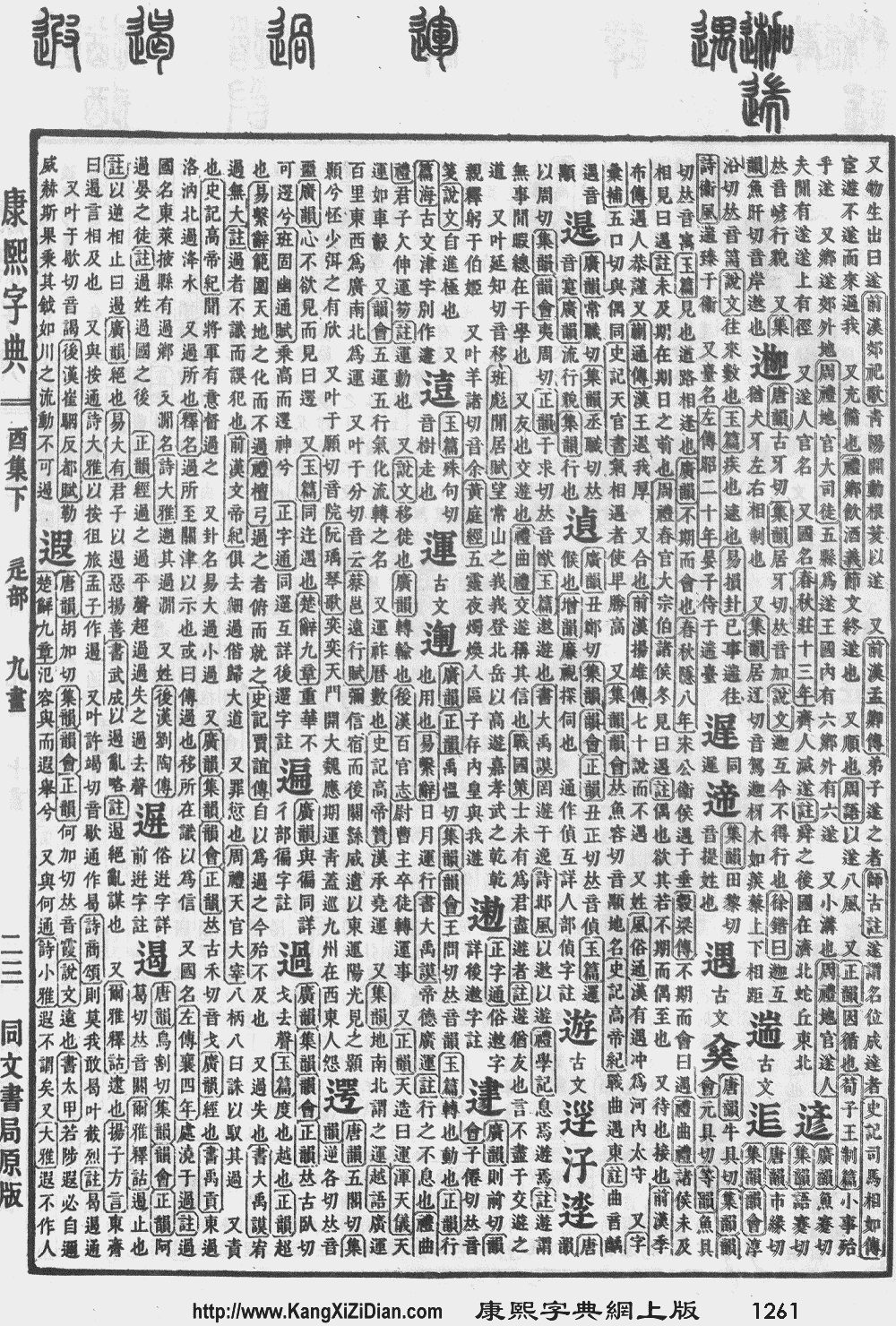
- Kangxi Dictionary: page 1261, character 11
- Dai Kanwa Jiten: character 38994
- Dae Jaweon: page 1751, character 14
- Hanyu Da Zidian (first edition): volume 6, page 3861, character 2
- Unihan data for U+904A
Chinese
| trad. | 遊 | |
|---|---|---|
| simp. | 游* | |
| 2nd round simp. | 沋 | |
| alternative forms | 𨔼 逰 | |
Etymology
From Sino-Tibetan. Cognate with Tibetan རྒྱུ་ (rgyu, “to go; to walk; to move; to wander”), Lepcha ᰚᰪ (yŭ), Rawang yɨ (“to flow”) (Schuessler, 2007).
Same word as 游 (OC *lu, “to swim”). See there for more.
Pronunciation
Definitions
遊
Compounds
- 交遊/交游 (jiāoyóu)
- 仙遊/仙游 (xiānyóu)
- 佚遊/佚游
- 俊遊/俊游
- 倦遊/倦游
- 優遊/优游 (yōuyóu)
- 冶遊/冶游 (yěyóu)
- 出遊/出游 (chūyóu)
- 到此一遊/到此一游 (dàocǐyīyóu)
- 勝遊/胜游
- 古遊/古游
- 吟遊詩人/吟游诗人 (yínyóushīrén)
- 周遊/周游 (zhōuyóu)
- 唱遊/唱游
- 國際漫遊/国际漫游
- 園遊會/园游会 (yuányóuhuì)
- 壯遊/壮游
- 夜遊/夜游 (yèyóu)
- 夜遊子/夜游子 (yèyóuzi)
- 夜遊神/夜游神
- 夢往神遊/梦往神游
- 夢遊/梦游 (mèngyóu)
- 夢遊症/梦游症 (mèngyóuzhèng)
- 套裝旅遊/套装旅游 (tàozhuāng lǚyóu)
- 嬉遊/嬉游 (xīyóu)
- 孤遊/孤游
- 客遊/客游
- 宦遊/宦游 (huànyóu)
- 宸遊/宸游
- 導遊/导游 (dǎoyóu)
- 心遊/心游
- 慢遊/慢游
- 抄手遊廊/抄手游廊
- 插箭遊營/插箭游营
- 敖遊/敖游
- 整人遊戲/整人游戏
- 文件旅遊/文件旅游
- 旅遊/旅游 (lǚyóu)
- 旅遊手冊/旅游手册
- 旅遊業/旅游业 (lǚyóuyè)
- 春遊/春游 (chūnyóu)
- 暢遊/畅游 (chàngyóu)
- 樂遊原/乐游原
- 歐遊/欧游 (Ōuyóu)
- 浪遊/浪游
- 浮雲遊子/浮云游子
- 淫遊/淫游
- 漫遊/漫游 (mànyóu)
- 炳燭夜遊/炳烛夜游
- 無業遊民/无业游民 (wúyèyóumín)
- 燕遊/燕游
- 爛遊/烂游
- 狎遊/狎游
- 環遊/环游 (huányóu)
- 盤遊/盘游
- 矯若遊龍/矫若游龙
- 示威遊行/示威游行
- 神遊/神游 (shényóu)
- 神遊太虛/神游太虚
- 秉燭夜遊/秉烛夜游
- 竄遊/窜游
- 老殘遊記/老残游记
- 臥遊/卧游
- 自主旅遊/自主旅游
- 自主遊/自主游
- 自助旅遊/自助旅游
- 舊地重遊/旧地重游
- 舊遊/旧游
- 良遊/良游
- 行遊/行游
- 西遊補/西游补
- 西遊記/西游记 (Xīyóujì)
- 豫遊/豫游
- 貴遊子弟/贵游子弟
- 超手遊廊/超手游廊
- 巡遊/巡游 (xúnyóu)
- 逍遙遊/逍遥游
- 遊人/游人 (yóurén)
- 遊仙/游仙
- 遊仙枕/游仙枕
- 遊仙詩/游仙诗
- 遊伴/游伴
- 遊俠/游侠 (yóuxiá)
- 遊冶/游冶
- 遊刃有餘/游刃有余 (yóurènyǒuyú)
- 遊動/游动 (yóudòng)
- 遊動哨/游动哨
- 遊園會/游园会 (yóuyuánhuì)
- 遊子/游子 (yóuzǐ)
- 遊子吟/游子吟
- 遊學/游学 (yóuxué)
- 遊客/游客 (yóukè)
- 遊客如織/游客如织
- 遊尺/游尺
- 遊山玩水/游山玩水 (yóushānwánshuǐ)
- 遊幕/游幕
- 遊庠/游庠
- 遊廊/游廊
- 遊弋/游弋
- 遊必有方/游必有方
- 遊惰/游惰
- 遊憩/游憩 (yóuqì)
- 遊戲/游戏 (yóuxì)
- 遊戲三昧/游戏三昧
- 遊戲人間/游戏人间
- 遊戲場/游戏场
- 遊戲規則/游戏规则 (yóuxì guīzé)
- 遊戲說/游戏说
- 遊手好閒/游手好闲 (yóushǒuhàoxián)
- 遊手遊食/游手游食
- 遊擊/游击 (yóujī)
- 遊擊區/游击区 (yóujīqū)
- 遊擊戰/游击战 (yóujīzhàn)
- 遊擊隊/游击队 (yóujīduì)
- 遊方/游方 (yóufāng)
- 遊樂/游乐 (yóulè)
- 遊樂場/游乐场 (yóulèchǎng)
- 遊樂林/游乐林
- 遊歷/游历 (yóulì)
- 遊民/游民 (yóumín)
- 遊氣/游气
- 遊湖/游湖
- 遊營撞屍/游营撞尸
- 遊牧/游牧 (yóumù)
- 遊獵/游猎 (yóuliè)
- 遊玩/游玩 (yóuwán)
- 遊畋/游畋
- 遊目/游目
- 遊禽/游禽
- 遊移/游移
- 遊絲/游丝 (yóusī)
- 遊絲飛絮/游丝飞絮
- 遊興/游兴 (yóuxìng)
- 遊舫/游舫
- 遊船/游船 (yóuchuán)
- 遊艇/游艇 (yóutǐng)
- 遊花插趣/游花插趣
- 遊蕩/游荡 (yóudàng)
- 遊藝/游艺 (yóuyì)
- 遊藝會/游艺会
- 遊蜂戲蝶/游蜂戏蝶
- 遊蜂浪蝶/游蜂浪蝶
- 遊行/游行 (yóuxíng)
- 遊街/游街 (yóujiē)
- 遊覽/游览 (yóulǎn)
- 遊覽勝地/游览胜地
- 遊覽車/游览车 (yóulǎnchē)
- 遊觀/游观
- 遊記/游记 (yóujì)
- 遊說/游说 (yóushuì)
- 遊豫/游豫 (yóuyù)
- 遊資/游资
- 遊賞/游赏
- 遊走/游走
- 遊蹤/游踪
- 遊逛/游逛 (yóuguàng)
- 遊鄉/游乡 (yóuxiāng)
- 遊離/游离 (yóulí)
- 遊離電子/游离电子
- 遊食/游食
- 遊騎/游骑
- 遊騎無歸/游骑无归
- 遊魂/游魂
- 遠遊/远游 (yuǎnyóu)
- 遨遊/遨游 (áoyóu)
- 郊遊/郊游 (jiāoyóu)
- 野遊/野游
- 釜底遊魂/釜底游魂
- 釣遊舊地/钓游旧地
- 閒遊/闲游
- 雲遊/云游 (yúnyóu)
- 電腦遊戲/电脑游戏 (diànnǎo yóuxì)
- 飄遊/飘游
- 魚遊釜中/鱼游釜中
- 魚遊釜底/鱼游釜底
- 鼓腹而遊/鼓腹而游
References
- “遊”, in 漢語多功能字庫 (Multi-function Chinese Character Database), 香港中文大學 (the Chinese University of Hong Kong), 2014–
Japanese
| Shinjitai | 遊 | |
| Kyūjitai [1] |
遊󠄁 遊+ 󠄁?(Adobe-Japan1) |
 |
| 遊󠄃 遊+ 󠄃?(Hanyo-Denshi) (Moji_Joho) | ||
| The displayed kanji may be different from the image due to your environment. See here for details. | ||
Readings
Compounds
References
- “遊”, in 漢字ぺディア (Kanjipedia) (in Japanese), 日本漢字能力検定協会, 2015–2024
Korean
Hanja
遊 • (yu) (hangeul 유, revised yu, McCune–Reischauer yu, Yale yu)
- This term needs a translation to English. Please help out and add a translation, then remove the text
{{rfdef}}.
Vietnamese
This article is issued from Wiktionary. The text is licensed under Creative Commons - Attribution - Sharealike. Additional terms may apply for the media files.