鍧
| ||||||||
Translingual
Han character
鍧 (Kangxi radical 167, 金+9, 17 strokes, cangjie input 金心卜口 (CPYR), four-corner 87120, composition ⿰釒訇)
References
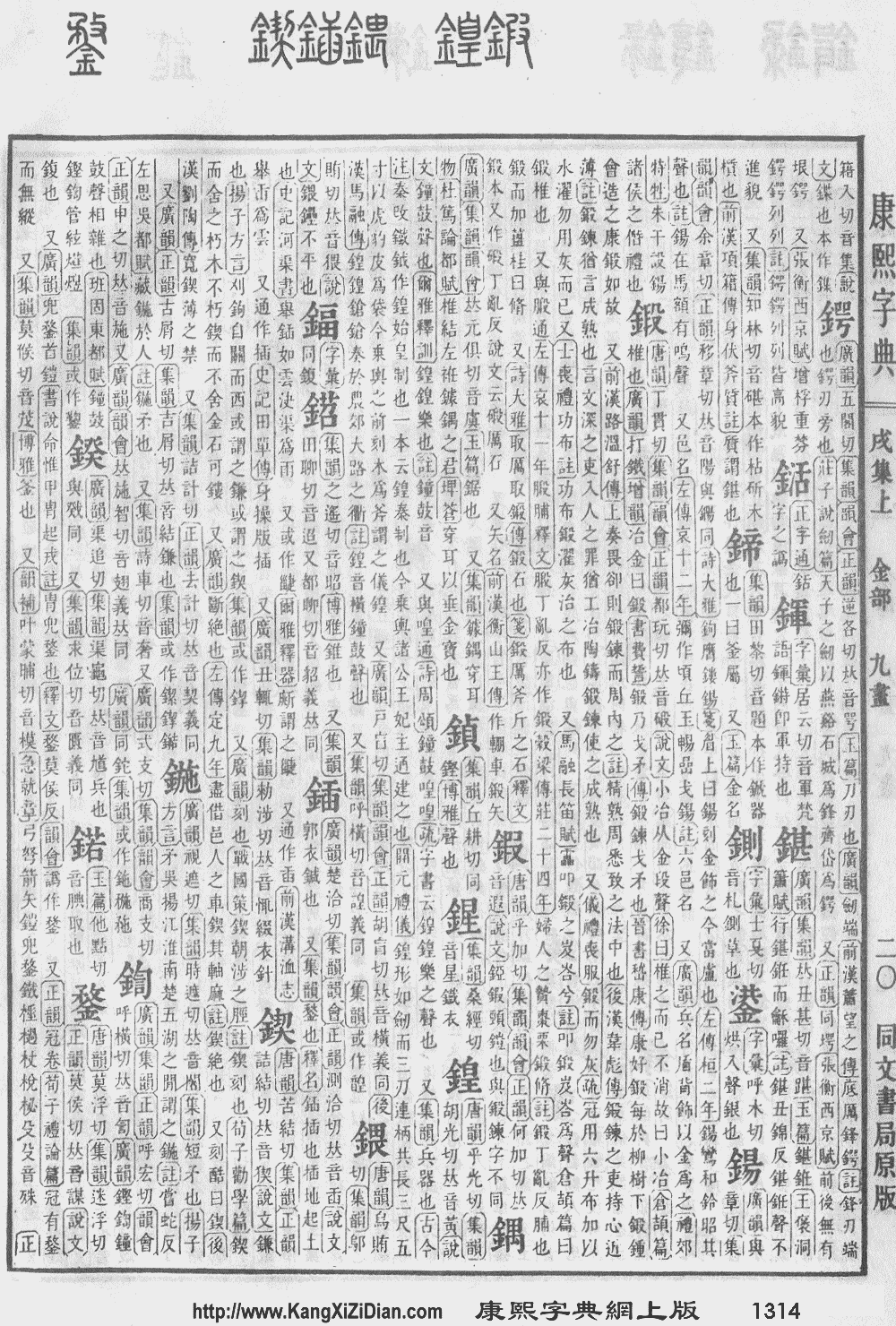
- Kangxi Dictionary: page 1314, character 21
- Dai Kanwa Jiten: character 40637
- Dae Jaweon: page 1815, character 7
- Hanyu Da Zidian (first edition): volume 6, page 4234, character 12
- Unihan data for U+9367
Chinese
| trad. | 鍧 | |
|---|---|---|
| simp. | 𰾡 | |
Glyph origin
Characters in the same phonetic series (匀) (Zhengzhang, 2003)
| Old Chinese | |
|---|---|
| 枃 | *skins |
| 笉 | *skʰinʔ |
| 郇 | *ɡʷreːn, *sqʰʷin |
| 絢 | *qʰʷiːns |
| 眴 | *qʰʷiːns, *ɡʷiːns, *sqʰʷin, *qʰʷjins, *ŋʷjin |
| 盷 | *ɡʷiːn |
| 訇 | *ɡʷiːn, *qʰʷreːŋ |
| 迿 | *ɡʷiːns, *sqʰʷins |
| 姰 | *ɡʷiːns, *sqʰʷin |
| 畇 | *l'iːŋ, *sqʰʷin, *sɢʷin, *ɢʷin |
| 荀 | *sqʰʷin |
| 詢 | *sqʰʷin |
| 洵 | *sqʰʷin, *sɢʷin |
| 恂 | *sqʰʷin |
| 峋 | *sqʰʷin |
| 珣 | *sqʰʷin |
| 槆 | *sqʰʷin |
| 筍 | *sqʰʷinʔ |
| 箰 | *sqʰʷinʔ |
| 旬 | *sɢʷin |
| 殉 | *sɢʷins |
| 徇 | *sɢʷins |
| 侚 | *sɢʷins |
| 均 | *kʷin |
| 鈞 | *kʷin |
| 袀 | *kʷin |
| 汮 | *kʷin, *kʷrin |
| 呁 | *kʷins |
| 筠 | *ɡʷin |
| 荺 | *ɢʷin, *ɡʷinʔ |
| 匀 | *ɢʷin |
| 韵 | *ɢʷins |
| 輷 | *qʰʷreːŋ, *qʰʷreːŋs |
| 揈 | *qʰʷreːŋ |
| 鍧 | *qʰʷreːŋ |
| 渹 | *qʰʷreːŋ |
| 赹 | *ɡʷeŋ |
| 憌 | *ɡʷeŋ |
| 惸 | *ɡʷeŋ |
| 咰 | *sqʰʷrid |
Pronunciation
Definitions
鍧
- This term needs a translation to English. Please help out and add a translation, then remove the text
{{rfdef}}.
Japanese
Kanji
鍧
- This term needs a translation to English. Please help out and add a translation, then remove the text
{{rfdef}}.
This article is issued from Wiktionary. The text is licensed under Creative Commons - Attribution - Sharealike. Additional terms may apply for the media files.