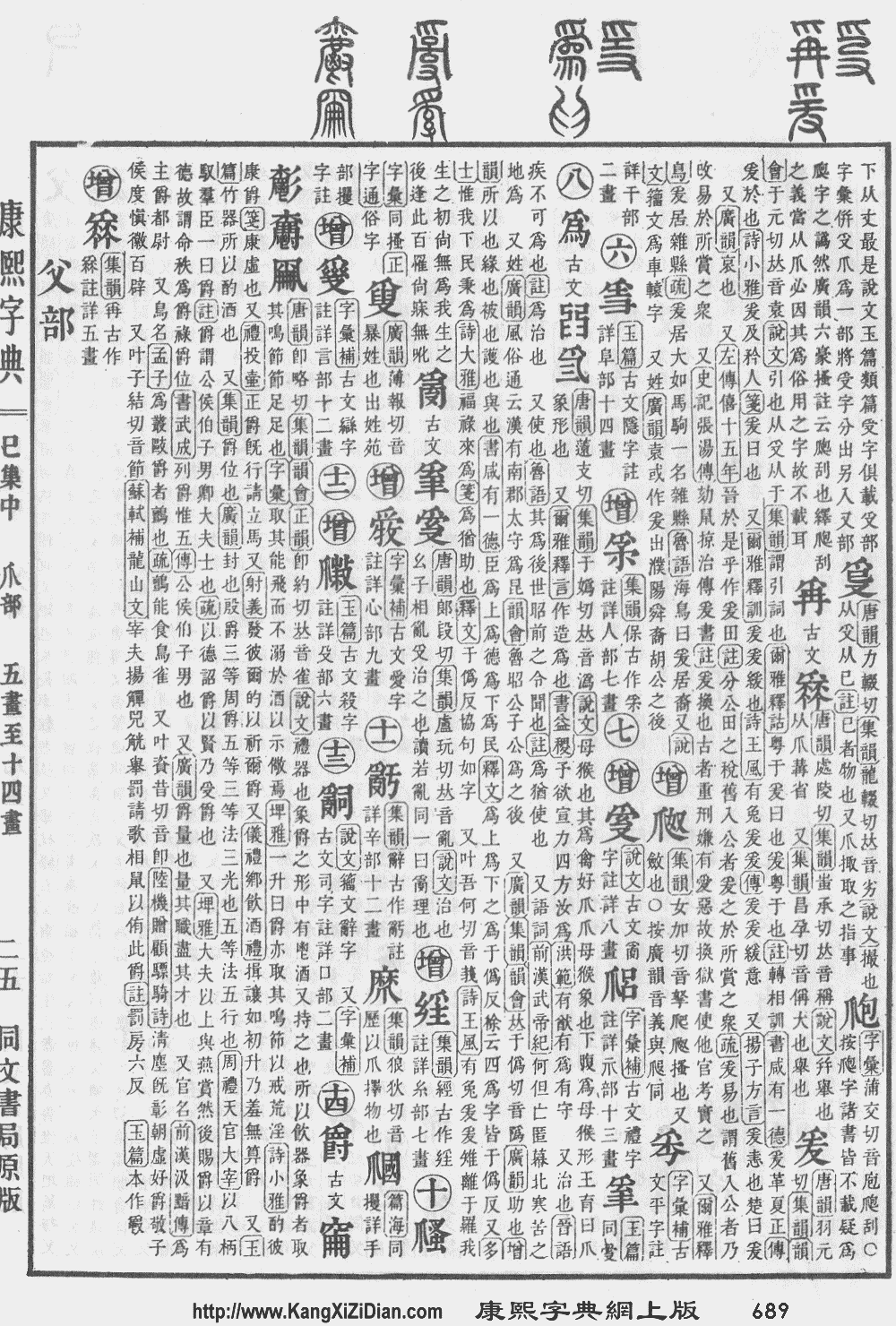
𤔔

See also: 亂
𤔔 U+24514, 𤔔
CJK UNIFIED IDEOGRAPH-24514
← 𤔓
[U+24513]
CJK Unified Ideographs Extension B 𤔕 →
[U+24515]

Translingual

Alternative forms

Han character

𤔔 (Kangxi radical 87, 爪+8, 12 strokes, cangjie input 月弓戈月 (BNIB), composition ⿳爫龴⿵冂⿱厶又)

Derived characters

References

Chinese

Glyph origin

Ideogrammic compound (會意/会意) : 糸 (“silk, threads”) + 冂 (“beater, heddle, comb”) + 𠬪 (“two hands”) — two persons disentangling a roll of threads using their hands with the help of a tool. Compositionally related to 受.

Etymology 1

simp. and trad.
𤔔
alternative forms 𠭟
𤔐
𤔒
𤔦
𤔬

Pronunciation


Rime
Character 𤔔
Reading # 1/1
Initial (聲) 來 (37)
Final (韻) 桓 (62)
Tone (調) Departing (H)
Openness (開合) Closed
Division (等) I
Fanqie 郎段切
Baxter lwanH
Reconstructions
Zhengzhang
Shangfang
/luɑnH/
Pan
Wuyun
/lʷɑnH/
Shao
Rongfen
/luɑnH/
Edwin
Pulleyblank
/lwanH/
Li
Rong
/luɑnH/
Wang
Li
/luɑnH/
Bernard
Karlgren
/luɑnH/
Expected
Mandarin
Reflex
luàn
Expected
Cantonese
Reflex
lyun6
Baxter–Sagart system 1.1 (2014)
Character 𤔔
Reading # 1/1
Modern
Beijing
(Pinyin)
luàn
Middle
Chinese
‹ lwanH ›
Old
Chinese
/*[r]ˁo[n]-s/
English disorder, rebellion

Notes for Old Chinese notations in the Baxter–Sagart system:

* Parentheses "()" indicate uncertain presence;
* Square brackets "[]" indicate uncertain identity, e.g. *[t] as coda may in fact be *-t or *-p;
* Angle brackets "<>" indicate infix;
* Hyphen "-" indicates morpheme boundary;

* Period "." indicates syllable boundary.

Definitions

𤔔

  1. ‡ to govern

References

Definitions

For pronunciation and definitions of 𤔔 – see 亂 (“disorderly; chaotic; unstable; volatile; turbulent; etc.”).
(This character is a variant form of 亂).

References

This article is issued from Wiktionary. The text is licensed under Creative Commons - Attribution - Sharealike. Additional terms may apply for the media files.