互
See also: 亙
| ||||||||
Translingual
| Stroke order | |||
|---|---|---|---|
 | |||
Han character
互 (Kangxi radical 7, 二+2, 4 strokes, cangjie input 一女弓一 (MVNM), four-corner 10107, composition ⿱一彑)
References
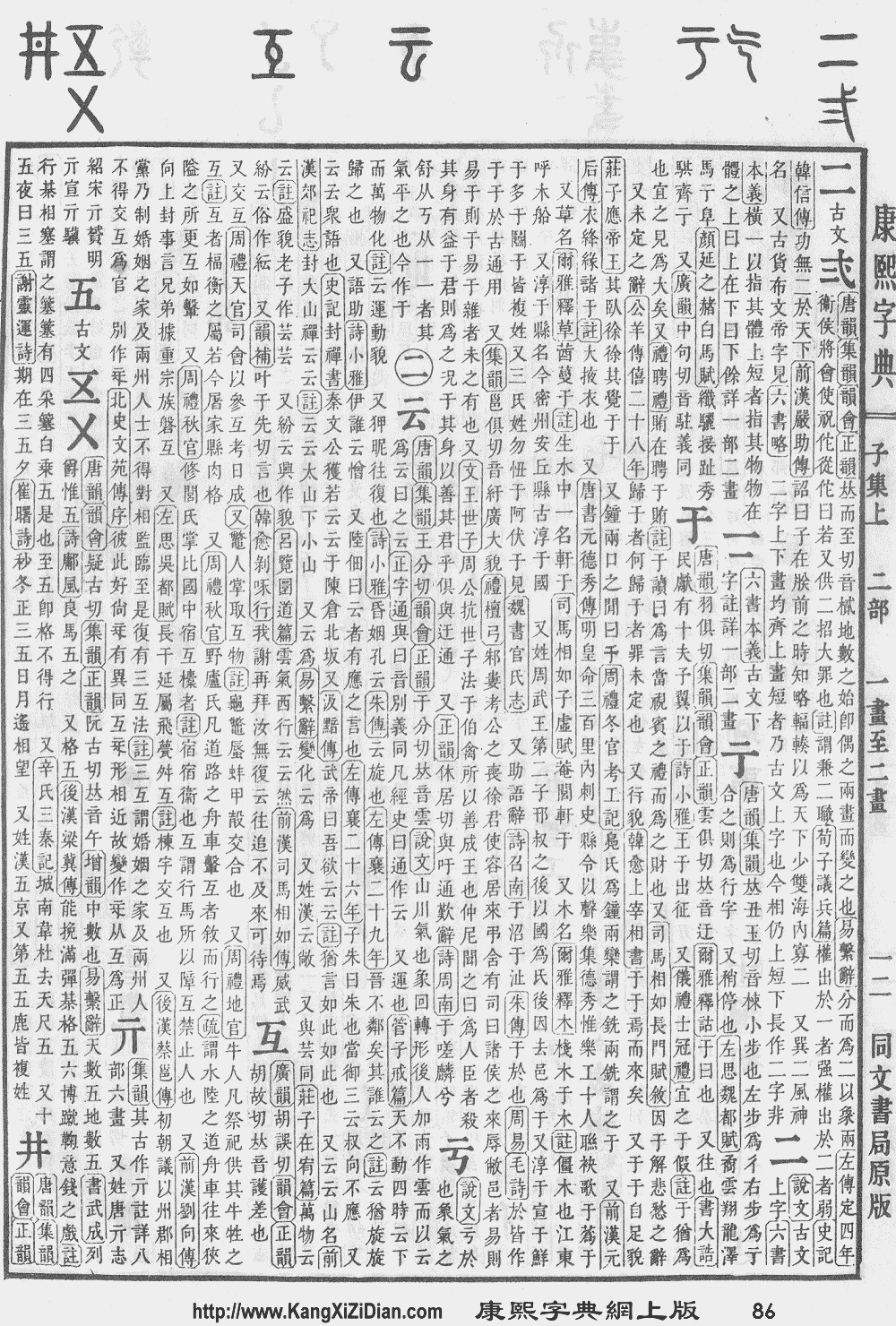
- Kangxi Dictionary: page 86, character 9
- Dai Kanwa Jiten: character 255
- Dae Jaweon: page 178, character 2
- Hanyu Da Zidian (first edition): volume 1, page 14, character 1
- Unihan data for U+4E92
Chinese
| simp. and trad. |
互 | |
|---|---|---|
| alternative forms | 弖 | |
Glyph origin
| Historical forms of the character 互 | |||||
|---|---|---|---|---|---|
| |||||
|
References: Mostly from Richard Sears' Chinese Etymology site (authorisation),
|


Characters in the same phonetic series (互) (Zhengzhang, 2003)
Pictogram (象形) . A spool to wind up rope (like a modern garden hose spool). Original character for 䇘
Pronunciation
Definitions
互
- mutually; reciprocally
- mutual
- crisscrossing; intertwining
- † Alternative form of 䇘 (hù, “a tool to wind up cord”)
- † Alternative form of 枑 (hù, “wooden rack”)
- † error; mistake
- † gate
- † crustacean
- a surname
Usage notes
- 互 (hù) usually modifies a verb of one syllable, while its negative 互不 usually modifies a verb of two.
Compounds
- 互不侵犯
- 互不相讓/互不相让 (hùbùxiāngràng)
- 互保
- 互信 (hùxìn)
- 互切互磋
- 互利 (hùlì)
- 互別苗頭/互别苗头
- 互助 (hùzhù, “to help each other”)
- 互助合作
- 互助會/互助会 (hùzhùhuì)
- 互勉 (hùmiǎn)
- 互動/互动 (hùdòng, “interactive”)
- 互動媒體/互动媒体
- 互動式/互动式 (hùdòngshì)
- 互定
- 互市 (hùshì)
- 互惠 (hùhuì)
- 互惠原則/互惠原则
- 互惠關稅/互惠关税
- 互感應/互感应 (hùgǎnyìng)
- 互換/互换 (hùhuàn)
- 互毆/互殴 (hù'ōu)
- 互物
- 互生
- 互用
- 互異/互异
- 互相 (hùxiāng, “each other”)
- 互相為謀/互相为谋 (hùxiāngwéimóu)
- 互粉 (hùfěn, “to follow or friend each other”)
- 互補/互补 (hùbǔ)
- 互補色/互补色 (hùbǔsè)
- 互見/互见
- 互角
- 互訓/互训
- 互託肝膽/互托肝胆
- 互調/互调
- 互讓/互让 (hùràng)
- 互質/互质 (hùzhì)
- 互通 (hùtōng)
- 互通有無/互通有无
- 互選/互选
- 互鄉/互乡
- 交互作用
- 仁智互見/仁智互见
- 共榮互利/共荣互利 (“to benefit mutually and prosper together”)
- 利弊互見/利弊互见
- 反目互毆/反目互殴
- 平等互惠
- 犬牙差互
- 瑕瑜互見/瑕瑜互见
- 盤互/盘互
- 相互 (xiānghù)
- 相互作用 (xiānghù zuòyòng)
- 社會互動/社会互动 (shèhuì hùdòng)
- 舛互
- 輪互/轮互
- 轚互/𰺟互
- 館際互借/馆际互借
- 首尾乖互
Pronunciation
Japanese
Korean
Hanja
互 (eum 호 (ho))
- This term needs a translation to English. Please help out and add a translation, then remove the text
{{rfdef}}.
Vietnamese
Han character
- This term needs a translation to English. Please help out and add a translation, then remove the text
{{rfdef}}.
References
This article is issued from Wiktionary. The text is licensed under Creative Commons - Attribution - Sharealike. Additional terms may apply for the media files.