為
| ||||||||
Translingual
| Stroke order | |||
|---|---|---|---|
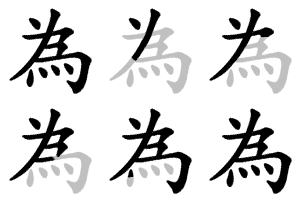 | |||
| Traditional | 為 |
|---|---|
| Simplified | 为 |
| Japanese | 為 |
| Korean | 爲 |
Han character
為 (Kangxi radical 86, 火+5, 9 strokes, cangjie input 戈大弓火 (IKNF), four-corner 20227, composition ⿵⿻𬼀⿳㇇㇇𠃌灬)
Descendants
References
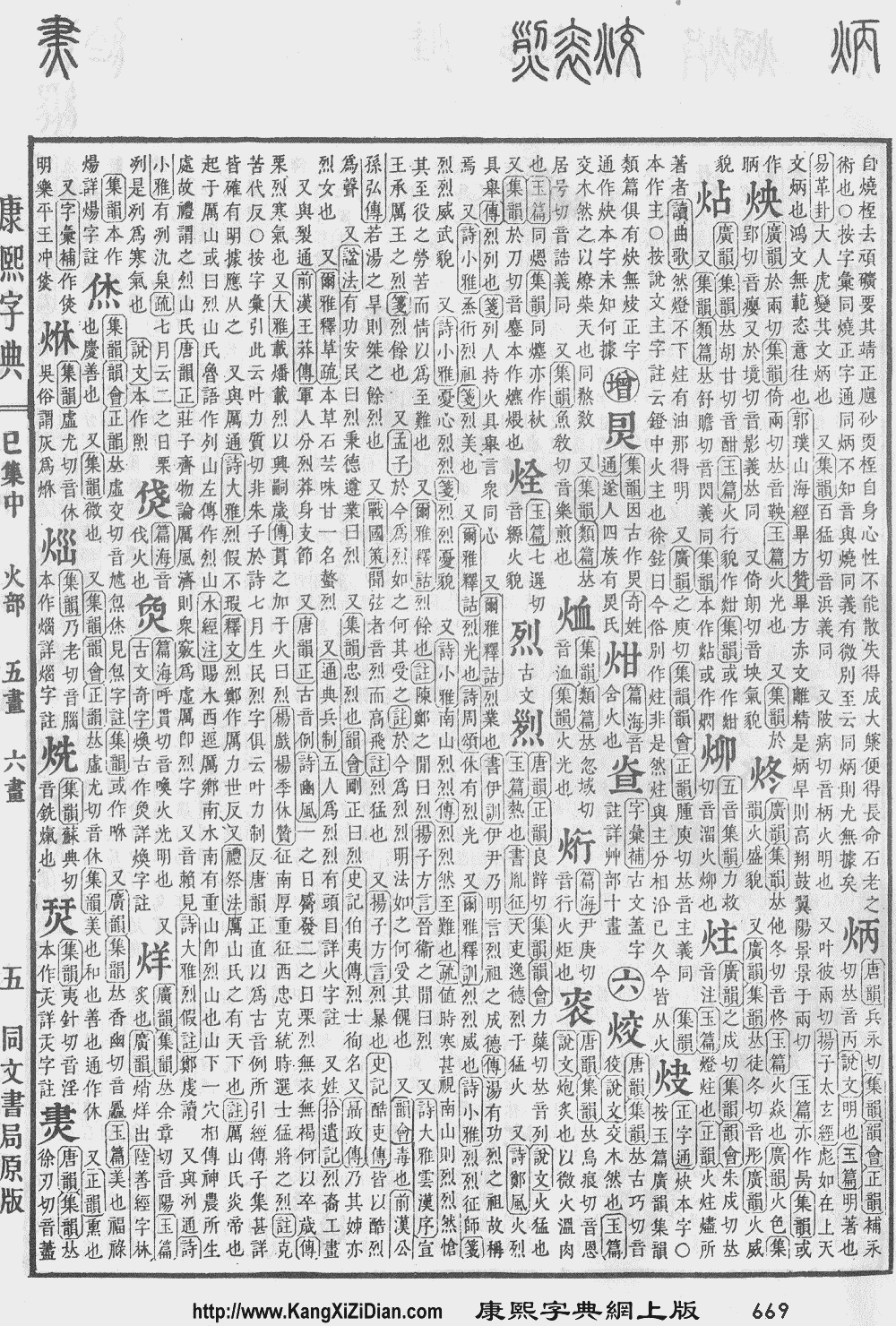
- Kangxi Dictionary: not present, would follow page 669, character 10
- Dai Kanwa Jiten: character 18981
- Hanyu Da Zidian (first edition): volume 3, page 2198, character 11
- Unihan data for U+70BA
Chinese
| trad. | 為/爲 | |
|---|---|---|
| simp. | 为 | |
| alternative forms | 𤔡 𫞟 𬊓 𦥮 ancient | |
Glyph origin
| Historical forms of the character 為 | ||||
|---|---|---|---|---|
| Shang | Western Zhou | Warring States | Shuowen Jiezi (compiled in Han) | Liushutong (compiled in Ming) |
| Oracle bone script | Bronze inscriptions | Chu slip and silk script | Small seal script | Transcribed ancient scripts |
 |
 |
 |
 |
 |
Simplified from 爲.
In the oracle bone script, it is an ideogrammic compound (會意/会意) : 又 (“hand”) + 象 (“elephant”) — a hand holding an elephant. The 又 later became 爪 (“hand; claw”).
Shuowen Jiezi interprets the character as a representation of the female macaque.
Etymology
The two pronunciations below (“to make; to do; to be”, “for; to; because”) are cognate; the latter is the *–s derivative of the former. Words meaning “to make, to do” often have secondary meanings of “for, as” – compare 作.
Etymology not certain. Starostin compared this word with Tibetan བགྱིད (bgyid, “to make, to manufacture”), བགྱི་བ (bgyi ba, “action, deed”), ཡིན (yin, “is, be”) and Burmese ဝေ (we, “to distribute, to share”). Schuessler (2007) listed *ʔaajh (“to give”) (> Khmer ឲ្យ (ʼaoy, “to give, to donate”)) and Khmer ធ្វើ (thvəə, “to do, to make”), although the vowels do not match.
The graphic representation using a monkey or an elephant probably stems from a homophonic or near-homophonic etymon which was rarely attested; compare Proto-Sino-Tibetan *b/g-woj-n > Jingpho woi (“monkey”) and possibly 猿 (OC *ɢʷan, “ape”). STEDT considers this word to be a possible descendant of Proto-Sino-Tibetan *m-gwi(j) (“elephant”). Outside Sino-Tibetan, compare Proto-Vietic *-vɔːj (“elephant”) > Vietnamese voi (“elephant”).
Pronunciation 1
Definitions
為
- to do; to make
- to administer; to govern
- 善人為邦百年,亦可以勝殘去殺矣。 [Classical Chinese, trad.]
- From: The Analects of Confucius, c. 475 – 221 BCE, translated based on James Legge's version
- Shànrén wéi bāng bǎinián, yì kěyǐ shèng cán qù shā yǐ. [Pinyin]
- If good men were to govern a country in succession for a hundred years, they would be able to transform the violently bad, and dispense with capital punishments.
善人为邦百年,亦可以胜残去杀矣。 [Classical Chinese, simp.]
- to construct; to make
- to become; to turn into
- to be (equivalent to, equal to)
- to take something as
- to act as; to serve as; to behave as
- 子曰:「溫故而知新,可以為師矣。」 [Classical Chinese, trad.]
- From: The Analects of Confucius, c. 475 – 221 BCE, translated based on James Legge's version
- Zǐ yuē: “Wēn gù ér zhī xīn, kěyǐ wéi shī yǐ.” [Pinyin]
- The Master said, "If a man keeps cherishing his old knowledge, so as continually to be acquiring new, he may be a teacher of others."
子曰:「温故而知新,可以为师矣。」 [Classical Chinese, simp.]
- 其竹節度三尺,柔細可為索,亦以皮為麻。 [Classical Chinese, trad.]
- From: Tang Dynasty, Fan Chuo, Manshu, chapter 7, part 7
- Qí zhújié duó sān chǐ, róuxì kě wéi suǒ, yì yǐ pí wéi má. [Pinyin]
- Each joint measures three chi; thin and supple, it may be used as a rope, and its skin may also be used as linen.
其竹节度三尺,柔细可为索,亦以皮为麻。 [Classical Chinese, simp.]
- by
- Suffix used after a single-character adjective to form an adverb
- Suffix used after a single-character adverb for emphasis
Compounds
- 一之為甚/一之为甚 (yīzhīwéishèn)
- 一吐為快/一吐为快 (yītǔwéikuài)
- 一言為定/一言为定 (yīyánwéidìng)
- 下不為例/下不为例 (xiàbùwéilì)
- 三折肱為良醫/三折肱为良医
- 不以為/不以为
- 不以為奇/不以为奇
- 不以為忤/不以为忤
- 不以為意/不以为意 (bùyǐwéiyì)
- 不以為然/不以为然 (bùyǐwéirán)
- 不以為苦/不以为苦
- 不作為/不作为 (bùzuòwéi)
- 不作為犯/不作为犯
- 不作為違警/不作为违警
- 不可為/不可为
- 不失為/不失为 (bùshīwéi)
- 不成為君/不成为君
- 不法行為/不法行为
- 不為/不为 (bùwéi)
- 不為人下/不为人下
- 不為人用/不为人用
- 不為利誘/不为利诱
- 不為已甚/不为已甚 (bùwéiyǐshèn)
- 不為所動/不为所动 (bùwéisuǒdòng)
- 不為過/不为过 (bùwéiguò)
- 不為難/不为难
- 不相為謀/不相为谋
- 不能為/不能为
- 不足為奇/不足为奇 (bùzúwéiqí)
- 不足為怪/不足为怪 (bùzúwéiguài)
- 不足為慮/不足为虑 (bùzúwéilǜ)
- 不足為憑/不足为凭 (bùzúwéipíng)
- 不足為據/不足为据 (bùzúwéijù)
- 不足為訓/不足为训 (bùzúwéixùn)
- 不足為道/不足为道
- 事在人為/事在人为 (shìzàirénwéi)
- 二豎為虐/二竖为虐
- 云為
- 互相為謀/互相为谋 (hùxiāngwéimóu)
- 人滿為患/人满为患 (rénmǎnwéihuàn)
- 人為/人为 (rénwéi)
- 人自為戰/人自为战
- 以人為鑑/以人为鉴
- 以假為真/以假为真
- 以古為鑑/以古为鉴
- 以攻為守/以攻为守 (yǐgōngwéishǒu)
- 以日為年/以日为年
- 以日為歲/以日为岁
- 以為/以为 (yǐwéi)
- 代為說項/代为说项
- 以白為黑/以白为黑
- 以筌為魚/以筌为鱼
- 以耳為目/以耳为目
- 以規為瑱/以规为瑱
- 以退為進/以退为进 (yǐtuìwéijìn)
- 以鄰為壑/以邻为壑 (yǐlínwéihè)
- 任性妄為/任性妄为
- 何所不為/何所不为
- 何樂不為/何乐不为 (hélèbùwéi)
- 何為/何为
- 作為/作为 (zuòwéi)
- 作為犯/作为犯
- 何足為奇/何足为奇
- 信以為真/信以为真 (xìnyǐwéizhēn)
- 侵權行為/侵权行为 (qīnquán xíngwéi)
- 倚多為勝/倚多为胜
- 倒果為因/倒果为因 (dàoguǒwéiyīn)
- 偶一為之/偶一为之
- 偏差行為/偏差行为
- 先下手為強/先下手为强 (xiān xiàshǒu wéi qiáng)
- 先入為主/先入为主 (xiānrùwéizhǔ)
- 先睹為快/先睹为快 (xiāndǔwéikuài)
- 入土為安/入土为安 (rùtǔwéi'ān)
- 兩處為難/两处为难
- 公示行為/公示行为
- 共為脣齒/共为唇齿
- 分而為二/分而为二
- 刓方為圓/刓方为圆
- 刻木為吏/刻木为吏
- 到處為家/到处为家
- 削方為圓/削方为圆
- 削木為吏/削木为吏
- 削觚為圓/削觚为圆
- 削髮為僧/削发为僧
- 劃地為王/划地为王
- 助人為樂/助人为乐 (zhùrénwéilè)
- 助桀為虐/助桀为虐
- 助紂為虐/助纣为虐 (zhùzhòuwéinüè)
- 勉為其難/勉为其难 (miǎnwéiqínán)
- 化干戈為玉帛 (huà gāngē wéi yùbó)
- 化敵為友/化敌为友 (huàdíwéiyǒu)
- 化整為零/化整为零 (huàzhěngwéilíng)
- 化暗為明/化暗为明
- 化為泡影/化为泡影 (huàwéi pàoyǐng)
- 化為烏有/化为乌有 (huàwéiwūyǒu)
- 化繁為簡/化繁为简 (huàfánwéijiǎn)
- 化腐朽為神奇/化腐朽为神奇 (huà fǔxiǔ wéi shénqí)
- 化險為夷/化险为夷 (huà xiǎn wéi yí)
- 化零為整/化零为整
- 化鴟為鳳/化鸱为凤
- 南面為王/南面为王
- 占為己有
- 反客為主/反客为主 (fǎnkèwéizhǔ)
- 反敗為勝/反败为胜 (fǎnbàiwéishèng)
- 反賓為主/反宾为主
- 古為今用/古为今用
- 名為/名为 (míngwéi)
- 各自為戰/各自为战 (gèzìwéizhàn)
- 各自為政/各自为政 (gèzìwéizhèng)
- 合零為整/合零为整
- 喬做胡為/乔做胡为
- 單獨行為/单独行为
- 善自為謀/善自为谋
- 嘆為觀止/叹为观止 (tànwéiguānzhǐ)
- 四海為家/四海为家 (sìhǎiwéijiā)
- 因樹為屋/因树为屋
- 因禍為福/因祸为福
- 國家行為主義/国家行为主义
- 圖為不軌/图为不轨
- 壓良為賤/压良为贱
- 夙夜為謀/夙夜为谋
- 多文為富/多文为富
- 大有作為/大有作为 (dàyǒuzuòwéi)
- 大有可為/大有可为 (dàyǒukěwéi)
- 大有為/大有为
- 大為受用/大为受用
- 大為失望/大为失望
- 大膽妄為/大胆妄为
- 天下為一/天下为一
- 天下為公/天下为公 (tiānxiàwéigōng)
- 天下為家/天下为家
- 夷為平地/夷为平地 (yíwéipíngdì)
- 奉為圭臬/奉为圭臬 (fèngwéiguīniè)
- 奉為楷模/奉为楷模
- 奮發有為/奋发有为
- 妄為/妄为 (wàngwéi)
- 好為人師/好为人师 (hàowéirénshī)
- 好自為之/好自为之
- 孤力難為/孤力难为 (gū lì nán wéi)
- 察察為明/察察为明 (chácháwéimíng)
- 寬大為懷/宽大为怀
- 將為/将为
- 尚有可為/尚有可为
- 左右為難/左右为难 (zuǒyòuwéinán)
- 師直為壯/师直为壮
- 年輕有為/年轻有为
- 幸為先容/幸为先容
- 康有為/康有为
- 引以為傲/引以为傲 (yǐnyǐwéi'ào)
- 引以為戒/引以为戒 (yǐnyǐwéijiè)
- 引以為榮/引以为荣 (yǐnyǐwéiróng)
- 引以為鑑/引以为鉴
- 引以為鑒/引以为鉴
- 強不知以為知/强不知以为知 (qiǎng bùzhī yǐwéi zhī)
- 強飯為嘉/强饭为嘉
- 後不為例/后不为例
- 性行為/性行为 (xìngxíngwéi)
- 性變態行為/性变态行为
- 恬不為怪/恬不为怪
- 恬不為意/恬不为意
- 恣意妄為/恣意妄为
- 恬淡無為/恬淡无为
- 慈悲為懷/慈悲为怀
- 慈悲為本/慈悲为本
- 成者為王,敗者為寇/成者为王,败者为寇 (chéng zhě wéi wáng, bài zhě wéi kòu)
- 截蒲為牒/截蒲为牒
- 戶限為穿/户限为穿
- 所作所為/所作所为 (suǒzuòsuǒwéi)
- 所為/所为
- 扭是為非/扭是为非
- 折箭為誓/折箭为誓 (zhéjiànwéishì)
- 指地為盟/指地为盟
- 指天為誓/指天为誓 (zhǐ tiān wéi shì)
- 指皂為白/指皂为白
- 指腹為婚/指腹为婚
- 指雁為羹/指雁为羹
- 指鹿為馬/指鹿为马 (zhǐlùwéimǎ)
- 指黑為白/指黑为白
- 振作有為/振作有为
- 搆木為巢/构木为巢
- 摧剛為柔/摧刚为柔
- 撓直為曲/挠直为曲
- 據為己有/据为己有 (jùwéijǐyǒu)
- 攻心為上/攻心为上
- 放任行為/放任行为
- 敢作敢為/敢作敢为 (gǎnzuògǎnwéi)
- 斫雕為樸/斫雕为朴
- 斬木為兵/斩木为兵
- 斲方為圓/斲方为圆
- 斲琱為樸/斲雕为朴
- 斲雕為樸/斲雕为朴
- 方便為門/方便为门
- 施為/施为
- 旱魃為虐/旱魃为虐
- 有作為/有作为
- 有償行為/有偿行为
- 有所作為/有所作为
- 有為/有为 (yǒuwéi)
- 有證為憑/有证为凭
- 朋比為奸 (péngbǐwéijiān)
- 木石為徒/木石为徒
- 未足為道/未足为道
- 橘化為枳/橘化为枳
- 歃血為盟/歃血为盟 (shàxuèwéiméng)
- 歃血為誓/歃血为誓
- 歎為觀止/叹为观止 (tànwéiguānzhǐ)
- 止戈為武/止戈为武 (zhǐgēwéiwǔ)
- 正當防衛行為/正当防卫行为
- 步步為營/步步为营 (bùbùwéiyíng)
- 殺身為報/杀身为报
- 殺雞為黍/杀鸡为黍
- 毀舟為杕/毁舟为杕
- 毀鐘為鐸/毁钟为铎
- 毫不為備/毫不为备
- 民以食為天/民以食为天 (mín yǐ shí wéi tiān)
- 民以食為本/民以食为本
- 民為邦本/民为邦本
- 法律行為/法律行为
- 清淨無為/清净无为
- 混為一談/混为一谈 (hùnwéiyītán)
- 清靜無為/清静无为
- 滿以為/满以为 (mǎnyǐwéi)
- 為主/为主 (wéizhǔ)
- 為主作倡/为主作倡
- 為人/为人
- 為人師表/为人师表 (wéirénshībiǎo)
- 為人行事/为人行事
- 為人解圍/为人解围
- 為仁不富/为仁不富
- 為今之計/为今之计
- 為伍/为伍 (wéiwǔ)
- 為力/为力
- 為善/为善 (wéishàn)
- 為善不欲人知/为善不欲人知 (wéi shàn bù yù rén zhī)
- 為善最樂/为善最乐 (wéishàn zuì lè)
- 為好成歉/为好成歉
- 為學/为学 (wéixué)
- 為害/为害 (wéihài)
- 為富不仁/为富不仁 (wéifùbùrén)
- 為德不卒/为德不卒
- 為患/为患
- 為惡不悛/为恶不悛
- 為所欲為/为所欲为 (wéisuǒyùwéi)
- 為政/为政 (wéizhèng)
- 為政不在多言/为政不在多言
- 為數/为数 (wéishù)
- 為時/为时
- 為時已晚/为时已晚 (wéishíyǐwǎn)
- 為期/为期 (wéiqī)
- 為期不遠/为期不远
- 為歉/为歉
- 為止/为止 (wéizhǐ)
- 為民喉舌/为民喉舌
- 為法自弊/为法自弊
- 為生/为生 (wéishēng)
- 為由/为由
- 為盼/为盼
- 為荷/为荷
- 為裘為箕/为裘为箕
- 為間/为间
- 為限/为限 (wéixiàn)
- 為難/为难 (wéinán)
- 為難之處/为难之处
- 為非作歹/为非作歹 (wéifēizuòdǎi)
- 為頭/为头
- 為頭把腦/为头把脑
- 為首/为首 (wéishǒu)
- 為鬼為蜮/为鬼为蜮
- 為鬼為魅/为鬼为魅
- 無以為敬/无以为敬
- 無以為生/无以为生
- 無以為繼/无以为继 (wúyǐwéijì)
- 無所不為/无所不为 (wúsuǒbùwéi)
- 無所作為/无所作为 (wúsuǒzuòwéi)
- 煮海為鹽/煮海为盐
- 無為/无为 (wúwéi)
- 無為而治/无为而治 (wúwéi'érzhì)
- 無為自化/无为自化
- 無能為力/无能为力 (wúnéngwéilì)
- 無能為役/无能为役
- 無與為比/无与为比
- 無行為能力人/无行为能力人
- 燕石為玉/燕石为玉
- 物以稀為貴/物以稀为贵
- 特特為為/特特为为
- 狼狽為奸/狼狈为奸 (lángbèiwéijiān)
- 率以為常/率以为常
- 璞玉為石/璞玉为石
- 異常行為/异常行为
- 畫地為牢/画地为牢
- 畫地為獄/画地为狱
- 盡力而為/尽力而为 (jìnlì'érwéi)
- 相依為命/相依为命 (xiāngyīwéimìng)
- 相倚為命/相倚为命
- 相倚為彊/相倚为强
- 相為/相为 (xiāngwéi)
- 相為表裡/相为表里
- 相與為命/相与为命
- 相須為命/相须为命
- 眼不見為淨/眼不见为净 (yǎnbùjiànwéijìng)
- 知其不可而為/知其不可而为 (zhī qí bùkě ér wéi)
- 破涕為笑/破涕为笑 (pòtìwéixiào)
- 破矩為圓/破矩为圆
- 破觚為圓/破觚为圆
- 破觚為圜/破觚为圜
- 碌碌無為/碌碌无为 (lùlùwúwéi)
- 社會行為/社会行为 (shèhuì xíngwéi)
- 社稷為墟/社稷为墟
- 票據行為/票据行为
- 視為畏途/视为畏途 (shìwéiwèitú)
- 福為禍先/福为祸先
- 禍為福先/祸为福先
- 福為禍始/福为祸始
- 禮樂為鉤/礼乐为钩
- 萬惡淫為首/万恶淫为首 (wàn'è yín wéishǒu)
- 移孝為忠/移孝为忠
- 積健為雄/积健为雄
- 緊急避難行為/紧急避难行为
- 縛稿為人/缚稿为人
- 羞與為伍/羞与为伍 (xiūyǔwéiwǔ)
- 習以為常/习以为常 (xíyǐwéicháng)
- 翻手為雲/翻手为云
- 老馬為駒/老马为驹
- 聚米為山/聚米为山
- 肆意妄為/肆意妄为
- 胡作非為/胡作非为 (húzuòfēiwéi)
- 胡做喬為/胡做乔为
- 胡為/胡为
- 胞與為懷/胞与为怀
- 能為/能为 (néngwéi)
- 能者為師/能者为师
- 膽大妄為/胆大妄为
- 自以為得計/自以为得计 (zì yǐwéi déjì)
- 自以為是/自以为是 (zìyǐwéishì)
- 與人為善/与人为善 (yǔrénwéishàn)
- 與噲為伍/与哙为伍
- 苟為/苟为
- 莫此為甚/莫此为甚
- 莫知所為/莫知所为
- 落草為寇/落草为寇 (luòcǎowéikòu)
- 落草為盜/落草为盗
- 蔚為大觀/蔚为大观 (wèiwéidàguān)
- 蔚為大觀/蔚为大观 (wèiwéidàguān)
- 蔚為奇觀/蔚为奇观 (wèiwéiqíguān)
- 蔚為奇觀/蔚为奇观 (wèiwéiqíguān)
- 融為一體/融为一体 (róngwéiyītǐ)
- 血化為碧/血化为碧
- 行為/行为 (xíngwéi)
- 行為主義/行为主义 (xíngwéizhǔyì)
- 行為模式/行为模式
- 行為派/行为派
- 行為科學/行为科学 (xíngwéi kēxué)
- 行為能力/行为能力 (xíngwéi nénglì)
- 行為藝術/行为艺术 (xíngwéi yìshù)
- 行為藝術者/行为艺术者
- 見義勇為/见义勇为 (jiànyì-yǒngwéi)
- 言為心聲/言为心声 (yánwéixīnshēng)
- 認為/认为 (rènwéi)
- 誣良為盜/诬良为盗
- 認賊為子/认贼为子
- 謀為不軌/谋为不轨
- 譸張為幻/诪张为幻
- 讀為/读为
- 變危為安/变危为安
- 賣文為活/卖文为活
- 走為上策/走为上策 (zǒuwéishàngcè)
- 起偃為豎/起偃为竖
- 軌外行為/轨外行为
- 轉危為安/转危为安 (zhuǎnwēiwéi'ān)
- 轉悲為喜/转悲为喜
- 轉愁為喜/转愁为喜
- 轉憂為喜/转忧为喜
- 轉敗為功/转败为功
- 轉敗為勝/转败为胜
- 轉災為福/转灾为福
- 轉禍為福/转祸为福
- 迫良為娼/迫良为娼
- 逞意妄為/逞意妄为
- 逼民為盜/逼民为盗
- 逼良為娼/逼良为娼 (bīliángwéichāng)
- 里仁為美
- 量入為出/量入为出 (liàngrùwéichū)
- 量力而為/量力而为 (liànglì'érwéi)
- 金石為開/金石为开
- 集體行為/集体行为
- 難乎為繼/难乎为继 (nánhūwéijì)
- 難以為情/难以为情
- 難以為繼/难以为继 (nányǐwéijì)
- 難為/难为
- 難為情/难为情 (nánwéiqíng)
- 難為狀/难为状
- 青年有為/青年有为
- 非法行為/非法行为
- 頗不以為然/颇不以为然
- 頗為可觀/颇为可观
- 飢者易為食/饥者易为食
- 驚為天人/惊为天人 (jīngwéitiānrén)
- 鮮為人知/鲜为人知 (xiǎnwéirénzhī)
- 點到為止/点到为止 (diǎndàowéizhǐ)
- 齒牙為猾/齿牙为猾
- 齒牙為禍/齿牙为祸
Pronunciation 2
Compounds
- 不為/不为 (bùwéi)
- 不為五斗米折腰 (bù wèi wǔ dǒu mǐ zhéyāo)
- 不為米折腰/不为米折腰
- 不足為外人道/不足为外人道 (bùzú wèi wàirén dào)
- 人為財死,鳥為食亡/人为财死,鸟为食亡 (rén wèi cái sǐ, niǎo wèi shí wáng)
- 何為/何为
- 千里做官,為的吃穿
- 各為其主/各为其主
- 因為/因为
- 士為知己者死/士为知己者死 (shì wèi zhījǐ zhě sǐ)
- 女為悅己容/女为悦己容
- 女為悅己者容/女为悦己者容
- 子為父隱/子为父隐
- 官官相為/官官相为
- 所為/所为
- 才為世出/才为世出
- 捨己為人/舍己为人 (shějǐwèirén)
- 捨己為公/舍己为公
- 於家為國/于家为国
- 是非只為多開口/是非只为多开口
- 未足為道/未足为道
- 正當防衛行為/正当防卫行为
- 洋子江心打立水,緊溜子裡為著人/洋子江心打立水,紧溜子里为着人
- 為…而…/为…而…
- 為了/为了 (wèile)
- 為人作嫁/为人作嫁
- 為人為徹/为人为彻
- 為人解圍/为人解围
- 為什麼/为什么 (wèishénme)
- 為何/为何
- 為公/为公
- 為叢敺雀/为丛驱雀 (wèicóngqūquè)
- 為叢驅雀/为丛驱雀 (wèicóngqūquè)
- 為啥物/为啥物 (ūi-siáⁿ-mi̍h)
- 為嘴傷身/为嘴伤身
- 為國捐軀/为国捐躯
- 為國為民/为国为民
- 為國爭光/为国争光
- 為小失大/为小失大
- 為情造文/为情造文
- 為我/为我
- 為此/为此 (wèicǐ)
- 為民請命/为民请命
- 為民除害/为民除害
- 為民除患/为民除患
- 為淵敺魚/为渊驱鱼 (wèiyuānqūyú)
- 為甚麼/为甚么 (wèishénme)
- 為的是/为的是
- 為著/为着 (wèizhe)
- 為虎作倀/为虎作伥
- 為虎傅翼/为虎傅翼
- 為虎添翼/为虎添翼
- 為蛇添足/为蛇添足
- 為蛇畫足/为蛇画足
- 父為子隱/父为子隐
- 特為/特为
- 相忍為國/相忍为国
- 破家為國/破家为国
- 視為畏途/视为畏途 (shìwéiwèitú)
- 禮讓為國/礼让为国
- 禮豈為我設/礼岂为我设
- 耕牛為主遭鞭杖/耕牛为主遭鞭杖
- 蚊子遭扇打,只為嘴傷人/蚊子遭扇打,只为嘴伤人
Japanese
| 為 | |
| 爲 |
Readings
- Go-on: い (i, Jōyō)←ゐ (wi, historical)
- Kan-on: い (i, Jōyō)←ゐ (wi, historical)
- Kun: する (suru, 為る); ため (tame, 為); たり (tari, 為); つくる (tsukuru, 為る); なす (nasu, 為す); なり (nari, 為); なる (naru, 為る)
- Nanori: さだ (sada); しげ (shige); す (su); すけ (suke); た (ta); ち (chi); なり (nari); びい (bii); ゆき (yuki); よし (yoshi); より (yori)
Etymology 1
| Kanji in this term |
|---|
| 為 |
| ため Grade: S |
| kun’yomi |
| Alternative spelling |
|---|
| 爲 (kyūjitai) |
| For pronunciation and definitions of 為 – see the following entry. | ||||
| ||||
| (This term, 為, is an alternative spelling of the above term.) |
Etymology 2
| Kanji in this term |
|---|
| 為 |
| た Grade: S |
| kun’yomi |
| Alternative spelling |
|---|
| 爲 (kyūjitai) |
| For pronunciation and definitions of 為 – see the following entry: た |
(The following entry is uncreated: た.)
Etymology 3
| Kanji in this term |
|---|
| 為 |
| す Grade: S |
| kun’yomi |
| Alternative spelling |
|---|
| 爲 (kyūjitai) |
| For pronunciation and definitions of 為 – see the following entry. | ||
| ||
| (This term, 為, is an alternative spelling of the above term.) |
Usage notes
- Used as 借音 (shakuon) kana for ⟨su⟩.
Etymology 4
| Kanji in this term |
|---|
| 為 |
| い Grade: S |
| on’yomi |
| Alternative spelling |
|---|
| 爲 (kyūjitai) |
/wi/ → /i/
From Middle Chinese 為 (MC hjwe).