倘
| ||||||||
Translingual
Han character
倘 (Kangxi radical 9, 人+8, 10 strokes, cangjie input 人火月口 (OFBR), four-corner 29227, composition ⿰亻尚 (GTV) or ⿰亻尙 (JK))
Derived characters
- 𬆈, 𲆸, 𣦛, 𫤁
References
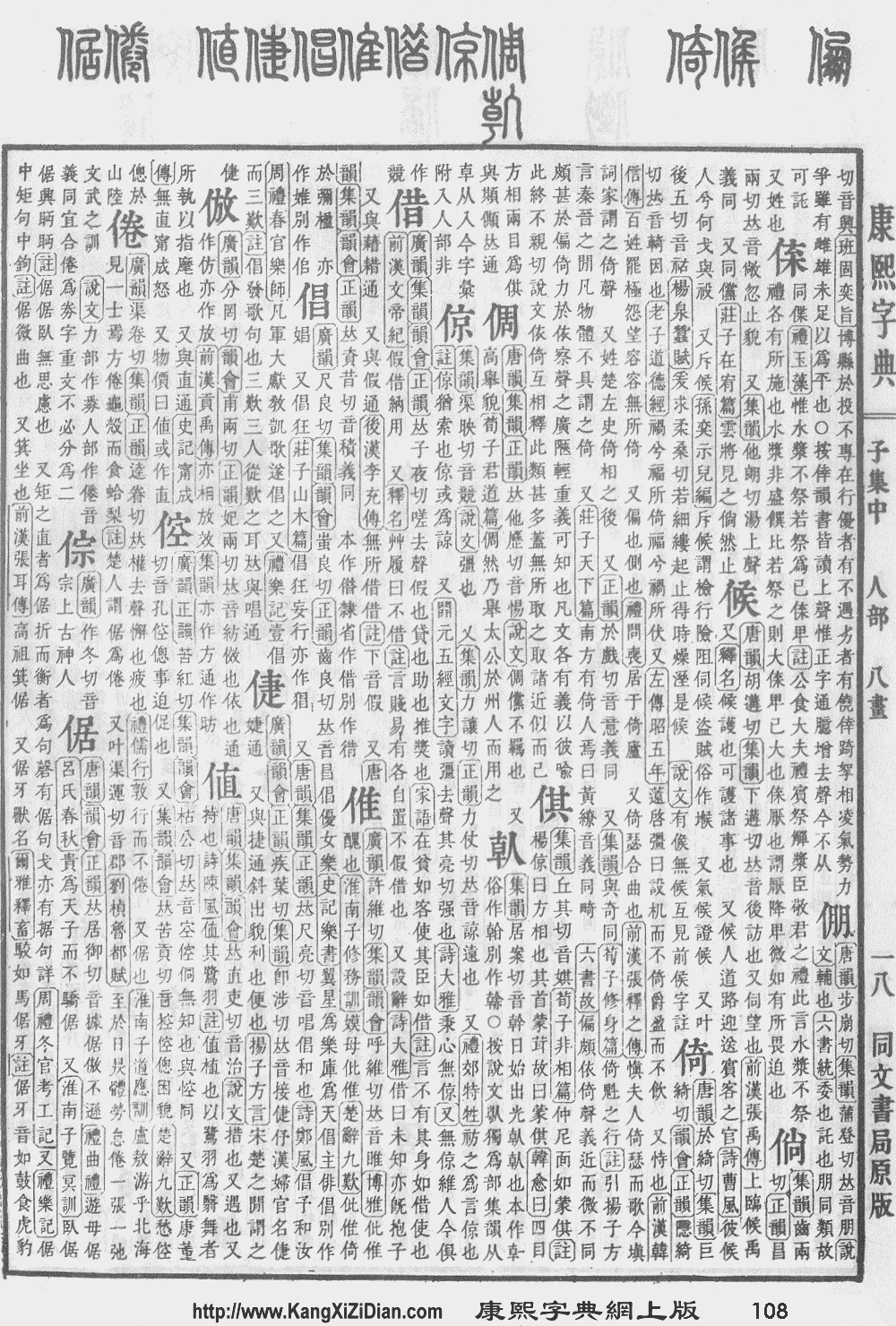
- Kangxi Dictionary: page 108, character 3
- Dai Kanwa Jiten: character 774
- Dae Jaweon: page 229, character 14
- Hanyu Da Zidian (first edition): volume 1, page 177, character 1
- Unihan data for U+5018
Chinese
| simp. and trad. |
倘 | |
|---|---|---|
Glyph origin
Characters in the same phonetic series (尚) (Zhengzhang, 2003)
| Old Chinese | |
|---|---|
| 當 | *taːŋ, *taːŋs |
| 襠 | *taːŋ |
| 鐺 | *taːŋ, *sʰraːŋ |
| 簹 | *taːŋ |
| 璫 | *taːŋ |
| 檔 | *taːŋ, *taːŋs |
| 儅 | *taːŋ, *taːŋs |
| 蟷 | *taːŋ |
| 擋 | *taːŋʔ, *taːŋs |
| 黨 | *taːŋʔ, *tʰaːŋʔ |
| 讜 | *taːŋʔ |
| 欓 | *taːŋʔ |
| 譡 | *taːŋs |
| 闣 | *taːŋs |
| 瓽 | *taːŋs |
| 鏜 | *tʰaːŋ |
| 闛 | *tʰaːŋ, *daːŋ |
| 鼞 | *tʰaːŋ |
| 曭 | *tʰaːŋʔ |
| 儻 | *tʰaːŋʔ, *tʰaːŋs |
| 戃 | *tʰaːŋʔ |
| 矘 | *tʰaːŋʔ |
| 爣 | *tʰaːŋʔ |
| 攩 | *hl'aːŋʔ, *ɦʷlaːŋʔ, *ɦʷlaːŋs |
| 淌 | *tʰaːŋʔ |
| 倘 | *tʰaːŋʔ |
| 躺 | *tʰaːŋʔ |
| 趟 | *tʰaːŋs, *rtaːŋ, *rtaːŋs |
| 堂 | *daːŋ |
| 坣 | *daːŋ |
| 棠 | *daːŋ |
| 糛 | *daːŋ |
| 螳 | *daːŋ |
| 隚 | *daːŋ |
| 橖 | *daːŋ |
| 掌 | *tjaŋʔ |
| 廠 | *tʰjaŋʔ, *tʰjaŋs |
| 敞 | *tʰjaŋʔ |
| 僘 | *tʰjaŋʔ |
| 氅 | *tʰjaŋʔ |
| 常 | *djaŋ |
| 嘗 | *djaŋ |
| 裳 | *djaŋ |
| 徜 | *djaŋ |
| 尚 | *djaŋ, *djaŋs |
| 甞 | *djaŋ |
| 鋿 | *djaŋ |
| 嫦 | *djaŋ |
| 償 | *djaŋ, *djaŋs |
| 賞 | *hjaŋʔ |
| 瞠 | *rtʰaːŋ |
| 撐 | *rtʰaːŋ |
| 樘 | *rtʰaːŋ |
| 橕 | *rtʰaːŋ |
| 牚 | *rtʰaːŋs |
| 埫 | *tʰoŋʔ |
Pronunciation
Pronunciation
Pronunciation
References
- “倘”, in 漢語多功能字庫 (Multi-function Chinese Character Database), 香港中文大學 (the Chinese University of Hong Kong), 2014–
Japanese
Kanji
倘
- This term needs a translation to English. Please help out and add a translation, then remove the text
{{rfdef}}.
Korean
Hanja
倘 (eum 당 (dang))
- This term needs a translation to English. Please help out and add a translation, then remove the text
{{rfdef}}.
Vietnamese
This article is issued from Wiktionary. The text is licensed under Creative Commons - Attribution - Sharealike. Additional terms may apply for the media files.