偔
| ||||||||
Translingual
Han character
偔 (Kangxi radical 9, 人+9, 11 strokes, cangjie input 人口口尸 (ORRS), composition ⿰亻咢)
References
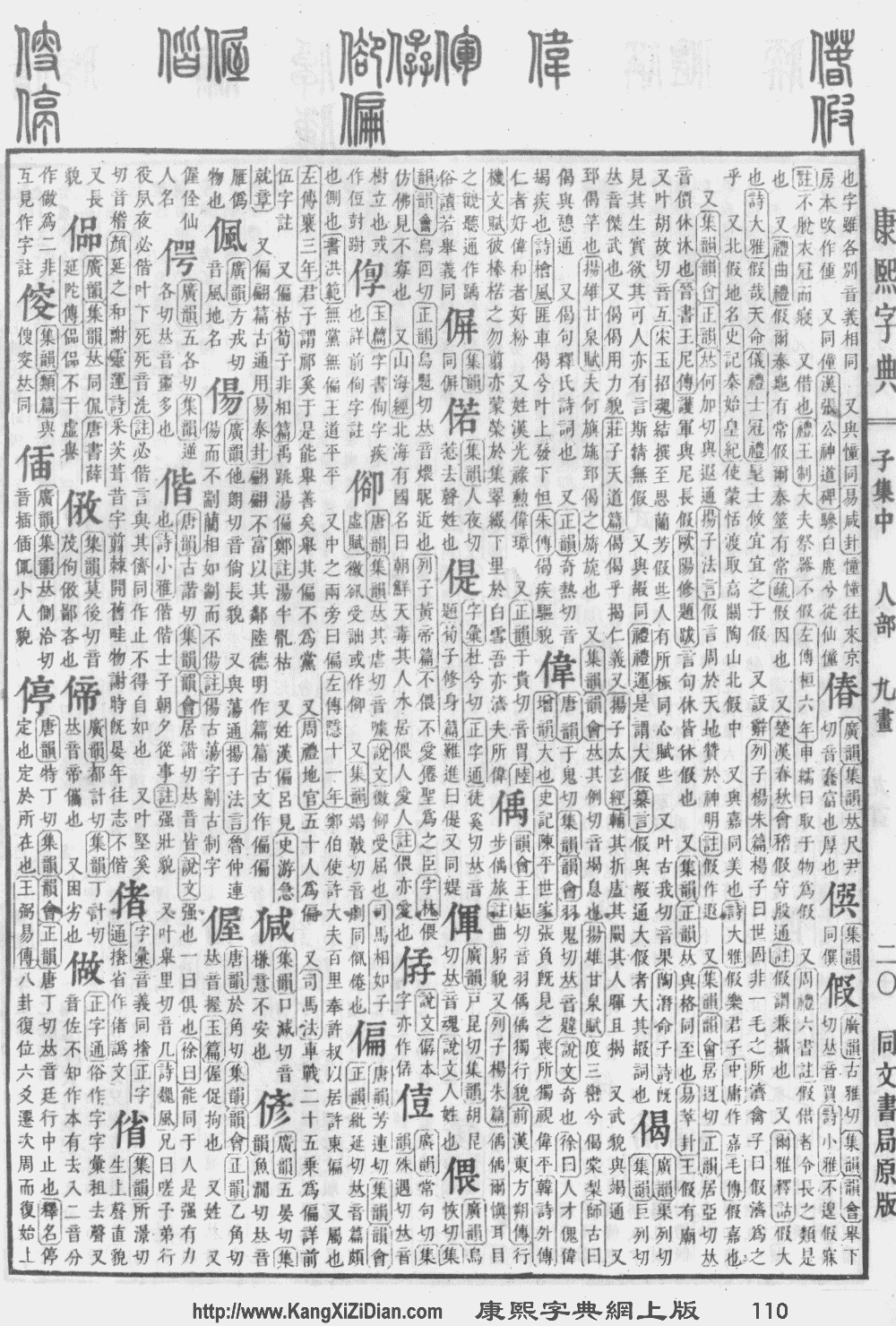
- Kangxi Dictionary: page 110, character 22
- Dai Kanwa Jiten: character 854
- Dae Jaweon: page 236, character 6
- Hanyu Da Zidian (first edition): volume 1, page 191, character 6
- Unihan data for U+5054
Chinese
| simp. and trad. |
偔 | |
|---|---|---|
Glyph origin
Characters in the same phonetic series (屰) (Zhengzhang, 2003)
| Old Chinese | |
|---|---|
| 斥 | *ŋ̊ʰjaːɡs, *ŋ̊ʰjaːɡ |
| 訴 | *sŋaːɡs |
| 泝 | *sŋaːɡs |
| 愬 | *sŋaːɡs, *sŋreːɡ |
| 遡 | *sŋaːɡs |
| 塑 | *sŋaːɡs |
| 溯 | *sŋaːɡs |
| 遻 | *ŋaːɡs |
| 柝 | *tŋ̊ʰaːɡ |
| 鶚 | *ŋaːɡ |
| 諤 | *ŋaːɡ |
| 齶 | *ŋaːɡ |
| 鍔 | *ŋaːɡ |
| 遌 | *ŋaːɡ |
| 崿 | *ŋaːɡ |
| 偔 | *ŋaːɡ |
| 堮 | *ŋaːɡ |
| 湂 | *ŋaːɡ |
| 鱷 | *ŋaːɡ |
| 噩 | *ŋaːɡ |
| 咢 | *ŋaːɡ |
| 鑩 | *ŋaːɡ |
| 鄂 | *ŋaːɡ |
| 鰐 | *ŋaːɡ |
| 萼 | *ŋaːɡ |
| 愕 | *ŋaːɡ |
| 顎 | *ŋaːɡ |
| 朔 | *sŋraːɡ |
| 槊 | *sraːwɢ |
| 蒴 | *sraːwɢ |
| 坼 | *tŋ̊ʰraːɡ |
| 拆 | *tŋ̊ʰraːɡ |
| 逆 | *ŋraɡ |
| 屰 | *ŋraɡ |
| 縌 | *ŋraɡ |
| 蝷 | *reːɡ |
Phono-semantic compound (形聲/形声, OC *ŋaːɡ) : semantic 亻 (“man; person”) + phonetic 咢 (OC *ŋaːɡ).
Pronunciation
Etymology 2
From 我 (“I; me”), with -k (plural marker) and tone change (Gan, 1997). Zhang (1997) suggests that this is a contraction of 我個.
Pronunciation
Synonyms
Dialectal synonyms of 我們 (“we; us (exclusive or no distinction of clusivity)”) [map]
This article is issued from Wiktionary. The text is licensed under Creative Commons - Attribution - Sharealike. Additional terms may apply for the media files.