們
| ||||||||
See also: 们
Translingual
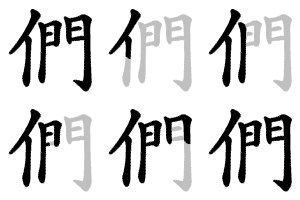
| Stroke order | |||
|---|---|---|---|
 | |||
Han character
們 (Kangxi radical 9, 人+8, 10 strokes, cangjie input 人日弓 (OAN), four-corner 27220, composition ⿰亻門)
References
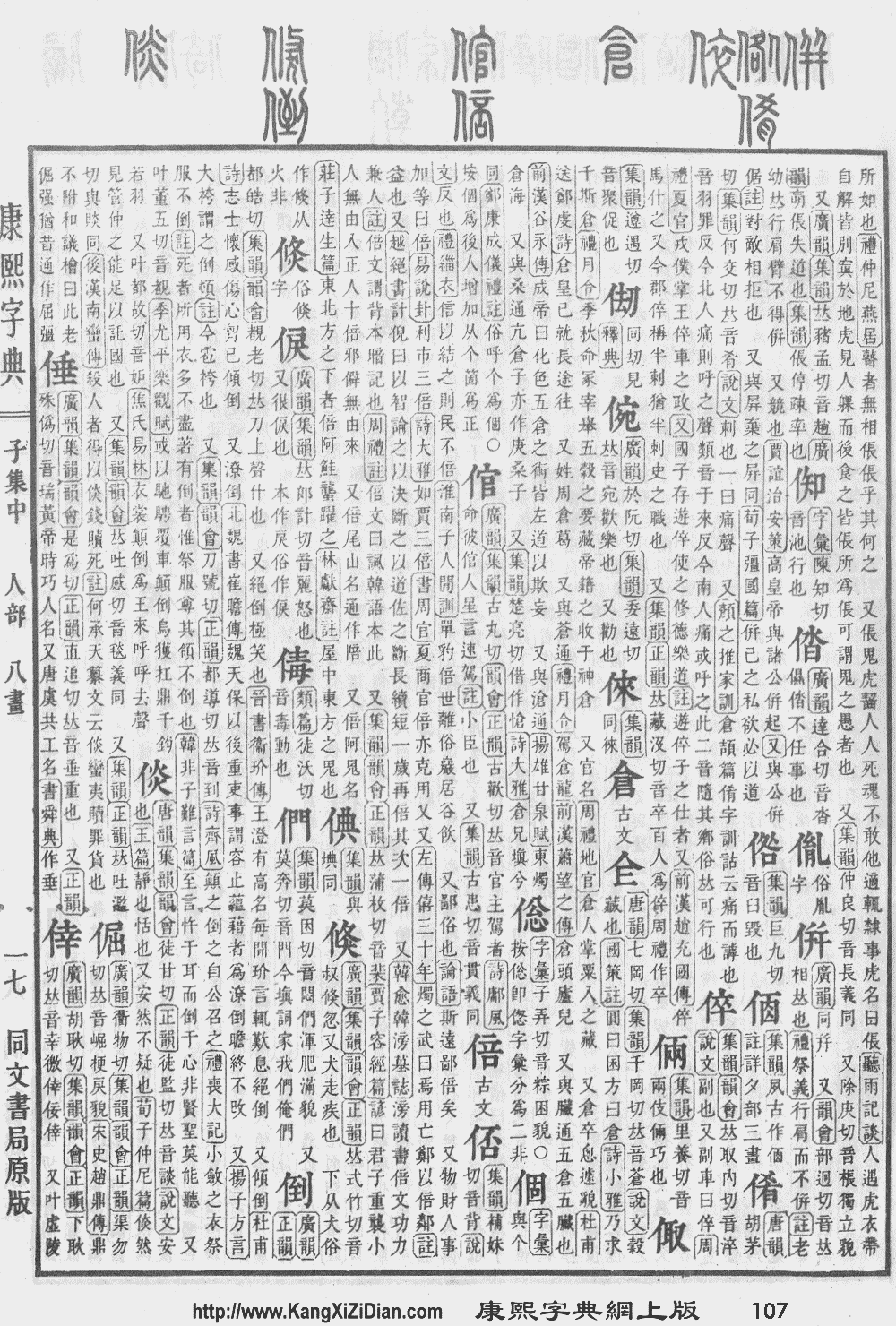
- Kangxi Dictionary: page 107, character 26
- Dai Kanwa Jiten: character 766
- Dae Jaweon: page 229, character 6
- Hanyu Da Zidian (first edition): volume 1, page 185, character 2
- Unihan data for U+5011
Chinese
| trad. | 們 | |
|---|---|---|
| simp. | 们 | |
Glyph origin
Phono-semantic compound (形聲/形声) : semantic 亻 (“person”) + phonetic 門 (OC *mɯːn).
Etymology 1
First attested in the Song dynasty (Lü, 1940). Various other glyphs representing *mVn have been attested in Song dynasty texts, including 懣, 滿, 瞞, 門.
It is probably related to 弭 (MC mjieX) (in 我弭) and 偉 (MC hjw+jX) (in 兒郎偉/儿郎伟 (érláng wěi)) attested in the Tang dynasty (Lü, 1940); it is related to 每 (měi), as in 我每 (wǒměi), common during the Jin (Jurchen), Yuan and early Ming dynasties (Lü, 1985).
Proposed etymologies:
- From the personal pronoun plural marker 輩 (OC *puːls) (Lü, 1985; Feng, 1997; Li, 2013).
- From 門 (MC mwon, “door; clan; family”) (Ota, 2003; Yu, 1989; Li and Shi, 2000).
- From 每人 (MC mwojX nyin, “everybody”) (Norman, 1988); compare Eastern Min 各儂/各侬 (“everybody”), used in 我各儂/我各侬 (“we; us”), 汝各儂/汝各侬 (“you (plural)”), 伊各儂/伊各侬 (“they”).
- From 物 (MC mjut, “thing”) (Jiang, 1995).
- From plural features in Dravidian languages, cf. Classical Tamil -m, -mar, -mār suffixes, Tamil நாம் (nām, “inclusive we”), via Indic languages by means of Buddhist transmission (Chen & Ye, 2020).
Also compare 您.
Pronunciation
Definitions
們
- Suffix indicating plural for pronouns, some animated nouns and personifications.
- Suffix attached to the name of the representative of a group to refer to that whole group.
- 蔡京們著數高,治元祐黨,只一章疏便盡行遣了。 [Written Vernacular Chinese, trad.]
- From: Various editors. c. 13th century. A Collection of Conversations of Master Zhu (《朱子語類》)
- Cài Jīng men zhāoshù gāo, zhì Yuányòu dǎng, zhǐ yīzhāng shū biàn jìnxíng qiǎn le. [Pinyin]
- Cai Jing and his ilk got their tricks. To deal with the Yuanyou faction — they got rid of them all with one single memo.
蔡京们着数高,治元祐党,只一章疏便尽行遣了。 [Written Vernacular Chinese, simp.]- 總括先生來信的意思,大概有兩點,一是罵史太林先生們是官僚,再一是斥毛澤東先生們的「各派聯合一致抗日」的主張為出賣革命。 [MSC, trad.]
- From: 1936, 魯迅 (Lu Xun), 《答托洛斯基派的信》 (Reply to a Letter from the Trotskyites). English translation based on
- Zǒngkuò xiānsheng láixìn de yìsi, dàgài yǒu liǎng diǎn, yī shì mà Shǐtàilín xiānshengmen shì guānliáo, zài yī shì chì Máo Zédōng xiānshengmen de “gèpài liánhé yīzhì kàngrì” de zhǔzhāng wéi chūmài gémìng. [Pinyin]
- I take it that the main drift of your letter is contained in these two points: You consider Stalin and his colleagues bureaucrats, and the proposal of Mao Zedong and others — “Let all parties unite to resist Japan” — as a betrayal of the cause of revolution.
总括先生来信的意思,大概有两点,一是骂史太林先生们是官僚,再一是斥毛泽东先生们的「各派联合一致抗日」的主张为出卖革命。 [MSC, simp.]- 艾奇遜們的欺騙做法在中國還有一層薄薄的社會基礎。 [MSC, trad.]
- From: 1949, 毛澤東 (Mao Zedong), 《丟掉幻想,準備鬥爭》 (Cast Away Illusions, Prepare for Struggle). English translation based on
- Àiqíxùnmen de qīpiàn zuòfǎ zài Zhōngguó hái yǒu yī céng bóbó de shèhuì jīchǔ. [Pinyin]
- The deceptive manoeuvres of the Achesons still have a flimsy social base in China.
艾奇逊们的欺骗做法在中国还有一层薄薄的社会基础。 [MSC, simp.]
- (dialectal Mandarin, Jin) General suffix indicating plural.
- 花兒們/花儿们 [dialectal Mandarin] ― huārmen [Pinyin] ― flowers
Compounds
- 人們/人们 (rénmen)
- 他們/他们
- 他們倆/他们俩 (tāmen liǎ)
- 你們/你们
- 佢們/佢们
- 俺們/俺们 (ǎnmen)
- 公們倆/公们俩 (gōngmenliǎ)
- 吾們/吾们 (wúmen)
- 咱們/咱们
- 哥們/哥们 (gēmen)
- 哥們兒/哥们儿 (gēmenr)
- 哥兒們/哥儿们 (gērmen)
- 圖們江/图们江 (Túmén Jiāng)
- 她們/她们
- 娘們/娘们
- 娘兒們/娘儿们 (niángrmen)
- 它們/它们
- 小哥兒們/小哥儿们 (xiǎogērmen)
- 小姐們兒/小姐们儿
- 恁們/恁们
- 我們/我们
- 某們/某们
- 渠們/渠们
- 爺們/爷们 (yémen)
- 爺們兒/爷们儿 (yémenr)
- 爺兒們/爷儿们
- 牠們/它们
- 祂們/祂们 (tāmen)
- 窮哥們/穷哥们
- 老哥兒們/老哥儿们
- 老娘們/老娘们
- 老爺們/老爷们 (lǎoyémen)
- 誰們/谁们 (shéimen)
- 諾們罕/诺们罕
- 這們/这们
- 那們/那们
- 鐵哥們/铁哥们
- 阿們/阿们 (āmén)
Pronunciation
Japanese
Kanji
們
- This term needs a translation to English. Please help out and add a translation, then remove the text
{{rfdef}}.
Korean
Hanja
們 (eum 문 (mun))
- This term needs a translation to English. Please help out and add a translation, then remove the text
{{rfdef}}.
Vietnamese
This article is issued from Wiktionary. The text is licensed under Creative Commons - Attribution - Sharealike. Additional terms may apply for the media files.