朔
| ||||||||
Translingual
Han character
朔 (Kangxi radical 74, 月+6, 10 strokes, cangjie input 廿山月 (TUB), four-corner 87420, composition ⿰屰月)
References
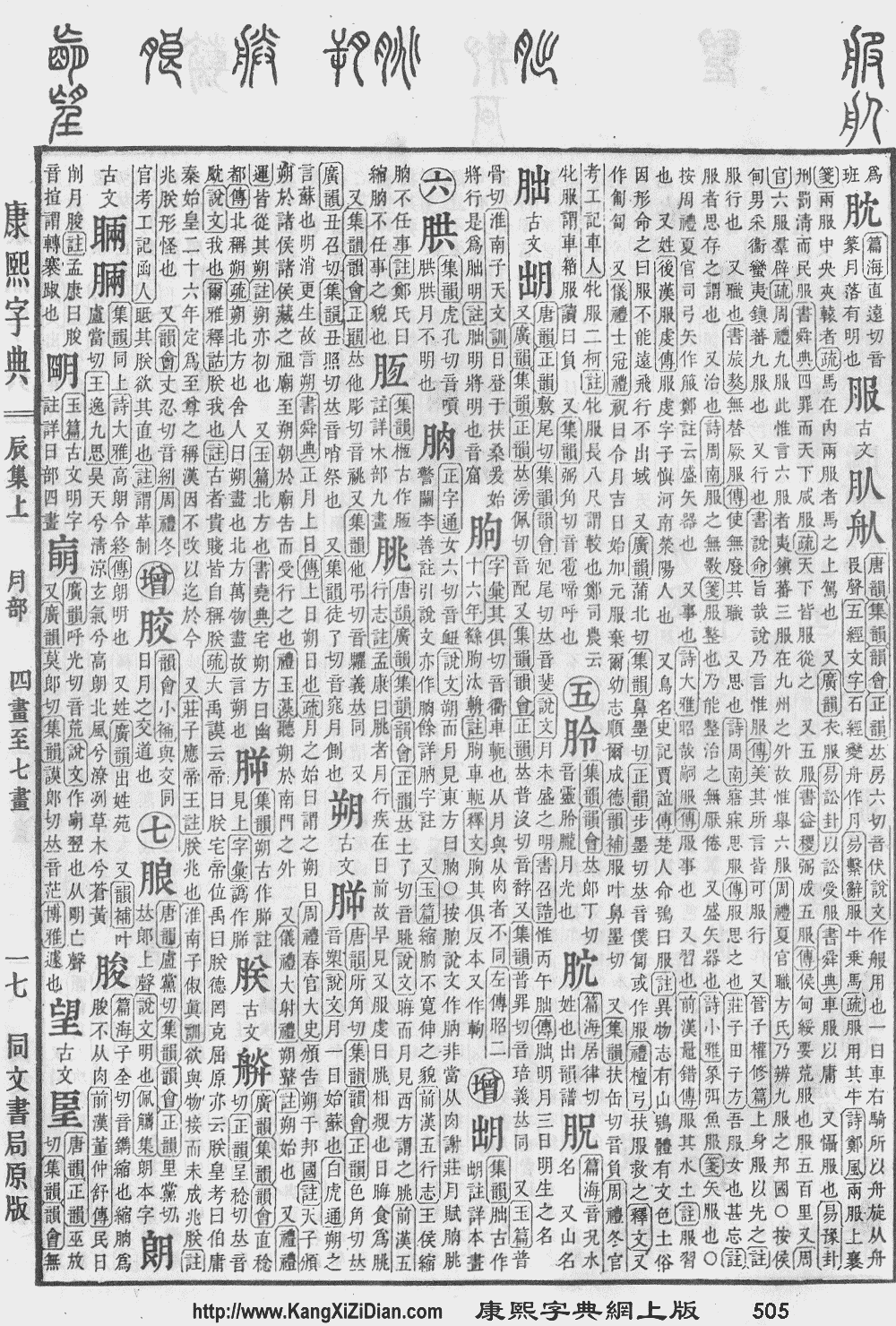
- Kangxi Dictionary: page 505, character 16
- Dai Kanwa Jiten: character 14359
- Dae Jaweon: page 884, character 8
- Hanyu Da Zidian (first edition): volume 3, page 2072, character 2
- Unihan data for U+6714
Chinese
| trad. | 朔 | |
|---|---|---|
| simp. # | 朔 | |
| alternative forms | 𣍮 | |
Glyph origin
Characters in the same phonetic series (屰) (Zhengzhang, 2003)
| Old Chinese | |
|---|---|
| 斥 | *ŋ̊ʰjaːɡs, *ŋ̊ʰjaːɡ |
| 訴 | *sŋaːɡs |
| 泝 | *sŋaːɡs |
| 愬 | *sŋaːɡs, *sŋreːɡ |
| 遡 | *sŋaːɡs |
| 塑 | *sŋaːɡs |
| 溯 | *sŋaːɡs |
| 遻 | *ŋaːɡs |
| 柝 | *tŋ̊ʰaːɡ |
| 鶚 | *ŋaːɡ |
| 諤 | *ŋaːɡ |
| 齶 | *ŋaːɡ |
| 鍔 | *ŋaːɡ |
| 遌 | *ŋaːɡ |
| 崿 | *ŋaːɡ |
| 偔 | *ŋaːɡ |
| 堮 | *ŋaːɡ |
| 湂 | *ŋaːɡ |
| 鱷 | *ŋaːɡ |
| 噩 | *ŋaːɡ |
| 咢 | *ŋaːɡ |
| 鑩 | *ŋaːɡ |
| 鄂 | *ŋaːɡ |
| 鰐 | *ŋaːɡ |
| 萼 | *ŋaːɡ |
| 愕 | *ŋaːɡ |
| 顎 | *ŋaːɡ |
| 朔 | *sŋraːɡ |
| 槊 | *sraːwɢ |
| 蒴 | *sraːwɢ |
| 坼 | *tŋ̊ʰraːɡ |
| 拆 | *tŋ̊ʰraːɡ |
| 逆 | *ŋraɡ |
| 屰 | *ŋraɡ |
| 縌 | *ŋraɡ |
| 蝷 | *reːɡ |
Phono-semantic compound (形聲/形声, OC *sŋraːɡ) : phonetic 屰 (OC *ŋraɡ) + semantic 月 (“moon”)
Etymology
From 逆 (OC *ŋraɡ) plus s-prefix. Schuessler (2007) interprets it as literally "turn again toward to meet"; while Baxter & Sagart (2014) interprets it as "when the moon changes from waning to waxing", with s- being a circumstantial prefix for place, time, & instrument.
Pronunciation
Definitions
朔
Compounds
- 合朔
- 告朔
- 告朔餼羊/告朔饩羊
- 奉其正朔
- 撲朔/扑朔 (pūshuò)
- 撲朔迷離/扑朔迷离 (pūshuòmílí)
- 旬朔 (xúnshuò)
- 晦朔 (huìshuò)
- 月朔 (yuèshuò)
- 朔吹 (shuòchuì)
- 朔州 (Shuòzhōu)
- 朔政
- 朔方 (shuòfāng)
- 朔日 (shuòrì)
- 朔月 (shuòyuè)
- 朔望 (shuòwàng)
- 朔望月 (shuòwàngyuè)
- 朔氣/朔气
- 朔漠 (shuòmò)
- 朔雪 (shuòxuě)
- 朔雲/朔云
- 朔風/朔风 (shuòfēng)
- 朔黨/朔党
- 望朔 (wàngshuò)
- 正朔 (zhēngshuò)
- 河朔 (Héshuò)
- 迷離撲朔/迷离扑朔
- 陽朔/阳朔 (Yángshuò)
Japanese
Kanji
朔
(“Jinmeiyō” kanji used for names)
- This term needs a translation to English. Please help out and add a translation, then remove the text
{{rfdef}}.
Korean
Etymology
From Middle Chinese 朔 (MC sraewk). Recorded as Middle Korean 삭〮 (sák) (Yale: sak) in Hunmong Jahoe (訓蒙字會 / 훈몽자회), 1527.
Hanja
Wikisource 朔 (eumhun 초하루 삭 (choharu sak))
- Hanja form? of 삭 (“the first day of the lunar month”).
Compounds
Compounds
- 삭망 (朔望, sangmang)
- 삭고 (朔鼓, sakgo)
- 삭료 (朔料, sangnyo)
Vietnamese
This article is issued from Wiktionary. The text is licensed under Creative Commons - Attribution - Sharealike. Additional terms may apply for the media files.