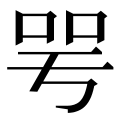
咢
| ||||||||
 | ||||||||
Translingual
Han character
咢 (Kangxi radical 30, 口+6, 9 strokes, cangjie input 口口一一尸 (RRMMS), four-corner 66207, composition ⿱吅亏)
Derived characters
References
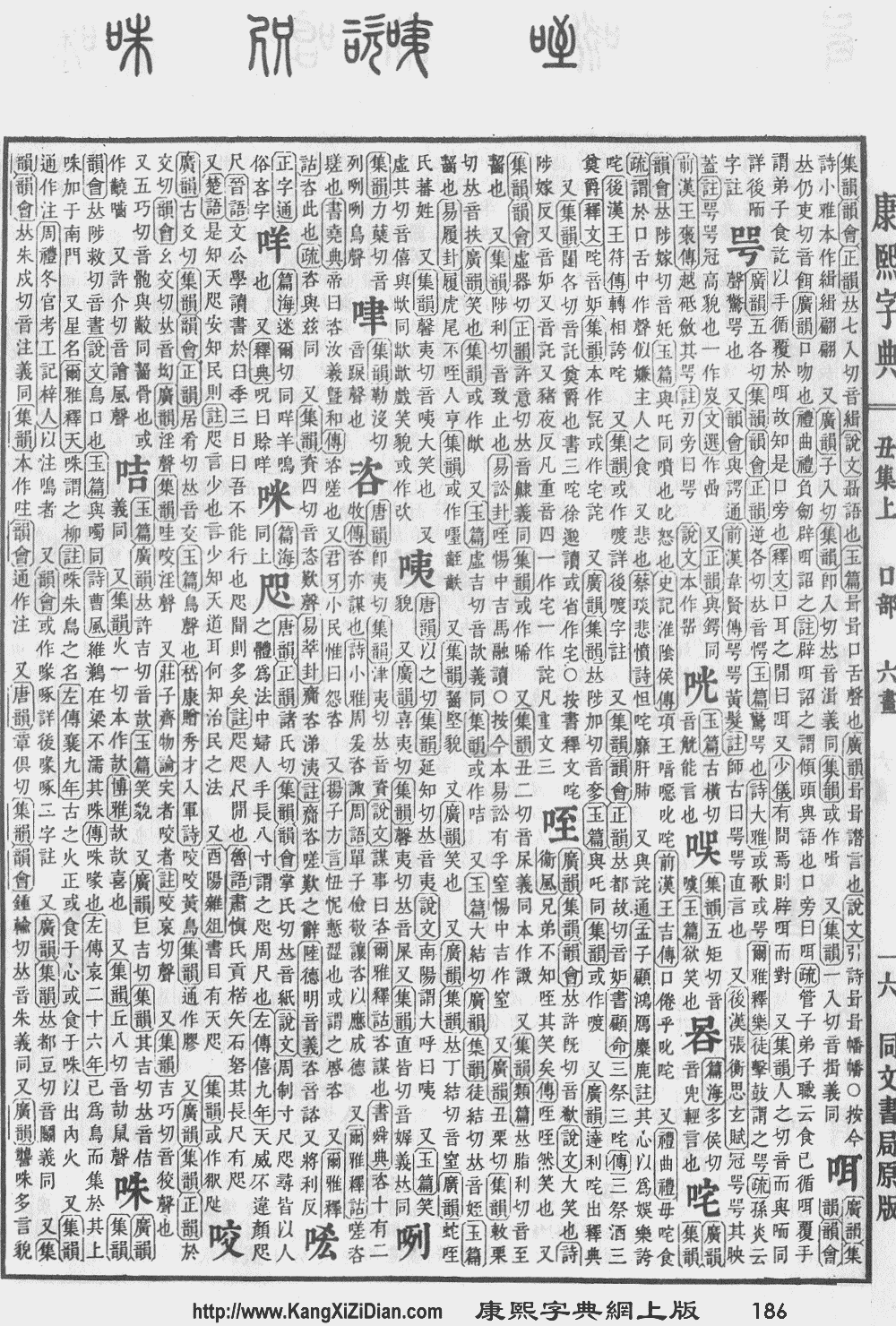
- Kangxi Dictionary: page 186, character 2
- Dai Kanwa Jiten: character 3529
- Dae Jaweon: page 405, character 24
- Hanyu Da Zidian (first edition): volume 1, page 615, character 6
- Unihan data for U+54A2
- Unihan data for U+2F840
Chinese
| simp. and trad. |
咢 | |
|---|---|---|
| alternative forms | 㖾 | |
Glyph origin
| Historical forms of the character 咢 | |||
|---|---|---|---|
| Shang | Western Zhou | Shuowen Jiezi (compiled in Han) | Liushutong (compiled in Ming) |
| Oracle bone script | Bronze inscriptions | Small seal script | Transcribed ancient scripts |
 |
 |
 |
 |
Characters in the same phonetic series (屰) (Zhengzhang, 2003)
| Old Chinese | |
|---|---|
| 斥 | *ŋ̊ʰjaːɡs, *ŋ̊ʰjaːɡ |
| 訴 | *sŋaːɡs |
| 泝 | *sŋaːɡs |
| 愬 | *sŋaːɡs, *sŋreːɡ |
| 遡 | *sŋaːɡs |
| 塑 | *sŋaːɡs |
| 溯 | *sŋaːɡs |
| 遻 | *ŋaːɡs |
| 柝 | *tŋ̊ʰaːɡ |
| 鶚 | *ŋaːɡ |
| 諤 | *ŋaːɡ |
| 齶 | *ŋaːɡ |
| 鍔 | *ŋaːɡ |
| 遌 | *ŋaːɡ |
| 崿 | *ŋaːɡ |
| 偔 | *ŋaːɡ |
| 堮 | *ŋaːɡ |
| 湂 | *ŋaːɡ |
| 鱷 | *ŋaːɡ |
| 噩 | *ŋaːɡ |
| 咢 | *ŋaːɡ |
| 鑩 | *ŋaːɡ |
| 鄂 | *ŋaːɡ |
| 鰐 | *ŋaːɡ |
| 萼 | *ŋaːɡ |
| 愕 | *ŋaːɡ |
| 顎 | *ŋaːɡ |
| 朔 | *sŋraːɡ |
| 槊 | *sraːwɢ |
| 蒴 | *sraːwɢ |
| 坼 | *tŋ̊ʰraːɡ |
| 拆 | *tŋ̊ʰraːɡ |
| 逆 | *ŋraɡ |
| 屰 | *ŋraɡ |
| 縌 | *ŋraɡ |
| 蝷 | *reːɡ |
The same character as 噩, both ultimately derived from or identical to 喪, see there for more.
Later phono-semantic compound (形聲/形声, OC *ŋaːɡ) : semantic 吅 + phonetic 屰 (OC *ŋraɡ).
Pronunciation
Definitions
咢
Compounds
- 咢咢 (è'è)
References
- “咢”, in 漢語多功能字庫 (Multi-function Chinese Character Database), 香港中文大學 (the Chinese University of Hong Kong), 2014–
Japanese
Korean
Hanja
咢 • (ak) (hangeul 악, revised ak, McCune–Reischauer ak)
- This term needs a translation to English. Please help out and add a translation, then remove the text
{{rfdef}}.
This article is issued from Wiktionary. The text is licensed under Creative Commons - Attribution - Sharealike. Additional terms may apply for the media files.