充
| ||||||||
 | ||||||||
Translingual
Han character
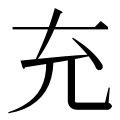
充 (Kangxi radical 10, 儿+4, 6 strokes, cangjie input 卜戈竹山 (YIHU), four-corner 00213, composition ⿱𠫓儿)
Derived characters
References
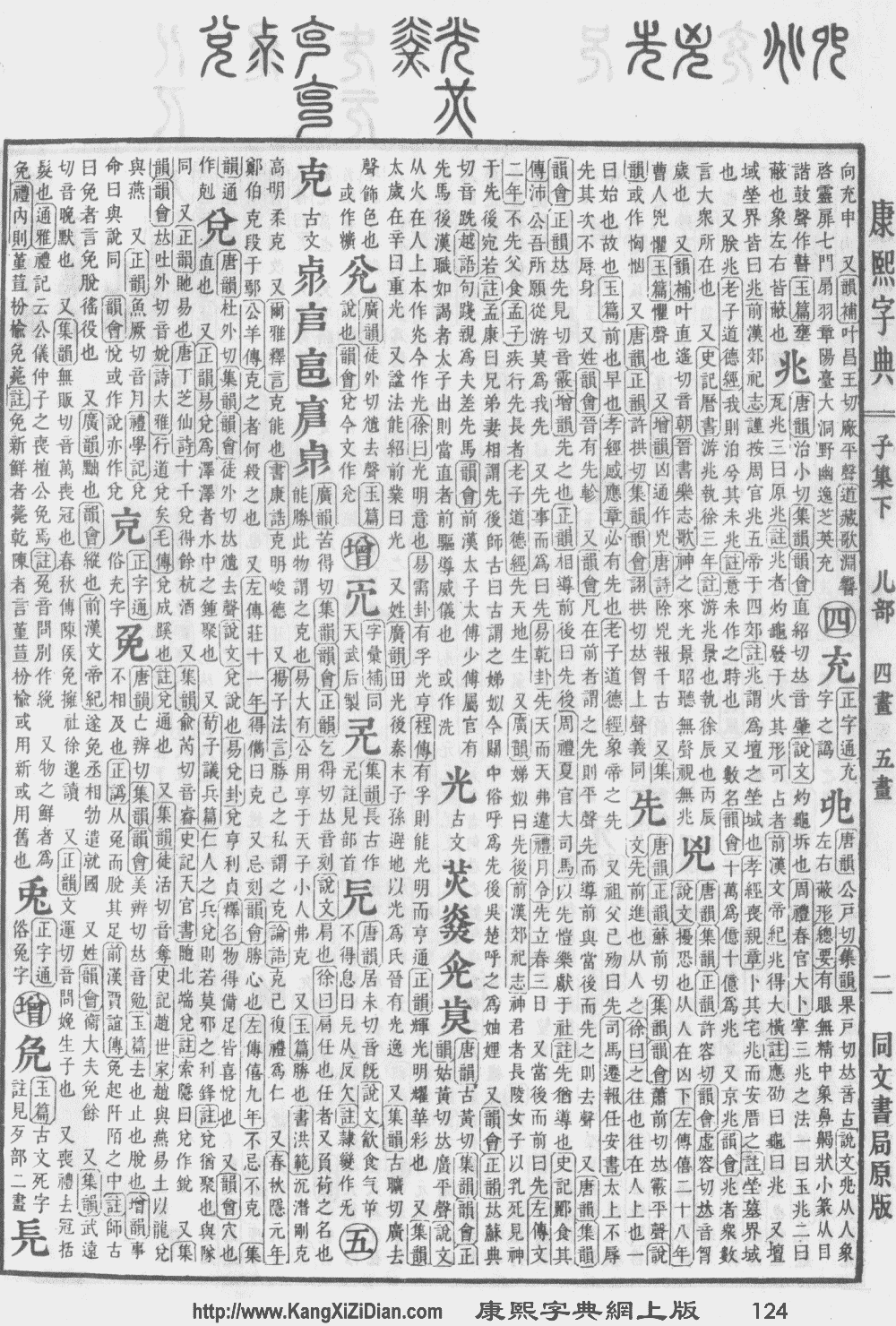
- Kangxi Dictionary: page 124, character 1
- Dai Kanwa Jiten: character 1345
- Dae Jaweon: page 260, character 1
- Hanyu Da Zidian (first edition): volume 1, page 269, character 2
- Unihan data for U+5145
- Unihan data for U+FA74
Chinese
| trad. | 充 | |
|---|---|---|
| simp. # | 充 | |
Glyph origin
| Historical forms of the character 充 | ||||||||||||||||
|---|---|---|---|---|---|---|---|---|---|---|---|---|---|---|---|---|
| ||||||||||||||||
|
References: Mostly from Richard Sears' Chinese Etymology site (authorisation),
|


Characters in the same phonetic series (充) (Zhengzhang, 2003)
Ideogrammic compound (會意/会意) : 𠫓 (“a newborn”) + 儿 (“standing person”) – A newborn grows to stand and become mature.
Pronunciation
Definitions
充
- to fill
- full
- (archaic) to serve as
- c. 1330 - 1400: Luo Guanzhong, Romance of the Three Kingdoms/Chapter 5
- 跟隨劉玄德充馬弓手。
- He serves as a cavalry officer for Liu Xuande.
- 跟隨劉玄德充馬弓手。
- c. 1330 - 1400: Luo Guanzhong, Romance of the Three Kingdoms/Chapter 5
Compounds
- 假充
- 充人 (chōngrén)
- 充任 (chōngrèn)
- 充作 (chōngzuò)
- 充光棍
- 充內行/充内行
- 充公 (chōnggōng)
- 充其量 (chōngqíliàng)
- 充分 (chōngfèn)
- 充分就業/充分就业
- 充員戰士/充员战士
- 充場面/充场面
- 充塞 (chōngsè)
- 充填 (chōngtián)
- 充實/充实 (chōngshí)
- 充庭
- 充排場/充排场
- 充數/充数 (chōngshù)
- 充斥 (chōngchì)
- 充暢/充畅
- 充棟汗牛/充栋汗牛
- 充氣/充气 (chōngqì)
- 充氣燈泡/充气灯泡
- 充沛 (chōngpèi)
- 充溢 (chōngyì)
- 充滿/充满 (chōngmǎn)
- 充然
- 充牣 (chōngrèn)
- 充當/充当 (chōngdāng)
- 充發/充发
- 充盈 (chōngyíng)
- 充磁
- 充羨/充羡
- 充耳
- 充耳不聞/充耳不闻 (chōng'ěrbùwén)
- 充能幹/充能干
- 充腴 (chōngyú)
- 充血 (chōngxuè)
- 充行家
- 充裕 (chōngyù)
- 充詘/充诎
- 充足 (chōngzú)
- 充身
- 充軍/充军 (chōngjūn)
- 充門面/充门面
- 充閭/充闾
- 充電/充电 (chōngdiàn)
- 充類至盡/充类至尽
- 充飢/充饥 (chōngjī)
- 充饑畫餅/充饥画饼 (chōngjī huà bǐng)
- 冒充 (màochōng)
- 南充 (Nánchōng)
- 填充 (tiánchōng)
- 填充物 (tiánchōngwù)
- 填充玩具
- 填充題/填充题
- 振鷺充庭/振鹭充庭
- 擴充/扩充 (kuòchōng)
- 擴充解釋/扩充解释
- 權充/权充 (quánchōng)
- 氣充志定/气充志定
- 氣充志驕/气充志骄
- 氣充文見/气充文见
- 汗充棟豪/汗充栋豪
- 汗牛充棟/汗牛充栋 (hànniúchōngdòng)
- 混充 (hùnchōng)
- 減充血劑/减充血剂 (jiǎnchōngxuèjì)
- 漏脯充饑/漏脯充饥
- 濫竽充數/滥竽充数 (lànyúchōngshù)
- 王充
- 畫餅充饑/画饼充饥 (huàbǐngchōngjī)
- 精力充沛
- 腦充血/脑充血 (nǎochōngxuè)
- 補充/补充 (bǔchōng)
- 補充兵役/补充兵役
- 褎如充耳
- 趙充國/赵充国
- 輪充/轮充
- 食不充口
- 食不充腸/食不充肠
- 食不充飢/食不充饥
Japanese
Readings
Korean
Vietnamese
This article is issued from Wiktionary. The text is licensed under Creative Commons - Attribution - Sharealike. Additional terms may apply for the media files.