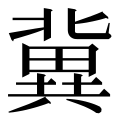
冀
| ||||||||
 | ||||||||
Translingual
Han character
冀 (Kangxi radical 12, 八+14, 16 strokes, cangjie input 中心田廿金 (LPWTC), four-corner 11801, composition ⿱北異)
References
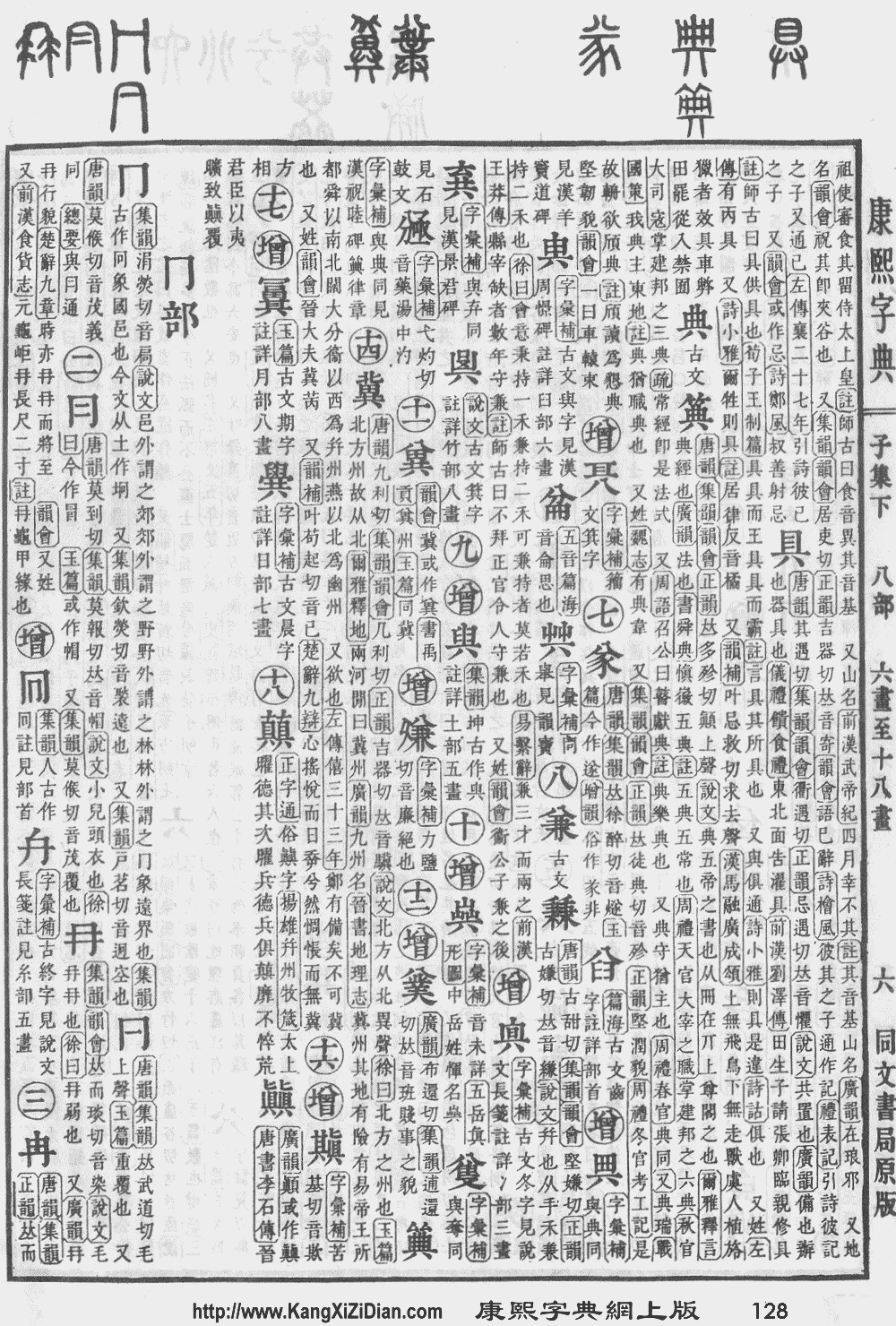
- Kangxi Dictionary: page 128, character 24
- Dai Kanwa Jiten: character 1500
- Dae Jaweon: page 289, character 3
- Hanyu Da Zidian (first edition): volume 1, page 253, character 8
- Unihan data for U+5180
- Unihan data for U+FA75
Chinese
| trad. | 冀 | |
|---|---|---|
| simp. # | 冀 | |
| 2nd round simp. | 丠/⿱北共 | |
| 丠/⿱北共 - 1977/1981 | ||
Glyph origin
| Historical forms of the character 冀 | ||||||||||||||||||
|---|---|---|---|---|---|---|---|---|---|---|---|---|---|---|---|---|---|---|
| Western Zhou | Shuowen Jiezi (compiled in Han) | Liushutong (compiled in Ming) | ||||||||||||||||
| Bronze inscriptions | Small seal script | Transcribed ancient scripts | ||||||||||||||||
 |
 |
 | ||||||||||||||||
||
|
References: Mostly from Richard Sears' Chinese Etymology site (authorisation),
| ||||||||||||||||||


Characters in the same phonetic series (冀) (Zhengzhang, 2003)
Phono-semantic compound (形聲/形声, OC *krɯls) : semantic 北 + phonetic 異 (OC *lɯɡs).
Pronunciation
Definitions
冀
Japanese
Readings
- Go-on: き (ki)
- Kan-on: き (ki)
- Kun: こいねがう (koinegau, 冀う)←こひねがふ (kofinegafu, 冀ふ, historical); こいねがわくは (koinegawakuha, 冀わくは)←こひねがはくは (kofinegafakufa, 冀はくは, historical)
Proper noun
冀 • (Ki)
- (historical) Short for 冀州 (Kishū): Ji Province
- Synonym of 河北 (Kahoku): Hebei Province
Derived terms
Derived terms
- 冀察政権 (Kisatsu Seiken)
- 冀察政務委員会 (Kisatsu Seimu Īnkai)
- 冀州 (Kishū)
- 冀北 (Kihoku)
- 冀東政権 (Kitō Seiken)
- 冀東防共自治政府 (Kitō Bōkyō Jichiseifu)
Vietnamese
This article is issued from Wiktionary. The text is licensed under Creative Commons - Attribution - Sharealike. Additional terms may apply for the media files.