統
See also: 统
| ||||||||
Translingual
Han character
統 (Kangxi radical 120, 糸+5 in traditional Chinese (Taiwan), 糸+6 in Chinese (mainland China, Hong Kong), Japanese and Korean, 11 strokes in traditional Chinese (Taiwan), 12 strokes in mainland China and Japanese and Korean, cangjie input 女火卜戈山 (VFYIU), four-corner 20913, composition ⿰糹充)
Derived characters
- 𫫴, 𫌒, 𬔕, 𦼟, 𥴗, 𨭑
Related characters
References
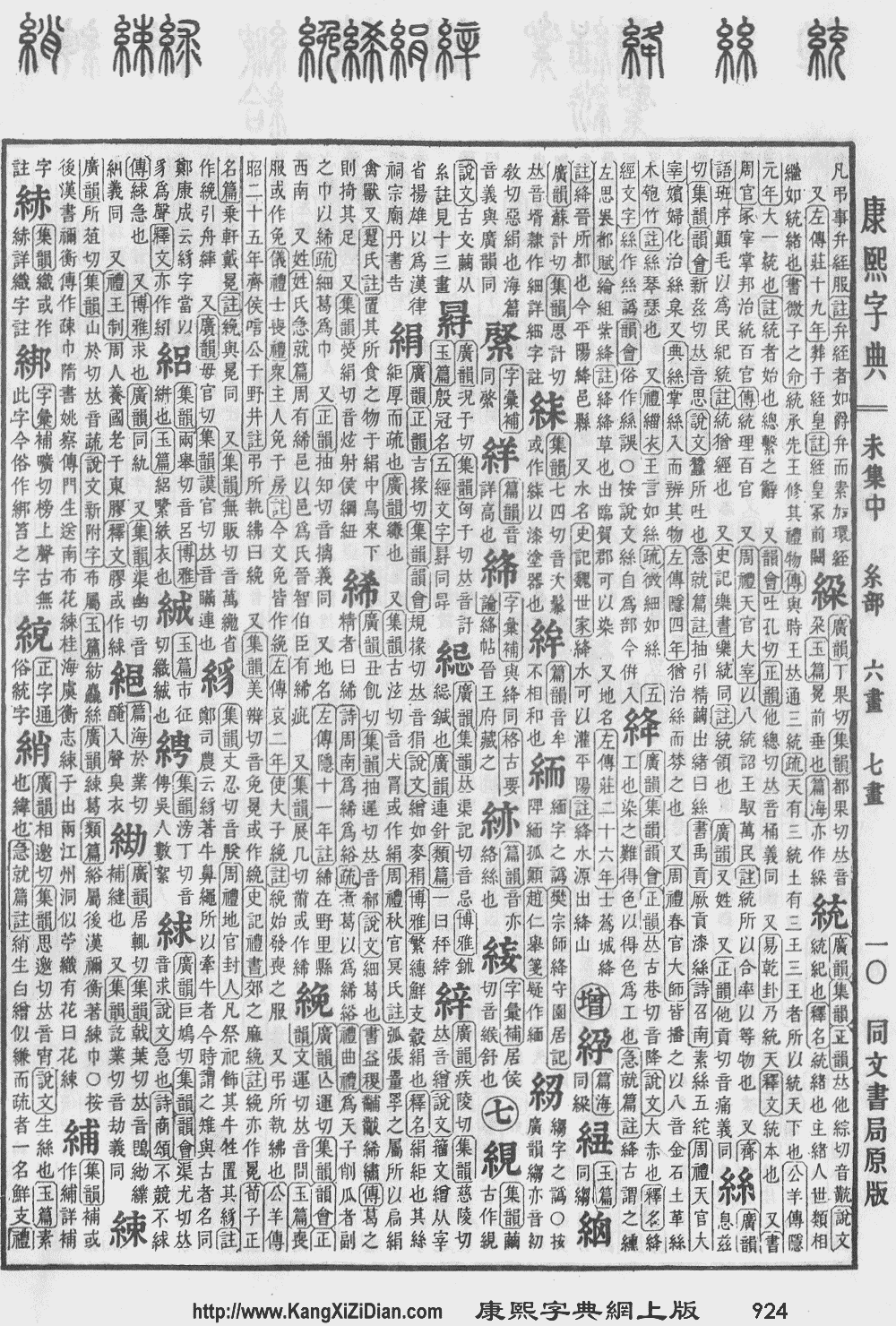
- Kangxi Dictionary: page 924, character 2
- Dai Kanwa Jiten: character 27447
- Dae Jaweon: page 1358, character 15
- Hanyu Da Zidian (first edition): volume 5, page 3398, character 5
- Unihan data for U+7D71
Chinese
| trad. | 統 | |
|---|---|---|
| simp. | 统 | |
Glyph origin
Characters in the same phonetic series (充) (Zhengzhang, 2003)
Phono-semantic compound (形聲/形声, OC *tʰuːŋs) : semantic 糸 + phonetic 充 (OC *l̥ʰjuŋ).
Pronunciation
Definitions
統
- interconnected and continuous relationship
- to govern; to command; to control
- to unite; to unify; to reunify
- all; together
- 二、澳門特別行政區政府在組建統一的警察部門之前,澳門原有各警察機構統歸澳門特別行政區政府保安司管轄,保安司司長兼任基本法所規定的「警察部門主要負責人」。 [MSC, trad.]
- From: “澳门特区筹委会关于澳门特区第一届政府有关机构和主要官员职位设置的意见”, in People's Daily (in Chinese), 1999 March 3, page 4
- Èr, Àomén tèbié xíngzhèngqū zhèngfǔ zài zǔjiàn tǒngyī de jǐngchá bùmén zhīqián, Àomén yuányǒu gè jǐngchá jīgòu tǒng guī Àomén tèbié xíngzhèngqū zhèngfǔ bǎo'ān sī guǎnxiá, bǎo'ān sī sīcháng jiānrèn jīběnfǎ suǒ guīdìng de “jǐngchá bùmén zhǔyào fùzérén”. [Pinyin]
- (please add an English translation of this usage example)
二、澳门特别行政区政府在组建统一的警察部门之前,澳门原有各警察机构统归澳门特别行政区政府保安司管辖,保安司司长兼任基本法所规定的「警察部门主要负责人」。 [MSC, simp.]
Compounds
- 一統/一统 (yītǒng)
- 一統天下/一统天下 (yītǒng tiānxià)
- 一統志/一统志
- 三統/三统
- 三統曆/三统历
- 不成體統/不成体统 (bùchéngtǐtǒng)
- 不留體統/不留体统
- 不統口/不统口
- 不顧體統/不顾体统
- 作業系統/作业系统 (zuòyè xìtǒng)
- 供電系統/供电系统
- 傳統/传统 (chuántǒng)
- 傳統主義/传统主义 (chuántǒng zhǔyì)
- 傳統戰爭/传统战争
- 傳統文化/传统文化
- 傳統社會/传统社会
- 傳統邏輯/传统逻辑
- 光學系統/光学系统
- 免疫系統/免疫系统 (miǎnyì xìtǒng)
- 八旗都統/八旗都统
- 分時系統/分时系统
- 分泌系統/分泌系统
- 副總統/副总统 (fùzǒngtǒng)
- 創業垂統/创业垂统
- 同文韻統/同文韵统
- 呼吸系統/呼吸系统 (hūxī xìtǒng)
- 國統會/国统会
- 國統綱領/国统纲领
- 圖資系統/图资系统
- 垂統/垂统
- 大傳統/大传统
- 大統/大统 (dàtǒng)
- 大總統/大总统 (dàzǒngtǒng)
- 委任統治/委任统治
- 學統/学统
- 宣統/宣统 (Xuāntǒng)
- 專家系統/专家系统
- 導引系統/导引系统
- 巴統/巴统 (Bātǒng)
- 廣播系統/广播系统
- 影音統碟/影音统碟
- 循環系統/循环系统 (xúnhuán xìtǒng)
- 成何體統/成何体统 (chénghétǐtǒng)
- 捷運系統/捷运系统
- 撥號系統/拨号系统
- 攏統/拢统
- 有失體統/有失体统
- 正統/正统 (zhèngtǒng)
- 正統派/正统派
- 步軍統領/步军统领
- 法統/法统
- 海內一統/海内一统 (hǎinèi yītǒng)
- 消化系統/消化系统 (xiāohuà xìtǒng)
- 淋巴系統/淋巴系统 (línbā xìtǒng)
- 物流系統/物流系统
- 皇統/皇统
- 神經系統/神经系统 (shénjīng xìtǒng)
- 視訊系統/视讯系统
- 萬姓統譜/万姓统谱
- 籠統/笼统 (lǒngtǒng)
- 系統/系统 (xìtǒng)
- 系統分析/系统分析
- 系統化/系统化 (xìtǒnghuà)
- 系統圖/系统图
- 系統工程/系统工程 (xìtǒng gōngchéng)
- 系統理論/系统理论
- 系統設計/系统设计
- 系統軟體/系统软体
- 統一/统一 (tǒngyī)
- 統一戰線/统一战线 (tǒngyī zhànxiàn)
- 統一發票/统一发票
- 統共/统共 (tǒnggòng)
- 統兵/统兵 (tǒngbīng)
- 統制/统制 (tǒngzhì)
- 統口/统口
- 統合/统合 (tǒnghé)
- 統帥/统帅 (tǒngshuài)
- 統帥權/统帅权
- 統御/统御 (tǒngyù)
- 統戰/统战 (tǒngzhàn)
- 統括/统括 (tǒngkuò)
- 統收統支/统收统支
- 統核/统核
- 統治/统治 (tǒngzhì)
- 統治權/统治权 (tǒngzhìquán)
- 統獨/统独 (tǒngdú)
- 統率/统率 (tǒngshuài)
- 統理/统理
- 統稱/统称 (tǒngchēng)
- 統籌/统筹 (tǒngchóu)
- 統紀/统纪
- 統統/统统 (tōngtōng)
- 統艙/统舱 (tǒngcāng)
- 統計/统计 (tǒngjì)
- 統計圖/统计图
- 統計地圖/统计地图
- 統計學/统计学 (tǒngjìxué)
- 統計方法/统计方法
- 統計表/统计表 (tǒngjìbiǎo)
- 統計製圖/统计制图
- 統計資料/统计资料
- 統譜/统谱
- 統購/统购 (tǒnggòu)
- 統轄/统辖 (tǒngxiá)
- 統通/统通
- 統鏝/统镘
- 統領/统领 (tǒnglǐng)
- 統馭/统驭 (tǒngyù)
- 網狀系統/网状系统
- 總統/总统 (zǒngtǒng)
- 總統制/总统制 (zǒngtǒngzhì)
- 總統府/总统府 (zǒngtǒngfǔ)
- 總統直選/总统直选
- 繼統/继统 (jìtǒng)
- 血統/血统 (xuètǒng)
- 通信系統/通信系统
- 通統/通统
- 道統/道统 (dàotǒng)
- 配水系統/配水系统
- 長統襪/长统袜 (chángtǒngwà)
- 開放系統/开放系统 (kāifàng xìtǒng)
- 閏統/闰统
- 防火系統/防火系统
- 非常總統/非常总统
- 體統/体统 (tǐtǒng)
Japanese
Readings
Korean
References
- “네이버 漢字辭典”, in (Please provide the book title or journal name) (in Korean), (Can we date this quote?)
Vietnamese
Chữ Hán
統: Hán Nôm readings: thống, thụng, thủng, xóng, tung, thỗng, thổng
- This term needs a translation to English. Please help out and add a translation, then remove the text
{{rfdef}}.
Compounds
- thống nhất (統一)
This article is issued from Wiktionary. The text is licensed under Creative Commons - Attribution - Sharealike. Additional terms may apply for the media files.